ROW80 Round 4 – Goals!

October 1st, 2012 (that’s tomorrow!) is the official start date for Round 4 of A Round of Words in 80 Days (aka ROW80). I have decided to join this writing challenge for the third time. Created by Kait Nolan, ROW80 is “the writing challenge that knows you have a life”, or “the challenge that champions the marriage of writing and real life.” Unlike NaNoWriMo which runs for only a month, each ROW80 round runs for 80 days and the participating writers have to set themselves writing goals for that time. Each Wednesday and Sunday, we check in and let the others know how we are doing. The idea is to form writing habits that writers will hopefully continue once the challenge is over.

As you may know if you follow this blog, my daily life is pretty crazy. I have a day job that keeps me extremely busy, I travel a lot and I read tons of books. Fitting some writing time in my schedule is a challenge, but I’m still very intent on getting published one day.

So here are my goals for this round (and yes, I know they haven’t changed much since the last round, but if at first you don’t succeed…):

Write or edit every day

Editing – Finish my current round of editing for The Last Queen, get my manuscript critiqued and beat-read, then edit some more.

Writing – Write a short story, and continue writing the first draft of The Cursed King

Round Four starts on Monday, October 1st and will end on Thursday, December 20th.

If you would like to join in this writing challenge and become a part of the ROW80 community, here are the rules:

  1. Post a goals post in which you lay out your goals for this round.
  2. Post a check-in post every Wednesday and Sunday, in which you share your progress with the other ROW80 participants.
  3. Comment on other participants’ check-in posts.

Here is the Linky for the other participants’ posts. What are your ROW80 goals for this round?

YA Epic Fantasy

What’s on my bookshelf ? 6

Are you looking for Epic Fantasy novels that are suitable for Young Adult readers? Here are a few that I enjoyed reading…

So, on my bookshelf, you can find:

The Hobbit by J.R.R. Tolkien

“In a hole in the ground there lived a hobbit”... and the most famous YA Epic Fantasy book came to life in 1937.

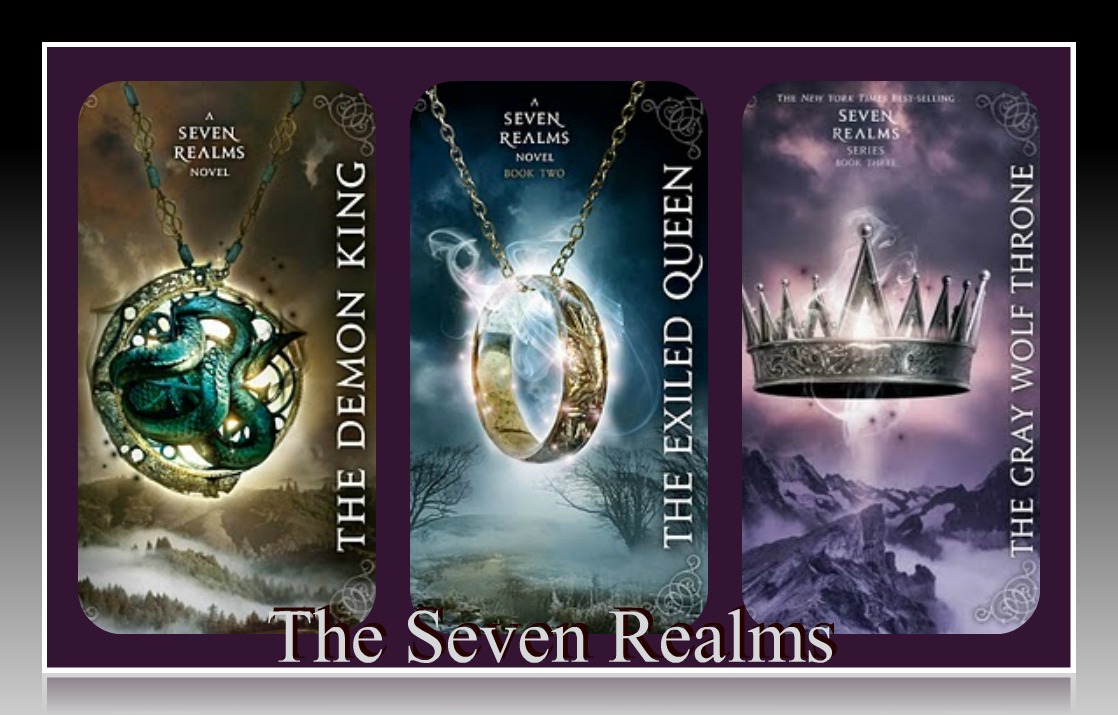
The Seven Realms series by Cinda Williams China

Han is a reformed thief in the mountain city of Fellsmarch. Raisa is the princess heir of the Fells. In the Seven Realms, clans and wizards are about to start a war. That’s when the lives of Han and Raisa collide…

The Dark Is Rising sequence by Susan Cooper

An immortal boy, six medallions created and hidden centuries ago, a Rider intent on gathering them and raising the Dark… an awesome read!

His Dark Materials trilogy by Philip Pullman

“There are some themes, some subjects, too large for adult fiction; they can only be dealt with adequately in a children’s book.” Philip Pullman, in his Carnegie Medal Acceptance Speech (1996). Such a complex, beautiful book, for all ages.

That’s it for today… I have many other YA Epic Fantasy stories sitting on my bookshelf but they’ll have to be included in another post…

Any other books you’d recommend? Feel free to comment!

Waiting On Wednesday – 18

“Waiting On Wednesday” is a weekly event, hosted by book blogger Breaking The Spine, that spotlights upcoming releases that we’re eagerly anticipating.

This week I’m waiting on THE ASSASSIN’S CURSE by Cassandra Rose Clarke (expected publication: October 2nd 2012 by Strange Chemistry). This is a YA High Fantasy novel and a 2012 debut.

From Goodreads:

Ananna of the Tanarau abandons ship when her parents try to marry her off to an allying pirate clan: she wants to captain her own boat, not serve as second-in-command to her handsome yet clueless fiance. But her escape has dire consequences when she learns the scorned clan has sent an assassin after her. 

And when the assassin, Naji, finally catches up with her, things get even worse. Ananna inadvertently triggers a nasty curse — with a life-altering result. Now Ananna and Naji are forced to become uneasy allies as they work together to break the curse and return their lives back to normal. Or at least as normal as the lives of a pirate and an assassin can be.

I already have way too many books on my TBR list, but I couldn’t resist adding this one to it. The cover is gorgeous and the blurb really intrigues me.

What do you think? Is this book on your TBR list?

And what are you waiting on this week?

On characters : whose story is this anyway ?

Hello gentle reader,

Today is Sunday, so here is my weekly post about the writing process. Hope you all had a lovely week. If you’re here to enter my Stuck In A Good Book Giveaway, click here.

As you may know, I’m currently revising my WIP The Last Queen, and this week I have been thinking a lot about characters and points of view. In most stories, the viewpoint character and the main character are the same person. But it doesn’t have to be. In my WIP, my main character is not the hero of the story. And it’s perfectly fine to write your story this way, as long as you know what you’re doing.

In The Writer’s Digest Guide to Science Fiction and Fantasy, Hugo Award winner Orson Scott Card explains:

“When you’re deciding whom the story is about, remember that the “hero”, the main character, and viewpoint character don’t have to be the same person. Most of us use the term hero as an informal synonym for “main character”. But in our day (…) it’s useful to keep a distinction in mind.

The hero is the character that the audience hopes will achieve his goals and desires – the character we are rooting for. There’s a moral judgment involved here. (…) We want him to win.

But the hero isn’t always the main character. Sometimes the most important character in a story, the one who makes everything happen, the one whose choices and struggles the story is about, [is another character].”

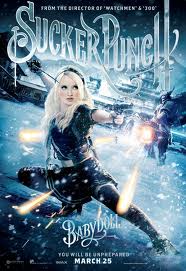
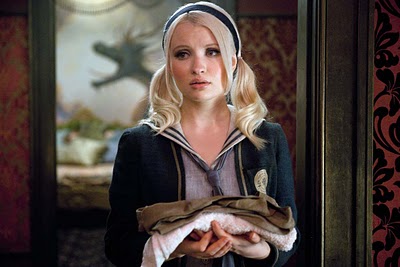
One of the best examples of this duality in a story is the movie Sucker Punch by Zack Snyder (2011). In this story, the main character is a girl named Sweet Pea.

She is the narrator of the story and the leader of the group of characters. She makes the decisions, and the story revolves around her choices and future.

But she is not the heroine of the movie. The heroine is another girl, named Baby Doll. She is the one the audience connects with and cares about. She is the one we follow to find out if her hopes and desires will be fulfilled. And it so happens that her desires and hopes involve giving Sweet Pea a bright future.

So how do you go about choosing your main character?

1)      You decide what you want to write about. What you want to say through your story.

2)      You decide whose story you want to tell. You choose your main character,  a voice to speak throughout the story, a character who connects with the reader.

3)      You decide if this main character is the hero of your story. Most of the times, the answer will be yes. But sometimes, it might worth considering the answer no.

 Then you write.

“And finally this question, the mystery of whose story it will be. Of who draws the curtain. Who is it that chooses our steps in the dance? Who drives us mad? Lashes us with whips and crowns us with victory when we survive the impossible? Who is it, that does all of these things?

Who honors those we love for the very life we live? Who sends monsters to kill us, and at the same time sings that we will never die? Who teaches us what’s real and how to laugh at lies? Who decides why we live and what we’ll die to defend? Who chains us? And Who holds the key that can set us free…

It’s You.

You have all the weapons you need.

Now Fight!”

Sweet Pea in Sucker Punch

So how do you go about choosing your main character? Is your main character always the hero in your stories? I’d love the read your input below!

Stuck in a Good Book Giveaway Hop (closed)

Hello gentle reader,

This week I’m taking part in the

Stuck in a Good Book Giveaway Hop

Hosted by Kathy @ I Am A Reader, Not A Writer & Valerie @ Stuck in Books

GIVEAWAY IS NOW CLOSED – THANKS TO ALL WHO ENTERED ! 

The winner will be contacted by email.

It runs from today until 25 September 2012 and it is a chance for me to share with you “a book that I just couldn’t put down”.

I have chosen to give away The Hunger Games by Suzanne Collins (new paperback, US edition). The giveaway is international.

The Hunger Games is a book that I would have read in one sitting if I could have. I actually remember reading it at work, because I couldn’t wait for the end of the day to know what would happen next. I also remember reading the last page when I was about halfway through the book. I NEVER do that. I always read the book from page 1 to the end and I don’t peak. But this book got me so tensed that I had to know if Peeta would survive the Games. So if you haven’t read The Hunger Games, here is your chance.

And of course,

May the odds be ever in your favor...

Giveaway information:

The giveaway is open until Tuesday, September 25th 2012 at midnight (BST time)

To enter please fill in the contact form below with your name and email.

If you follow my blog by email, WordPress or RSS feed, if you are a Twitter follower , if you like my page on Facebook or if you tweet about the giveaway, this will grant you an extra entry. Mention it below.

Entrants must be at least 13 years of age.

This giveaway is open Internationally.

The winner will be chosen randomly, notified by email and will have 72 hours to reply or a new winner will be chosen.

I am not responsible for items lost in the mail.

I hold the right to end the giveaway before its original deadline without any prior notice.

I hold the right to disqualify any entry as I see fit.

Privacy information: no information given for this giveaway will be used for other purpose than this giveaway. All information provided (names, emails and mail addresses) will be deleted after the giveaway.

Good luck and feel free to leave me a comment below…

This is a blog hop! Visit the other giveaways here.

Reader Appreciation Award!

I have received another award for my blog! It’s the Reader Appreciation Award and the wonderful Raewyn Hewitt nominated me. She is an Epic Fantasy writer who lives in New Zealand and is currently writing a trilogy entitled The Fall of the Kings. She has a great blog which chronicles her writing journey and quotes Tolkien and Doctor Who (what more can you ask for? Go and follow her already!).

So here are the rules for this award:

1. Identify and show appreciation to the blogger who nominated you.

2. Add the reward logo to your blog.

3. Tell your readers 7 things about yourself.

4. Nominate 5-10 of your favourite bloggers for this award.

5. Inform your nominees that you nominated them.

So I’m not really one to talk about myself, but here goes…

1-    Full disclosure. I’m 28.

2-    I live in England but my nationality is not British. Let the guessing game begin!

3-    I have lived in three different countries in the last ten years.

4-    I watch a lot of TV shows. Historical, SF or fantasy, I’ll give them a try. Right now I’m really into “Hell On Wheels” and “The Vampire Diaries”.

5-    I wrote my first novel at the age of 12. It was entitled “The Chronicles of a Girl on a Swing in Paris”. Please don’t judge 😉

6-    My current WIP The Last Queen is my 20th finished novel (!). I wrote the first draft in 2009. My cousin Elisabeth, who is my self proclaimed biggest fan and has read every single story I have ever written, chose that time to tell me that “maybe it was time to go out there and get my stories published.” However this endeavour turns out to be, I will blame it on her.

7-    My family is very supportive of my writing, even if they don’t actually, well, read what I write. My brother thinks that my WIP is “Game of Thrones with elves and werewolves”. My grandmother thinks it’s “something like Harry Potter”. My parents think it’s a masterpiece. I really hope they’re right.

Now on to the nominations of lovely blogger you should follow:

Elodie @ Commuting Girl A French girl living in Germany, and an aspiring author of YA novels (paranormal romance and contemporary romance) with a versatile blog.

Susan and Tyler-Rose @ The Feather and the Rose Two Epic Fantasy writers. One great blog tackling writing, revisions, queries and the epicness of it all.

Gina @ This Is Not Your Blog In her own words, a “mother, blogger, vlogger, writer, homeschooler, church-goer, nerdfighter, baker, cake decorator, avid reader, book reviewer.” She lives in Florida and her blog is a great read. Also I love her Fantasy Casting Feature.

Juliana Haygert When I started following her blog, she was a romance writer trying to get published. Today she is a published author. Yet she  is still this lovely Brazilian girl who lives in Connecticut and replies to all my tweets. This girl will go far, better get to know her now!

That’s it for me. For those nominated, there’s no pressure to participate. I just wanted to let my readers know how awesome you are!


ROW80 Check-In 10: Rae Carson’s success story

Hello gentle reader and fellow writers,

This week I have been hearing a lot about a British teenage writer who got a 6-figure book deal in less than 2 years. As dreamlike as these publishing stories are, I wanted to highlight another author’s story today.

Rae Carson is a YA High Fantasy author whose first book, The Girl of Fire and Thorns, came out in 2011. It was a nominee for the Andre Norton Award and the William C. Morris YA Debut Award. It was also an ALA (American Library Association) Top 10 Best Fiction for Young Adults honoree in 2012. The second book in The Fire and Thorns Trilogy, entitled The Crown of Embers, is coming out on September 18th 2012. Her third book, The Bitter Kingdom, will be published in 2013. In June 2012, she sold a new romantic fantasy trilogy set during the American gold rush to HarperCollins’s Greenwillow Books.


Rae’s journey into publishing is interesting because it was slow. She became serious about writing back in 2004, and it took her 7 years to get a book published. Along the way she sold a couple of short stories, wrote a first book which is still in her drawer, then in 2005 she wrote the first draft of The Girl of Fire and Thorns. She got an agent, and never sold the novel to a publisher. So she revised it and decided to go with another agent, who managed to sell the book within 24 hours. It took then another couple of years to have the book sitting on bookshelves in bookstores.

Here is what Rae says on her website:

I graduated college with a degree in Social Science–which qualified me to flip burgers–and a mound of education debt. I still didn’t know what I wanted to do when I grew up.

Well, that’s not true. I did know. I wanted to be a novelist. But that just wasn’t practical, and I had to come up with something else. I had to have a Plan B. So I tried bank tellering, secretarial work, customer service, inside sales, substitute teaching, data entry, logistics, and even machine shop-ing. I didn’t enjoy any of it.

In 2004, after quitting a very high paying job in a very toxic atmosphere, I decided to get serious about writing. It was the only thing I kept coming back to, the one thing that had held my interest over time and distance and lots of life change. So I joined the Online Writing Workshop for Science Fiction, Fantasy, and Horror where I met my future best friends, my future husband, and my calling.

I spent the next few years happily writing awful stuff. During this time, I got to know C.C. Finlay online, and after going on three real-life dates, I moved from California to Ohio to marry him. The writing became a lot less awful, and eventually I sold my first novel to Greenwillow/HarperCollins.

Hindsight is easy, I know, and writing about the awkwardness of adolescence is way easier than living it. But I can say unequivocally that although growing up is hard, it’s totally worth it. It’s possible to become your better self. And dreams, no matter how impractical, are made to be pursued.”

So do you find this story inspirational? Do you believe the traditional route to publishing is too slow? Or does it guarantee great books from great authors for readers? I’d love to read your thoughts in the comment section!

You can find Rae Carson on Twitter and Facebook.

To write this post, I have used:

http://www.locusmag.com/Perspectives/2012/07/rae-carson-amulet-of-power/

http://shelf-life.ew.com/2012/09/13/fire-and-thorns-author-rae-carson/

My ROW80 update for this week:

this week I have tried writing a short story AND revising my WIP The Last Queen. The reuslt is that I have a unfinished short story and I’m late in my revisions. So for the last week of this round, I need to focus on revisions.

How are you other ROWers doing? Here is the Linky to support each other!

What is “strong writing” ?

One of the most common reasons for agents and publishers to reject a manuscript is « weak writing ». Rather than listing here what makes your writing weak, I’d like to offer a few pointers to help you make your writing strong – or stronger. I will use The Hunger Games by Suzanne Collins as an example, since I think most of you have either read the book or seen the movie based on it.

What you need to work on to make your writing “strong”:

1-      The plot

In real life, things rarely go according to plan. Then why should they in books? Your Main Character needs to start out with a plan (for the day, for the year or in life). Then everything needs to go awry.

 In The Hunger Games, Katniss is constantly faced with the unexpected. She goes to the Reaping thinking she or Gale will be picked. It’s Prim who is chosen. She enters the arena thinking she’ll have to count only on herself to survive. Then she finds an ally in Peeta.

2-      The characters

The world cannot revolve around your Main Character. In some stories, the characters seem to exist for the sole purpose of helping the MC or making her miserable. When you’re told you need to “flesh out” your characters, it means you have to make them unique, but it also means you have to give them their own story, their own plan, their own desires, their own AGENDA that will have nothing to do with the MC.

In The Hunger Games, Effie has her own agenda (get promoted to a better district, have a good career) and it so happens that the best course of events for her is if Katniss wins the Games. So she helps Katniss along the way. But if you look at the story from her point of view, Katniss is a means to an end (at least at the beginning).

3-      The pace

Strong writing means no dull moments. It doesn’t mean you have to write an action-packed story in the strictest sense of the word, but it does mean things need to happen in every chapter, and there needs to be a “hanger” at the end of each chapter that will keep your reader reading.

In The Hunger Games, each chapter ends with a cliffhanger. If you write romance,  your “hanger” doesn’t have to be your MC waking up to “a wall of fire descending on” her, but it has to be something that makes the reader turn the page.

4-      High stakes

Having high stakes in your story means that your MC needs to be faced with hard decisions. Your reader needs to wonder what the outcome of the situation will be. Your reader needs to care about your MC making the right decision.

In The Hunger Games, the stakes cannot be higher since every decision Katniss is faced with means life or death for her or someone else. But a love triangle can constitute high stakes too. What works well in The Hunger Games is that Katniss choosing between Gale and Peeta is a very complicated decision, given the circumstances and who they are.

5-      Style

To avoid a so-called “awkward writing”, you may choose to write short, to-the-point sentences.

In The Hunger Games, Collins’ style is simple and it works. Each sentence is carefully worded, with judiciously chosen images. Example: “Behind Peeta, Cato slashes his way through the bush.” That’s 9 words. Yet we get a clear sense of the scene.

6-      World building / Descriptions

When your writing is strong, your reader doesn’t notice when you include world building or descriptions in your story.

By the end of The Hunger Games, the reader has a clear idea of what Katniss, District 12, the Capitol or the Games Arena look like, yet it’s hard to remember exactly when Collins described them. She intertwined the descriptions with her story.

7-      Depth

Strong writing is a tool to make your reader think. You read The Hunger Games for the story, the characters, the suspense. But the reason why so many readers enjoyed it so much is that it tackles important themes. It questions reality TV, freedom and the things we take for granted in our Western societies.

8-      Grammar, spelling and punctuation

No strong writing without them!


So strong writing makes effortless reading. Your readers shouldn’t be able to see through your writing devices. They should be able to believe in, and care about, your characters so much that when the Gamemakers announce that “both tributes from the same district will be declared winners if they are the last two alive”, they call out Peeta’s name at the same time Katniss does.

Do you agree? What makes “strong writing” according to you? I’d love to hear your thoughts in the comment section!

GUTGAA Pitch Polish

As previously mentioned on this blog, I am taking part in the Gearing Up To Get An Agent blogfest (GUTGAA) hosted by the amazing Deana Barnhart. This week is all about Pitch Polish and you can find my query and the first 150 words of my WIP The Last Queen here. Now, if you’ve read my query or part of my WIP before, know that my manuscript has been undergoing major revisions lately. I have also worked on my query, based on the comments I received a WriteOnCon. So I would be very grateful if you could have a look at my new pitch and give me some feedback on it. I’ll return the favour if you give me a link to your query in the comment section of this post!

And since I hate asking without giving, remember that you can still enter my 100 followers giveaway here and win books!

ROW80 Check-In 9 – Prologues: How and why to write one

Hello gentle readers and fellow writers,

Last week I came across an interesting post on the MythicScribes forum. It is a great forum for fantasy writers and a member called Lunaairis posted his thoughts on prologues on August 17th 2012.

Usually, writers are advised to avoid including prologues at the beginning of their novels. Prologues should be banned because they most likely are 1) unnecessary lengthy narrative of back story, 2) boring scene-setting that can be cut without harming the plot, 3) information that should be your chapter One, 4) something that readers don’t read anyway.

However many published Epic Fantasy books do start with a prologue and Lunaairis explains in his post when and how this is acceptable:

“I was looking at a post about prologues and I couldn’t help but think that there seems to be something wrong with people’s reactions to them. I for one like prologues as they can set the tone for the rest of the story; When they are prologues and not just masses of text. After reading Farlander (by Col Buchanan) I have realized what makes a prologue good, and why more fantasy stories need them.

1) A prologue should be like the story you will tell but in miniature, it should be no longer then your longest chapter and should never be split into parts (I’ve seen this done and it’s just horrendous). That said you should always leave the prologue to be the last thing you write. A prologue is so much like a door hinge I can’t even begin to explain. It is best used with the idea to gather readers; it’s a chapter the average man/woman or child can read at a book store to get a feel for the authors writing without going into the main story. It is what an author should use for getting the reader from the real world to their fictional world. Again like a door hinge it keeps the book open for the public eye to grab a glimpse.

2) The author can also use the prologue to slip in information that the other characters in the novel might already know (if it is important to the story). You wouldn’t want to write a chapter about a city falling to pieces, only for it to have no purpose for the rest of the story, waste-of-space much? (…) Don’t allow prologues to become information dumps, remember you are trying to get the average reader into your story, don’t bombard them with names that won’t or can’t be explained till 2-3 chapters in.

3) Prologues, after keeping in mind that they should not be long, they should also not be short. A prologue consisting of 1-4 paragraphs is rather useless; all the information presented could be bleed into the speech of some of the characters. Removing the need for the prologue all together. If there are only 1-4 paragraphs it’s likely that you just wrote an information dump and should delete it anyways.

4) There should be a story going on in your prologue, a beginning and an end. Introduce a key character in your story, Maybe a villain? The main character? A magic object? Something that has reason to exist, and has wants and needs. Present them a challenge; it could be a rival, a theft (the theft of a person’s life, an object, a person or a way of thinking) or maybe the end of a cycle. (…) Remember when coming up with the challenge, it may be a good idea to take the main problem of you fiction but show it on a miniature scale. If your story is about racism show a glimpse of the racism here.

5) Now show off the character or object’s skills by somehow getting them though the situation. This is a great way to get your reader interested in the character or object they are going to follow for the rest of the book. It’s time to show their talents, as this character or object may not be the only main character or object of the novel but is the one that pulls the story along, and likely won’t be showing up again for a few chapters.

6) Never talk history in the prologue; write as it happens. Do you remember sitting in those boring history classes with your unexciting history teacher? Thank god I loved history and never had a crappy history teacher. But I know other people who have and I also know they don’t like to read about it in their fiction, so keep it out of there! There is a time and a place to talk about the last great war between the Jubjubwicks and the Didolgigs but the prologue is not the place to be talking politics from a second source.”

So what do you think? Do you agree with Lunaairis? Have you included a prologue in your novel? If yes, what is it like? Or are you against prologues? Let me know in the comment section!

Finally, my update: I have had a good writing week after a very lazy summer on the writing front. I haven’t worked on my WIP, but I have written a short story, worked on my query letter and devised a new editing plan for my WIP. Next week I’m planning on diving back into editing…

How are you fellow ROWers doing?  Here is the Linky to the list of participants.

Happy writing!