A Writer in the Spotlight – Meagan Spooner

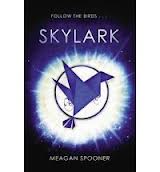
This week again I was lucky enough to have a YA author give me an exclusive interview! The idea behind the “Writer in the Spotlight” feature is that published (and bestselling) authors are the best source of advice for us, would-be-published writers. Today’s interview is with debut author Meagan Spooner. Her Dystopian novel, Skylark, is out now. Her science fiction novel, These Broken Stars (co-authored with Amie Kaufman), will be out in 2013.
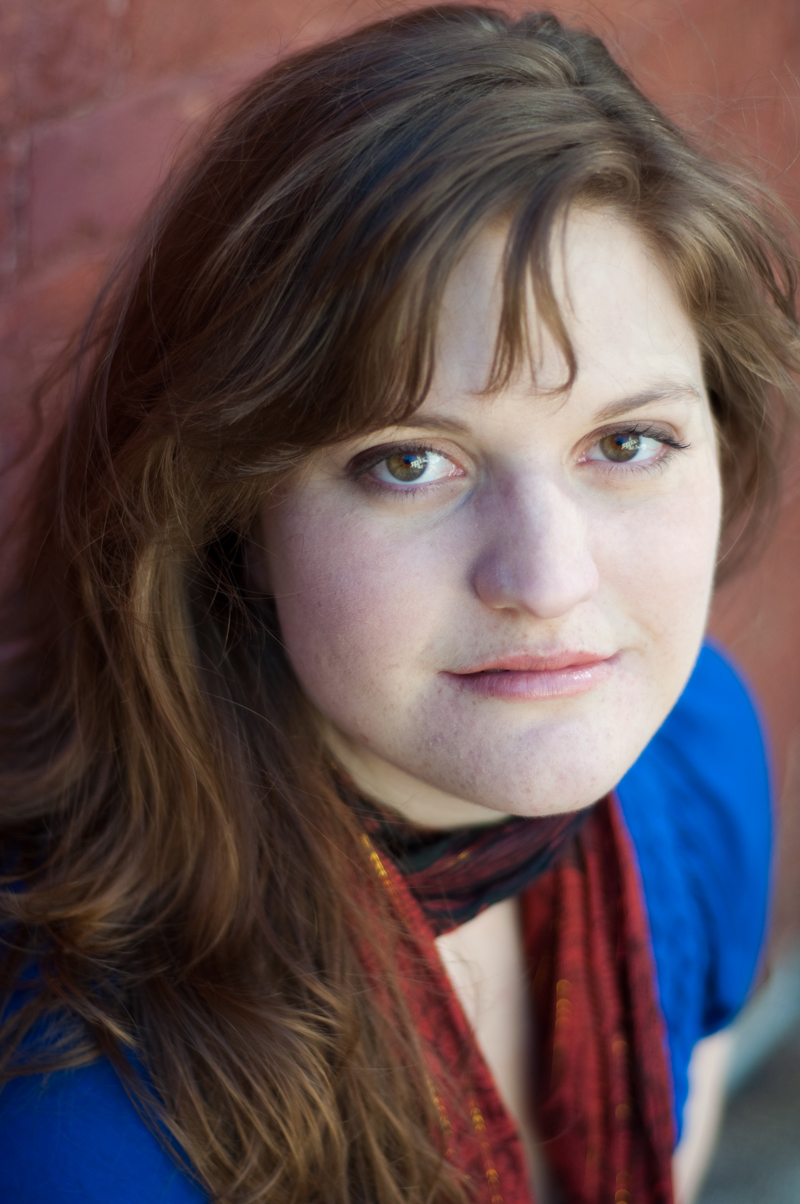
Author : Meagan Spooner

Genre : Young Adult, Dystopian & Fantasy

Location: Northern Virginia

Contact: Website, Goodreads, Twitter

Books : Skylark (2012), These Broken Stars (2013)

Bio: Meagan Spooner grew up reading and writing every spare moment of the day, while dreaming about life as an archaeologist, a marine biologist, an astronaut. She graduated from Hamilton College in New York with a degree in playwriting, and has spent several years since then living in Australia. She’s traveled with her family all over the world to places like Egypt, South Africa, the Arctic, Greece, Antarctica, and the Galapagos, and there’s a bit of every trip in every story she writes.She currently lives and writes in Northern Virginia, but the siren call of travel is hard to resist, and there’s no telling how long she’ll stay there. In her spare time she plays guitar, plays video games, plays with her cat, and reads.

My interview (01/10/2012):

On writing:

Did you always know you wanted to be a writer?

Yes. As long as I can remember, anyway. I was very young when I first decided I wanted to be an author–about four years old or so. I had one of those little-kid epiphanies where I suddenly realized that real people wrote the books I liked to read, and that blew my mind. You know how it is when you’re small, you never really think about where things come from. Well, when I realized that books were made by actual people, I decided that’s what I wanted to do some day. I’ve always had other aspirations along the way as well, but writing has been the only one I constantly aspired to.

When and where do you write?

Whenever I can/need to, and wherever I happen to be. I know that’s a boring answer, because people love to hear about the routine, but the truth is that once you start juggling deadlines for multiple books and series at every stage of the process, you can’t really afford to be precious about your routine. Ideally I like to write at my desk when I’m alone in my apartment, and that tends to be where I get the bulk of my work done. But I write on my netbook when I’m traveling, and I write by hand occasionally when I’ve got something flowing and no computer nearby. (This happens most often when I’m driving somewhere, and I end up having to pull over to the side of the road and write on napkins and receipts. Seriously.)

What do you say to people who want to be writers? How difficult is it to get published?

That’s kind of a tough question to answer because there are so many factors–it’s not just a level of difficulty on a scale from 1 to 10 that’s the same for everyone. Do you read a lot? Have you been writing for a long time? Do you pay attention to what other authors do and try to utilize those tools in your own writing? Are you talented? Do you work hard? Are you driven and dedicated? If the answer to most of those things is “yes,” then you’ve got a pretty good chance of being published. Yes, there’s luck involved–hitting the right agent/publisher with the right story at the right time–but most of it is hard work and being willing to improve yourself. You have to walk this incredibly fine line between being arrogant enough to keep thinking you can do it even when you get shot down over and over again, while also being humble enough to accept and incorporate criticism, and grow your craft.


On “Skylark”:

To write this book, where did you get your inspiration from? Were you aware of the coming dystopian trend in YA literature when you wrote it?

I wasn’t aware, no. I’d read THE HUNGER GAMES but wasn’t really paying attention to the YA market when I got the idea (which you can read more about here), because I wasn’t particularly driven to get published at that time. It was only after I had the idea for SKYLARK that I knew it was The Book, and I started keeping an eye on what was going on out there. The truth is, even then I had no particular view on the dystopian craze, because to me, SKYLARK isn’t really dystopian literature. There are elements that it shares with many dystopian stories, so it often gets called dystopian (even by me when I’m describing it simply) and shelved that way. But structurally it’s the Hero’s Journey, through and through–it’s fantasy, not science fiction.

Why did you choose to write for Young Adults?

Joss Whedon, one of my writing idols, often gets asked why he writes strong female characters. His response is “Because you’re still asking me that question.” Why write for young adults? Why NOT write for young adults? Why would anybody not want to write for young adults? For one thing, you won’t find a more riveted and dedicated audience anywhere. No one reads like kids and teenagers read, with such investment and heart.

But to me, being a teenager is all about having real choices for the first time in your life, and having to make those choices without necessarily knowing where they’ll lead you. And choice is what all good stories are really about, deep down. The choices protagonists make, and where those choices take them.

What are you working on now?

Everything. Okay, that’s not a helpful response, but that’s pretty much what it feels like. I’m revising book two of the SKYLARK trilogy, planning book three, doing copy edits on THESE BROKEN STARS, and writing the first draft of the second book in that series. And yes, all at the same time. If I had extra time, or if suddenly all my contracted work just vanished, I’d be working on a Beauty and the Beast retelling that I began way back when I first sent out query letters for SKYLARK. It was going to be my next project, in case SKYLARK (then called THE IRON WOOD) didn’t land me an agent. Two years later and I haven’t gotten to finish it yet! Someday. 😉
 

Reading advice:

Which authors inspire you now? Which YA books would recommend?

For dystopian fiction, I’d recommend THE GIVER by Lois Lowry. For science fiction, I’d recommend ENDER’S GAME by Orson Scott Card. For fantasy, I’d point you toward THE LAST UNICORN by Peter S. Beagle, or if you want a more recent book, GRACELING (and its companion novels) by Kristin Cashore.

As far as authors go, Tamora Pierce, Robin McKinley, Patricia C. Wrede, and Diana Wynne Jones have always been huge inspirations for me. I go back to them constantly whenever I lose sight of what I’m doing, or why I’m working so hard to do it.

Thanks, Meagan, for an awesome interview!

SKYLARK is available from Amazon here.

Waiting On Wednesday – 18

“Waiting On Wednesday” is a weekly event, hosted by book blogger Breaking The Spine, that spotlights upcoming releases that we’re eagerly anticipating.

This week I’m waiting on THE ASSASSIN’S CURSE by Cassandra Rose Clarke (expected publication: October 2nd 2012 by Strange Chemistry). This is a YA High Fantasy novel and a 2012 debut.

From Goodreads:

Ananna of the Tanarau abandons ship when her parents try to marry her off to an allying pirate clan: she wants to captain her own boat, not serve as second-in-command to her handsome yet clueless fiance. But her escape has dire consequences when she learns the scorned clan has sent an assassin after her. 

And when the assassin, Naji, finally catches up with her, things get even worse. Ananna inadvertently triggers a nasty curse — with a life-altering result. Now Ananna and Naji are forced to become uneasy allies as they work together to break the curse and return their lives back to normal. Or at least as normal as the lives of a pirate and an assassin can be.

I already have way too many books on my TBR list, but I couldn’t resist adding this one to it. The cover is gorgeous and the blurb really intrigues me.

What do you think? Is this book on your TBR list?

And what are you waiting on this week?

On characters : whose story is this anyway ?

Hello gentle reader,

Today is Sunday, so here is my weekly post about the writing process. Hope you all had a lovely week. If you’re here to enter my Stuck In A Good Book Giveaway, click here.

As you may know, I’m currently revising my WIP The Last Queen, and this week I have been thinking a lot about characters and points of view. In most stories, the viewpoint character and the main character are the same person. But it doesn’t have to be. In my WIP, my main character is not the hero of the story. And it’s perfectly fine to write your story this way, as long as you know what you’re doing.

In The Writer’s Digest Guide to Science Fiction and Fantasy, Hugo Award winner Orson Scott Card explains:

“When you’re deciding whom the story is about, remember that the “hero”, the main character, and viewpoint character don’t have to be the same person. Most of us use the term hero as an informal synonym for “main character”. But in our day (…) it’s useful to keep a distinction in mind.

The hero is the character that the audience hopes will achieve his goals and desires – the character we are rooting for. There’s a moral judgment involved here. (…) We want him to win.

But the hero isn’t always the main character. Sometimes the most important character in a story, the one who makes everything happen, the one whose choices and struggles the story is about, [is another character].”

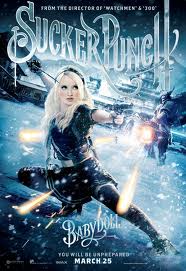
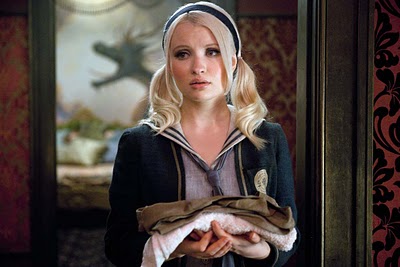
One of the best examples of this duality in a story is the movie Sucker Punch by Zack Snyder (2011). In this story, the main character is a girl named Sweet Pea.

She is the narrator of the story and the leader of the group of characters. She makes the decisions, and the story revolves around her choices and future.

But she is not the heroine of the movie. The heroine is another girl, named Baby Doll. She is the one the audience connects with and cares about. She is the one we follow to find out if her hopes and desires will be fulfilled. And it so happens that her desires and hopes involve giving Sweet Pea a bright future.

So how do you go about choosing your main character?

1)      You decide what you want to write about. What you want to say through your story.

2)      You decide whose story you want to tell. You choose your main character,  a voice to speak throughout the story, a character who connects with the reader.

3)      You decide if this main character is the hero of your story. Most of the times, the answer will be yes. But sometimes, it might worth considering the answer no.

 Then you write.

“And finally this question, the mystery of whose story it will be. Of who draws the curtain. Who is it that chooses our steps in the dance? Who drives us mad? Lashes us with whips and crowns us with victory when we survive the impossible? Who is it, that does all of these things?

Who honors those we love for the very life we live? Who sends monsters to kill us, and at the same time sings that we will never die? Who teaches us what’s real and how to laugh at lies? Who decides why we live and what we’ll die to defend? Who chains us? And Who holds the key that can set us free…

It’s You.

You have all the weapons you need.

Now Fight!”

Sweet Pea in Sucker Punch

So how do you go about choosing your main character? Is your main character always the hero in your stories? I’d love the read your input below!

YA Ghost Stories

What’s on my bookshelf ? 5

Today I want to mention a few ghost stories that I enjoyed reading and that I think are suitable for Young Adult readers.

So, on my bookshelf, you can find:

The Graveyard Book by Neil Gaiman

After the murder of his family, a toddler wanders into a graveyard and is raised by ghosts. Growing up in a graveyard can be dangerous but everyone knows the world outside its gate is even worse…

An amazing setting, and such a great story. Neil Gaiman has no equal.

Her Fearful Symmetry by Audrey Niffenegger

Two American sisters inherit a flat which borders Highgate Cemetery in London. The teenage twins move in and meet their strange neighbours, before realizing  their deceased aunt can’t seem to leave her old apartment – and life- behind.

Technically an Adult book. An interesting premise and a chilling ending. However the story relies heavily on clichés about London and its supposedly ghostly feel. Since I actually live here, I need a little more than that in terms of setting.

The Name of the Star by Maureen Johnson

The ghost of Jack The Ripper is killing again in modern-day London. The secret ghost police of London are on the case, with no time to waste.

Again a book set in London and targeted at American readers who have never set foot here. But in this one, the plot is great and the author actually conveys a “British feel” to her story.

Darker Still by Leanna Renee Hieber

Manhattan, 1882. A teenage girl who cannot speak. A haunted painting. A love story across time and space.

A good YA read, although the plot lacked high stakes. And I liked the twist halfway through the book.

That’s it for YA ghost stories sitting on my bookshelf… Any other books you’d recommend? Feel free to comment!

Also you can enter my 100 Followers Giveaway here and win YA books!

What is Gritty Epic Fantasy?

Hello gentle reader,

When people ask me what genre my WIP The Last Queen is, I usually reply “Fantasy”. But if I wanted to be precise, I would say “Gritty Epic Fantasy”. Usually I’m not that precise, because then I would have to explain what Gritty Epic Fantasy is and I would end up talking for 15 minutes…

So today I thought I would explain what Gritty Epic Fantasy is, just this once.

Let’s break it down, shall we?

According to Wikipedia,

Fantasy is a genre of fiction that commonly uses magic and other supernatural phenomena as a primary element of plot, theme, or setting. Many works within the genre take place in imaginary worlds where magic is common.

Epic Fantasy is a subgenre of fantasy that is set in invented or parallel worlds.

NB: Because they share so many similarities, Epic Fantasy and High Fantasy are often used as synonyms. In this post, I will not differentiate the two subgenres, although I do think there are some differences that distinguish them.

J.R.R. Tolkien and C.S. Lewis are seen as the founders of the Epic Fantasy subgenre. Both authors invented imaginary worlds where their characters go on a great adventure. Their books focus on a good-versus-evil story and they were published during the first half of the 20th Century.

These books are all about escapism and heroism. In The Hobbit, Bilbo is on a quest to find a treasure guarded by a dragon. In The Lord of the Rings, Gandalf comes back from the dead. In The Chronicles of Narnia, children protect the fictional realm from evil and restore the throne to its rightful line. In these first Epic Fantasy books, there are talking animals, mythical beasts, sword fights, magic at every turn and people rarely die.

As many other readers out there, I love those stories. But Fantasy literature is about being a metaphor for the world we live in. And this is 2012. Since the 1950s, society has changed. Readers have changed. They’ve grown up watching people getting killed live on TV, hearing about horrific cases of child abuse and reading about human trafficking in the paper. When they read Fantasy books, they want to read about characters who face similar challenges to the ones they do.

And that’s what Gritty Epic Fantasy, also known as Realistic Fantasy, has to offer.

The trend was started by Glen Cook’s Black Company series in the mid 1980s. Then George R. R. Martin’s A Song of Ice and Fire series followed in the mid 1990s. And in the last ten years, this subgenre has grown exponentially, with authors such as Joe Abercrombie, Scott Lynch, K. J. Parker, Mark Lawrence, Steven Erikson and Brent Weeks.

In these books, the setting is still imaginary worlds. But instead of relying on complicated magic systems and weird creatures, these stories show us a world in shades of grey, where the characters are as flawed as we are, with the same emotions and reactions. These books touch on concepts which echo in our real world. Martin’s A Song of Ice and Fire tackles politics and relationships, Week’s Night Angel trilogy mentions child abuse and moral ambiguity.

In Gritty Epic Fantasy, there is no old grey-bearded wizard in robes to save the day. No quest to find a hidden treasure. No talking lions and children more powerful than kings. No brave knights who defy death. No world in black and white.

“There’s no guarantee that justice will win out or that a noble sacrifice will make any difference. But when it does, there’s something that still swells my chest. There’s magic in that…. It tells me that’s the way things are supposed to be.”

Brent Weeks, Beyond the Shadows

So maybe Gritty Epic Fantasy is not for you. But I find that this Fantasy subgenre is the one that echoes the most in me and this is what I write.

Some reading recommendations:

Black Company series   (Glen Cook)
A Song of Ice and Fire series  (George R.R. Martin)
Malazan Book of the Fallen series  (Steven Erikson)
The Deed of Paksenarrion  (Elizabeth Moon)
Prince of Nothing series    (R. Scott Bakker)
Acacia  (David Anthony Durham)
The Chronicles of Thomas Covenant  (Stephen R. Donaldson)
First Law series  (Joe Abercrombie)
The Lies of Locke Lamora  (Scott Lynch)

The Night Angel trilogy (Brent Weeks)

Prince of Thorns (Mark Lawrence)

 On the web:

Gritty fantasy

http://bestfantasybooks.com/gritty-fantasy.html

Painting With Grey: The Development and Popularity of “Gritty Fantasy”

http://fantasy-faction.com/2012/painting-with-grey-the-development-and-popularity-of-gritty-fantasy

Why the Turn Towards Gritty Realism In Epic Fantasy?

http://io9.com/5850891/why-the-turn-towards-gritty-realism-in-epic-fantasy-authors-sound-off

So what do you think? Do read or write Gritty Epic Fantasy? Why or why not? I’d love to hear your thoughts!

Waiting on Wednesday – 14

“Waiting On Wednesday” is a weekly event, hosted by book blogger Breaking The Spine, that spotlights upcoming releases that we’re eagerly anticipating.

This week I’m waiting on Defiance by C.J. Redwine (expected publication: August 28th 2012 by Balzer + Bray). It is a YA Fantasy novel and a 2012 debut. I have been dying to read this book for a while now and August 28th is finally approaching…! Plus how gorgeous is this cover?!

 From Goodreads:

“Within the walls of Baalboden, beneath the shadow of the city’s brutal leader, Rachel Adams has a secret. While other girls sew dresses and obey their male Protectors, Rachel knows how to survive in the wilderness and deftly wield a sword. When her father, Jared, fails to return from a courier mission and is declared dead, the Commander assigns Rachel a new Protector, her father’s apprentice, Logan–the same boy Rachel declared her love for two years ago, and the same one who handed her heart right back to her. Left with nothing but a fierce belief in her father’s survival, Rachel decides to escape and find him herself. But treason against the Commander carries a heavy price, and what awaits her in the Wasteland could destroy her.

At nineteen, Logan McEntire is many things. Orphan. Outcast. Inventor. As apprentice to the city’s top courier, Logan is focused on learning his trade so he can escape the tyranny of Baalboden. But his plan never included being responsible for his mentor’s impulsive daughter. Logan is determined to protect her, but when his escape plan goes wrong and Rachel pays the price, he realizes he has more at stake than disappointing Jared.

As Rachel and Logan battle their way through the Wasteland, stalked by a monster that can’t be killed and an army of assassins out for blood, they discover romance, heartbreak, and a truth that will incite a war decades in the making.”

Visit C. J. Redwine’s blog here.

Book of the Week – 10

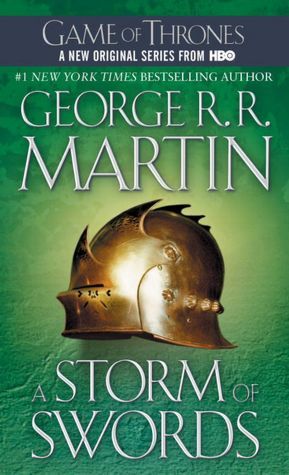
This week I’m reading Book 3 of the Song of Ice and Fire series by G.R.R. Martin: A Storm of Swords. First published in 2000, this book is a whooping 1128 pages long. Right now I’m about halfway through and I just cannot put it down. I will not go into too many details about this book here for fear of spoilers, but I will include the blurb for Book 1, entitled A Game of Thrones, to make you want to dive into this amazing epic fantasy series.

From Goodreads:

“Long ago, in a time forgotten, a preternatural event threw the seasons out of balance. In a land where summers can last decades and winters a lifetime, trouble is brewing. The cold is returning, and in the frozen wastes to the north of Winterfell, sinister and supernatural forces are massing beyond the kingdom’s protective Wall. At the center of the conflict lie the Starks of Winterfell, a family as harsh and unyielding as the land they were born to. Sweeping from a land of brutal cold to a distant summertime kingdom of epicurean plenty, here is a tale of lords and ladies, soldiers and sorcerers, assassins and bastards, who come together in a time of grim omens.
Here an enigmatic band of warriors bear swords of no human metal; a tribe of fierce wildlings carry men off into madness; a cruel young dragon prince barters his sister to win back his throne; and a determined woman undertakes the most treacherous of journeys. Amid plots and counterplots, tragedy and betrayal, victory and terror, the fate of the Starks, their allies, and their enemies hangs perilously in the balance, as each endeavors to win that deadliest of conflicts: the game of thrones.”

So, have you read this series? What did you think?

The Fantasy Novelist’s Exam by David J. Parker

So I didn’t write this post. This post was first published by David J. Parker (with additional material by Samuel Stoddard) on this website. Since it is awesome, I have decided to share it with you. Visit the RinkWorks Production website for more information.

So here goes…

“Ever since J.R.R. Tolkien and C.S. Lewis created the worlds of Middle Earth and Narnia, it seems like every windbag off the street thinks he can write great, original fantasy, too. The problem is that most of this “great, original fantasy” is actually poor, derivative fantasy. Frankly, we’re sick of it, so we’ve compiled a list of rip-off tip-offs in the form of an exam. We think anybody considering writing a fantasy novel should be required to take this exam first. Answering “yes” to any one question results in failure and means that the prospective novel should be abandoned at once.”

David J. Parker.

The Exam

  1. Does nothing happen in the first fifty pages?
  2. Is your main character a young farmhand with mysterious parentage?
  3. Is your main character the heir to the throne but doesn’t know it?
  4. Is your story about a young character who comes of age, gains great power, and defeats the supreme badguy?
  5. Is your story about a quest for a magical artifact that will save the world?
  6. How about one that will destroy it?
  7. Does your story revolve around an ancient prophecy about “The One” who will save the world and everybody and all the forces of good?
  8. Does your novel contain a character whose sole purpose is to show up at random plot points and dispense information?
  9. Does your novel contain a character that is really a god in disguise?
  10. Is the evil supreme badguy secretly the father of your main character?
  11. Is the king of your world a kindly king duped by an evil magician?
  12. Does “a forgetful wizard” describe any of the characters in your novel?
  13. How about “a powerful but slow and kind-hearted warrior”?
  14. How about “a wise, mystical sage who refuses to give away plot details for his own personal, mysterious reasons”?
  15. Do the female characters in your novel spend a lot of time worrying about how they look, especially when the male main character is around?
  16. Do any of your female characters exist solely to be captured and rescued?
  17. Do any of your female characters exist solely to embody feminist ideals?
  18. Would “a clumsy cooking wench more comfortable with a frying pan than a sword” aptly describe any of your female characters?
  19. Would “a fearless warrioress more comfortable with a sword than a frying pan” aptly describe any of your female characters?
  20. Is any character in your novel best described as “a dour dwarf”?
  21. How about “a half-elf torn between his human and elven heritage”?
  22. Did you make the elves and the dwarves great friends, just to be different?
  23. Does everybody under four feet tall exist solely for comic relief?
  24. Do you think that the only two uses for ships are fishing and piracy?
  25. Do you not know when the hay baler was invented?
  26. Did you draw a map for your novel which includes places named things like “The Blasted Lands” or “The Forest of Fear” or “The Desert of Desolation” or absolutely anything “of Doom”?
  27. Does your novel contain a prologue that is impossible to understand until you’ve read the entire book, if even then?
  28. Is this the first book in a planned trilogy?
  29. How about a quintet or a decalogue?
  30. Is your novel thicker than a New York City phone book?
  31. Did absolutely nothing happen in the previous book you wrote, yet you figure you’re still many sequels away from finishing your “story”?
  32. Are you writing prequels to your as-yet-unfinished series of books?
  33. Is your name Robert Jordan and you lied like a dog to get this far?
  34. Is your novel based on the adventures of your role-playing group?
  35. Does your novel contain characters transported from the real world to a fantasy realm?
  36. Do any of your main characters have apostrophes or dashes in their names?
  37. Do any of your main characters have names longer than three syllables?
  38. Do you see nothing wrong with having two characters from the same small isolated village being named “Tim Umber” and “Belthusalanthalus al’Grinsok”?
  39. Does your novel contain orcs, elves, dwarves, or halflings?
  40. How about “orken” or “dwerrows”?
  41. Do you have a race prefixed by “half-“?
  42. At any point in your novel, do the main characters take a shortcut through ancient dwarven mines?
  43. Do you write your battle scenes by playing them out in your favorite RPG?
  44. Have you done up game statistics for all of your main characters in your favorite RPG?
  45. Are you writing a work-for-hire for Wizards of the Coast?
  46. Do inns in your book exist solely so your main characters can have brawls?
  47. Do you think you know how feudalism worked but really don’t?
  48. Do your characters spend an inordinate amount of time journeying from place to place?
  49. Could one of your main characters tell the other characters something that would really help them in their quest but refuses to do so just so it won’t break the plot?
  50. Do any of the magic users in your novel cast spells easily identifiable as “fireball” or “lightning bolt”?
  51. Do you ever use the term “mana” in your novel?
  52. Do you ever use the term “plate mail” in your novel?
  53. Heaven help you, do you ever use the term “hit points” in your novel?
  54. Do you not realize how much gold actually weighs?
  55. Do you think horses can gallop all day long without rest?
  56. Does anybody in your novel fight for two hours straight in full plate armor, then ride a horse for four hours, then delicately make love to a willing barmaid all in the same day?
  57. Does your main character have a magic axe, hammer, spear, or other weapon that returns to him when he throws it?
  58. Does anybody in your novel ever stab anybody with a scimitar?
  59. Does anybody in your novel stab anybody straight through plate armor?
  60. Do you think swords weigh ten pounds or more? [info]
  61. Does your hero fall in love with an unattainable woman, whom he later attains?
  62. Does a large portion of the humor in your novel consist of puns?
  63. Is your hero able to withstand multiple blows from the fantasy equivalent of a ten pound sledge but is still threatened by a small woman with a dagger?
  64. Do you really think it frequently takes more than one arrow in the chest to kill a man?
  65. Do you not realize it takes hours to make a good stew, making it a poor choice for an “on the road” meal?
  66. Do you have nomadic barbarians living on the tundra and consuming barrels and barrels of mead?
  67. Do you think that “mead” is just a fancy name for “beer”?
  68. Does your story involve a number of different races, each of which has exactly one country, one ruler, and one religion?
  69. Is the best organized and most numerous group of people in your world the thieves’ guild?
  70. Does your main villain punish insignificant mistakes with death?
  71. Is your story about a crack team of warriors that take along a bard who is useless in a fight, though he plays a mean lute?
  72. Is “common” the official language of your world?
  73. Is the countryside in your novel littered with tombs and gravesites filled with ancient magical loot that nobody thought to steal centuries before?
  74. Is your book basically a rip-off of The Lord of the Rings?
  75. Read that question again and answer truthfully.

Hoping you enjoyed!

Feel free to leave a comment below…

Waiting on Wednesday – 13

“Waiting On Wednesday” is a weekly event, hosted by book blogger Breaking The Spine, that spotlights upcoming releases that we’re eagerly anticipating.

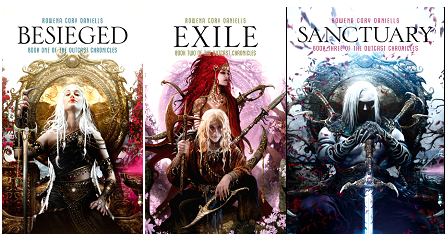
This week I’m waiting for The Outcast Chronicles by Rowena Cory Daniells. It is a YA Fantasy trilogy which will come out this summer:

Besieged (expected publication: June 26th 2012 by Solaris)

Exile (expected publication: July 31st 2012 by Solaris)

Sanctuary (expected publication: August 28th 2012 by Solaris)

From Goodreads:

“For nearly 300 years the mystics have lived alongside the true-men, who barely tolerate them, until…

King Charald is cursed with a half-blood mystic son. Sorne is raised to be a weapon against the mystics. Desperate to win his father’s respect, Sorne steals power to trigger visions. Unaware King Charald plans their downfall, the mystics are consumed by rivalry. Although physically stronger, the males’ gifts are weaker than the females. Imoshen, the only female mystic to be raised by a brotherhood, wants to end the feud. But the males resent her power and, even within her own sisterhood Imoshen’s enemies believe she is addicted to the male gifts.

Sorne tries, but cannot win the respect of true-men. When he has a vision of half-bloods in danger he has to ask himself where his loyalty lies.

Convinced he can destroy the mystics, King Charald plans to lay siege to their island city. Will Imoshen win the trust of the mystic leaders and, if she does, will she believe the visions of a half-blood?”

What are you waiting on this week?

« Clear Your Shelf » Giveaway Hop (over)

Welcome to my « Clear Your Shelf » Giveaway! It is hosted by Kathy @ I am a reader, not a writer and it runs from Friday, June 15th to Wednesday, June 20th 2012.

Here you can win ONE of the five following books:

Young Adult books:

Catching Fire (The Hunger Games #2) by Suzanne Collins (UK edition)

Mockingjay (The Hunger Games #3) by Suzanne Collins (UK edition)

I am Number Four by Pittacus Lore (UK edition)

Darker Still by Leanna Renee Hieber (US edition)

Adult fiction:

Confessions of an Ugly Stepsister by Gregory Maguire (UK edition)

All books are paperbacks  in perfect condition.

Giveaway information:

  • The giveaway is open until Wednesday 20th June at midnight (BST time)
  • To enter please fill in the contact form below with your name, email and the book you wish to win. Please state if you’re a blog follower (by email or RSS feed) or a Twitter follower or if you like my page on Facebook, as this will grant you an extra entry.
  • Entrants must be  at least 13 years of age.
  • This giveaway is open Internationally.
  • The 5 winners will be notified by email and will have 72 hours to reply or a new winner will be chosen.
  • For official giveaway rules and guidelines please consult the I am a readre not a writer page.
  • Privacy information: no information given for this giveaway will be used for other purpose than this giveaway. All information provided (names, emails and mail addresses) will be deleted after the giveaway.

*Giveaway is now closed*

Thanks for entering my giveaway and good luck! Feel free to leave a comment…

Visit the other giveaways here.