ROW80 Check-In 6 : Sarah J. Maas’ success story

Hello gentle reader,

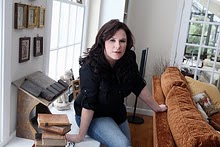
Today I want to share with you the writing journey of Sarah J. Maas. She is 26 years old and a YA Fantasy author. Her debut novel, THRONE OF GLASS, was released last Tuesday by Bloomsbury. Already her novel has received hundreds of five-star reviews on Goodreads, it has been quoted in the LA Times and the Wall Street Journal published a whole article about it.

So I haven’t read Sarah’s book yet, and I won’t go into details about it here. The reason I mention Sarah and her book is that she started writing Throne of Glass TEN YEARS AGO. It took her ten years to write and rewrite her book, to find an agent, to sell the book and have it published. TEN. YEARS.

On Tuesday she published a guest post on The Story Siren’s book blog explaining her ten-year journey. It’s a great read, so I have included it below.

Revision, Revision, Revision.
by Sarah J. Maas

“Getting to August 7th has been a journey over ten years in the making. I began writing THRONE OF GLASS back in March of 2002. I was sixteen years old, had a vague idea of where I wanted the story to go, and absolutely no clue how much this book would wind up shaping and changing my life.

My FictionPress origins have been discussed a fair amount in various places around the internet, so I’ll just give you the quick and dirty account of those first six years. A month into writing TOG (then titled QUEEN OF GLASS), I decided to throw up the first few chapters on FictionPress. I got such an enthusiastic response that I kept writing—and kept sharing. And in the six years that the story was on the site (the very, very rough drafts of the first three books of the series wound up being shared), it became the most-reviewed story on FictionPress. It was my FP readers that encouraged me to get published. And one day in Fall of 2008 (a few weeks after the final chapter of QOG/TOG had been posted), their support gave me the courage to remove TOG from FP in order to pursue publication.

By that time, I’d already started a secret, massive overhaul of the series, word for word, scene for scene, adding in new plotlines, expanding the world… In the six years since starting the series, I’d graduated from high school and college, and learned a hell of a lot about writing and books and storytelling. Of course, none of that taught me anything about the realities of publishing. Like…what the average book length should be.

So, it’s with a bit of horror and shame that I admit I sent out three very preliminary queries…

With a 240k-word manuscript (for Book 1).

I got the three rejections that I deserved.

It wasn’t until the amazing Mandy Hubbard (YA author and agent…and an FP fan of mine) offered to read the ms and give feedback that I understood was NEVER going to get an agent with a 240k-word fantasy novel. And it was Mandy who found places for me to cut and trim and condense…until we had a 150k-word manuscript. A few months and some more revisions later, (in December 2008), I sent out a round of queries…and landed my amazing agent from that batch.

We actually spent several months revising the manuscript—paring it down even more (I think it was around 140-145k words by the time we went on submission). My agent went on maternity leave for several months after that, and we did one FINAL round of revision when she came back.

Then, in summer 2009, we went on submission to editors. I know the internet is full of overnight YA mega-deal stories, but mine was not one of them. It took until December of 2009 for us to hear that an editor at Bloomsbury was VERY interested.

But.

(BUT!)

They wanted Book 1 to be more self-contained (it originally had a very open and unresolved ending). And they WERE super-interested…but only if I could present a detailed outline for the mega-revision I’d do if they offered.

So, after brainstorming with my agent, we came up with a solution: I’d split Book 1 in half. Not chronologically, but rather just PULL one of the major plotlines (there were two) and set it aside to make a brand-new Book 2 (thus pushing back other books in the series). And then I’d completely revamp the remaining plotline to contain a new, resolved ending.

What’s somewhat ironic is that in my initial rewrite of TOG (back before I began querying, and before Mandy even came along), I’d removed one of the original elements of Book 1, which was this competition to find the new personal assassin for the King. BUT, when it came time to come up with this outline for Bloomsbury, that competition was the FIRST thing I thought of—so I wound up bringing that plot back into the story.

So, we submitted that proposed outline. And waited.

And waited. And waited. And in March of 2010, we got our offer, based on that outline.

Once the celebrating had worn off, I realized that I now actually had to rewrite Book 1 from the ground up. It took me several months, but I eventually turned it in. Only to get an edit letter six months later (…yep.) that involved HEAVY amounts of revision. Nearly another rewrite. But I got through it (we’re into 2011 now), and I got through her second, super-intense revision letter, and then her smaller, surface-level third letter, and then…we were done (in late summer 2011). Of course, then there were copyedits and first pass pages and all of that fun stuff afterward, but by comparison, that stuff felt like a walk in the park.

As I’ve been writing all of this out, I’ve been realizing that this looks sort of bad. THAT many rewrites and revisions? You’re probably thinking that this was the most broken and un-publishable book of all time (…I certainly like to think that is NOT the case.). But honestly? It was hell. It was exhausting, and it was the hardest thing I’ve ever had to do.

But each of those revisions and rewrites brought me closer to my true vision for the book, even if I didn’t realize it at the time. Each edit letter gave me the opportunity to make the story better, to spend MORE time figuring out the world and the characters and the plot. It allowed me to learn SO much as a writer—but also as a person. I learned about my own strength—about just how far I was willing to go to make this book a reality. I learned that I CAN do anything I set my mind to, and that it might take years, but it is worth it.

And I wouldn’t change a single moment of it. Not a single one.

So when I walk into a bookstore today and see that book on a shelf, I’m not just seeing my book, and the story that is in my very soul. I’m also seeing over ten years of work—I’m seeing PROOF that “impossible” is nothing but a word. I’m seeing my dream, at long last, become a reality.”

So this is Sarah’s story. I hope it can give hope to all of you, fellow ROWers and would-be-published writers out there.

Now on to my ROW80 goals:

I’m still off work, which means that my daily schedule changes from one day to another. I haven’t been writing as regularly as I want to, but

1-       Write everyday: 3/7 days.

2-       Self-edit The Last Queen: a little bit done this week.

3-       Continue writing the first draft of The Cursed King: not done this week.

Here is the Linky for the other check-in posts. How are you other ROW80 writers doing?

Waiting On Wednesday – 16

“Waiting On Wednesday” is a weekly event, hosted by book blogger Breaking The Spine, that spotlights upcoming releases that we’re eagerly anticipating.

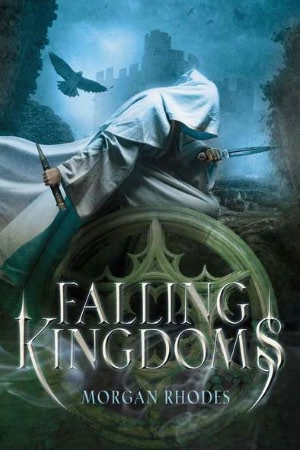
This week I’m waiting on Falling Kingdoms by Morgan Rhodes (Expected publication: December 11th 2012 by Razorbill). It is a YA High Fantasy novel and I can’t wait to read it. For those of you who don’t know, I write YA High Fantasy myself, and I’m very curious to see what Michelle Rowen (author of romance novels with vampires) has come up with under the pseudonym of Morgan Rhodes…

From Goodreads:

“In a land where magic has been forgotten but peace has reigned for centuries, a deadly unrest is simmering. Three kingdoms grapple for power—brutally transforming their subjects’ lives in the process. Amidst betrayals, bargains, and battles, four young people find their fates forever intertwined. The only outcome that’s certain is that kingdoms will fall. Who will emerge triumphant when all they know has collapsed?”

What do you think? Is this book on your TBR list?

And what are you waiting on this week?

Book of the Week – 12

This week I’m reading Hollow Pike by British author James Dawson (published in February 2012 by Orion Children’s Books). It is a 2012 debut and a YA Paranormal novel. I don’t usually read books about witches, but this one has an interesting blurb and a gorgeous cover that I couldn’t resist…

From Goodreads:

“Something wicked this way comes…

She thought she’d be safe in the country, but you can’t escape your own nightmares, and Lis London dreams repeatedly that someone is trying to kill her. Lis thinks she’s being paranoid – after all who would want to murder her? She doesn’t believe in the local legends of witchcraft. She doesn’t believe that anything bad will really happen to her. You never do, do you? Not until you’re alone in the woods, after dark – and a twig snaps…

Welcome to Hollow Pike – where witchcraft never sleeps.”

Visit the Hollow Pike website here. Watch the book trailer here.

What are you reading this week?

ROW80 Check-In 5: Susan Dennard’s Advice on Writing a Saleable Book

Welcome gentle reader,

today again I thought I would share with you some writing advice from a published author.

Susan Dennard is a YA author repped by Sara Kendall of NCLit. Her debut novel, SOMETHING STRANGE AND DEADLY, is available now from Harper Teen. Susan has an AWESOME blog where you can find invaluable advice on the craft of writing, on the art of storytelling and revising, on the querying process, on the value of critique partners, on grammar and style and on genres. She regularly writes for the Publishing Crawl blog and you can also find her on Twitter, Goodreads and Facebook.

I really recommend you check out her blog and if you need convincing, I have posted below one of her blog posts entitled Writing a Saleable Book. It was first posted by Susan on the Let The Words Flow website on August 10th 2011. You can read the initial post here.

“Recently, someone asked me:

What is required to make a book saleable?

That is a rather large-in-scope question, and as such, I’m afraid my answer will be kinda vague. All the same, I thought it was worth taking the time to answer for everyone.

My super broad response is the:

The most important thing in writing a saleable book is writing a good book.

I am 100% convinced that if you have a well-written, compelling story, your novel will eventually find an agent/editor. Period.

That said, there are a few critical things that define a “good book”. Again, these answers are vague, and I’d be more than happy to get specific for anyone with questions (ask in the comments, please!).

Parts of a Good Book

1. First and foremost, the story absolutely most flow. Stilted dialogue, poor pacing, or unreadable grammar/syntax will kill a manuscript. A reader can put up with slow scenes if it all flows beautifully, and a reader can put up with a less-than-compelling plot if it’s smooth.

The way to ensure your novel flows is to revise-revise-revise. Learning to master the written word is absolutely critical. Few people write stunning first drafts, but give them a red pen, and they can line-edit their words into perfect prose.

2. Secondly, a book needs a compelling plot with tension on every page. The story builds, the tension builds, and everything ends in an explosive climax (and this applies to any genre—by explosive I simply mean all aspects of the story finally come together).

This is something you can learn by reading about writing, taking workshops, or simply reading heavily in the genre you write. There are structure to stories (three-act is the most common), and your job is to practice until these are second nature when you write/revise.

Again, my first drafts are rarely good examples of compelling plot, but I can revise them until they shine and all the subplots weave into the main plot.

3. Third, a book needs a cast of characters that readers care about. The best way to achieve this is to ensure the MC has a desperate need—secondary characters too. This is also something you have to learn by doing/practicing.

4. Fourth, the book must have high stakes. “High stakes” simply means we are invested in whether or not the MC achieves his/her goal. What will she lose if she fails to reach her goal? And why does that matter? A common reason a book fails to compel readers is low stakes—if we don’t care about the MC’s failure, we don’t care about reading the book.

Finding Problems

My biggest suggestion in terms of how to address these 4 components is to start critiquing and getting your work critiqued. Either find a critique partner, join a critique group, or stay active in a critiquing community. This is no doubt something everyone here already knows, but it’s so important (in my opinion) that I just have to emphasize it!

When you see others make mistakes, you learn to spot them in your own writing. Additionally, we, the writers, are often too close to our novels to see them “as a whole”. CPs and betas have the needed distance to spot problems

When I got an agent, Something Strange and Deadly had been through 4 crit partners and 2 betas. Did I always listen to my CPs’/betas’ comments? No—you must decide and filter feedback—but it was thanks to my CPs/betas that I caught some of my biggest mistakes (character inconsistencies, flat climax, plot holes, etc.).”

I hope this post by Susan helped!

Now for my ROW80 goals:

After 10 days off (I was travelling) I have been somewhat back on track for the past three days.

1-          Write everyday: 3/7 days.

2-          Self-edit The Last Queen: done.

3-          Continue writing the first draft of The Cursed King: done.

Here is the Linky for the other check-in posts. How are you other ROW80 writers doing?
Waiting On Wednesday – 17

“Waiting On Wednesday” is a weekly event, hosted by book blogger Breaking The Spine, that spotlights upcoming releases that we’re eagerly anticipating.

This week I’m waiting on The Essence (The Pledge #2) by Kimberly Derting (Expected publication: January 2013 by Margaret K. McElderry). It is a YA Dystopian novel and the second book in The Pledge series. I was a bit surprised when I first heard about this book, because to me The Pledge was a stand-alone novel, but it seems that Kimberly Derting has more to write about Charlie, Max, and the country of Ludania…

There is no summary available yet, so I’m just going to include here the blurb for The Pledge.

From Goodreads:

“In the violent country of Ludania, the classes are strictly divided by the language they speak. The smallest transgression, like looking a member of a higher class in the eye while they are speaking their native tongue, results in immediate execution. Seventeen-year-old Charlaina has always been able to understand the languages of all classes, and she’s spent her life trying to hide her secret. The only place she can really be free is the drug-fueled underground clubs where people go to shake off the oppressive rules of the world they live in. It’s there that she meets a beautiful and mysterious boy named Max who speaks a language she’s never heard before . . . and her secret is almost exposed.”

Have you read The Pledge? Are you looking forward to its sequel?

What are you waiting on this week?

Book of the Week – 11

This week I’m reading a vampire book again: The Immortal Rules by Julie Kagawa (first published in April 2012 by Harlequin Teen). I have never read Julie Kagawa’s other YA series The Iron Fey but I couldn’t wait to get my hands on her new vampire series Blood of Eden. Book 2 of this series, entitled The Eternity Cure, is scheduled to be released in May 2013. In the meantime, I suggest you check out Book 1…

From Goodreads:

“In a future world, vampires reign. Humans are blood cattle. And one girl will search for the key to save humanity.”Allison Sekemoto survives in the Fringe, the outermost circle of a vampire city. By day, she and her crew scavenge for food. By night, any one of them could be eaten.

Some days, all that drives Allie is her hatred of “them.” The vampires who keep humans as blood cattle. Until the night Allie herself is attacked–and given the ultimate choice. Die…or become one of the monsters.

Faced with her own mortality, Allie becomes what she despises most. To survive, she must learn the rules of being immortal, including the most important: go long enough without human blood, and you will go mad.

Then Allie is forced to flee into the unknown, outside her city walls. There she joins a ragged band of humans who are seeking a legend–a possible cure to the disease that killed off most of humankind and created the rabids, the mindless creatures who threaten humans and vampires alike.

But it isn’t easy to pass for human. Especially not around Zeke, who might see past the monster inside her. And Allie soon must decide what–and who–is worth dying for.”

Visit the Blood of Eden official website here.

What are you reading this week?

Michelle Hodkin’s Secret to Getting Published

Michelle Hodkin is the author of The Unbecoming of Mara Dyer, a YA paranormal novel and one of my favourite books. The second book in the Mara Dyer series, entitled The Evolution of Mara Dyer, is scheduled to be released on October 23d, 2012. Michelle Hodkin has an amazing blog, that I strongly recommend you check out.

Back in November 2010, Michelle published a post on her blog entitled My secret to getting published. It is an AWESOME and inspirational post, and I have decided to share it with you, would-be-published writers out there.

If you like it, do comment on Michelle’s blog and let her know on Twitter. She’s amazingly nice, so don’t be afraid. And buy The Unbecoming of Mara Dyer, while you’re at it.

So, without further ado, here is Michelle’s secret to getting published:

“So! This past weekend, I got an email from a lovely woman the other day asking me to tell her my “secrets” to getting Simon & Schuster to publish my novel. I was SUPER surprised to get the email and super, super flattered! So I dove into my response with enthusiasm—I started writing back to her, and kept writing, and my response became very, very long. And I thought—well, I never expected anyone to email me asking this question, but maybe, since one person did, more people want to know? About my super magic secret to getting my beloved Simon & Schuster to publish THE UNBECOMING OF MARA DYER?
Well, do ya?
Okay, here it is: I worked hard. 
You thought I was going to tell you that I had no secrets, right? Well, gotcha! Because that’s my secret. Let me explain. When people talk to me about my book or the book deal or I’m confronted with the (very few) people I don’t know who have read it (no ARCs yet, so this number is small), I am very quick to brush off the compliments with a response about how lucky I was and am. You see, I am not the best taker of compliments, even though it makes me GLOW to hear good things. Like, there’s nothing that puts a smile on my face faster than hearing something nice about my book, or the fact that people care enough to want to read it. But when it’s time for me to respond? I’ll say it was the right place, right time, right agent, right editor, right book. And those things are all true to an extent; there are a bunch of folks who also work super hard on their novels and haven’t been published. Yet.
But I have a lot of faith, a lot of faith, that they will be.
Because you dedicated, aspiring authors are writing when your infants are napping and the dishes are done and the pets are fed and when the husband isn’t bothering you, in snatches of 5, 10, or however many minutes you get. You are writing on your thirty minute lunch break from the mentally exhausting day job. You are reading hundreds of industry blogs every day (my count was 115 industry, book, author, and writing blogs before publication, now I am nearing 200) to learn the difference between a problem query and a problem novel. You are reading dozens of novels, both in your genre and out of your genre, and you are reading with a critical eye to find out why these books work, not why they don’t. You are attending writers conferences, in person or online. You are on Twitter, not just chatting (which is valuable) but observing; watching what agents and editors say and following query and #kidlitchat and #yalitchat discussions, whether you agree with the tenor of those discussions or not.
And like me, you revise until your grey matter aches. You expose your words to public critique. You send your book out to beta readers you’ve found (through Twitter or Absolute Write or Verla Kay or maybe just your friends and family, who can be just as helpful) and discover that more important than getting critiques is knowing what crits to take and which to leave, and you have no idea, you really don’t, because you’re flying blind just like I was. But you do it and you do it again and eventually you find a rhythm; you figure out which of your readers excel at patching plot holes and which excel at consistency and which ones to go to when you just need to hear “OMFG THAT SCENE IS SO HOT,” which is just as important.
And all of this writing and reading about writing and revising and observing may mean that your number of watchable television shows dwindles from a meager eight to three to one, like it did for me. It may mean that after three or five or thirty rounds of revisions, you’ve only been able to tear yourself away from your laptop to watch seven movies in a year, like me. It may mean that the mountain of laundry has eaten your laundry room and is threatening to spill into the kitchen (guilty) or that your children are becoming jealous of your “imaginary friends.” You are working hard, and for no guaranteed payoff.  But that dedication, if you keep at it, will pay off. Maybe your first novel isn’t THE novel. Maybe it will be your eleventh novel that takes the publishing world by storm. Or maybe it will be your first—maybe you will have a dream that so consumes you that you have to write about it and the passion you feel for your story is so strong that readers can feel it, too. But either way? You will have worked hard. Because writing for publication isn’t easy. Not for me or for any of the writers I know and not even for the superstar writers out there. If you have been writing for 10 years you will face challenges and if you’ve been writing for ten months? You will face others.
So the only secret to getting published?
Keep at it.”

A Writer in the Spotlight – Susan Dennard

Something Strange and Deadly, a YA historical novel with zombies and a steampunk vibe, is out TODAY! And I have the pleasure to interview debut author Susan Dennard about the release and her writing process. As a reminder, the idea behind the “Writer in the Spotlight” feature is that published authors are the best source of advice for us, would-be-published writers.

Author : Susan Dennard

Genre : Young Adult, Fantasy

Location: Germany

Website: http://susandennard.com

Official Book Trailer: http://www.youtube.com/watch?v=bnQuHXPTUP0&feature=youtu.be

Goodreads: http://www.goodreads.com/author/show/4499623.Susan_Dennard

Twitter: www.twitter.com/stdennard

Books : Something Strange and Deadly series: Something Strange and Deadly (2012), A Darkness Strange and Lovely (2013) from Harper Teen.

My interview (22/07/2012):

On writing

Did you always know you wanted to be a writer?

I can’t say that I ALWAYS knew. I didn’t start putting my daydreams onto paper until I was around 13 or so. After that, all my dreams of a becoming a marine biologist vanished in my obsession with writing (though I was a TERRIBLE writer). Of course, I was such a snotty teen, though, that I refused to be taught–I didn’t want to learn to write since I thought I was already amazing. Ha! Then, when I went off to school to major in creative writing, I got side-tracked by marine biology. Funny how those things work!

I still love science and the marine world. College and graduate school were amazing experiences. In fact, the only reason I returned to writing was because my husband and I would have to live apart if I pursued my PhD. So–rather than separate–I moved with him to Germany, started writing (and studying the craft of writing) full-time, and the rest is history! 😉

When and where do you write?

I write in my office everyday. Or…I do something writing-related everyday. I’m very strict about this. My rule is that if my husband is working, I ought to be too! So either I’m BICHOK-ing (butt-in-chair, hands-on-keyboard), revising, or working on “administrative stuff” (emails, blogging, self-promotion, etc.).

What do you say to people who want to be writers?

Do it! Sit down and write. That’s the only way to achieve your dreams–but make sure you dream big too! I think success is three-part: aiming high, working hard, and not giving up. It’s so EASY to let dreams slide away when things take a while or don’t work out as you’d hoped. But you CAN’T give up. My mantra before I was published and to this day is: “It’s not a race. You know what you want, Sooz, so just keep on plugging away until you get there.”

I want to share my stories with as many people as possible, and so that’s what I’m trying to do!

On Something Strange and Deadly

To write this book, where did you get your inspiration from? (How did you come up with a historical novel with zombies?!)

Well, the initial premise came from a dream. My brother was missing; I knew I’d do anything to save him; and the only people who could help  mewere a ragtag team of outcasts. I took that idea and fleshed it out. I knew I wanted a paranormal/creepy element, and I settled on ghosts and corpses after rummaging through what scared me most! It sounds so silly, but honestly, I scanned my shelves trying to pick out which books made my skin crawl. If I was scared, then surely I could transfer that fear onto the page–and nothing creeps me out more than ghouls and zombies!

The historical aspect–specifically 1876–came about because I knew I wanted a steampunk vibe (but not 100% steampunk). I adore 19th century literature and history, and after some preliminary research, I discovered the Centennial Exhibition (the first American World’s Fair). I thought, “Whoa! What a great place for walking corpses! What if…what if my team of outcasts are actually zombie-fighters brought in to protect the Exhibition?”

And that, my friends, is how Something Strange and Deadly came to be.

Why did you choose to write for young adults?

I’m not sure I ever consciously set out to write YA…I just knew I wanted to write a book that I would love. And of all the books I’ve read, the ones that stay with me the most are the books I enjoyed growing up and during my teen years. I knew I wanted to write THAT sort of book, and so…I did! 🙂

 What are you working on now?

Right now, I’m writing the third book in the Something Strange and Deadly series (so weird to work on it when book 1 isn’t even out yet!) as well as a novella set before the events in the trilogy. I’m also working on some other projects–Screechers, an epic fantasy in a desert world; an untitled space opera with author Sarah Maas (Throne of Glass, Bloomsbury 2012); and a fluffy, fun contemporary.

You can buy Something Strange and Deadly on Amazon here. And you can enter the Something Strange and Deadly Outbreak giveaway here.

ROW80 Check-In 4: Rebecca Maizel’s Top Ten Tips for Budding Writers

Welcome gentle reader,

For this fourth ROW80 Check-In, I want to share with you a post first published by Rosanna MKB Digital on the My Kinda Book website on July 17, 2012. It gives YA bestselling author Rebecca Maizel’s top 10 tips for writers and I find it highly inspirational. Feel free to check out the original post here and to visit Rebecca’s blog here.


“10. Read aloud. What sounds good in your head has a different rhythm when read aloud. Dialogue especially. Read aloud before you give your manuscript to your trusted readers.

9. When you are revising your manuscript, pick out the metaphors, similes, and personification. Make sure they are original and that they add to the theme of your story.

8. If you want to write, you must read. Read! Read! Read! Read stories that you don’t think will interest you. Be surprised. Be inspired by other people’s genius.

7. Don’t give your work to your friends unless these friends are writers or he or she loves to read. They love you so they will lie to you. Give your work to friends who want to see you write incredible stories and will give you the hard critique so your work improves.

6. Read what’s in the market. “I don’t read” is a phrase I hear a lot from young people. How can you write a story if you don’t study story?

5. Do a read of your manuscript and circle the amount of times you wrote, “I felt.” Then revise as many of those sentences as you can without that phrase. Show the feeling, don’t tell the feeling. We want to experience it with the character.

4. Avoid laundry lists of description. Example: Rebecca Maizel wore black pants, a black shirt, and black heels. Her hair was styled up and it was dark brown. BOOOOOOOOORING.

3. Please give your villains motivation! A villain who is evil for no reason isn’t believable. Even Darth Vader had a good side. Everyone, even those who challenge us are three-dimensional. It’s even scarier if you can bring them to life in fiction.

2. Every main character must have a want – a desire. If you can’t answer this statement: My character wants _________, then you don’t have a story. If nothing is at stake, your readers will stop reading.

1. Write what you love. Because you have to. Because without this story you won’t be living a fulfilled life.”

Now for my ROW80 goals:

1-     Write everyday: 5/7 days. This week AGAIN I wrote every day except for Tuesday and Wednesday. Getting to 7/7 is hard.

2-      Self-edit The Last Queen: done. A little bit.

3-      Continue writing the first draft of The Cursed King: not done this week.

Also, this week on my blog, you could:

–     read the first and last lines of my current WIP. Comments are welcome!

–     read an exclusive interview with YA author Lisa M. Stasse about her writing process.

Here is the Linky for the other check-in posts. How are you other ROW80 writers doing?

A Writer in the Spotlight – Lisa M. Stasse

This week again I was lucky enough to have a YA author give me an exclusive interview! The idea behind the “Writer in the Spotlight” feature is that published (and bestselling) authors are the best source of advice for us, would-be-published writers. Today’s interview is with debut author Lisa M. Stasse. Her Dystopian novel,  The Forsaken, is already available in the US and it will be out in the UK on August 2d, 2012.


Author : Lisa M. Stasse

Genre : Young Adult, Dystopian

Website: www.lisamstasse.com

Official Book Trailer: http://www.youtube.com/watch?v=GtIwks26SZU

Goodreads: http://www.goodreads.com/book/show/12987192-the-forsaken

Twitter: www.twitter.com/lisamstasse

Facebook: https://www.facebook.com/lisamstasse

Books : The Forsaken (2012)

My interview (22/07/2012):

On writing:

Did you always know you wanted to be a writer?

Yep, ever since I was in high school. Either a writer or a photographer.

When and where do you write?

I usually write on my laptop in the early hours of the morning (or late at night, depending on how one looks at it!)

Do you ever experience writer’s block?

It hasn’t hit me yet. I hope it never does! I figure it might one day, but hopefully that will be many years and many books from now. 🙂

What do you say to people who want to be writers?

I tell them to read as many books as possible (which is some good advice I got from writers I admired when I asked them) and to write a little bit every single day. I read 3-5 books/week–a mix of YA and adult fiction, with a little bit of nonfiction in there too (I love travel books).

Is it better to outline and plot your novel or “go with the flow”?

I plot everything out because I’m crazy obsessive, but at the same time, I leave some wiggle room to come up with cool scenes and surprises along the way. If everything is too well-planned, then writing scenes can get boring and then the story can lose some energy.

Do you set goals for yourself as you write?

Definitely! I usually try to write a certain number of pages per day (depending on the day and the project) and I often reward myself with coffee or chocolate if I reach my goal. Of course, I often drink coffee and eat chocolate even when I don’t reach my goal, so I’m not sure how well my incentive plan is working out for me! 🙂


On “The Forsaken”:

To write this book, where did you get your inspiration from? Were you aware of the coming dystopian trend when you wrote it?

When I was writing The Forsaken, a few dystopian books were a big deal (The Hunger Games, The Forest of Hands and Teeth, The Maze Runner) but there wasn’t a huge onslaught like there is now. I pretty much wrapped up most of my book in 2010/early 2011. Books just take a while to come out. Having said that, I kind of love the giant wave of dystopian lit. It means people have a lot of choice in what they decide to read.

How did you come up with your characters? What made you choose teenagers as main characters?

Maybe I’m still a teenager at heart! And I think that that age is so great for writing complex characters–I remember when I was 16, I was a total conflicted mixture of extreme optimism and extreme pessimism. I also think teens make great characters as protagonists in a dystopian novel. Dystopians can deal with really serious and intense issues.

What type of music did you listen to when you wrote this book?

My musical tastes are all over the map, from indie rock (The Dirty Projectors, Ryan Adams, Cornershop, Long Winters) to dubstep (Deadmau5, Skrillex) and dance (La Roux), to old school classic rock (Beatles, Neil Young) and to really weird stuff as well (Salem). I also love Florence and the Machine, as well as a lot of singer-songwriters (Cat Power and Feist).

What are you working on now?

I’m finishing up copyedits on Book 2 of THE FORSAKEN trilogy.


Reading advice:

Which authors inspire you now?

Margaret Atwood, Suzanne Collins, James Dashner, JK Rowling, Orson Scott Card, Stephen King, Carrie Ryan, Tahereh Mafi, Jeanette Winterson, Leigh Bardugo, Veronica Rossi, and Veronica Roth.

Any YA books you would recommend?

Divergent, Looking for Alaska, Shadow and Bone, The Hunger Games (obviously!), Paper Towns, The Forest of Hands and Teeth, Shatter Me, Ender’s Game, The Maze Runner (and there’s probably a hundred more but those are the one off the top of my head!).

Thanks for the interview Lisa!

THANK YOU FOR HAVING ME!!! I really appreciate it–it was fun!!! 🙂

The Forsaken will be out in the UK on August 2d, 2012. Buy it on Amazon here.