ROW Check-In 8: Elizabeth May on Writerly Misconceptions

Hello gentle reader,

so I had a tough week. I was jet-lagged and I was having doubts about this whole “let’s get my book published” thing. So I didn’t write. Instead, I read great books and decided to postpone my writing until next week. And I found a post by debut author Elizabeth May. She posted it her blog on November 22d, 2011. Since then she has sold her YA steampunk novel THE FALCONER and it will be released in May 2013.

Here is her post:

Writerly Misconceptions: YES, YES, YOU DO WORK

Basically, I’ve come to understand that aside from the other things I have to do (that dissertation to finish, that photography business to run, that teaching anthropology thing I do), I have to write sometime.

Have to.  Because, while it might have been a hobby before, writing is now one of my jobs.  I have a trilogy to plan.  A sequel I should probably be writing as I type up this blog…  I am doing things!  Important things!  My heroine is a mess and I have to FIX HER.

So when I take a day and sit on my ass in front of the computer for hours, that’s not me being lazy.  That’s me bringing home the bacon.

The other day I asked Mr. May to do some task that I really can’t recall right now because I’m only on my third cup of coffee.

His response?  ”Wait, weren’t you home all day?”

Subtext?  ”You totally could have done this thing because while I was out working, you were sitting at home.”

It’s a totally innocent comment.  He’s right.  I was home all day.  I made two pots of coffee, clicked around on mah laptop, answered a few business e-mails, worked a bit on my dissertation write up that my supervisor is demanding — and oh yeah! I wrote some of that sequel.

Now, before anyone judges Mr. May (remember that I love him and he is not a writer), he totally didn’t mean this to sound dismissive of my work.  He is voicing a very common misconception about writers.  That writing a book is easy work* and that because most of us work from home, we are ”lucky” not to have to “go to work.”

Basically, that we are less busy because writing is dependent upon the rules and hours authors set for themselves.  If we all had offices away from the home, perhaps this misconception wouldn’t exist.  But because we prefer comfortable spaces (homes or coffee shops or cafes, or my favourite place of all, the couch) it’s perceived as, essentially, laziness.  Because I could be cleaning instead of typing.  I could be doing something active.  I could be going out to run errands.  Instead, I’m being sedentary.**  Some people believe writing is not a “real job” for all of these reasons.

Because this is my significant other, I had to set this straight.  I said, “Assume that whenever I’m staying home for the day, it is my designated ‘work on book’ day. It is not my ‘clean ALL THE THINGS’ day.”

And maybe, if I finish a chapter and feel like cleaning, I will clean.  But not before!

Mr. May, of course, apologized.  Because when people make comments like this, they don’t generally realize they’re speaking from this socially engrained idea that “work” equals “being active,” or that a “real job” requires “leaving the nest, staying out from 9-5.”***

So I’m clarifying this right here, right now.  Writing is work.  Writing is a job.  Writing is not for lazy people.  We don’t write because it’s easy.  That is not why we sit in front of a laptop or a blank sheet of paper for hours.  That is not why we spend years writing practice books that no one will ever read.  That is not why we spend all that time querying and getting rejections.  And that is certainly not why we write book after book.

Because we’re lazy?  No.  It’s because we’re compelled to.  It’s in our nature.  That is the only explanation for spending years writing unpublishable, crappy manuscripts to get to that point where our work is good enough to put out into the world.

So if you’ll excuse me, I will continue to sit on my couch and work.  Because this is how books are made.”

___________________________________

* Has anyone heard this? “I could write a book if I wanted!”

**  I’m being sedentary because I’m writing a damn book.

*** I’ve also heard the phrase used in reference to “non-career-like jobs” — the conceptualization of “real jobs” is limited to a few vocations, and let’s face it, it’s a shitty thing to tell anyone.  Right along the lines of “write a ‘real’ book” or “read a ‘real’ book.

How are you other fellow ROWers doing? You can visit them here.

Stacking The Shelves

Stacking The Shelves is a weekly meme hosted by Tynga @ Tyngasreviews. The idea is to showcase the books that we’ve recently won/bought. I have never felt the need to participate in such a meme, since until recently I had never won a book, and I shared the books I bought in my Book of the Week feature. But this month I have actually won/received books so I thought I’d share the news with you!

Won:

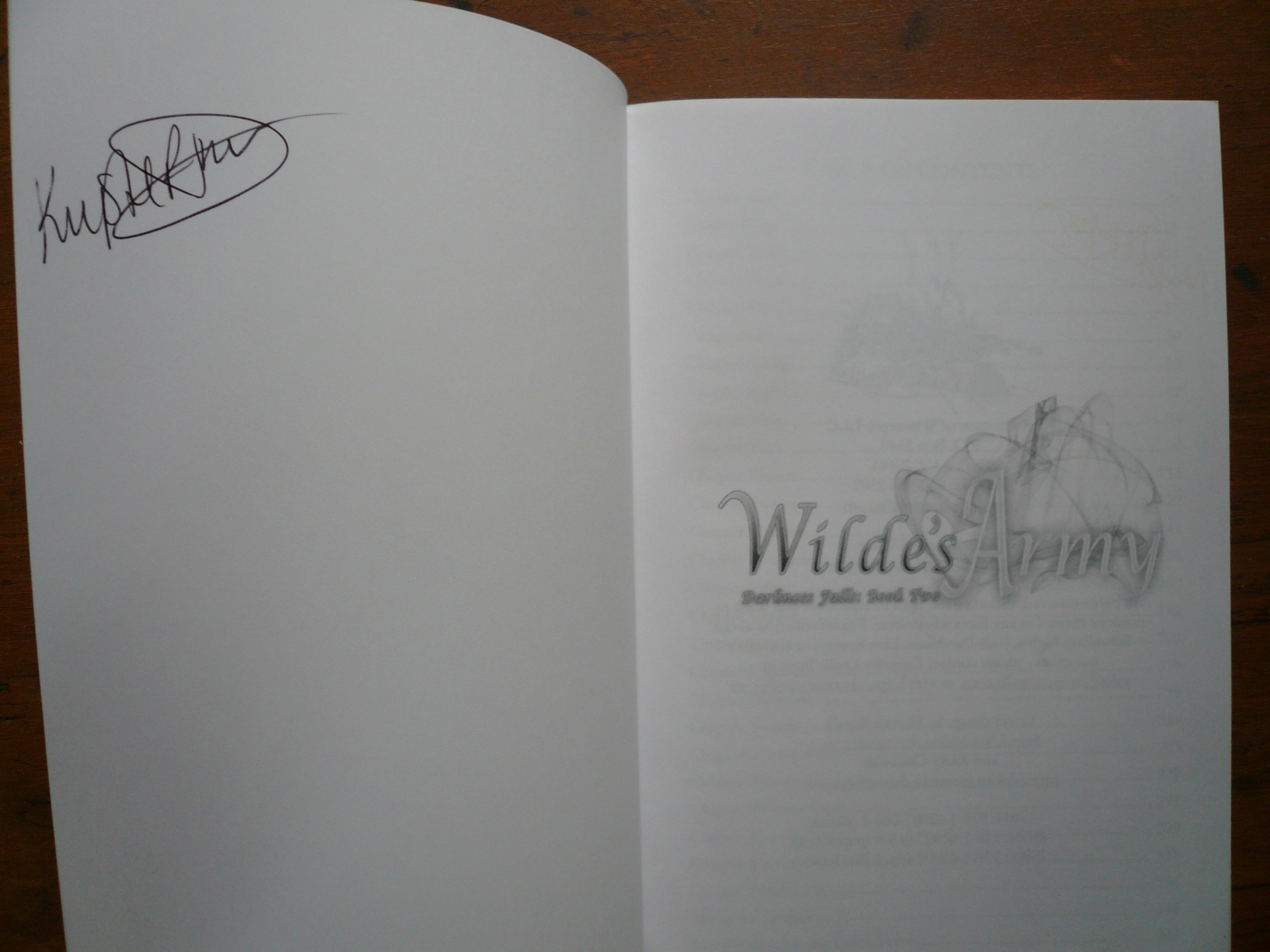
Wilde’s Army (Darkness Falls #2) by Krystal Wade via her website.

Look! It’s signed!

Received as a gift from the author:

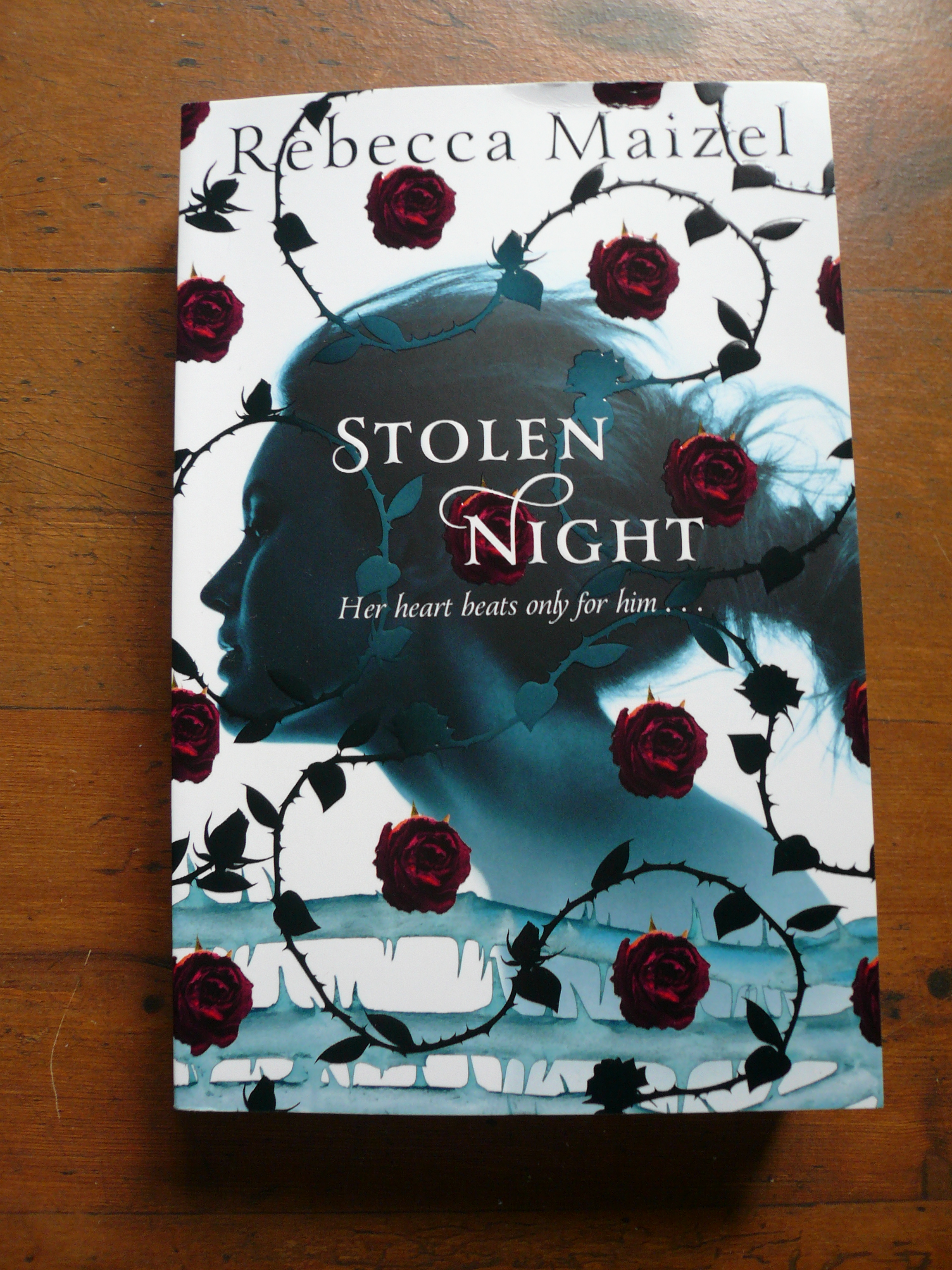
Stolen Night (The Vampire Queen #2) by Rebecca Maizel.

Look! It’s signed too!

Bought while in the US

Something Strange and Deadly by Susan Dennard

Once (Eve #2) by Anna Carey

Underworld (Abandon #2) by Meg Cabot

Girl of Nightmares (Anna #2) by Kendare Blake

What did YOU add to your shelves this week?

Waiting On Wednesday – 17

“Waiting On Wednesday” is a weekly event, hosted by book blogger Breaking The Spine, that spotlights upcoming releases that we’re eagerly anticipating.

This week I’m waiting on TAKEN by Erin Bowman (expected publication: April 16th 2013 by HarperTeen). This a YA Dystopian novel and a 2013 debut. I’m excited about this release for 3 reasons:

– it’s a YA dystopian novel and I usually love those.

– have you seen this cover??!

– Erin Bowman has a great blog that you should check out. I can’t wait to finally read her book.

From Goodreads:

There are no men in Claysoot. There are boys—but every one of them vanishes at midnight on his eighteenth birthday. The ground shakes, the wind howls, a blinding light descends…and he’s gone.

They call it the Heist.

Gray Weathersby’s eighteenth birthday is mere months away, and he’s prepared to meet his fate–until he finds a strange note from his mother and starts to question everything he’s been raised to accept: the Council leaders and their obvious secrets. The Heist itself. And what lies beyond the Wall that surrounds Claysoot–a structure that no one can cross and survive.

Climbing the Wall is suicide, but what comes after the Heist could be worse. Should he sit back and wait to be taken–or risk everything on the hope of the other side?

What do you think? Is this book on your TBR list?

And what are you waiting on this week?

ROW80 Check-In 7: What I learned at WriteOnCon

Hello gentle reader,

this week my writing schedule was completely thrown off, thanks to WriteOnCon.

On Friday I did a recap of the online writers conference WriteOnCon and today I thought I could go over a few things I learned during this crazy week. YA writer Aimee L. Salter already wrote a great blog post on this topic and I suggest you read it since she really made the most of the conference (she received six full manuscript requests and a direct referral to an editor!). I was less dedicated than her to fully take advantage of the conference (I only spent a few hours a day in front of the computer) but I did learn a few things worth sharing if you ever want to get published traditionally …

1)      Write an awesome book first.

Having a successful author platform and thousands of followers won’t do any good unless you have a great book to sell. Ultimately, agents and editors want an amazing book that will blow them away. The author platform and the followers will only be the “icing on the cake”.

2)       It’s a crowded world out there.

I read dozens of awesome queries on the WriteOnCon forums. These writers are going to get published, I have no doubt about it. And instead of being depressed by the prospect of having to “compete” with all those great writers, I found that reading their work on the forums  was motivating. Because now I know what agents getting my query will compare it with. I know I have to be as good as all those talented writers out there.

3)      A query has to make your book stand out.

Before WriteOnCon, my query was ok. I had sent it to 5 agents and got 2 partial requests. I hadn’t committed any of the Deadly Sins of Querying. My query was professional and brief. It included the agents’ names, the title of my MS, genre and word count, and a brief summary of the plot/main characters issues. But having an average query is not enough to get published. A query has to be outstanding. I learned that I had to make every word of my query count to make it unique and to really hook my reader.

4)      Don’t rush.

You should never send a query or a manuscript that is not ready and in the best possible shape. But getting your query/MS ready and in the best possible shape takes time. And it’s OK. Take a year to polish your MS. Take two! Revise, revise, revise. If your book is really unique and awesome, it will get published regardless of trends and external influences.

5)      Seek help and feedback.

I have said it before on this blog, but WriteOnCon confirmed my thoughts: you can’t do this alone. You cannot get your MS ready and awesome without people giving you feedback on it.

6)      Listen to the advice of professionals.

They are the ones who will read your query and hopefully buy your book and turn you into the next J.K. Rowling. Listen to what they have to say. Read their blogs, watch their vlogs and seek their advice. Be professional. They are.

7)      Trust your instinct.

A conference such as WriteOnCon is a great way to get advice. TONS of advice. And by the end of the day, you’ll notice contradictions. Don’t mention world-building in your query. Mention some elements of world building in your query. Don’t say you’re planning on writing a book series. Let people know you’ve devised your book as the first installment in a series. Don’t start your novel with a dream/prologue/MC running. It’s ok to start your novel with a dream/ prologue/MC running as long as it’s essential to the story. A YA novel shouldn’t be longer than 75K. No, 80K. No, 100K.  Actually 115K is ok in some cases. The next YA trend is edgy contemporary. No, it’s historical novels… You get the point. If you listen to everyone in the profession, you end up pulling your hair out.

So, at the end of the day, trust yourself. Make your book as awesome as possible and believe in it.

YOU CAN DO THIS.

To check out other fellow ROWers, click here.

WriteOnCon 2012 recap

Hello gentle reader,

you may have noticed that I have been very quiet on this blog since Monday: the reason for this is that I was attending an online writing conference called WriteOnCon.

According to its website, WriteOnCon “is a totally free, interactive online Writer’s Conference held annually during the summer. The first Conference, held August 10-12, 2010, had over 11,000 attendees. (…) WriteOnCon is not exclusive to kidlit writers. In order to stay organized, the curriculum is focused on Picture Book, Middle Grade, and Young Adult writers. However, much of the information provided applies to all writers, and many of the publishing professionals who participate cross over.”

This was my first year attending the conference and I have found it to be incredibly useful. The 2012 conference offered live professional panels, vlogs, blog posts, forum events, competitions, critiques and book prizes.

In case you missed it, it is not too late to access some of the most interesting content. I strongly recommend you check out:

– the Live Panel of Professionals (Tuesday) and Live Panel of Professionals (Wednesday): everything you need to know about the publishing world.

– the writing and revision tips: Tips for Starting a New Project, Hooks and Killer First Lines, What is Voice, and How do I Get it?, The Importance of Craft, Plotting with 3×5 cards,  Building Characters into Real People,  Elements of Writing, The Revision Checklist and “Back to Basic” Writing Tips.

– the tips on the querying process: Knowing When Your MS is Ready to Query and The Inside Scoop: Get Your Query Noticed.

– the discussions on genres: Differences between YA and MG, Middle Grade Rules, Picture Book Query Critiques.

– there are also many tips on social media: How to Get Started With Social Media: DON’T Do All The Things! and Blogging Basics

What I liked about the conference was that there were posts for beginners (like Reading like a Book Blogger which discussed the book bloggers’ pet peeves) and other posts for more experienced writers (like Choosing the Right Critique Partners).

My favourite post was World-building in Science Fiction and Fantasy by author Mindee Arnett, mostly because I write Epic Fantasy.

The last aspect of the conference that I loved was getting feedback on my query and some of my writing in the forum. My query is still up if you want to comment on it!

Did you take part in WriteOnCon? Did you find it useful? What did you enjoy most about it? Do comment and share your experience! I’d love to hear your thoughts…

Book of the Week – 13

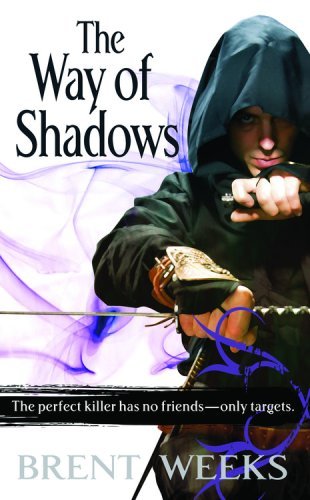
This week I’m reading The Way of Shadows by Brent Weeks. It was published in 2008 and it is the first novel in The Night Angel trilogy. As an epic fantasy book, it was nominated for the David Gemmell’s Legend Award and it is a New York Times bestseller.

I can’t believe I’ve waited so long to read this book, it is amazing! I really recommend it if you like gritty epic fantasy and great characters.

From Goodreads:

“For Durzo Blint, assassination is an art-and he is the city’s most accomplished artist.

For Azoth, survival is precarious. Something you never take for granted. As a guild rat, he’s grown up in the slums, and learned to judge people quickly – and to take risks. Risks like apprenticing himself to Durzo Blint.

But to be accepted, Azoth must turn his back on his old life and embrace a new identity and name. As Kylar Stern, he must learn to navigate the assassins’ world of dangerous politics and strange magics – and cultivate a flair for death.”

You can visit Brent Weeks’ website here.

ROW80 Check-In 6 : Sarah J. Maas’ success story

Hello gentle reader,

Today I want to share with you the writing journey of Sarah J. Maas. She is 26 years old and a YA Fantasy author. Her debut novel, THRONE OF GLASS, was released last Tuesday by Bloomsbury. Already her novel has received hundreds of five-star reviews on Goodreads, it has been quoted in the LA Times and the Wall Street Journal published a whole article about it.

So I haven’t read Sarah’s book yet, and I won’t go into details about it here. The reason I mention Sarah and her book is that she started writing Throne of Glass TEN YEARS AGO. It took her ten years to write and rewrite her book, to find an agent, to sell the book and have it published. TEN. YEARS.

On Tuesday she published a guest post on The Story Siren’s book blog explaining her ten-year journey. It’s a great read, so I have included it below.

Revision, Revision, Revision.
by Sarah J. Maas

“Getting to August 7th has been a journey over ten years in the making. I began writing THRONE OF GLASS back in March of 2002. I was sixteen years old, had a vague idea of where I wanted the story to go, and absolutely no clue how much this book would wind up shaping and changing my life.

My FictionPress origins have been discussed a fair amount in various places around the internet, so I’ll just give you the quick and dirty account of those first six years. A month into writing TOG (then titled QUEEN OF GLASS), I decided to throw up the first few chapters on FictionPress. I got such an enthusiastic response that I kept writing—and kept sharing. And in the six years that the story was on the site (the very, very rough drafts of the first three books of the series wound up being shared), it became the most-reviewed story on FictionPress. It was my FP readers that encouraged me to get published. And one day in Fall of 2008 (a few weeks after the final chapter of QOG/TOG had been posted), their support gave me the courage to remove TOG from FP in order to pursue publication.

By that time, I’d already started a secret, massive overhaul of the series, word for word, scene for scene, adding in new plotlines, expanding the world… In the six years since starting the series, I’d graduated from high school and college, and learned a hell of a lot about writing and books and storytelling. Of course, none of that taught me anything about the realities of publishing. Like…what the average book length should be.

So, it’s with a bit of horror and shame that I admit I sent out three very preliminary queries…

With a 240k-word manuscript (for Book 1).

I got the three rejections that I deserved.

It wasn’t until the amazing Mandy Hubbard (YA author and agent…and an FP fan of mine) offered to read the ms and give feedback that I understood was NEVER going to get an agent with a 240k-word fantasy novel. And it was Mandy who found places for me to cut and trim and condense…until we had a 150k-word manuscript. A few months and some more revisions later, (in December 2008), I sent out a round of queries…and landed my amazing agent from that batch.

We actually spent several months revising the manuscript—paring it down even more (I think it was around 140-145k words by the time we went on submission). My agent went on maternity leave for several months after that, and we did one FINAL round of revision when she came back.

Then, in summer 2009, we went on submission to editors. I know the internet is full of overnight YA mega-deal stories, but mine was not one of them. It took until December of 2009 for us to hear that an editor at Bloomsbury was VERY interested.

But.

(BUT!)

They wanted Book 1 to be more self-contained (it originally had a very open and unresolved ending). And they WERE super-interested…but only if I could present a detailed outline for the mega-revision I’d do if they offered.

So, after brainstorming with my agent, we came up with a solution: I’d split Book 1 in half. Not chronologically, but rather just PULL one of the major plotlines (there were two) and set it aside to make a brand-new Book 2 (thus pushing back other books in the series). And then I’d completely revamp the remaining plotline to contain a new, resolved ending.

What’s somewhat ironic is that in my initial rewrite of TOG (back before I began querying, and before Mandy even came along), I’d removed one of the original elements of Book 1, which was this competition to find the new personal assassin for the King. BUT, when it came time to come up with this outline for Bloomsbury, that competition was the FIRST thing I thought of—so I wound up bringing that plot back into the story.

So, we submitted that proposed outline. And waited.

And waited. And waited. And in March of 2010, we got our offer, based on that outline.

Once the celebrating had worn off, I realized that I now actually had to rewrite Book 1 from the ground up. It took me several months, but I eventually turned it in. Only to get an edit letter six months later (…yep.) that involved HEAVY amounts of revision. Nearly another rewrite. But I got through it (we’re into 2011 now), and I got through her second, super-intense revision letter, and then her smaller, surface-level third letter, and then…we were done (in late summer 2011). Of course, then there were copyedits and first pass pages and all of that fun stuff afterward, but by comparison, that stuff felt like a walk in the park.

As I’ve been writing all of this out, I’ve been realizing that this looks sort of bad. THAT many rewrites and revisions? You’re probably thinking that this was the most broken and un-publishable book of all time (…I certainly like to think that is NOT the case.). But honestly? It was hell. It was exhausting, and it was the hardest thing I’ve ever had to do.

But each of those revisions and rewrites brought me closer to my true vision for the book, even if I didn’t realize it at the time. Each edit letter gave me the opportunity to make the story better, to spend MORE time figuring out the world and the characters and the plot. It allowed me to learn SO much as a writer—but also as a person. I learned about my own strength—about just how far I was willing to go to make this book a reality. I learned that I CAN do anything I set my mind to, and that it might take years, but it is worth it.

And I wouldn’t change a single moment of it. Not a single one.

So when I walk into a bookstore today and see that book on a shelf, I’m not just seeing my book, and the story that is in my very soul. I’m also seeing over ten years of work—I’m seeing PROOF that “impossible” is nothing but a word. I’m seeing my dream, at long last, become a reality.”

So this is Sarah’s story. I hope it can give hope to all of you, fellow ROWers and would-be-published writers out there.

Now on to my ROW80 goals:

I’m still off work, which means that my daily schedule changes from one day to another. I haven’t been writing as regularly as I want to, but

1-       Write everyday: 3/7 days.

2-       Self-edit The Last Queen: a little bit done this week.

3-       Continue writing the first draft of The Cursed King: not done this week.

Here is the Linky for the other check-in posts. How are you other ROW80 writers doing?

Waiting On Wednesday – 16

“Waiting On Wednesday” is a weekly event, hosted by book blogger Breaking The Spine, that spotlights upcoming releases that we’re eagerly anticipating.

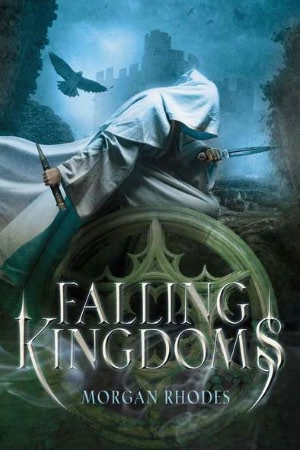
This week I’m waiting on Falling Kingdoms by Morgan Rhodes (Expected publication: December 11th 2012 by Razorbill). It is a YA High Fantasy novel and I can’t wait to read it. For those of you who don’t know, I write YA High Fantasy myself, and I’m very curious to see what Michelle Rowen (author of romance novels with vampires) has come up with under the pseudonym of Morgan Rhodes…

From Goodreads:

“In a land where magic has been forgotten but peace has reigned for centuries, a deadly unrest is simmering. Three kingdoms grapple for power—brutally transforming their subjects’ lives in the process. Amidst betrayals, bargains, and battles, four young people find their fates forever intertwined. The only outcome that’s certain is that kingdoms will fall. Who will emerge triumphant when all they know has collapsed?”

What do you think? Is this book on your TBR list?

And what are you waiting on this week?

Book of the Week – 12

This week I’m reading Hollow Pike by British author James Dawson (published in February 2012 by Orion Children’s Books). It is a 2012 debut and a YA Paranormal novel. I don’t usually read books about witches, but this one has an interesting blurb and a gorgeous cover that I couldn’t resist…

From Goodreads:

“Something wicked this way comes…

She thought she’d be safe in the country, but you can’t escape your own nightmares, and Lis London dreams repeatedly that someone is trying to kill her. Lis thinks she’s being paranoid – after all who would want to murder her? She doesn’t believe in the local legends of witchcraft. She doesn’t believe that anything bad will really happen to her. You never do, do you? Not until you’re alone in the woods, after dark – and a twig snaps…

Welcome to Hollow Pike – where witchcraft never sleeps.”

Visit the Hollow Pike website here. Watch the book trailer here.

What are you reading this week?

ROW80 Check-In 5: Susan Dennard’s Advice on Writing a Saleable Book

Welcome gentle reader,

today again I thought I would share with you some writing advice from a published author.

Susan Dennard is a YA author repped by Sara Kendall of NCLit. Her debut novel, SOMETHING STRANGE AND DEADLY, is available now from Harper Teen. Susan has an AWESOME blog where you can find invaluable advice on the craft of writing, on the art of storytelling and revising, on the querying process, on the value of critique partners, on grammar and style and on genres. She regularly writes for the Publishing Crawl blog and you can also find her on Twitter, Goodreads and Facebook.

I really recommend you check out her blog and if you need convincing, I have posted below one of her blog posts entitled Writing a Saleable Book. It was first posted by Susan on the Let The Words Flow website on August 10th 2011. You can read the initial post here.

“Recently, someone asked me:

What is required to make a book saleable?

That is a rather large-in-scope question, and as such, I’m afraid my answer will be kinda vague. All the same, I thought it was worth taking the time to answer for everyone.

My super broad response is the:

The most important thing in writing a saleable book is writing a good book.

I am 100% convinced that if you have a well-written, compelling story, your novel will eventually find an agent/editor. Period.

That said, there are a few critical things that define a “good book”. Again, these answers are vague, and I’d be more than happy to get specific for anyone with questions (ask in the comments, please!).

Parts of a Good Book

1. First and foremost, the story absolutely most flow. Stilted dialogue, poor pacing, or unreadable grammar/syntax will kill a manuscript. A reader can put up with slow scenes if it all flows beautifully, and a reader can put up with a less-than-compelling plot if it’s smooth.

The way to ensure your novel flows is to revise-revise-revise. Learning to master the written word is absolutely critical. Few people write stunning first drafts, but give them a red pen, and they can line-edit their words into perfect prose.

2. Secondly, a book needs a compelling plot with tension on every page. The story builds, the tension builds, and everything ends in an explosive climax (and this applies to any genre—by explosive I simply mean all aspects of the story finally come together).

This is something you can learn by reading about writing, taking workshops, or simply reading heavily in the genre you write. There are structure to stories (three-act is the most common), and your job is to practice until these are second nature when you write/revise.

Again, my first drafts are rarely good examples of compelling plot, but I can revise them until they shine and all the subplots weave into the main plot.

3. Third, a book needs a cast of characters that readers care about. The best way to achieve this is to ensure the MC has a desperate need—secondary characters too. This is also something you have to learn by doing/practicing.

4. Fourth, the book must have high stakes. “High stakes” simply means we are invested in whether or not the MC achieves his/her goal. What will she lose if she fails to reach her goal? And why does that matter? A common reason a book fails to compel readers is low stakes—if we don’t care about the MC’s failure, we don’t care about reading the book.

Finding Problems

My biggest suggestion in terms of how to address these 4 components is to start critiquing and getting your work critiqued. Either find a critique partner, join a critique group, or stay active in a critiquing community. This is no doubt something everyone here already knows, but it’s so important (in my opinion) that I just have to emphasize it!

When you see others make mistakes, you learn to spot them in your own writing. Additionally, we, the writers, are often too close to our novels to see them “as a whole”. CPs and betas have the needed distance to spot problems

When I got an agent, Something Strange and Deadly had been through 4 crit partners and 2 betas. Did I always listen to my CPs’/betas’ comments? No—you must decide and filter feedback—but it was thanks to my CPs/betas that I caught some of my biggest mistakes (character inconsistencies, flat climax, plot holes, etc.).”

I hope this post by Susan helped!

Now for my ROW80 goals:

After 10 days off (I was travelling) I have been somewhat back on track for the past three days.

1-          Write everyday: 3/7 days.

2-          Self-edit The Last Queen: done.

3-          Continue writing the first draft of The Cursed King: done.

Here is the Linky for the other check-in posts. How are you other ROW80 writers doing?