A Writer in the Spotlight – Susan Dennard

A Writer In The Spotlight Logo

Hello gentle reader,

Today I’m thrilled to share with you an interview with one of my favourite YA authors! You may remember I interviewed the wonderful Susan Dennard back in July 2012. At the time, her debut was just being released. Since then, Susan has published one more book and a novella, and the last book in her trilogy will come out in July. Additionally, she has sold another trilogy: a YA Epic Fantasy whose first installment will be available in Fall 2015.

Susan Dennard 2

Author : Susan Dennard

Genre : Young Adult, Fantasy

Location: Midwestern US

Website: http://susandennard.com

Books : Something Strange and Deadly series: Something Strange and Deadly (2012), A Darkness Strange and Lovely (2013), Strange And Ever After (expected publication: 22d July 2014) from Harper Teen.

Truthwitch series: expected publication Fall 2015 from Tor.

My interview (15th April 2014)

Can you tell us about your writing process for STRANGE AND EVER AFTER? Did you have everything already mapped out before you started drafting or did the book go through a lot revisions and changes?

I had a vague idea of where the series would end up–but VERY vague. Like, I knew Eleanor and the gang would go to Egypt and ultimately face the Big Baddie, but details were totally nonexistent. As I drafted A Darkness Strange and Lovely and new story threads were woven into the plot, my vision for book 3 became clearer. It wasn’t until I started writing book 3 and really set my mind to wrapping up all the story threads and all the character arcs that I fully understood what had to happen. Even then, it took me a half a draft to get a real handle on how everything would actually weave together for an epic ending. What can I say? I’m a bit of pantser…

Strange Ever After

STRANGE AND EVER AFTER is the last book in the series: how did it feel to part with these characters and this world?

Oh my gosh, it was HEARTBREAKING. I cried and cried and cried and immediately (like the same day) started writing a sequel set 5 years in the future. Ha! I will probably never try to publish that, but it was fun for me to see where Eleanor and the gang were going.

the-starkillerscycle

You’ve been writing THE STARKILLERS CYCLE with Sarah J. Maas and posting it on Tumblr. This is such a great project, can you explain why you chose to post it online for free rather than to publish it traditionally?

We just felt like the size and scope of the project was WAAAAY to big for traditional publishing–and that’s not traditional publishing’s fault. A single book that’s 200K+ is never easy to sell, and especially not in today’s market.

More importantly, though, this project is very organic for us and 100% a passion project. With our contracted works, we don’t get much stewing time or revising time. It kind of sucks because we’ both firmly believe that good stories take YEARS to percolate into their full potential. We wanted to be able to do that with STARKILLERS–to take breaks and stew. To go back and change earlier scenes as new ideas arose. Obviously, that would never work in traditional publishing. 😉

The first book in your next series, TRUTHWITCH, will come out in 2015. Did you decide with your agent to work on this particular project? Or did you write the story you wanted before considering whether or not it was something a publisher would be interested in?

Truthwitch was a passion project. All my books are. 🙂 I’m a FIRM believer in writing what you love and not worrying about the market (hence writing a sequel to SS&D that I will likely never share or writing STARKILLERS with Sarah).

Yes, passion projects can backfire if no one wants to buy them, and yes, I’ve written things that the market had no need for…BUT the market is always changing. One day, publishers might decide they want my dark middle grade. Or one day, the market might be perfect for my diesel-punk epic fantasy. The important thing is that I LOVED writing those books while I wrote them, and that passion always comes out on the page.

With Truthwitch, I loved every second I was working on it, and I think that passion is really evident on every page. Best of all, despite having revised/rewritten it until my eyes bled, I STILL love the book. I’m not sick of it because the need to tell this story–and to tell it RIGHT–just burns inside my chest. If I didn’t have that passion, I can’t imagine how miserable I would have been by the 2000th round of revisions! 😛

RoyalAirs

What are you reading right now? Do you have any recommendations?

I’m reading Royal Airs by Sharon Shinn. I’ve been on a Sharon Shinn binge lately. She’s just SO GOOD at world-building and romance. I highly recommend all of her series!

Thank you so much for this interview, Susan!

You can buy all of Susan’s books here. (You really should!)
Writing a large cast of characters – with Black Sails

Hello gentle reader,

Fantasy and Historical novels have something in common: they often have a large ensemble cast of at least a dozen main characters, with up to hundreds of secondary characters. Writing a large cast of characters presents some specific challenges: how can the writer make sure each character is distinct from the others and fully realized?

(Please note I’m not talking about the use of multiple points of view here: I’m only discussing managing a big ensemble cast).

With the fourth season of Game of Thrones being aired this month, you may be surprised that I haven’t chosen it as an example to support my argument. Although GoT does have a large ensemble cast, it circumnavigates some of the challenges of writing a large cast because all the main characters are in separate places.

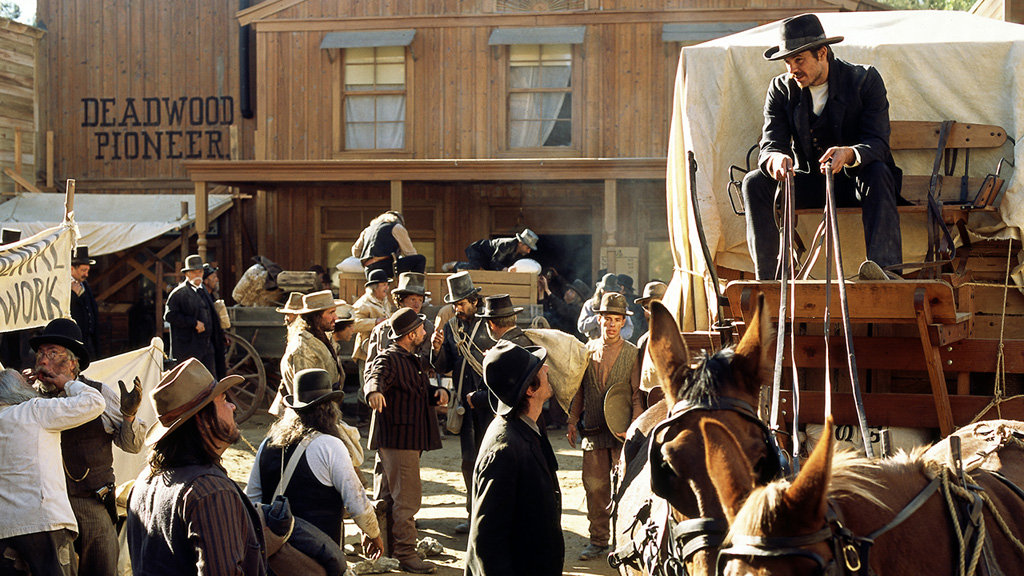
Today I’d like to give a few pointers about writing a large cast of characters who are all in the same place and are forced to constantly interact. I wanted to use HBO’s Deadwood (aka My Favourite Show of All Time) but I realize this show was cancelled in 2006 and you may not have seen it. Therefore I’m going to use a far more recent example: Starz’ Black Sails, whose first season aired in January (side note: this show isn’t censored and the viewer discretion is advised). It’s a prequel to Robert Louis Stevenson’s novel Treasure Island. I’ve been careful not to include spoilers here.

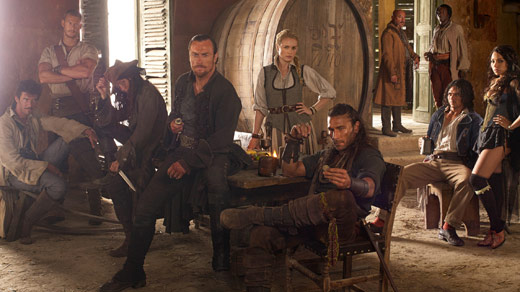
Black Sails introduces us to a cast of 11 main characters and more than 30 (named) secondary characters. They are all in one place: New Providence Island (West Indies) in 1715.

black-sails-cast-starz
How do the writers of the show manage to make us recognise each character and care for their fate? And how can you do the same in your Work In Progress?

1) Create distinct characters

The key here is to give each main character his own name, his own way of speaking, his own look (clothes), his own motivations (reasons to be in the story) and his own plotline or “story arc”.

What can be helpful is writing an “ID card” for each character before or while you’re drafting: that way you can keep track of each detail and refer to the character’s card for consistency.

Black-Sails-Episode-1x07
In Black Sails, Eleanor Guthrie is one of the key characters, and she ticks all the above boxes: her speech, her clothes, her hairdos, her goals and her story arc are completely specific to her and she can’t be confused with any other character.

2) Organize your key characters in groups and don’t introduce them all at once.

Black Sails 2
The characters in Black Sails can roughly be put into 3 groups: one led by Captain James Flint, one led by Eleanor Guthrie and one led by Captain Charles Vane.

Of course, these groups aren’t set in stone: as the story develops, people mingle, allegiances shift, etc. But these groups are a great way to introduce all the characters at the beginning: a reader or viewer can’t memorize the names of 20 characters in one chapter or one episode. However, what they can do is identify a few main characters and the group around them.

At the end of the first episode of Black Sails, I couldn’t tell you more than a couple of characters’ names. I could, however, tell you that Captain Flint was the main lead character, that his goal was to find a Spanish treasure galleon, and that his crew consisted of a nice and wise quartermaster, a handsome first mate, and a clever cook with a secret.

3) An opportunity for diversity

Having a large cast of characters is a golden opportunity to introduce characters with diverse cultural, religious and ethnic backgrounds, from different age groups, with various sexual orientations or with disabilities.

Black Sails makes quite an effort to introduce diversity in its cast of characters. In 8 episodes, these topics weren’t fully developed, but there’s room for some interesting characters’ development in the seasons to come.

Black Sails 3
4) Make us care: create complex characters

With a large cast of characters, it’s important that each one is fully fleshed out, with qualities and flaws. To make them as human as possible, it’s necessary to have them make good AND bad decisions, experience a wide range of emotions and be both strong and fragile.

If you check out Black Sails on Tumblr, you’ll see the premise of a fandom taking form. And among all the people who watched the first season of the show, you’ll see there are people who love Flint. Other people who hate Flint. People who love Vane. Other people who hate Vane with a fiery passion. People who love Max. People who can’t see why Max is even in the show. Etc. Etc. The reason all these people can’t seem to agree or make up their mind is because these characters are complex enough that you can’t really love them or hate them. There are no heroes and no bad guys.

black-sails-faces-an-uncertain-future
Let’s take Charles Vane as an example. This character is introduced as a villain. In the first couple of episodes he manages to kill a nice (elderly) secondary character, to punch Eleanor in the face and to beat up Max. So what writing device turns this cruel, murdering pirate into a complex character we actually care about? First, he has friends. Well, one friend, at least. This shows us others do see more in him than what he appears to be. Secondly, he rarely gets his way. For someone who’s willing to do anything to get what he wants, he actually rarely gets what he wants. That makes us sympathize with him, somehow. Finally, he’s in love with a girl who doesn’t love him. That’s always relatable. As a result, by Episode 6, you sort of like Charles Vane, with his flaws and his “no one understands me” attitude. Right? But he wouldn’t be a complex character if he was just this misunderstood guy. So in Episode 8 (the last in the season), the writers have him back to his old ways and you’re back to shouting at your TV screen and wondering if he’s-going-to-kill-everyone-oh-my-I-can’t-even.

Please note I could have written almost the same paragraph about James Flint, except that he starts out as the “hero” and ends up being not that hero-like…

5) Show, don’t tell

My final advice when writing a large cast of characters is to remember to show them to the reader, not tell the reader about them. We need to understand who these characters are and to make up our mind about them through their actions, not because we’re told about them.

Black Sails John Silver
In Black Sails, Long John Silver is a good example of a character we aren’t told much about. We don’t really know who he is, where he came from and what his backstory is. We do, however, get a really clear idea of what kind of person he is through his actions. By the end of the season, we know he’s an opportunist, a liar, a thief, a terrible cook, a very clever man and the Most Likely To Make It Out Alive of the show. That’s characterization well done.

So tell me: have you included a large set of characters in your manuscript? How did you go about it? Most importantly, have you watched Black Sails? Feel free to leave me a comment below!

ROW80 2014 – Round 2 – Check-In 1

ROW80 Logo

Hello gentle reader,

If you’ve been reading this blog for a while, you may recall a time when I took part in the ROW80 Challenge. From April 2012 to June 2013, I checked in every Sunday and reported on my writing progress. Then revisions for LILY IN THE SHADOWS took over my life, then I signed with my agent, and… I gave up on ROW80 check-ins.

But I’m back!

If you’re new around here, A Round of Words in 80 Days (aka ROW80) was created by Kait Nolan. It is “the writing challenge that knows you have a life”. Each ROW80 round runs for 80 days and the participating writers have to set themselves writing goals for that time. Each Wednesday and Sunday, we check in and let the others know how we are doing. The idea is to form writing habits that writers will hopefully continue once the challenge is over.

Round Two started on Monday 7th April (so I jump in a little late) and it will end on Thursday 26th June. If you would like to join in and become a part of the ROW80 community, please do so, it’s not too late and we’re friendly!

Here are my goals for this round (I always keep them very simple):

  1. Read or write every day
  2. Write the first draft of my new YA Historical Fantasy (hopefully by the end of this round I’ll be able to tell you what it’s about!)

Here is the Linky for the other check-in posts. How are you other ROW80 writers doing?


Successful Queries – Day 8 – Marieke Nijkamp

Hello gentle reader,

Welcome to the Successful Queries Blog Series! The idea is to share with you Queries That Worked and to find out what made them stand out in the slushpile. My hope is that it’ll help you, querying writers, to write an amazing query for your own manuscript and to find Your Agent.

Today Marieke Nijkamp, aka The Queen of Queries, is sharing her advice on how to write an outstanding query. Marieke writes YA and MG fiction and she’s represented by Jennifer Udden of Donald Maass Literary Agency.

Marieke Nijkamp

GUEST POST

I’ll let you in on a secret. I’m one of Those People who loves to write queries (and occasionally, even synopses *gasp*). I love the clarity in brings when you have to sum up a story in roughly 250 words, when you have to force yourself to get to the very core of a tale. I love the structure of queries and synopses, I love writing them, and I love critiquing them. I’ve probably critiqued close to a thousand over the years.

I know. Annoying, isn’t it?

But I also love to talk about queries, so when Eve asked me to talk about advice for querying writers, I knew I couldn’t pass that opportunity up.

First of all, learn the formulas

Query formulas are amazing to understand what works, and why. Whether it’s by perusing the archives of Query Shark, subjecting yourself to AbsoluteWrite’s Query Letter Hell, or workshopping queries at a conference, you have to get an ear for queries. Know the rules, read a lot and critique more, because all those things will help you a great deal in writing your own perfect pitch.

Second, less is more

Once you’ve figured out those bare bones, the easiest step is to try to fill the out with the entire story. Far too often, I see queries that try to do and be everything. Introduce ALL the characters. Explain ALL the plot points. Mention ALL the themes. And often it’s a matter of overkill—and of the writer overthinking it.

I love specifics that make the story come to life, but if you pick up a book in the bookstore, do you want the blurb to explain everything that happens in minute detail? Stick to what entices.

Thirdly, trust your readers

The best way to know if a query still makes sense and hits the right spots? Ask a CP or beta who’s read the manuscript. The best way to know if a query entices? Ask a reader who hasn’t.

So take your time, reach out and get feedback. And revise it until it shines.

And finally, break the rules

And with that in mind… trust your own gut, too. Because formulas are amazing. But, sometimes, when we turn them into a tight set of rules, they can get very overwhelming. Use a tagline. Don’t use a tagline. Start with personalization. Don’t even bother. Use comp titles. Have a good bio. Explain the story in one paragraph, three paragraphs, two, four… When really, formulas are also just a means to an end.

In the end, your main goal is simple and very straightforward: to hook your reader. Nothing less, nothing more.

So don’t be *too* intimidated by those 250 words. It’s only one page! You’re a writer, just tell the story! After all, as a reader, I read to love a story, not to hate it. I only want to know three things:

Who is the main character?

What choice do they face?

And above all, why should I care?

GIVEAWAY (closed)

Querying Writers! Marieke is giving away a QUERY CRITIQUE to THREE lucky winners! To enter, please fill in the form below with your name and email adresss, and include the genre of your mansucript. Good luck!

The giveaway is open internationally until Sunday 16th March 2014 at 11pm BST.

Any questions? Ask below!

KNIGHTS OF RILCH Release Day: Interview with Rachel O’Laughlin

Hello gentle reader,

KNIGHTS OF RILCH, the sequel to COLDNESS OF MAREK, and the second book in the SERENGARD Series, is out today!

KnightsOfRilch

Add it on Goodreads

Buy it on Amazon or on Barnes & Noble

Win it! Giveaway here

To celebrate this release, I’ve interviewed Rachel O’Laughlin about the process of writing a second book in a trilogy…

OLaughlinPic

Did you always know Serengard would be a trilogy or not?

Awesome question! I actually had no idea it would be a trilogy. When I drafted Coldness of Marek, I thought I was writing a standalone. Several months later, I felt like there was so much more to tell in order for the story to be understood. I went back to the drawing board and fleshed out a sequel. After drafting Knights of Rilch, I had so much more world building and character development that I wanted to incorporate into Coldness of Marek, so I went back and rewrote it from scratch. That’s when I knew the sequel wasn’t going to be enough and it needed to be a whole series. It’s quite a commitment, but I am thankful I made it. There’s so much more to Serengard than the short adventure I started with.

How did you go about writing this second book?

I made a rough outline via notebook and Scrivener in the month leading up to NaNoWriMo 2012, then I fast-drafted 70k that November. One of the unique things I did with this novel that I haven’t done before or since was having two non-writer friends read each chapter as I wrote. I’m not sure I’ll ever do it again, but it definitely gave me a lot of extra perspective. Early revisions were actually a joy with this book. I loved exploring how a scene could become deeper and darker, even if I had to cut some of it later. I had multiple writer friends and critique partners look at it after each revision — so many I can’t count — and they all had useful feedback for me. From first draft to final draft was exactly one year.

Is your final draft very different from your first one?

Very, very different. (As actually EM can attest! I think you read the second draft, didn’t you?) I had a major epiphany after my third or fourth revision — I chopped off the last half of the book and went an entirely different direction. It turned out to be the best decision ever. The villains are twice as strong, and the action builds up to a point at the end that I could never have envisioned with the first version. I did end up cutting several scenes and chapters from the first half. It was a lot of battle and build-up, and the detail was just bogging it down. My CPs and my editor helped me unsnarl some of the most complicated, touchy scenes, in addition to being total heroes on the line edits. I love how clean and snappy the finished novel turned out.

Would you say writing this second book was harder or easier than writing your first?

Harder. The story centers very much on the brother/sister bond, and that’s a relationship I’ve been driven to write ever since I was fourteen. The action is more complex and intense than the first book, the death toll higher by far. All of that contributed to me shredding scene after scene and reworking my timeline again and again whenever something just wasn’t working, but even more so, I felt this whole novel far deeper than the first. A couple of scenes always make me cry like nothing in Coldness of Marek has. Over all, Knights of Rilch was full of a lot of growing pains, and I think I pushed myself far harder than I have before.

As Knights of Rilch is coming out, is your state of mind different from when Coldness of Marek came out?

I am way less nervous about looking like an amateur, that’s for sure! Coldness of Marek was well received, and that’s made me pretty excited to see what everyone has to say about its sequel. But I’m still a little scared, to be honest. It’s hard to explain why, because having my work out there to be loved or hated is my ultimate dream. I guess it’s a good scared, because there’s really nothing awful that could happen. I appreciate “liked” reviews as much as “disliked”. I’m queasy and thrilled and desperate to hear how readers feel about my sophomore baby.

Rachel O’Laughlin grew up writing adventure stories in which heroines tend to get their hands dirty, bad guys sometimes win, and someone always gets kidnapped. Her passion for history morphed into a love for fantasy in her mid-teens, when she took a brief pause from reality for immersion in the arts and a hands-on education in sustainable living. She lives in New England with her husband and two boys, listens to The Fray, and drinks too many lattes. Two novels in her SERENGARD fantasy series have been released, and a third is scheduled for October 2014.

Author Website: http://rachelolaughlin.com

Twitter: http://twitter.com/rachelolaughlin

Facebook: www.facebook.com/r.k.olaughlin

Writing Pet Peeves

Hello gentle reader,

Sometimes in my readings I come across writing devices that make me roll my eyes and shake my head. I guess we all have them: pet peeves. I’ve recently come to realize that mine are mostly plot-related. I’ve listed them below, and I’m curious to find out if you share my opinion on them…

Pet Peeve #1: The Resurrection

Gossip-Girl-Chuck-Bart

This plot device consists in resurrecting a character that was presumed dead for a good part of the story in order to resolve a plot line. The Resurrection was used twice in Gossip Girl, for both Chuck’s father and mother. I’ll admit, I hate this plot device with a passion, because it’s usually synonymous with plot inconsistencies in particular and lazy writing in general.

Pet Peeve #2: Everybody lies

The pretender

This is when the main character, and the reader alongside her, can’t trust anything the characters say. Please note I’m not talking about the unreliable narrator here. I’m talking about the writing device that tells you something then denies it ten pages later, keeping you from speculating and therefore from really enjoying the book. Remember The Pretender? Teenage Me loved this show. To be honest, Present Me still loves it. But let’s face it, this show had serious plot issues, one of them being that everyone kept contradicting themselves from one episode to the other and saying they’d lied. That’s not good writing according to me.

Pet Peeve #3: The Keeper of Secrets

Witchblade Kenneth Irons

This is when the plot could be resolved in a second if one character just revealed everything he knows to the main character. But he doesn’t because of reasons. And the plot drags on forever. This writing device was used ad nauseam in Witchblade (both the comic book and the TV series): the main villain Kenneth Irons knew everything about the main character’s past and destiny, but he didn’t tell her anything because… he was villainous that way.

Pet Peeve #4: The ellipsis

This is when main events happen off screen and are retold/summarized later. Instead of having the satisfaction of seeing the events unfold in front of her, the reader has to make do with a main character losing consciousness, or a random chapter dealing with a subplot or a simple leap in time. Talk about disappointing.

What about you? Do you have writing pet peeves? Plot devices that make you roll your eyes? Most importantly, did you ever watch The Pretender? Make sure to leave me a comment below!

On Querying , Subjectivity and Getting Contradictory Feedback from Agents

Hello gentle reader,

I’ve blogged before about the Querying Process and the 4 Stages of Rejections. In my previous post, I explained Stage 4 as the moment when you’re getting requests left and right, which all turn into “I like it but I’ll pass” rejections.

Today I’d like to expand a little bit on this type of rejection.

If you’re in the querying trenches and getting a lot of form rejections, you might think that receiving personalized feedback from agents is great: at last, agents take time out of their busy schedule to let you know WHY they’re rejecting your manuscript and what you can do about it! When I was querying for the first time, I thought so too.

Except that sometimes, the agent’s feedback isn’t as helpful as we hope.

When I queried the manuscript that led me to signing with my agent, I had 19 requests. I received personalized feedback from 16 agents (which, incidentally, means that two agents form-rejected my full manuscript – that can happen too).

Now, if half these agents had given me the same reason for rejecting my work, I would have gone back to the drawing board and revised. But it’s not what happened.

Instead, I received a lot of “I’m not the right agent for this” replies. Fair enough. I understand an agent has to believe in a project with a fiery passion to sell it to editors.

But then I also received the oh-so-confusing Contradictory Feedback (NB: my main character is named Lily):

Agent 1: “I had some trouble with Lily’s voice.”

Agent 2: “I just didn’t find myself to be as hooked by Lily and her narrative voice as I had hoped to be.”

Agent 3: “I thought the voice was great.”

Agent 4: “I’m afraid I wasn’t able to connect to Lily’s voice.”

Agent 5: “I just LOVE Lily’s voice.”

These quotes are not made up. They are straight from my inbox.

Are you seeing a pattern here? Yes. It’s the Pattern of The Contradictory Feedback From Agents.

Now, what does this tell us? It tells us that when you reach Stage 4 of the Querying Process, it’s likely your manuscript is polished and good enough to find representation. And when agents reject it, it reminds us that the publishing business is subjective.

And it’s an important lesson, because the rest of our publishing journey will also be affected by subjectivity. From editors to readers, we’ll have people who won’t like out story, hopefully not because it’s bad, but because it just isn’t their cup of tea. And it shouldn’t get us down: we can’t please everyone. We just have to be grateful for the people who do enjoy our stories.

And don’t forget…

What about you? Have you been confronted with subjectivity in your publishing journey? How do you deal with contradictory feedback? Make sure to leave me a comment below!

Writing and How To Create A Vivid Setting

Hello gentle reader,

I haven’t been writing or blogging a lot lately, but I have been reading. And I’ve been disappointed by a couple of books, because of their setting. Or lack thereof.

If you’re a writer trying to get published, you may have received rejections that stated your world building needed work, or your setting wasn’t vivid enough.

Today I’m giving a few pointers to create a well-realised setting, one that will draw your readers in and bring the places you describe to life.

Step 1: Identify your setting’s weaknesses

–          Your book suffers from the “We could be anywhere” syndrome

I read this book that was set in Chicago. Halfway through it, I had to go back to the beginning, because I couldn’t remember if it took place in Chicago or New York City. That’s how vague the setting was. In your own manuscript, ask yourself if your story could take place anywhere else. If the answer is yes, it means that your plot and your story aren’t interwoven enough: there needs to be a reason why this story happens in this specific place (whether it is a small town in rural America or London).

 Welcome_to_Sunnydale_(Buffy_screenshot)

–          Your descriptions are clichéd

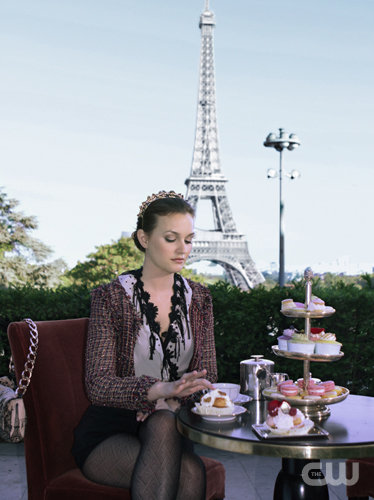
I recently read another book, which was set in Paris. To my dismay, the author seemed to think that mentioning the Eiffel Tower here and having a character talk about Montmartre there was enough to set the scene. With your story, ask yourself if you’ve researched your setting enough to avoid describing what everyone already knows about that place.

 Gossip Girl Paris

–          Your descriptions are boring

I read another book, which was set in a US high school. This is a tricky setting, because, well, we’ve all been to school and watched countless films/TV shows about teenagers at school. What you want to avoid here is a bland description: classrooms, bleachers, bathroom… If your story takes place in a very familiar place, ask yourself if you’ve described what makes it special in the eyes of your characters (whether good or bad). Ask yourself if your setting has personality.

Teen_Wolf_Meeting_at_school

Step 2: Create a great setting

–          Avoid setting each scene in “anonymous” places such as hotel rooms, random streets, nameless restaurants, etc. This is especially important if you’ve chosen to set your story in an exciting big city. As a reader, there’s nothing more frustrating than being sold a book “set in Tokyo” and have the characters spend all their time in a non-descript apartment, for example.

–          Do your research. Do A LOT of research. Your book will have two types of readers: the ones who have been to the place you describe, and therefore expect an accurate description, and the ones who haven’t been there, who deserve a description that will give them the chance to explore a place where they might never go. If you’re choosing to set your story in a well-know place, I tend to think that you should visit it yourself, to avoid clichés and to give your descriptions your own flavour. When it’s not possible, read widely about your setting, and make sure you write about what makes it unique and what makes it come alive.

–          Make your setting come alive by using all the senses: help you reader experience the whole of your setting. Help him see it, but also smell it, hear it, touch it and even taste it.

–          Avoid long descriptions: better focus on a few specific and striking details than write a boring one-page paragraph. Give the places’ names, and point out what makes them unforgettable.

deadwood

Reading recommendations:

–          For a great example of a setting and a plot that blend together: THE DIVINERS by Libba Bray

–          For a great example of a book set in Paris that avoids all the clichés: DIE FOR ME by Amy Plum

What about you? Do you have trouble writing vivid settings? Do you have examples of setting done well in literature? Make sure to share your thoughts below!

2013: My Writing Year In Retrospect

Hello gentle reader,

This is the last day of the year and time for a look back at 2013…

What I read:

I read 28 novels this year. You can find out which ones were my favourite here.

What I wrote:

I wrote a 70,000 word Historical Fantasy novel this year. It’s called LILY IN THE SHADOWS and you can read about it here. Hopefully one day soon you’ll be able to read the actual book too 😉

Where I went:

I attended two writers’ conferences this year:

SCBWI Europolitan Conference (Paris, France, March 2013) where I learnt so much and got such useful feedback on Lily.

Midwest Writer Workshop (Muncie, Indiana, USA, July 2013) where I went with my wonderful Critique Partner Jessica Rubinkowski and where lots of fun was had.

What happened on this blog:

According to WordPress.com, this blog was viewed about 24,000 times in 2013. My most popular post remains (just like in 2012) “Word count : is your Fantasy novel too long ?

What I watched:

I watched 32 new releases in 2013. It’s very hard to choose my favourite film of the year, but I’ll recommend Les Misérables, The Great Gatsby, Much Ado About Nothing, Saving Mr. Banks and The Hobbit: Desolation of Smaug.

What I’m thankful for:

You, gentle readers who keep reading my posts, entering my giveaways, leaving nice comments and sharing my words.

The writing community, so supportive and enthusiastic, always.

What’s next?

2013 was a great writing year for me, so I hope for more of the same in 2014: more books, more conferences, more writerly friendships, more inspiration and more blogging!

How was your year? Did you achieve your writerly goals? Make sure to share your thoughts below!

Happy New Year and see you in 2014!


Writers and Publishing Trends

Hello gentle reader,

On 27th September 2013, Publishers Weekly published an article about new trends in YA. Such articles appear every so often, informing us of what’s “in” and what’s “out” and attempting to predict YA readers’ future tastes.

Right now, Paranormal, Dystopian, Greek mythology, Sci-Fi, mermaids, vampires, werewolves and trilogies are not what editors are looking for. They are more interested in realistic contemporary fiction, thrillers, fantasy, mysteries and stand-alones.

As for what will be popular in a year, no one has a clue.

So what are we, writers, to do with such information?

Should we care about trends?

Writers wishing to get traditionally published should be aware of trends. Querying a paranormal manuscript with vampires and Greek gods in 2013 will only bring on rejections and disappointment. This is why writers are encouraged to read widely in their genre, and to stay informed of what’s happening in the publishing world (book fairs and specialised websites are a great way to find such information).

Should trends affect our writing?

Let’s be clear. I strongly believe you should write whatever you want, regardless of trends. Write that vampire book if it makes you happy: you will be honing your writing skills if anything else. Trends only come into play when you want to publish said book.

On the other hand, don’t try to write according to trends: your book will be out in 18 months at the earliest. By that time trends will have changed 3 times.

So what are we to do?

Write a book as original as possible within its genre, with an interesting plot, a great voice, unique characters and beautiful writing. Think about what makes it stand out from other books on the market.

This is what agents and publishers are looking for. This is the next trend.