Openings : how not to start your novel

A few tips I picked up along the way on how not to mess up your novel from the start… or on how to hook your reader with your first paragraph.
What you shouldn’t start your novel with:

–          The weather report: “It was warm and cloudy with a chance of scattered showers on the day Harry and Sally met.” Just start with Harry meeting Sally and include the weather later.

–          A dream: “… And then Sally woke up.” Let us start with something actually happening, shall we?

–          Your main character waking up and proceeding to having a normal day: “It was a day like any other day and Sally woke up, got out of bed, hopped in the shower and got dressed like she did every day. Little did she know that it was the day her life was going to change…” Just fast forward to the actual life-changing event.

–          A description of your novel’s setting: “Once upon a time, in a land where there were deep forests, green pastures and mirror-like lakes…” Action must come first, THEN the setting and world-building.

–          A page-long dialogue: “You’re joking”, Sally said. “No, I’m not,” Harry replied. “It is true, I swear. Just ask Marny.” “I don’t believe you,” Sally retorted. “I wish you did,” Harry insisted.” Meanwhile, the reader has no clue what’s going on and doesn’t really care.

–          Your main character running: “Sally was running through the woods and she could hear the beast not far behind her.” Sure, it is an in medias res situation. But it has been done so many times before and you can be much more original.

–          A sex scene: “Sally screamed with pleasure and collapsed on Harry’s muscular body.” Unless you’re writing erotica or romance, this is to be avoided on your first page.

–          A prologue that gives away the ending: “Sally was running through the woods, knowing she had no way of escaping Harry’s murderous intent. Yet when they had met six months before, she would have never guessed their relationship would end like this.” The fact that Twilight has such a prologue doesn’t mean you have to do it too.

What you should start your novel with:

–          A catchy first sentence : “Most people would probably call me a ghost. I am, after all, dead. But it wasn’t so long ago I was alive, you see. I was just 18. I had my whole life in front of me.” Remember Me by Christopher Pike.

–          An In Medias Res (“in the middle of things”) situation: “There was a hand in the darkness, and it held a knife.” The Graveyard Book by Neil Gaiman.

What you could start your novel with:

–          Your main character waking up and everything is different: “When I wake up, the other side of the bed is cold.”  The Hunger Games by Suzanne Collins.

–          A meaningful prologue: “A mile above Oz, the Witch balanced on the wind’s foreward edge, as if she were a green fleck of the land itself, flung up and sent wheeling away by the turbulent air.” Wicked: The Life and Times of the Wicked Witch of the West by Gregory Maguire

–          One sentence from a dialogue followed by some narration: “I SEE …” said the vampire thoughtfully, and slowly he walked across the room towards the window.” Interview with the Vampire by Anne Rice.

So how does your novel start? Have you avoided all the above pitfalls ? Do you think these ‘rules’ for opening are worth following? Leave me a comment, I’d love to hear your thoughts!

The Fantasy Novelist’s Exam by David J. Parker

So I didn’t write this post. This post was first published by David J. Parker (with additional material by Samuel Stoddard) on this website. Since it is awesome, I have decided to share it with you. Visit the RinkWorks Production website for more information.

So here goes…

“Ever since J.R.R. Tolkien and C.S. Lewis created the worlds of Middle Earth and Narnia, it seems like every windbag off the street thinks he can write great, original fantasy, too. The problem is that most of this “great, original fantasy” is actually poor, derivative fantasy. Frankly, we’re sick of it, so we’ve compiled a list of rip-off tip-offs in the form of an exam. We think anybody considering writing a fantasy novel should be required to take this exam first. Answering “yes” to any one question results in failure and means that the prospective novel should be abandoned at once.”

David J. Parker.

The Exam

  1. Does nothing happen in the first fifty pages?
  2. Is your main character a young farmhand with mysterious parentage?
  3. Is your main character the heir to the throne but doesn’t know it?
  4. Is your story about a young character who comes of age, gains great power, and defeats the supreme badguy?
  5. Is your story about a quest for a magical artifact that will save the world?
  6. How about one that will destroy it?
  7. Does your story revolve around an ancient prophecy about “The One” who will save the world and everybody and all the forces of good?
  8. Does your novel contain a character whose sole purpose is to show up at random plot points and dispense information?
  9. Does your novel contain a character that is really a god in disguise?
  10. Is the evil supreme badguy secretly the father of your main character?
  11. Is the king of your world a kindly king duped by an evil magician?
  12. Does “a forgetful wizard” describe any of the characters in your novel?
  13. How about “a powerful but slow and kind-hearted warrior”?
  14. How about “a wise, mystical sage who refuses to give away plot details for his own personal, mysterious reasons”?
  15. Do the female characters in your novel spend a lot of time worrying about how they look, especially when the male main character is around?
  16. Do any of your female characters exist solely to be captured and rescued?
  17. Do any of your female characters exist solely to embody feminist ideals?
  18. Would “a clumsy cooking wench more comfortable with a frying pan than a sword” aptly describe any of your female characters?
  19. Would “a fearless warrioress more comfortable with a sword than a frying pan” aptly describe any of your female characters?
  20. Is any character in your novel best described as “a dour dwarf”?
  21. How about “a half-elf torn between his human and elven heritage”?
  22. Did you make the elves and the dwarves great friends, just to be different?
  23. Does everybody under four feet tall exist solely for comic relief?
  24. Do you think that the only two uses for ships are fishing and piracy?
  25. Do you not know when the hay baler was invented?
  26. Did you draw a map for your novel which includes places named things like “The Blasted Lands” or “The Forest of Fear” or “The Desert of Desolation” or absolutely anything “of Doom”?
  27. Does your novel contain a prologue that is impossible to understand until you’ve read the entire book, if even then?
  28. Is this the first book in a planned trilogy?
  29. How about a quintet or a decalogue?
  30. Is your novel thicker than a New York City phone book?
  31. Did absolutely nothing happen in the previous book you wrote, yet you figure you’re still many sequels away from finishing your “story”?
  32. Are you writing prequels to your as-yet-unfinished series of books?
  33. Is your name Robert Jordan and you lied like a dog to get this far?
  34. Is your novel based on the adventures of your role-playing group?
  35. Does your novel contain characters transported from the real world to a fantasy realm?
  36. Do any of your main characters have apostrophes or dashes in their names?
  37. Do any of your main characters have names longer than three syllables?
  38. Do you see nothing wrong with having two characters from the same small isolated village being named “Tim Umber” and “Belthusalanthalus al’Grinsok”?
  39. Does your novel contain orcs, elves, dwarves, or halflings?
  40. How about “orken” or “dwerrows”?
  41. Do you have a race prefixed by “half-“?
  42. At any point in your novel, do the main characters take a shortcut through ancient dwarven mines?
  43. Do you write your battle scenes by playing them out in your favorite RPG?
  44. Have you done up game statistics for all of your main characters in your favorite RPG?
  45. Are you writing a work-for-hire for Wizards of the Coast?
  46. Do inns in your book exist solely so your main characters can have brawls?
  47. Do you think you know how feudalism worked but really don’t?
  48. Do your characters spend an inordinate amount of time journeying from place to place?
  49. Could one of your main characters tell the other characters something that would really help them in their quest but refuses to do so just so it won’t break the plot?
  50. Do any of the magic users in your novel cast spells easily identifiable as “fireball” or “lightning bolt”?
  51. Do you ever use the term “mana” in your novel?
  52. Do you ever use the term “plate mail” in your novel?
  53. Heaven help you, do you ever use the term “hit points” in your novel?
  54. Do you not realize how much gold actually weighs?
  55. Do you think horses can gallop all day long without rest?
  56. Does anybody in your novel fight for two hours straight in full plate armor, then ride a horse for four hours, then delicately make love to a willing barmaid all in the same day?
  57. Does your main character have a magic axe, hammer, spear, or other weapon that returns to him when he throws it?
  58. Does anybody in your novel ever stab anybody with a scimitar?
  59. Does anybody in your novel stab anybody straight through plate armor?
  60. Do you think swords weigh ten pounds or more? [info]
  61. Does your hero fall in love with an unattainable woman, whom he later attains?
  62. Does a large portion of the humor in your novel consist of puns?
  63. Is your hero able to withstand multiple blows from the fantasy equivalent of a ten pound sledge but is still threatened by a small woman with a dagger?
  64. Do you really think it frequently takes more than one arrow in the chest to kill a man?
  65. Do you not realize it takes hours to make a good stew, making it a poor choice for an “on the road” meal?
  66. Do you have nomadic barbarians living on the tundra and consuming barrels and barrels of mead?
  67. Do you think that “mead” is just a fancy name for “beer”?
  68. Does your story involve a number of different races, each of which has exactly one country, one ruler, and one religion?
  69. Is the best organized and most numerous group of people in your world the thieves’ guild?
  70. Does your main villain punish insignificant mistakes with death?
  71. Is your story about a crack team of warriors that take along a bard who is useless in a fight, though he plays a mean lute?
  72. Is “common” the official language of your world?
  73. Is the countryside in your novel littered with tombs and gravesites filled with ancient magical loot that nobody thought to steal centuries before?
  74. Is your book basically a rip-off of The Lord of the Rings?
  75. Read that question again and answer truthfully.

Hoping you enjoyed!

Feel free to leave a comment below…

ROW80 Check-In #9 and JuNoWriMo update: On Procrastination

Hello gentle reader,

For the past two weeks I have been neglecting my fellow ROWers and instead focusing on the JuNoWriMo writing challenge. For those who don’t know what JuNoWriMo is, check out this post. Oh, and if you’re reading this because you’re looking for my awesome “Clear Your Shelf” Giveaway, you’ll need to look a little bit further: here.

 With JuNoWriMo, my goal is to write every day, even if I don’t make the 50,000-word goal. I hesitated a while before deciding to join in, for two reasons. First, I spend an average of 62 hours a week at work, which means that I only write between 30 minutes and an hour a day. Second, I am a slow writer: I cannot spill 1000 words onto a page in half an hour. So the prospect of having to write an average of 1667 words a day was quite frightening. But I still decided to do the challenge, as it is a great way to keep motivated and to interact with fellow writers.

So how have I been doing, you ask? I have been writing every single day, which I am very happy about. My word count, however, has been lower than the required average of 1667 words a day. As of today my average is 1160 words a day. But I am interacting with fellow writers and keeping motivated (sprints on Twitter are especially good for me!).

What JuNoWriMo has helped me do so far is fighting procrastination. You see, gentle reader, I am terrible when it comes to putting things off. At the beginning of the challenge, I was like this:

Then I set this image as my wall paper on my laptop:

And things got better.

So now, I just…

And it’s been working well so far.

How have you been doing with your writing challenges? Do you have to fight procrastination? How do you do it?

Here is theLinky for the other ROW80 participants…

Have a great week and happy writing!

The Writer In You Blog Hop – 2

The Writer In You is a blog hop hosted by Katie at The Fiction Diaries. In her own words, “this is a blog hop for all aspiring writers out there. It is a chance to meet other writers and share tips, writing, and experiences, all while gaining new followers for your lovely blog…” Every Saturday, Katie asks a question that we have to answer.

This week’s question is: Do you outline your writing?

I do outline my stories before writing them. I didn’t use to, but over the years I have learnt that outlining your novel before writing it actually 1) saves you time and 2) helps you be a better writer. Because outlining makes you think about your story, makes you deal with the tough questions (Where is this all going? Is this scene/chapter useful for the plot? What are the arcs in my story? etc.) and makes you solve all the problems BEFORE writing the story. So when your outline is done, you can just WRITE. No excuse.

What about you? Do you outline your writing? Join the fun here and happy writing!

ROW80 Check-In #8

Hello gentle reader,

I’m late for this check-in, as I have just returned from London (for those of you who don’t live in the UK, we enjoy a four-day weekend here for the Queen’s Diamond Jubilee). Also this is my last ROW80 check-in for this round, as I’m now done with my one and only goal:

self-edit my YA Fantasy novel The Last Queen.

I’m so happy I am done with this I could sing.

And now that The Last Queen is off living its own destiny, I’m now focusing on the JuNoWriMo challenge: my goal is to write every day, even if I don’t make the 50,000-word goal.

So thank you, fellow ROW80ers, this has been very formative for me.

And let’s not forget the Linky

Have a great week and happy writing!

Preparing for JuNoWriMo

Hello gentle reader,

this week I have been getting ready for JuNoWriMo and it is all very exciting…

What is JuNoWriMo?

JuNoWriMo means “June Novel Writing Month”. It was started by Becca J. Campbell and Anna Howard and inspired by NaNoWriMo. The idea is to write the first draft of a 50,000 word book in 30 days. That’s an average of 1667 words per day.  The nice part of the challenge is that you also get to support and interact with other writers.

Getting ready…

The first edition of JuNoWriMo will start on Friday, June 1st and in the meantime, author  Aaron Pogue has been giving his advice on the JuNoWriMo blog to prepare the challenge: in a great series of posts, the idea was to help participants with their synopsis, character description, conflict resolution cycle, and so on… It is worth checking out if you’re interested in prewriting pointers.

Why am I participating?

During the past year, I have written and self-edited the first book in my Epic Fantasy trilogy THE DARKLANDS. I will soon start looking for an agent with it, but in the meantime, I want to take a break from that story. Thus, JuNoWriMo is for me the perfect opportunity to put THE DARKLANDS in a drawer for a month and to work on something else.

This month, I want to write a short YA dystopian novel which has been at the back of my mind for a while. When I say “short”, it is compared to the novel I just finished, which is over 100K… The working title for my JuNoWriMo WIP is BLACK ROSES, but it will most certainly change once I have completed the story. I usually come up with a definite title halfway through the writing process.

What is my JuNoWriMo novel about?

BLACK ROSES is set on the American continent at the end of the 22d Century. A virus has wiped out most of the world population ten years earlier. The only survivors are Humans (who weren’t affected by the virus) and Immortals (who have survived the virus and been turned into supernatural beings). Immortals rule the country and its capital New Wentworth, while Humans live on the margin. However, a third category of people is caught between them: Keepers have survived the virus but haven’t been turned into Immortals. The ruling class needs them in their new society, making them targets for rebel Humans. Seventeen-year-old Nessa is a Keeper. To her, this Friday is just like any other day. She hasn’t planned that Humans would choose it to stage a rebellion, that her life would suddenly be in danger, or that she would fall in love.

Why have I decided to write this specific story for JuNoWriMo?

I have always liked dystopian stories, even when they were just called Science-Fiction. I had the idea for BLACK ROSES years ago: I wrote a synopsis and a few key scenes before filing the thing away. Then the YA dystopian genre took over the world, and I started thinking ‘Maybe I should try and write that story after all.’ I don’t really intend to try and publish it, since the market is now saturated with YA Dystopian stories, but I think I will enjoy writing it in a short amount of time and having my beta readers read it. It will be a good way for me to hone my skills.

Interested in joining the madness?

Sign up for JuNoWriMo here.

The Writer In You Blog Hop – 1

The Writer In You is a blog hop hosted by Katie at The Fiction Diaries. In her own words, “this is a blog hop for all aspiring writers out there. It is a chance to meet other writers and share tips, writing, and experiences, all while gaining new followers for your loverly blog…” Every Saturday, Katie asks a question that we have to answer.

This week’s question is: When and where do you do most of your writing?

I have a very busy life and I tend to write when and where I can. Which is, mostly in the evening and at the weekend. In an ideal world, I would get up early in the morning to write, take a break in the afternoon, then go back to writing in the evening. I like writing at my desk by the window in my living room with music on.

What about you? Join the fun here and happy writing!

Writers in Movies

As a writer who watches a lot of movies, I’m always slightly annoyed by the way writers are depicted in films. Why? Because according to movies, if you’re a writer…

You’re British (or at least European)

You’re agoraphobic

You always have a bad-hair day

You eat junk food

You have no sense of fashion

You suffer from writer’s block

You take drugs to fight writer’s block (and you have a bad-hair day)

You have conversations with imaginary people (who look like movie stars)

You’re a loner

You’re uptight

You’d do anything to avoid your agent/publisher/editor

You’re old-fashioned

You’re a sad little thing who needs a hug (and a boyfriend)

Your day job is teaching (and you hate it)

You’re crazy (and you know it)

Your life is a mess (and so are you)

Whatever you do, your manuscript will end up blown in the wind

Does this sound familiar to you? Do you agree with this depiction of writers in movies? Are you like this? Tell me what you think in the comment section!

Movie credits:

Secret Window by David Koepp (2004)

The Ghost Writer by Roman Polanski (2011)

Adaptation by Spike Jonze (2002)

Swimming Pool by François Ozon (2002)

Possession by Neil LaBut (2002)

Stranger Than Fiction by Marc Forster (2006)

Nim’s Island by Jennifer Flackett & Mark Levin (2008)

Midnight in Paris by Woody Allen (2011)

Limitless by Neil Burger (2011)

A Round of Words in 80 Days – Check-in #4

Let’s review: last week I missed my weekly check-in as I was away from home without an Internet connection. This week I’m back but I’ve had to change my goals, as what I had decided on four weeks ago is no longer attainable, given my personal circumstances (day job and other non-writing obligations).

So let’s have a look at my goals:

1-        Write the first draft of my new dystopian novel with at least 750 words per day: not anymore. I just don’t have the time. So I will probably write this first draft from time to time, but I cannot pretend I can write it every day, with a set number of words.

2-        Self-edit/revise The Last Queen so that I finally have a final draft for it: this is what I have to focus on. I need to be done with that by the end of June and so far this final draft is not ready yet. So it’s Revision, Revision, Revision for me. My manuscript needs to be 20K shorter, so I have to start making serious cuts in it. Samurai like.

That’s it for me. How are you other ROW80 writers doing?

Here is the Linky for the other check-in posts.

This week on my blog you can find:

an interview with YA writer Rebecca Maizel on writing, reading and her books.

a post on YA best-selling author Lauren DeStefano with her advice on writing a book and getting it published.

inspiring pictures!
Happy writing!


A Writer in the Spotlight – Rebecca Maizel

This week again I was lucky enough to have a YA author give me an exclusive interview! The idea behind the “Writer in the Spotlight” feature is that published (and bestselling) authors are the best source of advice for us, would-be-published writers. Today’s interview is with the wonderful Rebecca Maizel, one of my favorite YA authors.

Author : Rebecca Maizel

Genre : Young Adult, Science Fiction & Fantasy

Location:  Rhode Island, USA

Website : http://rebeccamaizel.com/

Blog: http://rebeccamaizel.blogspot.co.uk/

Twitter: http://twitter.com/rebeccajoym and http://twitter.com/VampQueenNovels

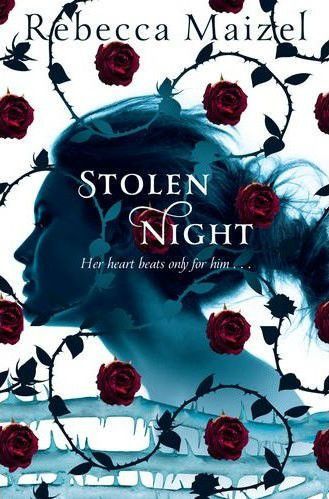
Books : The Vampire Queen series: Infinite Days (2010) and Stolen Nights (released July 2012)

Bio: Rebecca Maizel graduated from Boston University and the Rhode Island College master’s program. She teaches community college in Rhode Island and is studying to receive her MFA from Vermont College.

My interview (29/04/2012):

On Writing:

Did you always know you wanted to be a writer?

I’ve been writing since I was a little girl. When I was a kid most people were playing with Barbies, I was using my sister’s video camera to make movies starring my Barbies. I guess I was thinking in a narrative format even when I was really little! Also, I loved dance. I was in recitals and danced competitively until I was an older teenager. There was a connection for me between a choreographed dance and a choreographed scene. I haven’t gotten to the bottom of this yet  – but I will!

When and where do you write?

It really depends on the day. I write in my office at home, mostly. But these days if I’ve seen too much of my office, I’ll work at a coffee shop. In Rhode Island, I love a place called Java Madness which is fun because it’s right on top of the water. Mornings are best for me creatively but revisions I can do at night.

Do you ever experience writer’s block?

I try to listen to music, which is similar in tone to what I am writing. I go for long walks, I put the project down for a few days. Sometimes what helps is writing a letter from one character to another character within the story, writing from their point of view. For instance, in Infinite Days, I might write a letter to Lenah from Justin or vice versa. I usually do this with a character or situation I am having trouble pushing through.

What do you say to people who want to be writers? How difficult is it to get published?

You have to love the craft. Don’t write just to be published. Write because your characters deserve your time and effort. Write because this story is coming to you from the depths of your gut. Publishing will come in its due time. Hone your craft, perfect your sentences. Make it sing.

Is it better to outline and plot your novel or “go with the flow”?

Well, I think it really depends on your story. I always find it best to outline. There’s that dreaded ACT II of your book that somehow always needs the most work. I find it helpful to outline as best as I can. I usually veer off from it but if the major act points are there, I know the direction of my scenes. You can still “go with the flow” even if you have a direction.

Do you set goals for yourself as you write?

Outside of my editors’ deadlines? No. I write as scenes come to me. I get my best work done when I’m driving listening to music. Then I rush home, and get them down on paper. Sometimes this takes hours and I have a rush of scenes. I make sure that I write a 4-5 hours every day and make some progress. Sometimes progress means reading because I need inspiration.

On “The Vampire Queen” novels:

To write this specific series, where did you get your inspiration from? Were you aware of the coming vampire trend in YA literature when you wrote it?

I started to free write one day. I literally sat down, started writing and Lenah’s voice came through, I let her tell the story and 8 months later, I had a draft of Infinite Days. I wish this story were more exciting. I should say something like, I fell down, cracked my head and when I was in the hospital, I had A VISION! A near death experience! But no, I was in a dark library free writing.

After I had written the novel, I started to read everything in the genre so I could see what else was being published. Someone recommended the Twilight series to me and I thought (after reading it) “wow, this is huge. I wonder if there is room in this genre for me?”

Lenah Beaudonte: How did you come up with this (awesome) character?

I connected to her voice. It was so strong; and sinister and tragic. I wanted to tap into that sorrow and darkness. I wanted to bring this person, whoever she was back out to light. It turned out that she was a vampire and thematically, it worked. Every person out there has done something they aren’t proud of. And whatever that thing is, they have to live with it – forever. That’s Lenah but times about a million! I just started writing one day and there she was with a motive, a purpose, and some really scary enemies.

What type of music do you listen to when you write this series?

I listen to music when I write but it has to be music without lyrics. Most of the time its operatic or choral music like a soundtrack from a movie or ambient. I know a lot of writers use music to illuminate the mood or atmosphere of a scene, I know I do. Listening to music as I write helps me imagine a scene more clearly in my head. It’s strange to think of fiction in “scenes,” like you would a movie but I think it’s easier that way.

Some tracks:

1. None Can Die – Tristan and Isolde Soundtrack

2. Little Women Soundtrack

3. Tall Ships – Bill Leslie

What are you working on now? Is it a “Vampire Queen” novel?

I have started Book 3. I am working on other books as well but they are very top secret.

When is “Stolen Night” finally coming out?

July 5th in the UK! Soon thereafter in the US.

Reading advice:

Which authors inspire you now?

AM Jenkins, Franny Billingsley, Coe Booth, An Na, and many many others. I’m inspired by beautiful language and hot fictional boyfriends. 🙂

Which YA books would recommend?

Last great books I read:
Gina Damico – Croak
AM Jenkins – Beating Heart
Laini Taylor – Daughter of Smoke and Bone
Coe Booth – Bronxwood

Liked this interview? Check out my interview with Rachel Caine (author of the Morganville Vampires series) here and my interview with Beth Fantaskey (author of Jessica’s Guide to Dating on the Dark Side) here.