ROW80 Round 4 – Goals!

October 1st, 2012 (that’s tomorrow!) is the official start date for Round 4 of A Round of Words in 80 Days (aka ROW80). I have decided to join this writing challenge for the third time. Created by Kait Nolan, ROW80 is “the writing challenge that knows you have a life”, or “the challenge that champions the marriage of writing and real life.” Unlike NaNoWriMo which runs for only a month, each ROW80 round runs for 80 days and the participating writers have to set themselves writing goals for that time. Each Wednesday and Sunday, we check in and let the others know how we are doing. The idea is to form writing habits that writers will hopefully continue once the challenge is over.

As you may know if you follow this blog, my daily life is pretty crazy. I have a day job that keeps me extremely busy, I travel a lot and I read tons of books. Fitting some writing time in my schedule is a challenge, but I’m still very intent on getting published one day.

So here are my goals for this round (and yes, I know they haven’t changed much since the last round, but if at first you don’t succeed…):

Write or edit every day

Editing – Finish my current round of editing for The Last Queen, get my manuscript critiqued and beat-read, then edit some more.

Writing – Write a short story, and continue writing the first draft of The Cursed King

Round Four starts on Monday, October 1st and will end on Thursday, December 20th.

If you would like to join in this writing challenge and become a part of the ROW80 community, here are the rules:

  1. Post a goals post in which you lay out your goals for this round.
  2. Post a check-in post every Wednesday and Sunday, in which you share your progress with the other ROW80 participants.
  3. Comment on other participants’ check-in posts.

Here is the Linky for the other participants’ posts. What are your ROW80 goals for this round?

On characters : whose story is this anyway ?

Hello gentle reader,

Today is Sunday, so here is my weekly post about the writing process. Hope you all had a lovely week. If you’re here to enter my Stuck In A Good Book Giveaway, click here.

As you may know, I’m currently revising my WIP The Last Queen, and this week I have been thinking a lot about characters and points of view. In most stories, the viewpoint character and the main character are the same person. But it doesn’t have to be. In my WIP, my main character is not the hero of the story. And it’s perfectly fine to write your story this way, as long as you know what you’re doing.

In The Writer’s Digest Guide to Science Fiction and Fantasy, Hugo Award winner Orson Scott Card explains:

“When you’re deciding whom the story is about, remember that the “hero”, the main character, and viewpoint character don’t have to be the same person. Most of us use the term hero as an informal synonym for “main character”. But in our day (…) it’s useful to keep a distinction in mind.

The hero is the character that the audience hopes will achieve his goals and desires – the character we are rooting for. There’s a moral judgment involved here. (…) We want him to win.

But the hero isn’t always the main character. Sometimes the most important character in a story, the one who makes everything happen, the one whose choices and struggles the story is about, [is another character].”

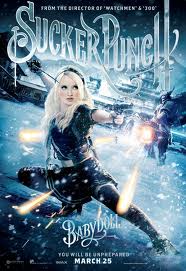
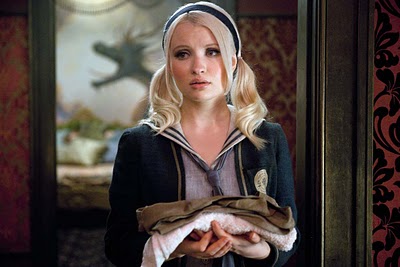
One of the best examples of this duality in a story is the movie Sucker Punch by Zack Snyder (2011). In this story, the main character is a girl named Sweet Pea.

She is the narrator of the story and the leader of the group of characters. She makes the decisions, and the story revolves around her choices and future.

But she is not the heroine of the movie. The heroine is another girl, named Baby Doll. She is the one the audience connects with and cares about. She is the one we follow to find out if her hopes and desires will be fulfilled. And it so happens that her desires and hopes involve giving Sweet Pea a bright future.

So how do you go about choosing your main character?

1)      You decide what you want to write about. What you want to say through your story.

2)      You decide whose story you want to tell. You choose your main character,  a voice to speak throughout the story, a character who connects with the reader.

3)      You decide if this main character is the hero of your story. Most of the times, the answer will be yes. But sometimes, it might worth considering the answer no.

 Then you write.

“And finally this question, the mystery of whose story it will be. Of who draws the curtain. Who is it that chooses our steps in the dance? Who drives us mad? Lashes us with whips and crowns us with victory when we survive the impossible? Who is it, that does all of these things?

Who honors those we love for the very life we live? Who sends monsters to kill us, and at the same time sings that we will never die? Who teaches us what’s real and how to laugh at lies? Who decides why we live and what we’ll die to defend? Who chains us? And Who holds the key that can set us free…

It’s You.

You have all the weapons you need.

Now Fight!”

Sweet Pea in Sucker Punch

So how do you go about choosing your main character? Is your main character always the hero in your stories? I’d love the read your input below!

ROW80 Check-In 10: Rae Carson’s success story

Hello gentle reader and fellow writers,

This week I have been hearing a lot about a British teenage writer who got a 6-figure book deal in less than 2 years. As dreamlike as these publishing stories are, I wanted to highlight another author’s story today.

Rae Carson is a YA High Fantasy author whose first book, The Girl of Fire and Thorns, came out in 2011. It was a nominee for the Andre Norton Award and the William C. Morris YA Debut Award. It was also an ALA (American Library Association) Top 10 Best Fiction for Young Adults honoree in 2012. The second book in The Fire and Thorns Trilogy, entitled The Crown of Embers, is coming out on September 18th 2012. Her third book, The Bitter Kingdom, will be published in 2013. In June 2012, she sold a new romantic fantasy trilogy set during the American gold rush to HarperCollins’s Greenwillow Books.


Rae’s journey into publishing is interesting because it was slow. She became serious about writing back in 2004, and it took her 7 years to get a book published. Along the way she sold a couple of short stories, wrote a first book which is still in her drawer, then in 2005 she wrote the first draft of The Girl of Fire and Thorns. She got an agent, and never sold the novel to a publisher. So she revised it and decided to go with another agent, who managed to sell the book within 24 hours. It took then another couple of years to have the book sitting on bookshelves in bookstores.

Here is what Rae says on her website:

I graduated college with a degree in Social Science–which qualified me to flip burgers–and a mound of education debt. I still didn’t know what I wanted to do when I grew up.

Well, that’s not true. I did know. I wanted to be a novelist. But that just wasn’t practical, and I had to come up with something else. I had to have a Plan B. So I tried bank tellering, secretarial work, customer service, inside sales, substitute teaching, data entry, logistics, and even machine shop-ing. I didn’t enjoy any of it.

In 2004, after quitting a very high paying job in a very toxic atmosphere, I decided to get serious about writing. It was the only thing I kept coming back to, the one thing that had held my interest over time and distance and lots of life change. So I joined the Online Writing Workshop for Science Fiction, Fantasy, and Horror where I met my future best friends, my future husband, and my calling.

I spent the next few years happily writing awful stuff. During this time, I got to know C.C. Finlay online, and after going on three real-life dates, I moved from California to Ohio to marry him. The writing became a lot less awful, and eventually I sold my first novel to Greenwillow/HarperCollins.

Hindsight is easy, I know, and writing about the awkwardness of adolescence is way easier than living it. But I can say unequivocally that although growing up is hard, it’s totally worth it. It’s possible to become your better self. And dreams, no matter how impractical, are made to be pursued.”

So do you find this story inspirational? Do you believe the traditional route to publishing is too slow? Or does it guarantee great books from great authors for readers? I’d love to read your thoughts in the comment section!

You can find Rae Carson on Twitter and Facebook.

To write this post, I have used:

http://www.locusmag.com/Perspectives/2012/07/rae-carson-amulet-of-power/

http://shelf-life.ew.com/2012/09/13/fire-and-thorns-author-rae-carson/

My ROW80 update for this week:

this week I have tried writing a short story AND revising my WIP The Last Queen. The reuslt is that I have a unfinished short story and I’m late in my revisions. So for the last week of this round, I need to focus on revisions.

How are you other ROWers doing? Here is the Linky to support each other!

What is “strong writing” ?

One of the most common reasons for agents and publishers to reject a manuscript is « weak writing ». Rather than listing here what makes your writing weak, I’d like to offer a few pointers to help you make your writing strong – or stronger. I will use The Hunger Games by Suzanne Collins as an example, since I think most of you have either read the book or seen the movie based on it.

What you need to work on to make your writing “strong”:

1-      The plot

In real life, things rarely go according to plan. Then why should they in books? Your Main Character needs to start out with a plan (for the day, for the year or in life). Then everything needs to go awry.

 In The Hunger Games, Katniss is constantly faced with the unexpected. She goes to the Reaping thinking she or Gale will be picked. It’s Prim who is chosen. She enters the arena thinking she’ll have to count only on herself to survive. Then she finds an ally in Peeta.

2-      The characters

The world cannot revolve around your Main Character. In some stories, the characters seem to exist for the sole purpose of helping the MC or making her miserable. When you’re told you need to “flesh out” your characters, it means you have to make them unique, but it also means you have to give them their own story, their own plan, their own desires, their own AGENDA that will have nothing to do with the MC.

In The Hunger Games, Effie has her own agenda (get promoted to a better district, have a good career) and it so happens that the best course of events for her is if Katniss wins the Games. So she helps Katniss along the way. But if you look at the story from her point of view, Katniss is a means to an end (at least at the beginning).

3-      The pace

Strong writing means no dull moments. It doesn’t mean you have to write an action-packed story in the strictest sense of the word, but it does mean things need to happen in every chapter, and there needs to be a “hanger” at the end of each chapter that will keep your reader reading.

In The Hunger Games, each chapter ends with a cliffhanger. If you write romance,  your “hanger” doesn’t have to be your MC waking up to “a wall of fire descending on” her, but it has to be something that makes the reader turn the page.

4-      High stakes

Having high stakes in your story means that your MC needs to be faced with hard decisions. Your reader needs to wonder what the outcome of the situation will be. Your reader needs to care about your MC making the right decision.

In The Hunger Games, the stakes cannot be higher since every decision Katniss is faced with means life or death for her or someone else. But a love triangle can constitute high stakes too. What works well in The Hunger Games is that Katniss choosing between Gale and Peeta is a very complicated decision, given the circumstances and who they are.

5-      Style

To avoid a so-called “awkward writing”, you may choose to write short, to-the-point sentences.

In The Hunger Games, Collins’ style is simple and it works. Each sentence is carefully worded, with judiciously chosen images. Example: “Behind Peeta, Cato slashes his way through the bush.” That’s 9 words. Yet we get a clear sense of the scene.

6-      World building / Descriptions

When your writing is strong, your reader doesn’t notice when you include world building or descriptions in your story.

By the end of The Hunger Games, the reader has a clear idea of what Katniss, District 12, the Capitol or the Games Arena look like, yet it’s hard to remember exactly when Collins described them. She intertwined the descriptions with her story.

7-      Depth

Strong writing is a tool to make your reader think. You read The Hunger Games for the story, the characters, the suspense. But the reason why so many readers enjoyed it so much is that it tackles important themes. It questions reality TV, freedom and the things we take for granted in our Western societies.

8-      Grammar, spelling and punctuation

No strong writing without them!


So strong writing makes effortless reading. Your readers shouldn’t be able to see through your writing devices. They should be able to believe in, and care about, your characters so much that when the Gamemakers announce that “both tributes from the same district will be declared winners if they are the last two alive”, they call out Peeta’s name at the same time Katniss does.

Do you agree? What makes “strong writing” according to you? I’d love to hear your thoughts in the comment section!

ROW80 Check-In 9 – Prologues: How and why to write one

Hello gentle readers and fellow writers,

Last week I came across an interesting post on the MythicScribes forum. It is a great forum for fantasy writers and a member called Lunaairis posted his thoughts on prologues on August 17th 2012.

Usually, writers are advised to avoid including prologues at the beginning of their novels. Prologues should be banned because they most likely are 1) unnecessary lengthy narrative of back story, 2) boring scene-setting that can be cut without harming the plot, 3) information that should be your chapter One, 4) something that readers don’t read anyway.

However many published Epic Fantasy books do start with a prologue and Lunaairis explains in his post when and how this is acceptable:

“I was looking at a post about prologues and I couldn’t help but think that there seems to be something wrong with people’s reactions to them. I for one like prologues as they can set the tone for the rest of the story; When they are prologues and not just masses of text. After reading Farlander (by Col Buchanan) I have realized what makes a prologue good, and why more fantasy stories need them.

1) A prologue should be like the story you will tell but in miniature, it should be no longer then your longest chapter and should never be split into parts (I’ve seen this done and it’s just horrendous). That said you should always leave the prologue to be the last thing you write. A prologue is so much like a door hinge I can’t even begin to explain. It is best used with the idea to gather readers; it’s a chapter the average man/woman or child can read at a book store to get a feel for the authors writing without going into the main story. It is what an author should use for getting the reader from the real world to their fictional world. Again like a door hinge it keeps the book open for the public eye to grab a glimpse.

2) The author can also use the prologue to slip in information that the other characters in the novel might already know (if it is important to the story). You wouldn’t want to write a chapter about a city falling to pieces, only for it to have no purpose for the rest of the story, waste-of-space much? (…) Don’t allow prologues to become information dumps, remember you are trying to get the average reader into your story, don’t bombard them with names that won’t or can’t be explained till 2-3 chapters in.

3) Prologues, after keeping in mind that they should not be long, they should also not be short. A prologue consisting of 1-4 paragraphs is rather useless; all the information presented could be bleed into the speech of some of the characters. Removing the need for the prologue all together. If there are only 1-4 paragraphs it’s likely that you just wrote an information dump and should delete it anyways.

4) There should be a story going on in your prologue, a beginning and an end. Introduce a key character in your story, Maybe a villain? The main character? A magic object? Something that has reason to exist, and has wants and needs. Present them a challenge; it could be a rival, a theft (the theft of a person’s life, an object, a person or a way of thinking) or maybe the end of a cycle. (…) Remember when coming up with the challenge, it may be a good idea to take the main problem of you fiction but show it on a miniature scale. If your story is about racism show a glimpse of the racism here.

5) Now show off the character or object’s skills by somehow getting them though the situation. This is a great way to get your reader interested in the character or object they are going to follow for the rest of the book. It’s time to show their talents, as this character or object may not be the only main character or object of the novel but is the one that pulls the story along, and likely won’t be showing up again for a few chapters.

6) Never talk history in the prologue; write as it happens. Do you remember sitting in those boring history classes with your unexciting history teacher? Thank god I loved history and never had a crappy history teacher. But I know other people who have and I also know they don’t like to read about it in their fiction, so keep it out of there! There is a time and a place to talk about the last great war between the Jubjubwicks and the Didolgigs but the prologue is not the place to be talking politics from a second source.”

So what do you think? Do you agree with Lunaairis? Have you included a prologue in your novel? If yes, what is it like? Or are you against prologues? Let me know in the comment section!

Finally, my update: I have had a good writing week after a very lazy summer on the writing front. I haven’t worked on my WIP, but I have written a short story, worked on my query letter and devised a new editing plan for my WIP. Next week I’m planning on diving back into editing…

How are you fellow ROWers doing?  Here is the Linky to the list of participants.

Happy writing!

Gearing Up To Get An Agent Blogfest – Meet and Greet

Hello gentle reader,

this month I am taking part in an exciting blogfest: Gearing Up To Get An Agent (aka GUTGAA) hosted by the amazing Deana Barnhart.

What is GUTGAA? you ask.

GUTGAA is a blogfest Deana Barnhart started last year “in the hopes that those of us striving to reach “agented” status could come together, polish those pitches and have fun at the same time.”

Today is the first day of this blogfest and it’s Meet and Greet time… If you want to join the fun and sign up for the blogfest, you can do so here. Then add a Meet and Greet post on your blog and you will have from today until Friday, Sept 7th to visit others’ blogs and get to know them. Have fun and visit as many as you can!

Questions for the Meet and Greet
Quick bio

I am a writer of YA High Fantasy novels. I live in an English castle, travel extensively, read voraciously, listen to music bands few people have heard of and watch too many movies to count. In case you are wondering, I also have a full-time job, so I mostly write at odd hours and drink a lot of tea. I am also a member of the British Fantasy Society.

Where do you write?
At home, at my desk in my living room. From my window I can see the castle’s park and the beautiful English countryside beyond. No need for a retreat for me!
Quick. Go to your writing space, sit down and look to your left. What is the first thing you see?
My armchair. This is where I sit to read. And I read A LOT.
Favorite time to write?
Evenings.
Drink of choice while writing?
Tea!
When writing , do you listen to music or do you need complete silence?
I need music to write. I even wrote a blog post about my favourite writing music.
What was your inspiration for your latest manuscript and where did you find it?
I write epic fantasy. I have had my WIP in me FOREVER. I think I got the inspiration for it about ten years ago. I wanted to write a story with a strong female teenager as the main character. I also liked the idea of a fantasy land where humans were the lesser people. Finally I wanted to write a love story that would be as realistic as possible, although set in an imaginary land.
What’s your most valuable writing tip?

Write every day, and NEVER give up.

Thanks for stopping by! Feel free to comment below and I will definitely pay your blog a visit.

Also you can enter my 100 Followers Giveaway here and win YA books!

Finally, I would love to hear from you on Twitter if you wish to know me better.

ROW Check-In 8: Elizabeth May on Writerly Misconceptions

Hello gentle reader,

so I had a tough week. I was jet-lagged and I was having doubts about this whole “let’s get my book published” thing. So I didn’t write. Instead, I read great books and decided to postpone my writing until next week. And I found a post by debut author Elizabeth May. She posted it her blog on November 22d, 2011. Since then she has sold her YA steampunk novel THE FALCONER and it will be released in May 2013.

Here is her post:

Writerly Misconceptions: YES, YES, YOU DO WORK

Basically, I’ve come to understand that aside from the other things I have to do (that dissertation to finish, that photography business to run, that teaching anthropology thing I do), I have to write sometime.

Have to.  Because, while it might have been a hobby before, writing is now one of my jobs.  I have a trilogy to plan.  A sequel I should probably be writing as I type up this blog…  I am doing things!  Important things!  My heroine is a mess and I have to FIX HER.

So when I take a day and sit on my ass in front of the computer for hours, that’s not me being lazy.  That’s me bringing home the bacon.

The other day I asked Mr. May to do some task that I really can’t recall right now because I’m only on my third cup of coffee.

His response?  ”Wait, weren’t you home all day?”

Subtext?  ”You totally could have done this thing because while I was out working, you were sitting at home.”

It’s a totally innocent comment.  He’s right.  I was home all day.  I made two pots of coffee, clicked around on mah laptop, answered a few business e-mails, worked a bit on my dissertation write up that my supervisor is demanding — and oh yeah! I wrote some of that sequel.

Now, before anyone judges Mr. May (remember that I love him and he is not a writer), he totally didn’t mean this to sound dismissive of my work.  He is voicing a very common misconception about writers.  That writing a book is easy work* and that because most of us work from home, we are ”lucky” not to have to “go to work.”

Basically, that we are less busy because writing is dependent upon the rules and hours authors set for themselves.  If we all had offices away from the home, perhaps this misconception wouldn’t exist.  But because we prefer comfortable spaces (homes or coffee shops or cafes, or my favourite place of all, the couch) it’s perceived as, essentially, laziness.  Because I could be cleaning instead of typing.  I could be doing something active.  I could be going out to run errands.  Instead, I’m being sedentary.**  Some people believe writing is not a “real job” for all of these reasons.

Because this is my significant other, I had to set this straight.  I said, “Assume that whenever I’m staying home for the day, it is my designated ‘work on book’ day. It is not my ‘clean ALL THE THINGS’ day.”

And maybe, if I finish a chapter and feel like cleaning, I will clean.  But not before!

Mr. May, of course, apologized.  Because when people make comments like this, they don’t generally realize they’re speaking from this socially engrained idea that “work” equals “being active,” or that a “real job” requires “leaving the nest, staying out from 9-5.”***

So I’m clarifying this right here, right now.  Writing is work.  Writing is a job.  Writing is not for lazy people.  We don’t write because it’s easy.  That is not why we sit in front of a laptop or a blank sheet of paper for hours.  That is not why we spend years writing practice books that no one will ever read.  That is not why we spend all that time querying and getting rejections.  And that is certainly not why we write book after book.

Because we’re lazy?  No.  It’s because we’re compelled to.  It’s in our nature.  That is the only explanation for spending years writing unpublishable, crappy manuscripts to get to that point where our work is good enough to put out into the world.

So if you’ll excuse me, I will continue to sit on my couch and work.  Because this is how books are made.”

___________________________________

* Has anyone heard this? “I could write a book if I wanted!”

**  I’m being sedentary because I’m writing a damn book.

*** I’ve also heard the phrase used in reference to “non-career-like jobs” — the conceptualization of “real jobs” is limited to a few vocations, and let’s face it, it’s a shitty thing to tell anyone.  Right along the lines of “write a ‘real’ book” or “read a ‘real’ book.

How are you other fellow ROWers doing? You can visit them here.

ROW80 Check-In 7: What I learned at WriteOnCon

Hello gentle reader,

this week my writing schedule was completely thrown off, thanks to WriteOnCon.

On Friday I did a recap of the online writers conference WriteOnCon and today I thought I could go over a few things I learned during this crazy week. YA writer Aimee L. Salter already wrote a great blog post on this topic and I suggest you read it since she really made the most of the conference (she received six full manuscript requests and a direct referral to an editor!). I was less dedicated than her to fully take advantage of the conference (I only spent a few hours a day in front of the computer) but I did learn a few things worth sharing if you ever want to get published traditionally …

1)      Write an awesome book first.

Having a successful author platform and thousands of followers won’t do any good unless you have a great book to sell. Ultimately, agents and editors want an amazing book that will blow them away. The author platform and the followers will only be the “icing on the cake”.

2)       It’s a crowded world out there.

I read dozens of awesome queries on the WriteOnCon forums. These writers are going to get published, I have no doubt about it. And instead of being depressed by the prospect of having to “compete” with all those great writers, I found that reading their work on the forums  was motivating. Because now I know what agents getting my query will compare it with. I know I have to be as good as all those talented writers out there.

3)      A query has to make your book stand out.

Before WriteOnCon, my query was ok. I had sent it to 5 agents and got 2 partial requests. I hadn’t committed any of the Deadly Sins of Querying. My query was professional and brief. It included the agents’ names, the title of my MS, genre and word count, and a brief summary of the plot/main characters issues. But having an average query is not enough to get published. A query has to be outstanding. I learned that I had to make every word of my query count to make it unique and to really hook my reader.

4)      Don’t rush.

You should never send a query or a manuscript that is not ready and in the best possible shape. But getting your query/MS ready and in the best possible shape takes time. And it’s OK. Take a year to polish your MS. Take two! Revise, revise, revise. If your book is really unique and awesome, it will get published regardless of trends and external influences.

5)      Seek help and feedback.

I have said it before on this blog, but WriteOnCon confirmed my thoughts: you can’t do this alone. You cannot get your MS ready and awesome without people giving you feedback on it.

6)      Listen to the advice of professionals.

They are the ones who will read your query and hopefully buy your book and turn you into the next J.K. Rowling. Listen to what they have to say. Read their blogs, watch their vlogs and seek their advice. Be professional. They are.

7)      Trust your instinct.

A conference such as WriteOnCon is a great way to get advice. TONS of advice. And by the end of the day, you’ll notice contradictions. Don’t mention world-building in your query. Mention some elements of world building in your query. Don’t say you’re planning on writing a book series. Let people know you’ve devised your book as the first installment in a series. Don’t start your novel with a dream/prologue/MC running. It’s ok to start your novel with a dream/ prologue/MC running as long as it’s essential to the story. A YA novel shouldn’t be longer than 75K. No, 80K. No, 100K.  Actually 115K is ok in some cases. The next YA trend is edgy contemporary. No, it’s historical novels… You get the point. If you listen to everyone in the profession, you end up pulling your hair out.

So, at the end of the day, trust yourself. Make your book as awesome as possible and believe in it.

YOU CAN DO THIS.

To check out other fellow ROWers, click here.

WriteOnCon 2012 recap

Hello gentle reader,

you may have noticed that I have been very quiet on this blog since Monday: the reason for this is that I was attending an online writing conference called WriteOnCon.

According to its website, WriteOnCon “is a totally free, interactive online Writer’s Conference held annually during the summer. The first Conference, held August 10-12, 2010, had over 11,000 attendees. (…) WriteOnCon is not exclusive to kidlit writers. In order to stay organized, the curriculum is focused on Picture Book, Middle Grade, and Young Adult writers. However, much of the information provided applies to all writers, and many of the publishing professionals who participate cross over.”

This was my first year attending the conference and I have found it to be incredibly useful. The 2012 conference offered live professional panels, vlogs, blog posts, forum events, competitions, critiques and book prizes.

In case you missed it, it is not too late to access some of the most interesting content. I strongly recommend you check out:

– the Live Panel of Professionals (Tuesday) and Live Panel of Professionals (Wednesday): everything you need to know about the publishing world.

– the writing and revision tips: Tips for Starting a New Project, Hooks and Killer First Lines, What is Voice, and How do I Get it?, The Importance of Craft, Plotting with 3×5 cards,  Building Characters into Real People,  Elements of Writing, The Revision Checklist and “Back to Basic” Writing Tips.

– the tips on the querying process: Knowing When Your MS is Ready to Query and The Inside Scoop: Get Your Query Noticed.

– the discussions on genres: Differences between YA and MG, Middle Grade Rules, Picture Book Query Critiques.

– there are also many tips on social media: How to Get Started With Social Media: DON’T Do All The Things! and Blogging Basics

What I liked about the conference was that there were posts for beginners (like Reading like a Book Blogger which discussed the book bloggers’ pet peeves) and other posts for more experienced writers (like Choosing the Right Critique Partners).

My favourite post was World-building in Science Fiction and Fantasy by author Mindee Arnett, mostly because I write Epic Fantasy.

The last aspect of the conference that I loved was getting feedback on my query and some of my writing in the forum. My query is still up if you want to comment on it!

Did you take part in WriteOnCon? Did you find it useful? What did you enjoy most about it? Do comment and share your experience! I’d love to hear your thoughts…

ROW80 Check-In 3 On the importance of feedback and beta readers

Welcome gentle reader,

Week 2 of ROW80 (Round 3) has ended and today I wanted to mention the importance of getting feedback on your WIP.

Because writing your novels in a vacuum can only take you so far, there is always a time when you need beta readers in order to make some progress.

“What are beta readers?” you may ask.

According to Wikipedia, “the author or writer, who can be referred to as the alpha reader, may use several beta readers prior to publication. A beta reader (…) can serve as proof-reader of spelling and grammar errors or (…) work on the “flow” of prose. In fiction, the beta reader might highlight plot holes or problems with continuity, characterisation or believability.”

So, I’ll admit it, sending off your Precious Manuscript to beta readers can be scary. No one wants to hear their writing is dreadful and their WIP should be revised from start to finish.

But you need to take that plunge in order to know what your WIP is really worth and to make the appropriate corrections BEFORE you send your Masterpiece to a dozen agents.

Indeed, it is essential to query agents with a manuscript that is in the best possible form in order to maximize your chances of success. If you follow US literary agent Sara Megibow’s #10queriesin10tweets on Twitter, you’ll notice that she receives 200 submissions A DAY. And out of those, she often comments that the writing is “poor” or “weak” or “unclear”. You don’t want to be one of those writers, do you?

So to avoid such rejection, you need to find beta readers who will critique your query/novel/short story. They will find writing issues and they will tell you about it so you can fix them.

Now, how to choose your beta readers?

Even if I’m going against the flow here, I’ll say start with your family and friends. Often, you’re told not to do this because you need critique, not praise, and your relatives tend to just tell you that you are the next big thing. Or they laugh at you. However I have found that getting some of my friends and family members to read my WIP is worth it. Firstly they are all non-writers and they are readers of published YA novels, so it is interesting for me to get their reactions on my own YA novels. One of the earliest comments I got from one of these beta readers was that my WIP was “like a real book.” It was very encouraging for me to hear that my novel could be compared to published YA books. These non-writer beta readers will tell you if your WIP is boring or impossible to understand, if they liked your characters and if they enjoyed reading your story. That’s the first step.

Then you need to find beta readers who are writers themselves. These beta readers are valuable because they will spot writing issues more easily. They will tell you about spelling and grammar errors, about plot issues etc. You can find these beta readers through a writing group, an online community or via your social media platform.

This feedback may or may not be what you want to hear? But if you listen to what your beta readers have to say, you’ll improve your chances of getting published.

Some interesting articles on beta reading:

Susan Dennard http://susandennard.com/2010/05/18/975/

Diary of a Random Fangirl http://therandomfangirl.wordpress.com/2012/04/04/writing-wednesdays-the-importance-of-beta-readers/

Bryan Thomas Schmidt http://bryanthomasschmidt.net/2011/05/21/6-tips-for-being-a-good-beta-reader/

To wrap up this post, my ROW80 progress this week:

1-     Write everyday: 5/7 days. This week I wrote every day except for Tuesday and Saturday. A special thanks to Lauren Garafalo for leading ROW80  sprints on Twitter, they really help!

2-      Self-edit The Last Queen: done. A little bit.

3-      Continue writing the first draft of The Cursed King: not done. Instead I wrote a short story.

Also, this week on my blog, you could:

–       find out how NOT to start your novel or how hook your reader from the first paragraph.

–     read an exclusive interview with YA author Kendare Blake about her writing and how she got her best-selling ghost story Anna Dressed In Blood published.

Here is the Linky for the other check-in posts. How are you other ROW80 writers doing?