ROW80 Check-In 7: Tamora Pierce on finding ideas & dealing with writer’s block


Hello gentle reader,

It is already time for another ROW80 check-in! My goals for this fourth round are as follows: Write or edit every day 4/7

This week I finished my current round of editing for The Last Queen. Unfortunately I didn’t do this every day but I did get a lot more done than last week. I’m hoping to get back to writing every day next week. Also this week my blog reached 200 followers and I have a giveaway to celebrate. Feel free to enter to win YA books!

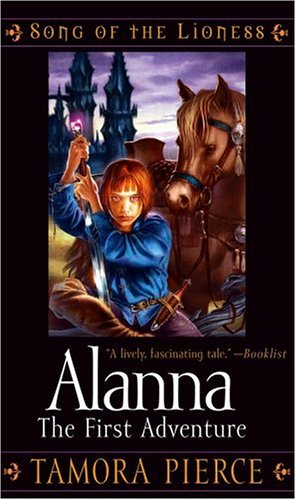
Now, on to an inspiring story to keep us going this coming week. Today I’m sharing Tamora Pierce’s tips to find ideas and fight writer’s block. When it comes to YA fantasy, one doesn’t really get more successful than Tamora Pierce. She has been writing since the 1980s and she is most famous for her Song of the Lioness quartet.

“Where do you get your ideas?

Some I stumble across: watching his nature programs, I decided British naturalist Sir David Attenborough would make a cool bio-mage. Watching my mother and sister produce blankets from balls of yarn and crochet hooks, I thought of it as a kind of magic, and wondered what all could be done with thread magic. Wrestling with my best friend’s dove gave me the ideas for Kel’s relationship with the baby griffin in SQUIRE. Pictures in magazines also give me ideas, as do stories in the news.

Other ideas come from my past obsessions. From the time I was six or seven until I was ten, I read anything and everything I could find about knights, the Crusades, and the Middle Ages. My next area of interest in knighthood was in the fantasy novels and Arthurian legends I read in middle school.

Another way I get ideas is from people: my Random House editor, Mallory Loehr, my agent Craig Tenney, my husband Tim, my friend Raquel…

Current events and history are also fertile ground for ideas. Keep a file of events and figures that interest you; it might prove useful one day.

The best way to prepare to have ideas when you need them is to listen to and encourage your obsessions. Watch and re-watch all the TV programs and movies you have a need to; read and re-read all the books, magazines and comic books; visit all the museums, zoos, galleries, concerts and wilderness areas; and listen to all the kinds of music that interest you. If you get a sudden passion for anything and everything to do with, say, gang warfare, starling behavior, painting frescoes, or jousting, go with the urge. Find out all you can. Even if you can’t use it right away, it’ll go into some holding zone deep in your brain, and surface when you need it. All creative people–not just writers!–expose themselves to as much information, in as many forms, as possible, in the hopes that it will be useful down the road, or even right now. You never know what will spark something new!
 

How do you deal with writer’s block? Here are some fixes I use when I get stuck:

  • Introduce a new character, a strong one with an individual style in speech, dress and behavior–one who will cause the other characters to review their own actions and motives to decide where they stand with regard to the new character.
  • Have something dramatic happen. As Raymond Chandler put it, “Have someone come through the door with a gun in his hand.” (My husband translates this as “Have a troll come through the door with a spear in his hand.”) Machinery or vehicles (cars, wagons, horses, camels) can break down; your characters can be attacked by robbers or pirates; a flood or tornado sweeps through. Stage a war or an elopement or a financial crash. New, hard circumstances force characters to sink or swim, and the way you show how they do either will move things along.
  • Change the point of view from which you tell the story. If you’re doing it from inside one character’s head, try switching to another character’s point of view. If you’re telling the story from an all-seeing, third person (“he/she thought”) point of view, try narrowing your focus down to one character telling the story in first person. If down the road in the world you’ve created someone has written a book or encyclopedia about these events, insert a nonfiction-like segment (that doesn’t give the important stuff away) as a change of pace. Try telling it as a poem, or a play (you can convert it to story form later).
  • Put this story aside, and start something else: letters, an article, a poem, a play, an art project. Look at the story in a day, or a week, or a couple of months. It may be fresh for you then; it may spark new ideas.
  • If you have an intelligent friend who’s into the things you’re writing about, talk it out with him/her. My husband often supplies wonderful new ideas so I can get past whatever hangs me up, and my family and friends are used to mysterious phone calls asking about things seemingly out of the blue, like what gems would you wear with a scarlet gown, or how tall are pole beans in late June?
  • Most important of all, know when it’s time to quit. Sometimes you take an idea as far as it will go, then run out of steam. This is completely normal. When I began to write, I must have started 25 things for each one I completed. Whether you finish something or not, you’ll still have learned as you wrote. The things you learn and ideas you developed, even in a project you don’t finish, can be brought to your next project, and the next, and the next. Sooner or later you’ll have a story which you can carry to a finish.”

How are other ROWers doing? Here is the Linky to support each other!

ROW80 Check-In 6 & Sunshine Award

Hello gentle reader,

So I had a crazy week, and for the first time since the beginning of this round, I didn’t meet my ROW80 goal, which is to: Write or edit every day. You also won’t find an inspiring story along with this post, simply because I didn’t have the time to find one.

Here is my week in numbers:

Number of hours spent editing/writing this week: 4

Number of hours spent at my day job: 54

Number of work-related dinner parties I attended: 2

Number of pest control interventions because of a wasp invasion in my kitchen: 1

Number of YA authors interviewed on my blog: 1 (you can read the interview here)

Number of writing contests I entered: 1

Number of awards my blog received: 1

Rhiann Wynn-Nolet was kind enough to pass on to me the Sunshine Award. This award is for “bloggers who positively and creatively inspire others in the blogosphere”. Although I am very flattered to receive this award, I am not going to answer the questions that go with it simply because they are all about my favourite food, my favourite colour and my favourite flower, and I don’t see how this can be interesting for you, gentle reader. I am also supposed to nominate 10 bloggers for this award, so I’ll just say: if you’re reading this and you’re doing ROW80, consider yourself (and your blog) nominated.

Hope you all have a great week! Here is the Linky to support each other.

ROW80 Check-In 5 : Claire Legrand on How To Come To Terms With Your Writing

Hello gentle reader,

And it is time for another ROW80 check-in! My goals for this fourth round are as follows:

Write or edit every day DONE

Editing – Finish my current round of editing for The Last Queen, get my manuscript critiqued and beat-read, then edit some more.

DONE: This week again I have been editing every day.

Writing – Write a short story, and continue writing the first draft of The Cursed King

I didn’t do any writing this week since I was focused on editing The Last Queen.

So this was another good writing week for me and I’m still happy with my goals. This week I also posted on my blog two posts you might enjoy: my Halloween reads recommendations and a discussion on the popularity of YA High Fantasy novels.

Now, on to an inspiring story to keep us going this coming week. Today I’m sharing YA author Claire Legrand’s tips for writers. Claire’s debut novel THE CAVENDISH HOME FOR BOYS AND GIRLS came out in August 2012.

“When I first started writing, I spent a lot of time online researching what writers should and should not do. There are many rules floating around out there dictating what supposedly makes for a good writing process and a bad writing process, a good writer and a bad writer, a book that will sell and a book that won’t.

Some I have encountered are:

  • You must write every day.
  • You should NOT write every day.
  • You should write [insert number of choice] words per day.
  • You should make a writing schedule and stick to it, absolutely no excuses.
  • You should be writing [insert number of choice] books per year if you ever hope to make a living in this business.
  • You must write at this pace.
  • No, this pace.
  • No way, THIS pace. Slackers.
  • You should write at least one million words before even thinking of querying an agent with a manuscript; before then, you’re not ready.
  • You should create an account for THIS social media service, and THIS one, and THIS one too, and post THIS many times a week.
  • You should blog regularly, on a set schedule, and stick to it. If you blog irregularly, you’re a bad blogger/writer/human being.
  • You should use Scrivener.
  • No, you shouldn’t.
  • You MUST outline, in detail.
  • You MUST outline, but only the main plot points.
  • Eh, you don’t need to outline.
  • You should plan your book around this method of story structure.
  • No, this one.
  • No, those suck, THIS one.
  • You should query one agent at a time.
  • You should query five agents at a time.
  • You should query ten agents at a time.
  • Your book should be between [number] and [number] words long, and anything else won’t fly.
  • You must use critique partners.
  • Your first drafts should look like this.
  • You should only have to do [insert number] rounds of revisions; anything more, and something’s wrong with you/your book/your soul.

Frankly, these shoulds and shouldn’ts start contradicting each other pretty quickly, and it can make a fledgling writer feel pretty lost. Heck, I’m all fancy and published now (and I say that tongue-in-cheek because there’s not much that’s fancy about it, and also, I still don’t feel like I know what I’m doing), and reading these kinds of statements STILL makes me feel pretty lost. They also, if I focus too hard on them, make me feel like I’m doing everything wrong when I can look at what I’m producing and rationally know that I’m not.

Rules can be a good thing. As Victoria Wright might say, rules help the world run just so.

But writing is not always a quantifiable activity. Much of it is instinct, luck, and plain old dogged persistence, whether that’s rigidly scheduled in a spreadsheet or just crammed into whatever spare thirty minutes you can find as your day allows it. And much of what works and what doesn’t for one person’s writing doesn’t translate to the next person. Therefore, I would say that many of the so-called universal writing rules we might see in blog posts, online articles, and tweets are really just what the author has found to work for herself, or for her friends, or for the majority of people within her peer group.

But that doesn’t mean it has to–or will–work for you (or for your book).

Such a statement seems elementary enough (everyone’s different! we’re all unique snowflakes!), but I still have a hard time accepting it. I’m a person very influenced by others, for good or for ill. This means some of my most productive writing days are when I’m “sprinting” online in the company of friends; this also means that other’s successes, failures, methods, and “musts” all have a way of affecting me deeply. I start to think I’m not doing enough or that I’m not doing it right, and then I lose confidence, and then I sit there staring at a blank Word document while scarfing down a box of Cheezits.

The thing is, I don’t do half the things on that list up there above.

I don’t use Scrivener; I have a notebook in which I scribble random thoughts. The rest is done in plain old Microsoft Word, with a lot of world-building and character notes jotted down in Notepad.

I don’t use critique partners. There is one good writer friend whom I trust to look at my unpolished work, but beyond that, no one looks at my books before my editor except for me and my agent.

I outline in detail, but I don’t have a set writing schedule every day, nor do I log my word counts or have micro-goals of any kind. I tried doing that, but it didn’t work for me because if I didn’t meet a goal for the day (or the week) I felt like a failure, and my work suffered for it. Instead, I shoot for big goals (finishing the book by this date) and as long as I meet that big goal, what happens until then doesn’t matter.

I write long what I call “zero drafts” (that is, the first ever draft of the book, before I make preliminary cuts, before I send to abovementioned good writer friend, before I send to agent). And when I say long, I mean long. And even beyond that, once a book has gone through revisions, it’s still on the longer side. I’m just plain wordy (as you can tell by reading this post and really my blog in general). (…)

What does this say about me and my writing?

Absolutely nothing. Except that I write long and then cut back during revisions. It does not reflect on the quality of my writing, the effectiveness of my methods, or how I measure up against the writing and methods of others.

Likewise, my method of outlining, my writing schedules, the fact that I only have one beta reader, etc. etc., means nothing except that this system is what works for me and my books. End of story.

You hear that, brain??

So I’m going to tell you this, in hopes that myself, through writing it, will soak in the reminder (and because I know there are others out there who, like me, doubt and compare and wonder if they’re nuts or stupid or somehow wrong for writing like they do):

The way you write is not necessarily how others write.

Your books are not going to be as [insert adjective of choice] as others’ are.

Your writing will be just that: how you write.

Your books will be just that: your books (and no one else’s.)

Know this, accept this. The sooner you do, the sooner you will come to terms with your writing. And the sooner you do that, the sooner you can get to writing that next book (and the next one, and the next . . . ), no matter how long/short/bracketed/messy/outlined/pantsed/critiqued/Scrivenered/Worded/slowly written/quickly written/ it ends up being.”

How are you other ROWers doing? Here is the Linky to support each other!

ROW80 Check-In 4 : Jay Kristoff’s Query tips

Hello gentle reader,

And it is time for another ROW80 check-in! My goals for this fourth round are as follows:

Write or edit every day DONE!

Editing – Finish my current round of editing for The Last Queen, get my manuscript critiqued and beat-read, then edit some more.

DONE: I heard back from my CPs and beta readers at the beginning of the week and I have been editing all week.

Writing – Write a short story, and continue writing the first draft of The Cursed King

I didn’t do any writing per se this week since I was focused on editing The Last Queen.

So this was again a good writing week for me and I’m still happy with my goals. However I was so focused on my editing that I neglected my inbox and blog comments. I apologise if you’re waiting to hear back from me, I’ll get to this today. I didn’t have the time for any reading either. The only thing I did manage to do this week beside editing was keeping my blog alive with a Halloween book giveaway (you can enter here to win THE GRAVEYARD BOOK by Neil Gaiman if you wish). Also my blog received the Liebster Award!

Now, on to an inspiring story to keep us going this coming week. Today I’m sharing SF/F author Jay Kristoff’s 13 Steps to Getting an Agent. Jay’s first trilogy, THE LOTUS WAR, was purchased in a three-way auction by US publishing houses in 2011. The first installment, STORMDANCER, is out now. It is “a dystopian Japanese-inspired Steampunk Fantasy”. I have found the following tips on the Adventures in YA & Children’s Publishing blog.

“The agent search. You pick up your manuscript, nurtured from a tiny seed, and send it out into the world. It’s perfect. You love it. Surely, everyone else will too.

And then you watch agents curbstomp it, or worse, ignore it, months on end, until you look at this thing you once loved and question whether it has any redeeming features at all.

That pretty much sums up what it was like for me. Brief periods of giddy excitement. Disappointment. Intense self-doubt. Feigned apathy. Resentment. Months on end. Long is the way, and hard, that out of hell leads up to representation. And nothing anybody says makes it easier. You can have your betas say your MS is the next Harry Potter, you can repeat the absolute, perfect truth “It only takes one yes” until your voice fails, but ultimately, you’re still getting rejected. And rejection is a fun as funerals.

The thing that made it easier for me was mechanizing the process. Routine and ritual. I don’t claim to be any kind of expert. But I share my thirteen steps here, in the hope it might help somebody else out on that long hard road.

Step 1 – Write a book. Make it the best you can possibly make it. This is kinda the easy part, and I’m not kidding when I say that. By no means is it easy. But it’s easier than what comes after.

Step 2 – Finish the book. Really finish it. Don’t just finish your third edit and say “done!”. Scour the pages until they bleed. No truer words were ever spoken to me than this – “Your first chapter better be stonkingly awesome. Because that’s all most agents are ever gonna read.”

Step 3 – Stop finishing the book. You’re just ruining it now. There comes a time when you need to say “Enough, this thing is ready to go out”. Some people spend years polishing, and never get around to actually querying. That’s fear. Fear is the mindkiller. Say it with me and Muad’dib and send that puppy out to slaughter.

Step 4 – Do your homework – Go to Querytracker. Go to Agentquery. Subscribe to Publisher’s Marketplace. Visit agent websites, read interviews. Learn everything you can about them. Check outPreditors and Editors. Pay no money to an agent upfront, EVER. Do not let your desire to get published blind you to the realities. Do not let your hard work go to waste at the hands of a hustler. Do not be a sucker.

Do. Your. Homework.

Note – there’s a fine line between research and stalking. If you find yourself rifling through an agent’s trash or standing outside their apartment in the rain, you’re doing it wrong.

Step 5 – Prioritize your list. Who’s your dream agent? Do you put them top of list or midlist? Do you acknowledge your query is going to suck at first (because it will), or do you think it’s as awesome as it’s ever going to be (it isn’t) and blow your shots at your dream agents by using them as guinea pigs?

Step 6 – Forge a prescription for some quality painkillers, then write your query letter. There are entire websites devoted to this (writing the query, not forging a prescription). I won’t elaborate on it, but there are faaaaaaaabulous resources online, darling, and you should take advantage.

You can find my query on my blog if you’re interested. The version you’ll be reading was my third iteration. The first one blew more goat than wow I don’t even want to finish that thought…

Step 7 – Read the submission guidelines. This can’t be stressed enough. The brownie points I’m racking up by mentioning this fact will be enough to get me repped in my next seventeen lives.

Every agent is different. Some like you to send your query solo (which is why your letter needs to sing like Amanda Palmer). Some like a synopsis. Some like a sample. Some like watching episodes of House wearing only an old “Spice Girls” T-shirt and bunny slippers, but you don’t know that because you’re not standing outside her apartment in the rain, are you?

Are you?

Step 8 – Send it. Cross your fingers. Pray to whatever flavor of Flying Spaghetti Monster you prefer. Sacrifice a cat to the blood god. Seriously, cats are vermin, the less we have of them, the better.

I had around 15 queries in the air at any given moment. As soon as a rejection came in, I’d send out another. Some folks will tell you this is too many queries to run at the one time. Some will say it’s not enough. There are no absolutes here. You are stepping beyond the rim.

Step 9 – Wait.

Then wait some more.

You can choose to spend your waiting time however you wish. Writing your next book is a good way to go. Whatever you do, it had best be something you enjoy, because you’re going to doing a lot of it.

STORMDANCER is a rulebreaker –it really only took three months for me to land an agent on it, which is nothing. To put it in perspective, I waited three months for replies on some queries for my first ms. I spent five months waiting to hear back on a full (which incidentally, was a rejection).

So writing your next book while you wait? Probably a good idea.

Step 10 – Wait.

I realize I said this already, but it’s worth mentioning twice.

Step 11 – Learn from your rejections. My wife used to say to me “Stephanie Meyer got rejected nine times before Twilight got bought. J.K Rowling got canned a dozen times too”. I will say this now – those ladies had it easy. I took twenty two kicks to the baby maker on STORMDANCER. I took seventy on my previous MS. I had it easy. I know writers who got rejected over three hundred times before they got repped. Three. Hundred.

Most of your rejections will be forms. An automated, boiler-plate “thanks but no thanks”. If you’re lucky enough to receive feedback from an agent with your rejection, treat this like a nugget of gold. It’s a true rarity, and that agent is taking time out of an unimaginably busy schedule to offer it. Say “thank you” and be on your way.

When you get rejected, don’t ask why. You’ll be sorely tempted to. But sadly, it’s not the agent’s job to tell you what’s wrong with your ms. It’s your job to be telepathic. Yay!

Step 12 – Revise.

My query letter got better as I went along (hence you should consider the order in which you query your “dream picks” very seriously). If you’re getting lots of rejections, something is wrong. Of course, trying to fix it when you’re getting nothing but boiler-plate is difficult unless you have mutant powers. It’s maddening, but this is the status-quo.

Step 13 – Believe

I’ll depart from my wise-cracking, tall dark and scary routine long enough to give a little group hug now. Everyone needs a hug once in a while, especially querying writers. Here it is:

The only belief that matters in this equation is your own. It’s nice to have the support of betas or trusted friends, but it’s not necessary (the only person who had any idea that I was writing a book until I got repped was my wife). The only person who needs to believe you can do this is you. Everything else is window dressing. If you’re meant to be doing this, you can, and you will.

Believe in yourself. Keep the faith. At the end of the day, it’s all any of us have.”

How are you other ROWers doing? Here is the Linky to support each other!
ROW80 Check-In 3: Bree Despain’s Writing Tips


Hello gentle reader,

And it is time for a third ROW80 check-in! My goals for this fourth round are as follows:

Write or edit every day

Editing – Finish my current round of editing for The Last Queen, get my manuscript critiqued and beat-read, then edit some more.

I haven’t done any editing this week since I’m waiting to hear back from my CPs and beta readers.

Writing – Write a short story, and continue writing the first draft of The Cursed King

DONE : I worked on The Cursed King but progress was slow this week, although I did write every day except for Wednesday.

So this was again a good writing week for me and I don’t feel that I need to adjust my goals. This week I also managed to read one book and I kept my blog alive by taking part in The Next Big Thing blog hop: feel free to have a look if you want to know more about my WIP.

Now, on to an inspiring story to keep us going this coming week. Today I’m quoting bestselling YA author Bree Despain. I found the following on her website. Bree is an American author who has a degree in creative writing. She started writing full-time after being involved in a car accident and she has written three novels in her DARK DIVINE series.

Writing Tips

  1. Be a sponge. The more knowledge you can soak up, the better your writing will become. Take writing classes, attend writing conferences, and read as much as you can. There are plenty of online resources for writing classes, but if you can, take an in-person class at a local university or writing conference. There is something very energizing about sitting in a room with a bunch of other writers. And you will probably learn more from in-class debates, and critiquing other writer’s stuff, than you will from reading a computer screen filled with writing tips . . . hey, wait a second . . .hehe. Keep reading anyway 😀
  2. Don’t forget to write. Okay, that sounds silly . . . but really, it happens. Sometimes we get so absorbed in the task of learning about our craft, that we don’t actually ever sit down and do the writing. Or sometimes, we experience “information overload” and we get so overwhelmed we just need to unplug from the world in order to start writing. Remember—no amount of reading, class taking, networking, or schmoozing, etc. is going to get you anywhere if you don’t actually write. Write every day if you can. Carry a notebook to capture ideas when they strike you. I actually wrote the prologue for The Dark Divine on the back of a program during church.
  3. Join a critique group. Like I said, there is something magical about being in a room with other writers. And a critique group is a fun, inexpensive way to get feedback, advice, and brainstorming help. Plus, some of my favorite people in the world are my writing chicas.
  4. Let your writing sit for a bit. Like a good piece of cheese, let your writing “age” for a while before you send it out. Stick your manuscript in a drawer for a couple of weeks and then come back to it with fresh eyes. Let your critique group read it over and offer feedback. Sometimes, you may even need to put something away for a long time before you can really see the kinks that need to be worked out. After sending out the original version of The Dark Divine (unsuccessfully) to a few agents back in 2006, I realized that the manuscript needed a major overhaul—but I didn’t know how to do it. I ended up putting that book in a drawer (figuratively speaking) for over a year. I moved on to other projects, and then one day, the answers to my problems with The Dark Divine just started to work themselves out in my mind. I pulled the manuscript out again and spent the next year overhauling it, let it sit for a month, and then sent it out to agents again . . . and a few weeks later I landed the fabulous Agent Ted!
  5. Don’t be unwilling to revise. I’ve said it before and I’ll say it again: GREAT BOOKS AREN’T WRITTEN—THEY’RE REVISED! Revising is just part of writing, and a major part at that. Hardly anything you write will be golden the first time you put it down on paper. You will tweak and revise on your own, with your critique group, in writing classes, at writing conferences, then take your stuff home and revise, revise, and revise it again. And then you’ll send it out to agents, and more likely than not, you’ll end up tweaking and revising your book even more based on the rejections you get. Then you’ll send it out again, and when you land an agent—guess what? He/she’s going to make you revise it some more before it goes out on submissions. And then when you sell your novel . . . well, that’s when the REAL revising starts. And then when you think you can’t possibly revise that darn freaking manuscript one more time . . . they’ll send it to copy editing where you’ll find out that apparently the language you’ve been speaking all your life isn’t actually English . . .Okay, okay, you get my point? Sorry to say it, but you won’t make it anywhere in the publishing biz if you aren’t willing to revise your writing.
  6. Don’t do all of the revisions people suggest to you. I know, I know, I’m such a hypocrite. I just went on telling you that you MUST revise your book, and now I’m saying not to? Okay, before you kick me in the pants, let me explain. You will get a lot of advice on your book, and a lot of critique suggestions—a lot of them will be good suggestions, some . . . well . . . not so much. Or some suggestions might work well for someone else’s story, but don’t jive with your vision for your book. You will even run into a few people who will pretty much want to write your book for you. But remember, you are the author. This is your baby. Take every revision suggestion with a grain of salt. At first, some revision suggestions seem impossible, or highly improbable, or just plain not right for your story. I always sit on revision notes for a few days (sometimes a few weeks) before I implement them. With a little time and perspective, you will be able to sift out the good suggestions from the bad. And sometimes, an impossible suggestion will suddenly click in your head and it will make a huge difference in the quality of your book. But, if after a little time, a revision suggestion still seems off to you—well then, it probably is. Go with your gut, and do what’s right for your story. But always consider WHY a certain suggestion was made. Did a critiquer want you to change Z into X, but that doesn’t sit well with you? Well, then maybe the reason for Z happening is just not clear enough to your reader. Or perhaps after evaluating the suggestion you will realize that Z actually needs to be changed into Y rather than X. I often find that many revisions are a matter of making things clearer. Does that make any sense?
  7. Accept the fact that becoming an author takes time—and a lot of it. Yes, there are those fluke cases where someone writes a book and then has a multi-million-dollar debut book deal six months later. But for the other 99.9% of us, it takes several years to become an author. Ask just about any published author (including Sara Zarr and Laurie Halse Anderson) and they’ll tell you that it takes about 10 years to make a name for yourself in this biz. And most of us are better off because of the time it took to strengthen our writing. I thank my lucky stars that my first novel never sold. I’m extremely grateful that the original version of The Dark Divine was rejected by every agent I sent it to. Your writing may not be ready for publication right now, but if you keep working, and learning, and reading, and writing, it WILL get there someday. Good Luck!
  8. Remember that authors are real people too! I loved telling stories and writing when I was kid. But I seriously thought that authors were this special breed of people, and someone ordinary like me could never become one. I wish I would have figured out a long time ago that anyone—with enough drive and hard work—can become an author. Even a mild mannered citizen like myself :D.

How are you other ROWers doing? Here is the Linky to support each other!

ROW80 Check-In 2 : Meg Cabot’s writing tips

Hello gentle reader,

It is already time for a second ROW80 check-in. My goals for this fourth round are as follows:

Write or edit every day

Editing – Finish my current round of editing for The Last Queen, get my manuscript critiqued and beat-read, then edit some more.

DONE: I finished another round of editing and sent The Last Queen to CPs and beta readers. I’m waiting to hear back from them.

Writing – Write a short story, and continue writing the first draft of The Cursed King

DONE : I worked on The Cursed King and added about 2000 words to my first draft.

So this was another good writing week for me: I did write or edit every day. Tuesday and Friday were once again tough (because I get home from work late on those days), but I still stuck to the routine. A big thank you to Lauren Garafalo, Julie Jordan Scott and Juliana Haygert for their support during our Twitter sprints!

This week I also managed to read two books again and I kept my blog alive with a post on word counts. Check it out if you want to discuss the relevance of limited word counts for writers. I also worked on my query letter and my synopsis. A big thank you to Craig Schmidt for his help.

Now, on to an inspiring story to keep us going this coming week. Today I’m quoting bestselling YA author Meg Cabot. I found the following on her website.

“It took me three years of sending out query letters every day to get an agent, and a year for her to find me a publisher. When my first book got published I was 30. I sent out several hundred of these letters before a single person ever asked to see the book I was trying to sell.

Some people say if you get anyone to look at your book at all, you are lucky. I believe that luck is 95% preparation and 5% opportunity. So basically…you have to make your own luck.

My advice to young writers is:

Write the kinds of stories you like to read. If you don’t love what you’re writing, no one else will, either.

Don’t tell people you want to be a writer. Everyone will try to talk you out of choosing a job with so little security, so it is better just to keep it to yourself, and prove them all wrong later.

You are not a hundred dollar bill. Not everyone is going to like you … or your story. Do not take rejection personally.

If you are blocked on a story, there is probably something wrong with it. Take a few days off and put the story on a back burner for a while. Eventually, it will come to you.

Read-and write-all the time. Never stop sending out your stuff. Don’t wait for a response after sending a story out…start a new story right away, and then send that one out! If you are constantly writing and sending stuff out (don’t forget to live your life, too, while you are doing this) eventually someone will bite!

It is nearly impossible to get published these days without an agent. The guide I used to get mine was called the Jeff Herman Guide to Agents, Editors, and Publishers. It was well worth the money I spent on it, since it lists every agent in the business and what he or she is looking for. It also tells you how to write a query letter, what to expect from your publisher, and all sorts of good stuff…a must buy for any aspiring author!

And above all, become a good listener. In order to write believable dialogue, you need to listen to the conversations of the people around you—then try to imitate them! So my advice is always to try to keeping quiet, listen only, and let other people to do the talking for a change. You’ll be surprised how much this will improve your writing skills (and how many people will think you’re a really sage person, when all you’re basically doing is spying on them).

Good luck, and keep writing! If I can do it, so can you!”

 How are you other ROWers doing? Here is the Linky to support each other!

ROW80 Check-In 1: Neil Gaiman’s 8 Rules of Writing

Hello gentle reader,

It is time for my first ROW80 check-in! My goals for this fourth round are as follows:

Write or edit every day

Editing – Finish my current round of editing for The Last Queen, get my manuscript critiqued and beat-read, then edit some more.

Writing – Write a short story, and continue writing the first draft of The Cursed King

I’m happy to report that I’ve had a great writing week, since I did manage to write or edit every day! Some days (Tuesday and Friday) were tough because I got home from work very late, but I still stuck to the routine. I also managed to read two books for my upcoming Halloween post and I kept my blog alive with an interview with YA author Meagan Spooner. Check it out if you want to know how she got published.

If you’re new to this blog, know that I always add an inspiring story to my ROW80 check-ins. This week, I’m sharing Neil Gaiman’s 8 Rules of Writing that I found on the Guardian website. Neil Gaiman is one of my favourite authors and his writing advice is worth a read.

Image by Kimberly Butler

  1. Write
  2. Put one word after another. Find the right word, put it down.
  3. Finish what you’re writing. Whatever you have to do to finish it, finish it.
  4. Put it aside. Read it pretending you’ve never read it before. Show it to friends whose opinion you respect and who like the kind of thing that this is.
  5. Remember: when people tell you something’s wrong or doesn’t work for them, they are almost always right. When they tell you exactly what they think is wrong and how to fix it, they are almost always wrong.
  6. Fix it. Remember that, sooner or later, before it ever reaches perfection, you will have to let it go and move on and start to write the next thing. Perfection is like chasing the horizon. Keep moving.
  7. Laugh at your own jokes.
  8. The main rule of writing is that if you do it with enough assurance and confidence, you’re allowed to do whatever you like. (That may be a rule for life as well as for writing. But it’s definitely true for writing.) So write your story as it needs to be written. Write it ­honestly, and tell it as best you can. I’m not sure that there are any other rules. Not ones that matter.

How are you other ROWers doing? Here is the Linky to support each other!

ROW80 Round 4 – Goals!

October 1st, 2012 (that’s tomorrow!) is the official start date for Round 4 of A Round of Words in 80 Days (aka ROW80). I have decided to join this writing challenge for the third time. Created by Kait Nolan, ROW80 is “the writing challenge that knows you have a life”, or “the challenge that champions the marriage of writing and real life.” Unlike NaNoWriMo which runs for only a month, each ROW80 round runs for 80 days and the participating writers have to set themselves writing goals for that time. Each Wednesday and Sunday, we check in and let the others know how we are doing. The idea is to form writing habits that writers will hopefully continue once the challenge is over.

As you may know if you follow this blog, my daily life is pretty crazy. I have a day job that keeps me extremely busy, I travel a lot and I read tons of books. Fitting some writing time in my schedule is a challenge, but I’m still very intent on getting published one day.

So here are my goals for this round (and yes, I know they haven’t changed much since the last round, but if at first you don’t succeed…):

Write or edit every day

Editing – Finish my current round of editing for The Last Queen, get my manuscript critiqued and beat-read, then edit some more.

Writing – Write a short story, and continue writing the first draft of The Cursed King

Round Four starts on Monday, October 1st and will end on Thursday, December 20th.

If you would like to join in this writing challenge and become a part of the ROW80 community, here are the rules:

  1. Post a goals post in which you lay out your goals for this round.
  2. Post a check-in post every Wednesday and Sunday, in which you share your progress with the other ROW80 participants.
  3. Comment on other participants’ check-in posts.

Here is the Linky for the other participants’ posts. What are your ROW80 goals for this round?

ROW80 Check-In 10: Rae Carson’s success story

Hello gentle reader and fellow writers,

This week I have been hearing a lot about a British teenage writer who got a 6-figure book deal in less than 2 years. As dreamlike as these publishing stories are, I wanted to highlight another author’s story today.

Rae Carson is a YA High Fantasy author whose first book, The Girl of Fire and Thorns, came out in 2011. It was a nominee for the Andre Norton Award and the William C. Morris YA Debut Award. It was also an ALA (American Library Association) Top 10 Best Fiction for Young Adults honoree in 2012. The second book in The Fire and Thorns Trilogy, entitled The Crown of Embers, is coming out on September 18th 2012. Her third book, The Bitter Kingdom, will be published in 2013. In June 2012, she sold a new romantic fantasy trilogy set during the American gold rush to HarperCollins’s Greenwillow Books.


Rae’s journey into publishing is interesting because it was slow. She became serious about writing back in 2004, and it took her 7 years to get a book published. Along the way she sold a couple of short stories, wrote a first book which is still in her drawer, then in 2005 she wrote the first draft of The Girl of Fire and Thorns. She got an agent, and never sold the novel to a publisher. So she revised it and decided to go with another agent, who managed to sell the book within 24 hours. It took then another couple of years to have the book sitting on bookshelves in bookstores.

Here is what Rae says on her website:

I graduated college with a degree in Social Science–which qualified me to flip burgers–and a mound of education debt. I still didn’t know what I wanted to do when I grew up.

Well, that’s not true. I did know. I wanted to be a novelist. But that just wasn’t practical, and I had to come up with something else. I had to have a Plan B. So I tried bank tellering, secretarial work, customer service, inside sales, substitute teaching, data entry, logistics, and even machine shop-ing. I didn’t enjoy any of it.

In 2004, after quitting a very high paying job in a very toxic atmosphere, I decided to get serious about writing. It was the only thing I kept coming back to, the one thing that had held my interest over time and distance and lots of life change. So I joined the Online Writing Workshop for Science Fiction, Fantasy, and Horror where I met my future best friends, my future husband, and my calling.

I spent the next few years happily writing awful stuff. During this time, I got to know C.C. Finlay online, and after going on three real-life dates, I moved from California to Ohio to marry him. The writing became a lot less awful, and eventually I sold my first novel to Greenwillow/HarperCollins.

Hindsight is easy, I know, and writing about the awkwardness of adolescence is way easier than living it. But I can say unequivocally that although growing up is hard, it’s totally worth it. It’s possible to become your better self. And dreams, no matter how impractical, are made to be pursued.”

So do you find this story inspirational? Do you believe the traditional route to publishing is too slow? Or does it guarantee great books from great authors for readers? I’d love to read your thoughts in the comment section!

You can find Rae Carson on Twitter and Facebook.

To write this post, I have used:

http://www.locusmag.com/Perspectives/2012/07/rae-carson-amulet-of-power/

http://shelf-life.ew.com/2012/09/13/fire-and-thorns-author-rae-carson/

My ROW80 update for this week:

this week I have tried writing a short story AND revising my WIP The Last Queen. The reuslt is that I have a unfinished short story and I’m late in my revisions. So for the last week of this round, I need to focus on revisions.

How are you other ROWers doing? Here is the Linky to support each other!

ROW80 Check-In 9 – Prologues: How and why to write one

Hello gentle readers and fellow writers,

Last week I came across an interesting post on the MythicScribes forum. It is a great forum for fantasy writers and a member called Lunaairis posted his thoughts on prologues on August 17th 2012.

Usually, writers are advised to avoid including prologues at the beginning of their novels. Prologues should be banned because they most likely are 1) unnecessary lengthy narrative of back story, 2) boring scene-setting that can be cut without harming the plot, 3) information that should be your chapter One, 4) something that readers don’t read anyway.

However many published Epic Fantasy books do start with a prologue and Lunaairis explains in his post when and how this is acceptable:

“I was looking at a post about prologues and I couldn’t help but think that there seems to be something wrong with people’s reactions to them. I for one like prologues as they can set the tone for the rest of the story; When they are prologues and not just masses of text. After reading Farlander (by Col Buchanan) I have realized what makes a prologue good, and why more fantasy stories need them.

1) A prologue should be like the story you will tell but in miniature, it should be no longer then your longest chapter and should never be split into parts (I’ve seen this done and it’s just horrendous). That said you should always leave the prologue to be the last thing you write. A prologue is so much like a door hinge I can’t even begin to explain. It is best used with the idea to gather readers; it’s a chapter the average man/woman or child can read at a book store to get a feel for the authors writing without going into the main story. It is what an author should use for getting the reader from the real world to their fictional world. Again like a door hinge it keeps the book open for the public eye to grab a glimpse.

2) The author can also use the prologue to slip in information that the other characters in the novel might already know (if it is important to the story). You wouldn’t want to write a chapter about a city falling to pieces, only for it to have no purpose for the rest of the story, waste-of-space much? (…) Don’t allow prologues to become information dumps, remember you are trying to get the average reader into your story, don’t bombard them with names that won’t or can’t be explained till 2-3 chapters in.

3) Prologues, after keeping in mind that they should not be long, they should also not be short. A prologue consisting of 1-4 paragraphs is rather useless; all the information presented could be bleed into the speech of some of the characters. Removing the need for the prologue all together. If there are only 1-4 paragraphs it’s likely that you just wrote an information dump and should delete it anyways.

4) There should be a story going on in your prologue, a beginning and an end. Introduce a key character in your story, Maybe a villain? The main character? A magic object? Something that has reason to exist, and has wants and needs. Present them a challenge; it could be a rival, a theft (the theft of a person’s life, an object, a person or a way of thinking) or maybe the end of a cycle. (…) Remember when coming up with the challenge, it may be a good idea to take the main problem of you fiction but show it on a miniature scale. If your story is about racism show a glimpse of the racism here.

5) Now show off the character or object’s skills by somehow getting them though the situation. This is a great way to get your reader interested in the character or object they are going to follow for the rest of the book. It’s time to show their talents, as this character or object may not be the only main character or object of the novel but is the one that pulls the story along, and likely won’t be showing up again for a few chapters.

6) Never talk history in the prologue; write as it happens. Do you remember sitting in those boring history classes with your unexciting history teacher? Thank god I loved history and never had a crappy history teacher. But I know other people who have and I also know they don’t like to read about it in their fiction, so keep it out of there! There is a time and a place to talk about the last great war between the Jubjubwicks and the Didolgigs but the prologue is not the place to be talking politics from a second source.”

So what do you think? Do you agree with Lunaairis? Have you included a prologue in your novel? If yes, what is it like? Or are you against prologues? Let me know in the comment section!

Finally, my update: I have had a good writing week after a very lazy summer on the writing front. I haven’t worked on my WIP, but I have written a short story, worked on my query letter and devised a new editing plan for my WIP. Next week I’m planning on diving back into editing…

How are you fellow ROWers doing?  Here is the Linky to the list of participants.

Happy writing!