On world building and how to avoid the “info-dump”

Hello gentle reader,

It’s Friday, let’s talk about writing and Fantasy, shall we?

Before I started querying my novel The Last Queen, I researched agents and the reasons why they reject A LOT of High/Epic Fantasy manuscripts. Most of the time, their verdict is: too much info-dump in the first pages. It means that instead of artfully weaving the secondary world into the story, the writer buries the reader under a heap of information. Agents and readers? They don’t like it, especially if your novel is intended for young adults.

series-of-unfortunate-events-2

We are bored.

So today, I’d like to help you avoid painful rejections or reviews by sharing a few tips on world building and how to eliminate the dreaded “info-dump” in 3 steps…

Step 1: Recognizing the “info-dump”

Let’s say you’ve been told your novel is “plagued by info-dump”. It’s not nice to hear, but we’re here to learn and make our stories better, aren’t we? So how do you recognize the signs of “info-dumping”? You ask yourself the following questions:

–          Does your Epic Fantasy novel include long descriptive passages where absolutely nothing happens and whose sole purpose is, well, to describe stuff?

–          Do your characters have conversations about things they already know? Is the sole purpose of these conversations to give information to the reader?

–          Do you explain your world to the reader instead of showing it to him?

If you’ve answered yes to one or more of these questions, then you’re guilty of info-dumping. But fear not, gentle reader! You can FIX THAT.
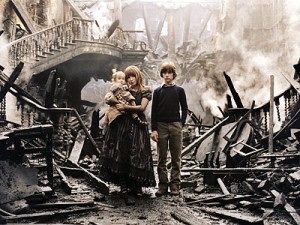
series-of-unfortunate-events

I don’t see how this situation can be fixed.

Step 2: Fixing the “info-dump” problem

The key here is to avoid the aforementioned issues by making your world building integral to the plot and having it emerge as the story unfolds. Your readers need to be slowly immersed into the world you created, not banged on the head with it. How do you do that?

–          You focus on the plot and the action. Instead of spending a chapter describing the Big Castle, you have your Hero escape from said castle and, as he is being chased by the Bad Guys, you include a few details that give the reader an idea of the setting, through the MC’s eyes.

–          As a result, you can’t describe everything. Because you only include the few details that your hero sees as he runs through the corridors of the castle, you can’t tell the reader about all the castle’s turrets and secret passageways. And it’s fine! Because even with only the few details you give him, your reader will be able to imagine the rest. Trust him.

But as you delete all the info-dump and replace it with a few chosen details, how do you know what to focus on?

Series-of-Unfortunate-Events-3

I’m listening.

Step 3: Focusing on the details that matter

So you’re building your secondary world by showing it as the story unfolds, awesome! But what to focus on? You focus on the details that matter for the specific scene/action you’re writing. And there’s so much to choose from, it’s easy to find something that will be a nice touch of world building in your scene without appearing to be world building to the reader. Here is what you can mention in passing and that will help you build your world:

–          Natural elements: flora and fauna, rocks and animals, bugs and creatures…

–          Political elements

–          Cultural elements: religion, mythology, language

–          Historical and geographical elements

–          And if all else fails, as we say in England, mention the weather.

Hoping this helps, feel free to leave me your comments and questions below! (This blog post was sponsored by A Series of Unfortunate Events. Or not.)

And if you want to find out more about this topic, here are a few useful links:

Juliet Marillier talks about creating Fantasy Worlds…

World Building: In the Beginning… by Raewyn Hewitt

How to Dump Info without Info-dumping– Writing Lessons from Inception by Shallee McArthur

World-Building 201: How to eliminate the info-dump by Hayley E Lavik

2012 : My Writing Year In Retrospect

Hello gentle reader,

I have been writing for 15 years but to me 2012 was the year I became a writer. Here is how it happened…

January: I am sitting on top of a pile of unpublished manuscripts in a castle in England, when my friends and family unwittingly suggest “Why don’t you try and get one of those published?” and I say, well, why not?

Downton Abbey - Dowager Countess

February: I read several books about getting published. I have a hunch this won’t be easy. I decide on focusing on my YA High Fantasy THE LAST QUEEN.

belle-and-gaston-beauty-and-the-beast

March: I start my blog. To my surprise, people other than my father follow it.

Sherlock-Watson

April: I attend the London Book Fair. I realise there are many would-be-published writers out there and this “get a book published” endeavour might not be as easy as I thought. I decide nothing can stop me now. I start the “A Round of Words in 80 Days” writing challenge.

Merlin-Morgana

May: I send a query to 3 agents, get 1 request, then a final rejection. I decide it’s time I take this vampire writing thing seriously.

jessica-true-blood

June: I join in JuNoWriMo (June Novel Writing Month) and find out writing a book in a month is not for me. I decide this sort of challenge can’t be for everyone.

Angel-Ozon-Garai

July: I take part in the Hookers and Hangers Blogfest (hosted by Falling For Fiction) and I post the first and last lines of THE LAST QUEEN on my blog. I get good feedback as well as a record number of comments, and I connect with many awesome people.

despicable-me-agnes

August: 3 words: Write On Con. More critiques, more awesome people, more connections, more motivation.

shakespeare-in-love

September: my blog is 6 months old and for some reason it is taking off.

veronica-mars

October: with the help of some wonderful CPs and beta readers (especially Aimee L. Salter and Jessica Montgomery) I revise THE LAST QUEEN in depth. I have conversations with people about my MC Elian as if he were a real person. He thinks it’s odd too.

Pillars of the Earth - Eddie Redmayne

November: I start querying THE LAST QUEEN, for good this time. I send out ten queries and get a full request within one week.

Enchanted

December: everyone is on holidays, including the agents I queried. I am sitting in a castle in England and working on a new manuscript. I have writerly friends on Twitter, Facebook, There And Draft Again, and my blog. Life is good.

Gosford Park Elsie

That’s it for me in 2012! How was your year? Leave me a comment below and have a fun New Year’s Eve tonight!

See you next year…

The Next Big Thing

Hello gentle reader,

I was recently tagged by the lovely Amanda Fanger for The Next Big Thing blog hop and I’m happy to take part since all I have to do is answer questions about my Work In Progress.

What is the working title of your book?

THE LAST QUEEN (Book I in THE DARKLANDS trilogy)

Where did the idea come from for the book?

I started thinking about this story ten years ago. I wanted to write a story where the main character would be a teenage girl (like I was at the time). I also liked the idea of a fantasy land where humans were the lesser people. Finally I wanted to write a love story that would be as realistic as possible, although set in an imaginary land.

What genre does your book fall under?

YA high fantasy.

What is the one-sentence synopsis of your book?

In the dangerous Darklands, a power struggle between Elves, Wolfmen and Humans is igniting, shattering the lives of a young princess, a warrior and a slave boy whose destinies seem meant to intertwine.

Which actors would you choose to play your characters in a movie rendition?

I’m going to cheat for that one 😉 I have no idea who would play my characters on screen, but I can tell you who inspired me while I was writing The Last Queen. I need to have a clear picture of my characters in my head in order to bring them to life, and I’m usually inspired by actors. With that in mind, here goes:

Elian is my main character. He is a 16-year-old slave whose life has been quite traumatic until he meets Araminta. He was directly based on English actor Eddie Redmayne, who was in countless historical movies between 2007 and 2010. Every time I saw him on screen I thought “This is Elian!” So here it is: Elian.

Araminta is 14 years old. She is an Elf, and a Queen. She is strong-willed, smart and quiet. When I described her in my WIP, I thought of English actress Lucy Griffiths.

Theron is 19 years old and he is Araminta’s husband. He is a Wolfman and the son of a lord, who loses all at the beginning of my WIP. He is a short-tempered warrior who happens to be very good-looking. Since I have had a crush on British actor Henry Cavill since, well, forever, I pictured Theron looking like him.

Will your book be self-published or represented by an agency?

Call me crazy, but I’m going for the traditional route.

How long did it take you to write the first draft of your manuscript?

Seven months for the first draft. Then six months for the first round of revision. I have battled with a high word count, instances of telling instead of showing, repetitions, adverbs, passive form and everything you shouldn’t do when you write. I’m still working on this manuscript, hoping one day I will get it in shape for the query process.

What other books would you compare this story to within your genre?

That’s a tough one. If you don’t know what High or Epic Fantasy is, think Game of Thrones and The Lord Of The Rings. But I can’t compare my WIP to those masterpieces. Since it’s YA, I guess it could be compared to The Seven Realms series by Cinda Williams Chima.

What else about your book might pique the reader’s interest?

My favourite character in the book (beside Elian) is Araminta’s bodyguard/slave/assassin Jerod. I actually wrote a short story about him entitled The First Guardian, because I felt he deserved his own story since he is, you know, awesome.

Thanks Amanda for nominating me!

And now, for my nominations… Six special ladies who write Epic Fantasy:

Raewyn Hewitt http://raewynhewitt.wordpress.com/

Mara Valderran http://maravalderran.blogspot.co.uk/

Susan Francino & Tyler-Rose Counts http://thefeatherandtherose.blogspot.co.uk/

Rachel Horwitz http://www.rachelhorwitz.com/blog/

K.L. Schwengler http://myrandommuse.wordpress.com/

GUTGAA Pitch Polish

As previously mentioned on this blog, I am taking part in the Gearing Up To Get An Agent blogfest (GUTGAA) hosted by the amazing Deana Barnhart. This week is all about Pitch Polish and you can find my query and the first 150 words of my WIP The Last Queen here. Now, if you’ve read my query or part of my WIP before, know that my manuscript has been undergoing major revisions lately. I have also worked on my query, based on the comments I received a WriteOnCon. So I would be very grateful if you could have a look at my new pitch and give me some feedback on it. I’ll return the favour if you give me a link to your query in the comment section of this post!

And since I hate asking without giving, remember that you can still enter my 100 followers giveaway here and win books!

Gearing Up To Get An Agent Blogfest – Meet and Greet

Hello gentle reader,

this month I am taking part in an exciting blogfest: Gearing Up To Get An Agent (aka GUTGAA) hosted by the amazing Deana Barnhart.

What is GUTGAA? you ask.

GUTGAA is a blogfest Deana Barnhart started last year “in the hopes that those of us striving to reach “agented” status could come together, polish those pitches and have fun at the same time.”

Today is the first day of this blogfest and it’s Meet and Greet time… If you want to join the fun and sign up for the blogfest, you can do so here. Then add a Meet and Greet post on your blog and you will have from today until Friday, Sept 7th to visit others’ blogs and get to know them. Have fun and visit as many as you can!

Questions for the Meet and Greet
Quick bio

I am a writer of YA High Fantasy novels. I live in an English castle, travel extensively, read voraciously, listen to music bands few people have heard of and watch too many movies to count. In case you are wondering, I also have a full-time job, so I mostly write at odd hours and drink a lot of tea. I am also a member of the British Fantasy Society.

Where do you write?
At home, at my desk in my living room. From my window I can see the castle’s park and the beautiful English countryside beyond. No need for a retreat for me!
Quick. Go to your writing space, sit down and look to your left. What is the first thing you see?
My armchair. This is where I sit to read. And I read A LOT.
Favorite time to write?
Evenings.
Drink of choice while writing?
Tea!
When writing , do you listen to music or do you need complete silence?
I need music to write. I even wrote a blog post about my favourite writing music.
What was your inspiration for your latest manuscript and where did you find it?
I write epic fantasy. I have had my WIP in me FOREVER. I think I got the inspiration for it about ten years ago. I wanted to write a story with a strong female teenager as the main character. I also liked the idea of a fantasy land where humans were the lesser people. Finally I wanted to write a love story that would be as realistic as possible, although set in an imaginary land.
What’s your most valuable writing tip?

Write every day, and NEVER give up.

Thanks for stopping by! Feel free to comment below and I will definitely pay your blog a visit.

Also you can enter my 100 Followers Giveaway here and win YA books!

Finally, I would love to hear from you on Twitter if you wish to know me better.

ROW80 Check-In 7: What I learned at WriteOnCon

Hello gentle reader,

this week my writing schedule was completely thrown off, thanks to WriteOnCon.

On Friday I did a recap of the online writers conference WriteOnCon and today I thought I could go over a few things I learned during this crazy week. YA writer Aimee L. Salter already wrote a great blog post on this topic and I suggest you read it since she really made the most of the conference (she received six full manuscript requests and a direct referral to an editor!). I was less dedicated than her to fully take advantage of the conference (I only spent a few hours a day in front of the computer) but I did learn a few things worth sharing if you ever want to get published traditionally …

1)      Write an awesome book first.

Having a successful author platform and thousands of followers won’t do any good unless you have a great book to sell. Ultimately, agents and editors want an amazing book that will blow them away. The author platform and the followers will only be the “icing on the cake”.

2)       It’s a crowded world out there.

I read dozens of awesome queries on the WriteOnCon forums. These writers are going to get published, I have no doubt about it. And instead of being depressed by the prospect of having to “compete” with all those great writers, I found that reading their work on the forums  was motivating. Because now I know what agents getting my query will compare it with. I know I have to be as good as all those talented writers out there.

3)      A query has to make your book stand out.

Before WriteOnCon, my query was ok. I had sent it to 5 agents and got 2 partial requests. I hadn’t committed any of the Deadly Sins of Querying. My query was professional and brief. It included the agents’ names, the title of my MS, genre and word count, and a brief summary of the plot/main characters issues. But having an average query is not enough to get published. A query has to be outstanding. I learned that I had to make every word of my query count to make it unique and to really hook my reader.

4)      Don’t rush.

You should never send a query or a manuscript that is not ready and in the best possible shape. But getting your query/MS ready and in the best possible shape takes time. And it’s OK. Take a year to polish your MS. Take two! Revise, revise, revise. If your book is really unique and awesome, it will get published regardless of trends and external influences.

5)      Seek help and feedback.

I have said it before on this blog, but WriteOnCon confirmed my thoughts: you can’t do this alone. You cannot get your MS ready and awesome without people giving you feedback on it.

6)      Listen to the advice of professionals.

They are the ones who will read your query and hopefully buy your book and turn you into the next J.K. Rowling. Listen to what they have to say. Read their blogs, watch their vlogs and seek their advice. Be professional. They are.

7)      Trust your instinct.

A conference such as WriteOnCon is a great way to get advice. TONS of advice. And by the end of the day, you’ll notice contradictions. Don’t mention world-building in your query. Mention some elements of world building in your query. Don’t say you’re planning on writing a book series. Let people know you’ve devised your book as the first installment in a series. Don’t start your novel with a dream/prologue/MC running. It’s ok to start your novel with a dream/ prologue/MC running as long as it’s essential to the story. A YA novel shouldn’t be longer than 75K. No, 80K. No, 100K.  Actually 115K is ok in some cases. The next YA trend is edgy contemporary. No, it’s historical novels… You get the point. If you listen to everyone in the profession, you end up pulling your hair out.

So, at the end of the day, trust yourself. Make your book as awesome as possible and believe in it.

YOU CAN DO THIS.

To check out other fellow ROWers, click here.

WriteOnCon 2012 recap

Hello gentle reader,

you may have noticed that I have been very quiet on this blog since Monday: the reason for this is that I was attending an online writing conference called WriteOnCon.

According to its website, WriteOnCon “is a totally free, interactive online Writer’s Conference held annually during the summer. The first Conference, held August 10-12, 2010, had over 11,000 attendees. (…) WriteOnCon is not exclusive to kidlit writers. In order to stay organized, the curriculum is focused on Picture Book, Middle Grade, and Young Adult writers. However, much of the information provided applies to all writers, and many of the publishing professionals who participate cross over.”

This was my first year attending the conference and I have found it to be incredibly useful. The 2012 conference offered live professional panels, vlogs, blog posts, forum events, competitions, critiques and book prizes.

In case you missed it, it is not too late to access some of the most interesting content. I strongly recommend you check out:

– the Live Panel of Professionals (Tuesday) and Live Panel of Professionals (Wednesday): everything you need to know about the publishing world.

– the writing and revision tips: Tips for Starting a New Project, Hooks and Killer First Lines, What is Voice, and How do I Get it?, The Importance of Craft, Plotting with 3×5 cards,  Building Characters into Real People,  Elements of Writing, The Revision Checklist and “Back to Basic” Writing Tips.

– the tips on the querying process: Knowing When Your MS is Ready to Query and The Inside Scoop: Get Your Query Noticed.

– the discussions on genres: Differences between YA and MG, Middle Grade Rules, Picture Book Query Critiques.

– there are also many tips on social media: How to Get Started With Social Media: DON’T Do All The Things! and Blogging Basics

What I liked about the conference was that there were posts for beginners (like Reading like a Book Blogger which discussed the book bloggers’ pet peeves) and other posts for more experienced writers (like Choosing the Right Critique Partners).

My favourite post was World-building in Science Fiction and Fantasy by author Mindee Arnett, mostly because I write Epic Fantasy.

The last aspect of the conference that I loved was getting feedback on my query and some of my writing in the forum. My query is still up if you want to comment on it!

Did you take part in WriteOnCon? Did you find it useful? What did you enjoy most about it? Do comment and share your experience! I’d love to hear your thoughts…

Michelle Hodkin’s Secret to Getting Published

Michelle Hodkin is the author of The Unbecoming of Mara Dyer, a YA paranormal novel and one of my favourite books. The second book in the Mara Dyer series, entitled The Evolution of Mara Dyer, is scheduled to be released on October 23d, 2012. Michelle Hodkin has an amazing blog, that I strongly recommend you check out.

Back in November 2010, Michelle published a post on her blog entitled My secret to getting published. It is an AWESOME and inspirational post, and I have decided to share it with you, would-be-published writers out there.

If you like it, do comment on Michelle’s blog and let her know on Twitter. She’s amazingly nice, so don’t be afraid. And buy The Unbecoming of Mara Dyer, while you’re at it.

So, without further ado, here is Michelle’s secret to getting published:

“So! This past weekend, I got an email from a lovely woman the other day asking me to tell her my “secrets” to getting Simon & Schuster to publish my novel. I was SUPER surprised to get the email and super, super flattered! So I dove into my response with enthusiasm—I started writing back to her, and kept writing, and my response became very, very long. And I thought—well, I never expected anyone to email me asking this question, but maybe, since one person did, more people want to know? About my super magic secret to getting my beloved Simon & Schuster to publish THE UNBECOMING OF MARA DYER?
Well, do ya?
Okay, here it is: I worked hard. 
You thought I was going to tell you that I had no secrets, right? Well, gotcha! Because that’s my secret. Let me explain. When people talk to me about my book or the book deal or I’m confronted with the (very few) people I don’t know who have read it (no ARCs yet, so this number is small), I am very quick to brush off the compliments with a response about how lucky I was and am. You see, I am not the best taker of compliments, even though it makes me GLOW to hear good things. Like, there’s nothing that puts a smile on my face faster than hearing something nice about my book, or the fact that people care enough to want to read it. But when it’s time for me to respond? I’ll say it was the right place, right time, right agent, right editor, right book. And those things are all true to an extent; there are a bunch of folks who also work super hard on their novels and haven’t been published. Yet.
But I have a lot of faith, a lot of faith, that they will be.
Because you dedicated, aspiring authors are writing when your infants are napping and the dishes are done and the pets are fed and when the husband isn’t bothering you, in snatches of 5, 10, or however many minutes you get. You are writing on your thirty minute lunch break from the mentally exhausting day job. You are reading hundreds of industry blogs every day (my count was 115 industry, book, author, and writing blogs before publication, now I am nearing 200) to learn the difference between a problem query and a problem novel. You are reading dozens of novels, both in your genre and out of your genre, and you are reading with a critical eye to find out why these books work, not why they don’t. You are attending writers conferences, in person or online. You are on Twitter, not just chatting (which is valuable) but observing; watching what agents and editors say and following query and #kidlitchat and #yalitchat discussions, whether you agree with the tenor of those discussions or not.
And like me, you revise until your grey matter aches. You expose your words to public critique. You send your book out to beta readers you’ve found (through Twitter or Absolute Write or Verla Kay or maybe just your friends and family, who can be just as helpful) and discover that more important than getting critiques is knowing what crits to take and which to leave, and you have no idea, you really don’t, because you’re flying blind just like I was. But you do it and you do it again and eventually you find a rhythm; you figure out which of your readers excel at patching plot holes and which excel at consistency and which ones to go to when you just need to hear “OMFG THAT SCENE IS SO HOT,” which is just as important.
And all of this writing and reading about writing and revising and observing may mean that your number of watchable television shows dwindles from a meager eight to three to one, like it did for me. It may mean that after three or five or thirty rounds of revisions, you’ve only been able to tear yourself away from your laptop to watch seven movies in a year, like me. It may mean that the mountain of laundry has eaten your laundry room and is threatening to spill into the kitchen (guilty) or that your children are becoming jealous of your “imaginary friends.” You are working hard, and for no guaranteed payoff.  But that dedication, if you keep at it, will pay off. Maybe your first novel isn’t THE novel. Maybe it will be your eleventh novel that takes the publishing world by storm. Or maybe it will be your first—maybe you will have a dream that so consumes you that you have to write about it and the passion you feel for your story is so strong that readers can feel it, too. But either way? You will have worked hard. Because writing for publication isn’t easy. Not for me or for any of the writers I know and not even for the superstar writers out there. If you have been writing for 10 years you will face challenges and if you’ve been writing for ten months? You will face others.
So the only secret to getting published?
Keep at it.”

ROW80 Check-In #5 The art of self-editing your novel

Hello gentle reader,

6 weeks into ROW80, I am happy to announce that I have had a breakthrough in my self-editing process. As a reminder, my goal for this ROW80 is to edit my YA Fantasy manuscript The Last Queen and to have a final draft for it by the end of June.

So, up until this week I wasn’t very organized to self-edit my novel: I knew I had to cut 20K words and tidy up the whole thing, but the way I went about doing it was quite random and unsystematic.

But this week, I decided I had wasted enough time playing around with my MS and being inefficient. It was time to be professional and serious about this self-editing process.

It was time to slay some bad writing habits and come up with a shiny, edited and readable manuscript.

Today I am going to share my method to self-edit my novel, as maybe some of you, fellow would-be-published writers out there, are still struggling with this process.

Step 1: Finish the first draft of your novel. Your book has a beginning, a middle and an end. Congratulations on making it this far. Now put the manuscript away in a drawer for at least a couple of weeks and celebrate.

Step 2: Recover from celebration. then read two amazing books on the craft of writing.

How Not to Write a Novel: 200 Classic Mistakes and How to Avoid Them–A Misstep-by-Misstep Guide by Howard Mittelmark and Sandra Newman 

This one is not only a hilarious read, but it will also help you reflect on the main aspects of your novel: the plot, the characters, the setting. It is a great way to evaluate if your book has cartoonish villains, a plot so complex even you have lost track of it, or a setting so clichéd it will make any publisher nod off.

Self-editing for fiction writers by Browne and King

This second book is great for the next step of your self-evaluation: it will help you see the mistakes you have made regarding style, dialogue, points of view, beats, proportion and repetitions.

Once you have read those two books (or others like them), you can move on to…

Step 3: Know your strengths.

These you will know from experience and from the feedback of your beta readers. For example, I know that I don’t really need to amend the plot and characterization in The Last Queen. Devising a complicated plot that falls into place by the end is what I know to do best. Once you know what is great about your novel, you can focus on amending what needs to be edited, rather than wasting time fiddling with characters that are already well-written.

Step 4: Know your weaknesses.

From your readings, you should know by now what is probably not that great in your Beloved Manuscript. One of my main problems in The Last Queen is repetition. For you, it might be settings that are too detailed, lengthy paragraphs with boring content, and so on. Just know what they are. Because it is only then that you can…

Step 5: Make a checklist of what you want to edit in your novel. Edit your novel.

I love lists. They are a great tool when you self-edit as you can have yours by your computer while you read through each scene/chapter. Read each scene, and check it against your list of mistakes. If you have committed any, you edit, then move on to the next scene.

Step 6: Finish self-editing your Precious Manuscript. Celebrate some more.

Step 7: Repeat Steps 5 and 6 a few times before thinking about sending your Masterpiece to an agent.

That’s it for me. How are you other ROW80 writers doing?

Here is the Linky for the other check-in posts.

A guide to attending international book fairs for would-be-published writers – The London Book Fair 2012

Next Monday I am going to attend the London Book Fair 2012. It will be held at Earls Court, London from the 16th – 18th April. I went there last year during two days and I had a great time, which is why I’m going again this year.

According to its own website, the London Book Fair has been “the global market place and leading business-2-business exhibition for rights negotiation and the sales and distribution of content across print, audio, TV, film and digital channels for 41 years. With over 400 seminars and events, 1,500 international exhibiting companies and 24,500 publishing professionals, The London Book Fair encompasses the broad spectrum of the publishing industry.”

So the question is: is it at all worth it, for a would-be-published writer, to attend such a fair? My answer is yes, IF you are realistic about your expectations.

What won’t happen at the London Book Fair

If you are, like me, a would-be-published author, you shouldn’t go to a book fair (whether in London, New York City or Frankfurt) hoping to get noticed by an agent or a publisher. To me, this is not the place to get your foot in the door by walking up to agents or publishers and dumping your awesome manuscript in their lap.

Agents and publishers who attend those book fairs do so to meet business partners that they already have, not to meet new ones. Unless you were actually given a meeting time by an agent or a publisher at the fair, don’t expect to be able to sit down with them and to pitch them your best-seller in the making. They don’t have time for newcomers who haven’t previously been introduced to them. Even if you “only” want to talk with a specific agent, chances are he is fully booked with meetings with different publishers and book buyers anyway.

If you want to talk to agents and editors, my advice is to attend writers’ conventions/conferences. The agents and editors who attend those are actually expecting to talk to authors.

So should you just give up and not go to the London Book Fair? No. Because here is what will happen there

If you are a would-be-published writer, going to the London Book Fair is still worth the trip for three reasons.

1-      You can attend seminars and workshops and learn A LOT about how the publishing business works. Last year I attended a How To Get Published Masterclass, numerous seminars on the state of the publishing industry and its (digital) future, as well as a few authors/publishers panels. And it was enlightening on many levels. Among others, I got to listen to words of advice from Philip Pullman (best-selling author of children’s fantasy novels, His Dark Material) and Sarah Odedina, the former Bloomsbury Group editor-in-chief who has published all of J.K. Rowling’s Harry Potter books. Talking about people who know their stuff.

2-      You get to have an insight into future publishing trends. It can be a good way to find out whether this great book you’ve been working on is in sync with what those decision-making people actually want to buy/publish.

3-      You meet other would-be-published writers. To paraphrase Kristen Lamb, you are not alone. Other unpublished authors go to those fairs and unlike agents and publishers, they are interested in talking with you. And it’s great to meet and exchange with other writers who are on the exact same “I want to be a writer!” roller-coaster ride you’re currently on. The book fair is the time to connect and make friends.

So what do you think? Are you going to attend the London Book Fair?

To wrap this up (yeah if you’ve read the whole thing!), a few noteworthy websites:

The London Book Fair http://www.londonbookfair.co.uk/

Book Expo America http://www.bookexpoamerica.com/

The Frankfurt Book Fair http://www.buchmesse.de/en/fbf/

Absolute Write Forum (on going to the London Book fair) http://absolutewrite.com/forums/archive/index.php/t-94444.html

Kristen Lamb’s hilarious account of her personal first book fair disaster http://warriorwriters.wordpress.com/?s=book+fair