On world building and how to avoid the “info-dump”

Hello gentle reader,

It’s Friday, let’s talk about writing and Fantasy, shall we?

Before I started querying my novel The Last Queen, I researched agents and the reasons why they reject A LOT of High/Epic Fantasy manuscripts. Most of the time, their verdict is: too much info-dump in the first pages. It means that instead of artfully weaving the secondary world into the story, the writer buries the reader under a heap of information. Agents and readers? They don’t like it, especially if your novel is intended for young adults.

series-of-unfortunate-events-2

We are bored.

So today, I’d like to help you avoid painful rejections or reviews by sharing a few tips on world building and how to eliminate the dreaded “info-dump” in 3 steps…

Step 1: Recognizing the “info-dump”

Let’s say you’ve been told your novel is “plagued by info-dump”. It’s not nice to hear, but we’re here to learn and make our stories better, aren’t we? So how do you recognize the signs of “info-dumping”? You ask yourself the following questions:

–          Does your Epic Fantasy novel include long descriptive passages where absolutely nothing happens and whose sole purpose is, well, to describe stuff?

–          Do your characters have conversations about things they already know? Is the sole purpose of these conversations to give information to the reader?

–          Do you explain your world to the reader instead of showing it to him?

If you’ve answered yes to one or more of these questions, then you’re guilty of info-dumping. But fear not, gentle reader! You can FIX THAT.
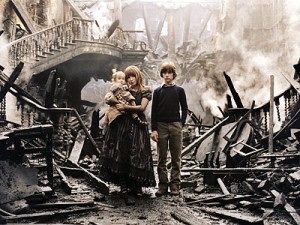
series-of-unfortunate-events

I don’t see how this situation can be fixed.

Step 2: Fixing the “info-dump” problem

The key here is to avoid the aforementioned issues by making your world building integral to the plot and having it emerge as the story unfolds. Your readers need to be slowly immersed into the world you created, not banged on the head with it. How do you do that?

–          You focus on the plot and the action. Instead of spending a chapter describing the Big Castle, you have your Hero escape from said castle and, as he is being chased by the Bad Guys, you include a few details that give the reader an idea of the setting, through the MC’s eyes.

–          As a result, you can’t describe everything. Because you only include the few details that your hero sees as he runs through the corridors of the castle, you can’t tell the reader about all the castle’s turrets and secret passageways. And it’s fine! Because even with only the few details you give him, your reader will be able to imagine the rest. Trust him.

But as you delete all the info-dump and replace it with a few chosen details, how do you know what to focus on?

Series-of-Unfortunate-Events-3

I’m listening.

Step 3: Focusing on the details that matter

So you’re building your secondary world by showing it as the story unfolds, awesome! But what to focus on? You focus on the details that matter for the specific scene/action you’re writing. And there’s so much to choose from, it’s easy to find something that will be a nice touch of world building in your scene without appearing to be world building to the reader. Here is what you can mention in passing and that will help you build your world:

–          Natural elements: flora and fauna, rocks and animals, bugs and creatures…

–          Political elements

–          Cultural elements: religion, mythology, language

–          Historical and geographical elements

–          And if all else fails, as we say in England, mention the weather.

Hoping this helps, feel free to leave me your comments and questions below! (This blog post was sponsored by A Series of Unfortunate Events. Or not.)

And if you want to find out more about this topic, here are a few useful links:

Juliet Marillier talks about creating Fantasy Worlds…

World Building: In the Beginning… by Raewyn Hewitt

How to Dump Info without Info-dumping– Writing Lessons from Inception by Shallee McArthur

World-Building 201: How to eliminate the info-dump by Hayley E Lavik
On originality and writing a book that doesn’t already exist

shakespeare-in-love

Hello gentle reader,

Today is Thursday and I thought a post about the writing process was in order.

 I was actually inspired by this post written by YA author Aimee L. Salter on 19th November 2012. In her post, Aimee made a list of all the good reasons we writers have to read other people’s books. Among other things, she mentioned the importance of knowing the competition and of understanding what works (or doesn’t work) in other books.

On that same day, Epic Fantasy writer Jeff Hargett published a blog post in which he admitted to having just realised his book (which he has been working on for ten years) was very similar to the TV show/movie Airbender and Robert Jordan’s Wheel of Time book series.

It reminded me of another blog post I read in February 2012. Back then, YA author Elizabeth May published a great post entitled The Unfortunate Case of the Book that Looked Just Like Someone Else’s, in which she confessed having written, edited and queried a manuscript that was extremely similar to a published book that she bought later on Amazon. When she found out about it, she felt embarrassed and she shelved her manuscript, feeling that she had somewhat wasted her time and the agents’ time.

So what’s the moral of these stories? Listen to Aimee’s advice and READ. If your story is derivative of other works, you need to be aware of it and it needs to be intentional. Being derivative by accident is the worst thing that could happen to you as a writer.

Secret Window

Let’s face it. If you live in the US, Europe or Down Under, chances are you are influenced by the same things that other writers are. We all watch the same movies and TV shows, we all hear about the news from around the world and we have all read the same books as children. This means that it is likely we will write stories that remind us of other stories.

And it’s fine, AS LONG AS YOU ARE AWARE OF IT.

Discovering that the book you’ve worked so hard on already exists is crushing. To avoid it, read the books that are already out there. Read books in your genre and category. Read publishing news and newly published books. Agents do. Publishers do. You won’t have the excuse of not knowing once you try to get your own story published.

I’ll finish this post with my own little experience in the matter: I finished writing the first draft of THE LAST QUEEN in the summer of 2011. Then I heard about a series of books entitled THE SEVEN REALMS (by Cinda Williams Chima). The blurb goes like this: “Times are hard in the mountain city of Fellsmarch. Reformed thief Han Alister will do almost anything to eke out a living for for his family. Meanwhile, Raisa ana’Marianna, princess heir of the Fells, has her own battles to fight. Her mother’s plans for her include marriage to a suitor who goes against everything the queendom stands for.” My heart dropped. This sounded A LOT like THE LAST QUEEN. Especially the Princess Heir part. So I bought the book, read it (loved it) and realised that this book had nothing in common with mine. Cue sigh of relief.

But I keep reading YA High Fantasy books. For my pleasure, to know the competition, and to make sure no one has already written and published a book similar to mine.

What about you? Have you had that kind of experience? Have you written a book then found out it was similar to another book? What did you do? I’d love to read your comments!

ROW80 Check-In 8: 5 Writing Tips from Laini Taylor

Hello gentle reader,

It is already time for another ROW80 check-in! My goals for this fourth round are as follows: Write or edit every day

This week I was waiting to hear from my beta readers on The Last Queen after my latest round of edits, so in the meantime I did something which has nothing to do with my Darklands trilogy. I dug up an unfinished first draft and added some 5000 words to it, and it was a lot of fun. I also worked on my query and researched agents. Finally I worked on a Super Secret and Super Exciting Project (code name TADA): you’ll find out all about it on 1st December!

Now, on to an inspiring story to keep us going this coming week. Today I’m sharing Laini Taylor’s writing tips. The following article was published on the Publishers Weekly website on 16 November 2012. In case you’ve missed it, here it is:

Laini Taylor‘s Days of Blood & Starlight (the follow-up to Daughter of Smoke & Bone) is filled with dazzling writing, not to mention fantasy, suspense, and a page-turning story. Take notes, because Taylor’s sharing her 5 writing tips.

I’ve wanted to be a writer since I was a small child, but I was thirty-five before I finished my first novel, because I have issues with perfectionism. It took me a long time to learn to finish what I start, and I’ve developed a lot of tools and tricks for keeping myself moving forward through a story when a big slice of my brain wants nothing so much as to stop and rewrite everything I’ve already written. It can be exhausting, but the upside is that I love to revise. The main thing I’ve learned is that we all have to learn to work with—and appreciate—the brain we’ve been given, and not waste time wishing things were easier.

1. Know what you love. Try imagining the book that would light your heart and mind on fire if you came across it in a bookstore—the one that would quicken your pulse and keep you up all night reading. What would it be? Details, details: when, where, what, who? Think it up, imagine it fully, then bring it forth. That’s the book you should be writing.

2. Never sit staring at a blank page or screen. If you find yourself stuck, write. Write about the scene you’re trying to write. Writing about is easier than writing, and chances are, it will give you your way in. You could try listing ten things that might happen next, or do a timed freewrite—fast, non-precious forward momentum; you don’t even have to read it afterward, but it might give you ideas. Try anything and everything. Never fall still, and don’t be lazy.

3. Eliminate distractions. Eliminate Internet access. Find/create a place and time where you won’t be bothered. Noise-canceling headphones are great. Hotel-writing-sprees are even better if you can make that happen every once and a while: total dedicated writing time. During my second draft pass on my last book I made 20,000 words happen in a week, which is practically supernatural for me, and it would never have been possible without three nights in a hotel in my own city. It’s an incredible splurge, and a huge liberation, and you might just deserve it!

4. Get your characters talking. Dialogue is the place that books are most alive and forge the most direct connection with readers. It is also where we as writers discover our characters and allow them to become real. Get them talking. Don’t be precious. Write dialogues. Cultivate the attitude that every word you write need not end up in the book. Some things are just exercises, part of the process of discovery. Be willing to do more work than will show. The end result is all that matters. Be huge and generous and fearless.

5. Be an unstoppable force. Write with an imaginary machete strapped to your thigh. This is not wishy-washy, polite, drinking-tea-with-your-pinkie-sticking-out stuff. It’s who you want to be, your most powerful self. Write your books. Finish them, then make them better. Find the way. No one will make this dream come true for you but you.”

How are other ROWers doing? Here is the Linky to support each other!

ROW80 Check-In 7: Tamora Pierce on finding ideas & dealing with writer’s block


Hello gentle reader,

It is already time for another ROW80 check-in! My goals for this fourth round are as follows: Write or edit every day 4/7

This week I finished my current round of editing for The Last Queen. Unfortunately I didn’t do this every day but I did get a lot more done than last week. I’m hoping to get back to writing every day next week. Also this week my blog reached 200 followers and I have a giveaway to celebrate. Feel free to enter to win YA books!

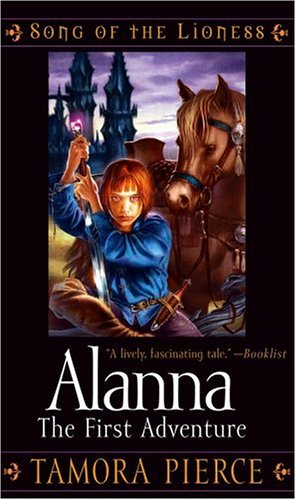
Now, on to an inspiring story to keep us going this coming week. Today I’m sharing Tamora Pierce’s tips to find ideas and fight writer’s block. When it comes to YA fantasy, one doesn’t really get more successful than Tamora Pierce. She has been writing since the 1980s and she is most famous for her Song of the Lioness quartet.

“Where do you get your ideas?

Some I stumble across: watching his nature programs, I decided British naturalist Sir David Attenborough would make a cool bio-mage. Watching my mother and sister produce blankets from balls of yarn and crochet hooks, I thought of it as a kind of magic, and wondered what all could be done with thread magic. Wrestling with my best friend’s dove gave me the ideas for Kel’s relationship with the baby griffin in SQUIRE. Pictures in magazines also give me ideas, as do stories in the news.

Other ideas come from my past obsessions. From the time I was six or seven until I was ten, I read anything and everything I could find about knights, the Crusades, and the Middle Ages. My next area of interest in knighthood was in the fantasy novels and Arthurian legends I read in middle school.

Another way I get ideas is from people: my Random House editor, Mallory Loehr, my agent Craig Tenney, my husband Tim, my friend Raquel…

Current events and history are also fertile ground for ideas. Keep a file of events and figures that interest you; it might prove useful one day.

The best way to prepare to have ideas when you need them is to listen to and encourage your obsessions. Watch and re-watch all the TV programs and movies you have a need to; read and re-read all the books, magazines and comic books; visit all the museums, zoos, galleries, concerts and wilderness areas; and listen to all the kinds of music that interest you. If you get a sudden passion for anything and everything to do with, say, gang warfare, starling behavior, painting frescoes, or jousting, go with the urge. Find out all you can. Even if you can’t use it right away, it’ll go into some holding zone deep in your brain, and surface when you need it. All creative people–not just writers!–expose themselves to as much information, in as many forms, as possible, in the hopes that it will be useful down the road, or even right now. You never know what will spark something new!


How do you deal with writer’s block? Here are some fixes I use when I get stuck:

  • Introduce a new character, a strong one with an individual style in speech, dress and behavior–one who will cause the other characters to review their own actions and motives to decide where they stand with regard to the new character.
  • Have something dramatic happen. As Raymond Chandler put it, “Have someone come through the door with a gun in his hand.” (My husband translates this as “Have a troll come through the door with a spear in his hand.”) Machinery or vehicles (cars, wagons, horses, camels) can break down; your characters can be attacked by robbers or pirates; a flood or tornado sweeps through. Stage a war or an elopement or a financial crash. New, hard circumstances force characters to sink or swim, and the way you show how they do either will move things along.
  • Change the point of view from which you tell the story. If you’re doing it from inside one character’s head, try switching to another character’s point of view. If you’re telling the story from an all-seeing, third person (“he/she thought”) point of view, try narrowing your focus down to one character telling the story in first person. If down the road in the world you’ve created someone has written a book or encyclopedia about these events, insert a nonfiction-like segment (that doesn’t give the important stuff away) as a change of pace. Try telling it as a poem, or a play (you can convert it to story form later).
  • Put this story aside, and start something else: letters, an article, a poem, a play, an art project. Look at the story in a day, or a week, or a couple of months. It may be fresh for you then; it may spark new ideas.
  • If you have an intelligent friend who’s into the things you’re writing about, talk it out with him/her. My husband often supplies wonderful new ideas so I can get past whatever hangs me up, and my family and friends are used to mysterious phone calls asking about things seemingly out of the blue, like what gems would you wear with a scarlet gown, or how tall are pole beans in late June?
  • Most important of all, know when it’s time to quit. Sometimes you take an idea as far as it will go, then run out of steam. This is completely normal. When I began to write, I must have started 25 things for each one I completed. Whether you finish something or not, you’ll still have learned as you wrote. The things you learn and ideas you developed, even in a project you don’t finish, can be brought to your next project, and the next, and the next. Sooner or later you’ll have a story which you can carry to a finish.”

How are other ROWers doing? Here is the Linky to support each other!

A Writer in the Spotlight – Anna Carey

This week again I was lucky enough to have a YA author give me an exclusive interview! The idea behind the “Writer in the Spotlight” feature is that published (and bestselling) authors are the best source of advice for us, would-be-published writers. Today’s interview is with the amazing Anna Carey. Between her busy schedule and emails lost in spam folders, there were times when I thought I would never get this interview, but Anna was SUPER kind and I’m very happy that you can read her answers to my questions today!

Author : Anna Carey

Genre : Young Adult, Dystopian, Contemporary

Location: Los Angeles, USA

Contact: Website, Goodreads, Twitter

Books : The Sloan Sisters series (2009), the Eve trilogy: Eve (2011), Once (2012), Rise (2013)

Bio: Anna Carey has been a gift wrapper, face painter, nanny, horrific cocktail waitress, sofa saleswoman and children’s book editor. She graduated from New York University and has an MFA in fiction from Brooklyn College. She currently lives in Los Angeles, where she can be found writing, reading, and doodling on the giant chalkboard in her kitchen.

My interview (08/11/2012)

On writing:

Did you always know you wanted to be a writer?

I always knew I wanted to be a writer, though it took me nearly a decade to say those words out loud. Growing up I didn’t know any authors, had never been to a book talk or had a writer visit my school. That life seemed like an impossible dream.

When and where do you write?

As much as I try to keep a set schedule, this changes from book to book. My preference is to write at home, on my couch, in yoga pants. It usually takes me eight hours to get five solid hours of work done. I’ve gone through periods where things are different, where I work predominantly in coffee shops or only at night, but the eight hour rule has always proved true.

What do you say to people who want to be writers?

First off, read as much as you can. You learn so much about characters, story, and plot just from reading well crafted books. We’re lucky that there are so many books on writing out there (On Writing by Stephen King, The Faith of a Writer by Joyce Carol Oates, Burning Down the House by Charles Baxter). Add these to your reading list.

Secondly, write as much as you can and finish whatever you start. Strangely, this is the hardest part. Try not to get discouraged by unwieldy first drafts. Try not to judge. Once you finish there will be time to cut, add, rewrite and perfect. Until then…it’s impossible to revise a blank page.

Lastly: Find a few readers you trust. Share your work and learn how to listen to criticism. A useful comment feels like an arrow hitting it’s mark.

On the “Eve” trilogy:

To write these books, where did you get your inspiration from? Were you aware of the coming dystopian trend in YA literature when you wrote “Eve”?

Eve started with a question: What happens when you discover everything you learned is a lie? Would you have the courage to relearn your life?

Publishing is a slow industry. It can take over a year (sometimes two) for a book to go from finished manuscript to published work. That said, once you’re aware of a trend it’s generally too late to write with it. I’m like most of the authors who are writing dystopian now. When I started Eve dystopian wasn’t a huge trend. The first book of The Hunger Games was out, but it wasn’t what it is now. I wrote the story I was interested in, and fortunately the timing was right.

On reading:

Which authors inspire you now?

I just read The Marbury Lens by Andrew Smith, which is creepy and magnificent. If I Stay by Gayle Forman is one of my favorite YA reads, my go-to “if you haven’t read this READ THIS”. Right now I’m on a bit of a Gillian Flynn kick. I finished Gone Girl and am now reading Sharp Objects, one of her earlier books.

Thanks, Anna, for an awesome interview!

Anna’s books are available from Amazon here.

ROW80 Check-In 5 : Claire Legrand on How To Come To Terms With Your Writing

Hello gentle reader,

And it is time for another ROW80 check-in! My goals for this fourth round are as follows:

Write or edit every day DONE

Editing – Finish my current round of editing for The Last Queen, get my manuscript critiqued and beat-read, then edit some more.

DONE: This week again I have been editing every day.

Writing – Write a short story, and continue writing the first draft of The Cursed King

I didn’t do any writing this week since I was focused on editing The Last Queen.

So this was another good writing week for me and I’m still happy with my goals. This week I also posted on my blog two posts you might enjoy: my Halloween reads recommendations and a discussion on the popularity of YA High Fantasy novels.

Now, on to an inspiring story to keep us going this coming week. Today I’m sharing YA author Claire Legrand’s tips for writers. Claire’s debut novel THE CAVENDISH HOME FOR BOYS AND GIRLS came out in August 2012.

“When I first started writing, I spent a lot of time online researching what writers should and should not do. There are many rules floating around out there dictating what supposedly makes for a good writing process and a bad writing process, a good writer and a bad writer, a book that will sell and a book that won’t.

Some I have encountered are:

  • You must write every day.
  • You should NOT write every day.
  • You should write [insert number of choice] words per day.
  • You should make a writing schedule and stick to it, absolutely no excuses.
  • You should be writing [insert number of choice] books per year if you ever hope to make a living in this business.
  • You must write at this pace.
  • No, this pace.
  • No way, THIS pace. Slackers.
  • You should write at least one million words before even thinking of querying an agent with a manuscript; before then, you’re not ready.
  • You should create an account for THIS social media service, and THIS one, and THIS one too, and post THIS many times a week.
  • You should blog regularly, on a set schedule, and stick to it. If you blog irregularly, you’re a bad blogger/writer/human being.
  • You should use Scrivener.
  • No, you shouldn’t.
  • You MUST outline, in detail.
  • You MUST outline, but only the main plot points.
  • Eh, you don’t need to outline.
  • You should plan your book around this method of story structure.
  • No, this one.
  • No, those suck, THIS one.
  • You should query one agent at a time.
  • You should query five agents at a time.
  • You should query ten agents at a time.
  • Your book should be between [number] and [number] words long, and anything else won’t fly.
  • You must use critique partners.
  • Your first drafts should look like this.
  • You should only have to do [insert number] rounds of revisions; anything more, and something’s wrong with you/your book/your soul.

Frankly, these shoulds and shouldn’ts start contradicting each other pretty quickly, and it can make a fledgling writer feel pretty lost. Heck, I’m all fancy and published now (and I say that tongue-in-cheek because there’s not much that’s fancy about it, and also, I still don’t feel like I know what I’m doing), and reading these kinds of statements STILL makes me feel pretty lost. They also, if I focus too hard on them, make me feel like I’m doing everything wrong when I can look at what I’m producing and rationally know that I’m not.

Rules can be a good thing. As Victoria Wright might say, rules help the world run just so.

But writing is not always a quantifiable activity. Much of it is instinct, luck, and plain old dogged persistence, whether that’s rigidly scheduled in a spreadsheet or just crammed into whatever spare thirty minutes you can find as your day allows it. And much of what works and what doesn’t for one person’s writing doesn’t translate to the next person. Therefore, I would say that many of the so-called universal writing rules we might see in blog posts, online articles, and tweets are really just what the author has found to work for herself, or for her friends, or for the majority of people within her peer group.

But that doesn’t mean it has to–or will–work for you (or for your book).

Such a statement seems elementary enough (everyone’s different! we’re all unique snowflakes!), but I still have a hard time accepting it. I’m a person very influenced by others, for good or for ill. This means some of my most productive writing days are when I’m “sprinting” online in the company of friends; this also means that other’s successes, failures, methods, and “musts” all have a way of affecting me deeply. I start to think I’m not doing enough or that I’m not doing it right, and then I lose confidence, and then I sit there staring at a blank Word document while scarfing down a box of Cheezits.

The thing is, I don’t do half the things on that list up there above.

I don’t use Scrivener; I have a notebook in which I scribble random thoughts. The rest is done in plain old Microsoft Word, with a lot of world-building and character notes jotted down in Notepad.

I don’t use critique partners. There is one good writer friend whom I trust to look at my unpolished work, but beyond that, no one looks at my books before my editor except for me and my agent.

I outline in detail, but I don’t have a set writing schedule every day, nor do I log my word counts or have micro-goals of any kind. I tried doing that, but it didn’t work for me because if I didn’t meet a goal for the day (or the week) I felt like a failure, and my work suffered for it. Instead, I shoot for big goals (finishing the book by this date) and as long as I meet that big goal, what happens until then doesn’t matter.

I write long what I call “zero drafts” (that is, the first ever draft of the book, before I make preliminary cuts, before I send to abovementioned good writer friend, before I send to agent). And when I say long, I mean long. And even beyond that, once a book has gone through revisions, it’s still on the longer side. I’m just plain wordy (as you can tell by reading this post and really my blog in general). (…)

What does this say about me and my writing?

Absolutely nothing. Except that I write long and then cut back during revisions. It does not reflect on the quality of my writing, the effectiveness of my methods, or how I measure up against the writing and methods of others.

Likewise, my method of outlining, my writing schedules, the fact that I only have one beta reader, etc. etc., means nothing except that this system is what works for me and my books. End of story.

You hear that, brain??

So I’m going to tell you this, in hopes that myself, through writing it, will soak in the reminder (and because I know there are others out there who, like me, doubt and compare and wonder if they’re nuts or stupid or somehow wrong for writing like they do):

The way you write is not necessarily how others write.

Your books are not going to be as [insert adjective of choice] as others’ are.

Your writing will be just that: how you write.

Your books will be just that: your books (and no one else’s.)

Know this, accept this. The sooner you do, the sooner you will come to terms with your writing. And the sooner you do that, the sooner you can get to writing that next book (and the next one, and the next . . . ), no matter how long/short/bracketed/messy/outlined/pantsed/critiqued/Scrivenered/Worded/slowly written/quickly written/ it ends up being.”

How are you other ROWers doing? Here is the Linky to support each other!

ROW80 Check-In 3: Bree Despain’s Writing Tips


Hello gentle reader,

And it is time for a third ROW80 check-in! My goals for this fourth round are as follows:

Write or edit every day

Editing – Finish my current round of editing for The Last Queen, get my manuscript critiqued and beat-read, then edit some more.

I haven’t done any editing this week since I’m waiting to hear back from my CPs and beta readers.

Writing – Write a short story, and continue writing the first draft of The Cursed King

DONE : I worked on The Cursed King but progress was slow this week, although I did write every day except for Wednesday.

So this was again a good writing week for me and I don’t feel that I need to adjust my goals. This week I also managed to read one book and I kept my blog alive by taking part in The Next Big Thing blog hop: feel free to have a look if you want to know more about my WIP.

Now, on to an inspiring story to keep us going this coming week. Today I’m quoting bestselling YA author Bree Despain. I found the following on her website. Bree is an American author who has a degree in creative writing. She started writing full-time after being involved in a car accident and she has written three novels in her DARK DIVINE series.

Writing Tips

  1. Be a sponge. The more knowledge you can soak up, the better your writing will become. Take writing classes, attend writing conferences, and read as much as you can. There are plenty of online resources for writing classes, but if you can, take an in-person class at a local university or writing conference. There is something very energizing about sitting in a room with a bunch of other writers. And you will probably learn more from in-class debates, and critiquing other writer’s stuff, than you will from reading a computer screen filled with writing tips . . . hey, wait a second . . .hehe. Keep reading anyway 😀
  2. Don’t forget to write. Okay, that sounds silly . . . but really, it happens. Sometimes we get so absorbed in the task of learning about our craft, that we don’t actually ever sit down and do the writing. Or sometimes, we experience “information overload” and we get so overwhelmed we just need to unplug from the world in order to start writing. Remember—no amount of reading, class taking, networking, or schmoozing, etc. is going to get you anywhere if you don’t actually write. Write every day if you can. Carry a notebook to capture ideas when they strike you. I actually wrote the prologue for The Dark Divine on the back of a program during church.
  3. Join a critique group. Like I said, there is something magical about being in a room with other writers. And a critique group is a fun, inexpensive way to get feedback, advice, and brainstorming help. Plus, some of my favorite people in the world are my writing chicas.
  4. Let your writing sit for a bit. Like a good piece of cheese, let your writing “age” for a while before you send it out. Stick your manuscript in a drawer for a couple of weeks and then come back to it with fresh eyes. Let your critique group read it over and offer feedback. Sometimes, you may even need to put something away for a long time before you can really see the kinks that need to be worked out. After sending out the original version of The Dark Divine (unsuccessfully) to a few agents back in 2006, I realized that the manuscript needed a major overhaul—but I didn’t know how to do it. I ended up putting that book in a drawer (figuratively speaking) for over a year. I moved on to other projects, and then one day, the answers to my problems with The Dark Divine just started to work themselves out in my mind. I pulled the manuscript out again and spent the next year overhauling it, let it sit for a month, and then sent it out to agents again . . . and a few weeks later I landed the fabulous Agent Ted!
  5. Don’t be unwilling to revise. I’ve said it before and I’ll say it again: GREAT BOOKS AREN’T WRITTEN—THEY’RE REVISED! Revising is just part of writing, and a major part at that. Hardly anything you write will be golden the first time you put it down on paper. You will tweak and revise on your own, with your critique group, in writing classes, at writing conferences, then take your stuff home and revise, revise, and revise it again. And then you’ll send it out to agents, and more likely than not, you’ll end up tweaking and revising your book even more based on the rejections you get. Then you’ll send it out again, and when you land an agent—guess what? He/she’s going to make you revise it some more before it goes out on submissions. And then when you sell your novel . . . well, that’s when the REAL revising starts. And then when you think you can’t possibly revise that darn freaking manuscript one more time . . . they’ll send it to copy editing where you’ll find out that apparently the language you’ve been speaking all your life isn’t actually English . . .Okay, okay, you get my point? Sorry to say it, but you won’t make it anywhere in the publishing biz if you aren’t willing to revise your writing.
  6. Don’t do all of the revisions people suggest to you. I know, I know, I’m such a hypocrite. I just went on telling you that you MUST revise your book, and now I’m saying not to? Okay, before you kick me in the pants, let me explain. You will get a lot of advice on your book, and a lot of critique suggestions—a lot of them will be good suggestions, some . . . well . . . not so much. Or some suggestions might work well for someone else’s story, but don’t jive with your vision for your book. You will even run into a few people who will pretty much want to write your book for you. But remember, you are the author. This is your baby. Take every revision suggestion with a grain of salt. At first, some revision suggestions seem impossible, or highly improbable, or just plain not right for your story. I always sit on revision notes for a few days (sometimes a few weeks) before I implement them. With a little time and perspective, you will be able to sift out the good suggestions from the bad. And sometimes, an impossible suggestion will suddenly click in your head and it will make a huge difference in the quality of your book. But, if after a little time, a revision suggestion still seems off to you—well then, it probably is. Go with your gut, and do what’s right for your story. But always consider WHY a certain suggestion was made. Did a critiquer want you to change Z into X, but that doesn’t sit well with you? Well, then maybe the reason for Z happening is just not clear enough to your reader. Or perhaps after evaluating the suggestion you will realize that Z actually needs to be changed into Y rather than X. I often find that many revisions are a matter of making things clearer. Does that make any sense?
  7. Accept the fact that becoming an author takes time—and a lot of it. Yes, there are those fluke cases where someone writes a book and then has a multi-million-dollar debut book deal six months later. But for the other 99.9% of us, it takes several years to become an author. Ask just about any published author (including Sara Zarr and Laurie Halse Anderson) and they’ll tell you that it takes about 10 years to make a name for yourself in this biz. And most of us are better off because of the time it took to strengthen our writing. I thank my lucky stars that my first novel never sold. I’m extremely grateful that the original version of The Dark Divine was rejected by every agent I sent it to. Your writing may not be ready for publication right now, but if you keep working, and learning, and reading, and writing, it WILL get there someday. Good Luck!
  8. Remember that authors are real people too! I loved telling stories and writing when I was kid. But I seriously thought that authors were this special breed of people, and someone ordinary like me could never become one. I wish I would have figured out a long time ago that anyone—with enough drive and hard work—can become an author. Even a mild mannered citizen like myself :D.

How are you other ROWers doing? Here is the Linky to support each other!

ROW80 Check-In 2 : Meg Cabot’s writing tips

Hello gentle reader,

It is already time for a second ROW80 check-in. My goals for this fourth round are as follows:

Write or edit every day

Editing – Finish my current round of editing for The Last Queen, get my manuscript critiqued and beat-read, then edit some more.

DONE: I finished another round of editing and sent The Last Queen to CPs and beta readers. I’m waiting to hear back from them.

Writing – Write a short story, and continue writing the first draft of The Cursed King

DONE : I worked on The Cursed King and added about 2000 words to my first draft.

So this was another good writing week for me: I did write or edit every day. Tuesday and Friday were once again tough (because I get home from work late on those days), but I still stuck to the routine. A big thank you to Lauren Garafalo, Julie Jordan Scott and Juliana Haygert for their support during our Twitter sprints!

This week I also managed to read two books again and I kept my blog alive with a post on word counts. Check it out if you want to discuss the relevance of limited word counts for writers. I also worked on my query letter and my synopsis. A big thank you to Craig Schmidt for his help.

Now, on to an inspiring story to keep us going this coming week. Today I’m quoting bestselling YA author Meg Cabot. I found the following on her website.

“It took me three years of sending out query letters every day to get an agent, and a year for her to find me a publisher. When my first book got published I was 30. I sent out several hundred of these letters before a single person ever asked to see the book I was trying to sell.

Some people say if you get anyone to look at your book at all, you are lucky. I believe that luck is 95% preparation and 5% opportunity. So basically…you have to make your own luck.

My advice to young writers is:

Write the kinds of stories you like to read. If you don’t love what you’re writing, no one else will, either.

Don’t tell people you want to be a writer. Everyone will try to talk you out of choosing a job with so little security, so it is better just to keep it to yourself, and prove them all wrong later.

You are not a hundred dollar bill. Not everyone is going to like you … or your story. Do not take rejection personally.

If you are blocked on a story, there is probably something wrong with it. Take a few days off and put the story on a back burner for a while. Eventually, it will come to you.

Read-and write-all the time. Never stop sending out your stuff. Don’t wait for a response after sending a story out…start a new story right away, and then send that one out! If you are constantly writing and sending stuff out (don’t forget to live your life, too, while you are doing this) eventually someone will bite!

It is nearly impossible to get published these days without an agent. The guide I used to get mine was called the Jeff Herman Guide to Agents, Editors, and Publishers. It was well worth the money I spent on it, since it lists every agent in the business and what he or she is looking for. It also tells you how to write a query letter, what to expect from your publisher, and all sorts of good stuff…a must buy for any aspiring author!

And above all, become a good listener. In order to write believable dialogue, you need to listen to the conversations of the people around you—then try to imitate them! So my advice is always to try to keeping quiet, listen only, and let other people to do the talking for a change. You’ll be surprised how much this will improve your writing skills (and how many people will think you’re a really sage person, when all you’re basically doing is spying on them).

Good luck, and keep writing! If I can do it, so can you!”

 How are you other ROWers doing? Here is the Linky to support each other!

Word count : is your Fantasy novel too long ?

Hello gentle reader,

It’s Thursday! Let’s talk about writing, shall we?

As you may know, I am currently revising my WIP The Last Queen, and I have been struggling with a high word count. I wrote the first draft of this YA Epic Fantasy novel without really thinking of its length (I just wrote the story I wanted), and now I have to cut down some words if I don’t want to make agents cringe when they read my query letter.

This week I have also helped the lovely Mara Valderran with her own query letter. She is currently querying her Epic Fantasy novel HEIRS OF WAR with a word count at 137k. And here is what she says about her word count: “My word count is really high for a new author. You know this, I know this, and I’ve done my damndest to cut it (I shaved 12k off in the past two weeks! Yay!). Is it a roadblock for me? Sure. But it’s one I am painfully aware of.”

So it seems that I’m far from being the only Epic Fantasy writer struggling with a high word count.

As writers, our first reaction is often to say: but there are lots of Fantasy novels out there with huge word counts and they still sell! And some are even first novels! (see Elizabeth Kostova’s The Historian, at about 240k words)

Yes, people do buy books with high word counts. I’m one of those readers who are not afraid to read a super long book. However, these books are either AMAZING like The Historian, or they are, well, too long. G.R.R. Martin can publish A Storm of Swords at 424k words because he is an established and bestselling author, but I still think this novel was way too long and should have been edited down. The same goes for The Passage by Justin Cronin: 300k words and half the book could have been cut out without hurting the story.

So if you write Fantasy and you’re trying to get agented or published, nothing stops you from querying a 150k + words manuscript.

YA Epic Fantasy author Sarah J. Maas did just that with her 240k-word novel Throne of Glass back in 2008 (read the story here). And guess what? She got rejected. She did eventually get an agent with her manuscript at 145k words. And guess what? She got rejected by editors. Throne of Glass was finally published in August 2012, with a final word count of… a little over 100K words.

The moral of this story? Listen to the advice of professionals. Whatever the genre of your novel, research the word count expected by agents and editors. And follow their guidelines, even if it costs you. Editing your Masterpiece is part of the writing process. So is getting rid of unnessary plot points and extra words. Do it. It might save you time, and the pain of being rejected.

Freelance editor Cassandra Marshall gives these guidelines for Fantasy books word counts:

YA fantasy:  70-90k words

Adult Fantasy – 80,000-120,000 words (most averaging 100k-115k but editors would prefer to see them below 100k)

YA epic/high/traditional/historical fantasy = 90k to 120k

Finally, if you’re curious about the word count of popular Epic Fantasy novels, you can check them out here.

So what do you think? Are you struggling with a high word count? Do you think agents and editors should be more flexible debut authors and their word counts? As a reader, do you enjoy reading long books? I’d love to hear your thoughts in the comment section!

On characters : whose story is this anyway ?

Hello gentle reader,

Today is Sunday, so here is my weekly post about the writing process. Hope you all had a lovely week. If you’re here to enter my Stuck In A Good Book Giveaway, click here.

As you may know, I’m currently revising my WIP The Last Queen, and this week I have been thinking a lot about characters and points of view. In most stories, the viewpoint character and the main character are the same person. But it doesn’t have to be. In my WIP, my main character is not the hero of the story. And it’s perfectly fine to write your story this way, as long as you know what you’re doing.

In The Writer’s Digest Guide to Science Fiction and Fantasy, Hugo Award winner Orson Scott Card explains:

“When you’re deciding whom the story is about, remember that the “hero”, the main character, and viewpoint character don’t have to be the same person. Most of us use the term hero as an informal synonym for “main character”. But in our day (…) it’s useful to keep a distinction in mind.

The hero is the character that the audience hopes will achieve his goals and desires – the character we are rooting for. There’s a moral judgment involved here. (…) We want him to win.

But the hero isn’t always the main character. Sometimes the most important character in a story, the one who makes everything happen, the one whose choices and struggles the story is about, [is another character].”

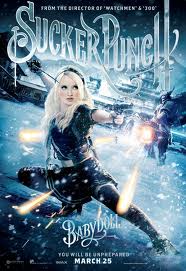
One of the best examples of this duality in a story is the movie Sucker Punch by Zack Snyder (2011). In this story, the main character is a girl named Sweet Pea.

She is the narrator of the story and the leader of the group of characters. She makes the decisions, and the story revolves around her choices and future.

But she is not the heroine of the movie. The heroine is another girl, named Baby Doll. She is the one the audience connects with and cares about. She is the one we follow to find out if her hopes and desires will be fulfilled. And it so happens that her desires and hopes involve giving Sweet Pea a bright future.

So how do you go about choosing your main character?

1)      You decide what you want to write about. What you want to say through your story.

2)      You decide whose story you want to tell. You choose your main character,  a voice to speak throughout the story, a character who connects with the reader.

3)      You decide if this main character is the hero of your story. Most of the times, the answer will be yes. But sometimes, it might worth considering the answer no.

 Then you write.

“And finally this question, the mystery of whose story it will be. Of who draws the curtain. Who is it that chooses our steps in the dance? Who drives us mad? Lashes us with whips and crowns us with victory when we survive the impossible? Who is it, that does all of these things?

Who honors those we love for the very life we live? Who sends monsters to kill us, and at the same time sings that we will never die? Who teaches us what’s real and how to laugh at lies? Who decides why we live and what we’ll die to defend? Who chains us? And Who holds the key that can set us free…

It’s You.

You have all the weapons you need.

Now Fight!”

Sweet Pea in Sucker Punch

So how do you go about choosing your main character? Is your main character always the hero in your stories? I’d love the read your input below!