The Next Big Thing

Hello gentle reader,

I was recently tagged by the lovely Amanda Fanger for The Next Big Thing blog hop and I’m happy to take part since all I have to do is answer questions about my Work In Progress.

What is the working title of your book?

THE LAST QUEEN (Book I in THE DARKLANDS trilogy)

Where did the idea come from for the book?

I started thinking about this story ten years ago. I wanted to write a story where the main character would be a teenage girl (like I was at the time). I also liked the idea of a fantasy land where humans were the lesser people. Finally I wanted to write a love story that would be as realistic as possible, although set in an imaginary land.

What genre does your book fall under?

YA high fantasy.

What is the one-sentence synopsis of your book?

In the dangerous Darklands, a power struggle between Elves, Wolfmen and Humans is igniting, shattering the lives of a young princess, a warrior and a slave boy whose destinies seem meant to intertwine.

Which actors would you choose to play your characters in a movie rendition?

I’m going to cheat for that one 😉 I have no idea who would play my characters on screen, but I can tell you who inspired me while I was writing The Last Queen. I need to have a clear picture of my characters in my head in order to bring them to life, and I’m usually inspired by actors. With that in mind, here goes:

Elian is my main character. He is a 16-year-old slave whose life has been quite traumatic until he meets Araminta. He was directly based on English actor Eddie Redmayne, who was in countless historical movies between 2007 and 2010. Every time I saw him on screen I thought “This is Elian!” So here it is: Elian.

Araminta is 14 years old. She is an Elf, and a Queen. She is strong-willed, smart and quiet. When I described her in my WIP, I thought of English actress Lucy Griffiths.

Theron is 19 years old and he is Araminta’s husband. He is a Wolfman and the son of a lord, who loses all at the beginning of my WIP. He is a short-tempered warrior who happens to be very good-looking. Since I have had a crush on British actor Henry Cavill since, well, forever, I pictured Theron looking like him.

Will your book be self-published or represented by an agency?

Call me crazy, but I’m going for the traditional route.

How long did it take you to write the first draft of your manuscript?

Seven months for the first draft. Then six months for the first round of revision. I have battled with a high word count, instances of telling instead of showing, repetitions, adverbs, passive form and everything you shouldn’t do when you write. I’m still working on this manuscript, hoping one day I will get it in shape for the query process.

What other books would you compare this story to within your genre?

That’s a tough one. If you don’t know what High or Epic Fantasy is, think Game of Thrones and The Lord Of The Rings. But I can’t compare my WIP to those masterpieces. Since it’s YA, I guess it could be compared to The Seven Realms series by Cinda Williams Chima.

What else about your book might pique the reader’s interest?

My favourite character in the book (beside Elian) is Araminta’s bodyguard/slave/assassin Jerod. I actually wrote a short story about him entitled The First Guardian, because I felt he deserved his own story since he is, you know, awesome.

Thanks Amanda for nominating me!

And now, for my nominations… Six special ladies who write Epic Fantasy:

Raewyn Hewitt http://raewynhewitt.wordpress.com/

Mara Valderran http://maravalderran.blogspot.co.uk/

Susan Francino & Tyler-Rose Counts http://thefeatherandtherose.blogspot.co.uk/

Rachel Horwitz http://www.rachelhorwitz.com/blog/

K.L. Schwengler http://myrandommuse.wordpress.com/
ROW80 Check-In 2 : Meg Cabot’s writing tips

Hello gentle reader,

It is already time for a second ROW80 check-in. My goals for this fourth round are as follows:

Write or edit every day

Editing – Finish my current round of editing for The Last Queen, get my manuscript critiqued and beat-read, then edit some more.

DONE: I finished another round of editing and sent The Last Queen to CPs and beta readers. I’m waiting to hear back from them.

Writing – Write a short story, and continue writing the first draft of The Cursed King

DONE : I worked on The Cursed King and added about 2000 words to my first draft.

So this was another good writing week for me: I did write or edit every day. Tuesday and Friday were once again tough (because I get home from work late on those days), but I still stuck to the routine. A big thank you to Lauren Garafalo, Julie Jordan Scott and Juliana Haygert for their support during our Twitter sprints!

This week I also managed to read two books again and I kept my blog alive with a post on word counts. Check it out if you want to discuss the relevance of limited word counts for writers. I also worked on my query letter and my synopsis. A big thank you to Craig Schmidt for his help.

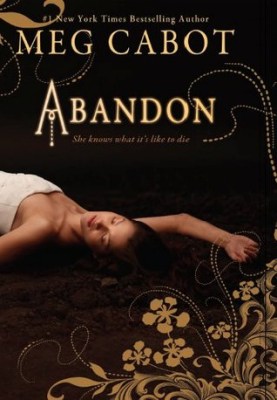
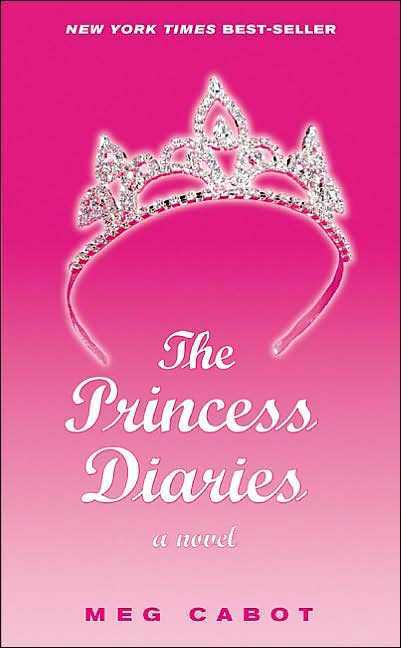
Now, on to an inspiring story to keep us going this coming week. Today I’m quoting bestselling YA author Meg Cabot. I found the following on her website.

“It took me three years of sending out query letters every day to get an agent, and a year for her to find me a publisher. When my first book got published I was 30. I sent out several hundred of these letters before a single person ever asked to see the book I was trying to sell.

Some people say if you get anyone to look at your book at all, you are lucky. I believe that luck is 95% preparation and 5% opportunity. So basically…you have to make your own luck.

My advice to young writers is:

Write the kinds of stories you like to read. If you don’t love what you’re writing, no one else will, either.

Don’t tell people you want to be a writer. Everyone will try to talk you out of choosing a job with so little security, so it is better just to keep it to yourself, and prove them all wrong later.

You are not a hundred dollar bill. Not everyone is going to like you … or your story. Do not take rejection personally.

If you are blocked on a story, there is probably something wrong with it. Take a few days off and put the story on a back burner for a while. Eventually, it will come to you.

Read-and write-all the time. Never stop sending out your stuff. Don’t wait for a response after sending a story out…start a new story right away, and then send that one out! If you are constantly writing and sending stuff out (don’t forget to live your life, too, while you are doing this) eventually someone will bite!

It is nearly impossible to get published these days without an agent. The guide I used to get mine was called the Jeff Herman Guide to Agents, Editors, and Publishers. It was well worth the money I spent on it, since it lists every agent in the business and what he or she is looking for. It also tells you how to write a query letter, what to expect from your publisher, and all sorts of good stuff…a must buy for any aspiring author!

And above all, become a good listener. In order to write believable dialogue, you need to listen to the conversations of the people around you—then try to imitate them! So my advice is always to try to keeping quiet, listen only, and let other people to do the talking for a change. You’ll be surprised how much this will improve your writing skills (and how many people will think you’re a really sage person, when all you’re basically doing is spying on them).

Good luck, and keep writing! If I can do it, so can you!”

 How are you other ROWers doing? Here is the Linky to support each other!

ROW80 Check-In 1: Neil Gaiman’s 8 Rules of Writing

Hello gentle reader,

It is time for my first ROW80 check-in! My goals for this fourth round are as follows:

Write or edit every day

Editing – Finish my current round of editing for The Last Queen, get my manuscript critiqued and beat-read, then edit some more.

Writing – Write a short story, and continue writing the first draft of The Cursed King

I’m happy to report that I’ve had a great writing week, since I did manage to write or edit every day! Some days (Tuesday and Friday) were tough because I got home from work very late, but I still stuck to the routine. I also managed to read two books for my upcoming Halloween post and I kept my blog alive with an interview with YA author Meagan Spooner. Check it out if you want to know how she got published.

If you’re new to this blog, know that I always add an inspiring story to my ROW80 check-ins. This week, I’m sharing Neil Gaiman’s 8 Rules of Writing that I found on the Guardian website. Neil Gaiman is one of my favourite authors and his writing advice is worth a read.

Image by Kimberly Butler

  1. Write
  2. Put one word after another. Find the right word, put it down.
  3. Finish what you’re writing. Whatever you have to do to finish it, finish it.
  4. Put it aside. Read it pretending you’ve never read it before. Show it to friends whose opinion you respect and who like the kind of thing that this is.
  5. Remember: when people tell you something’s wrong or doesn’t work for them, they are almost always right. When they tell you exactly what they think is wrong and how to fix it, they are almost always wrong.
  6. Fix it. Remember that, sooner or later, before it ever reaches perfection, you will have to let it go and move on and start to write the next thing. Perfection is like chasing the horizon. Keep moving.
  7. Laugh at your own jokes.
  8. The main rule of writing is that if you do it with enough assurance and confidence, you’re allowed to do whatever you like. (That may be a rule for life as well as for writing. But it’s definitely true for writing.) So write your story as it needs to be written. Write it ­honestly, and tell it as best you can. I’m not sure that there are any other rules. Not ones that matter.

How are you other ROWers doing? Here is the Linky to support each other!

A Writer in the Spotlight – Meagan Spooner

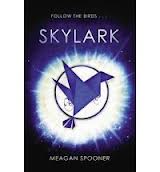
This week again I was lucky enough to have a YA author give me an exclusive interview! The idea behind the “Writer in the Spotlight” feature is that published (and bestselling) authors are the best source of advice for us, would-be-published writers. Today’s interview is with debut author Meagan Spooner. Her Dystopian novel, Skylark, is out now. Her science fiction novel, These Broken Stars (co-authored with Amie Kaufman), will be out in 2013.

Author : Meagan Spooner

Genre : Young Adult, Dystopian & Fantasy

Location: Northern Virginia

Contact: Website, Goodreads, Twitter

Books : Skylark (2012), These Broken Stars (2013)

Bio: Meagan Spooner grew up reading and writing every spare moment of the day, while dreaming about life as an archaeologist, a marine biologist, an astronaut. She graduated from Hamilton College in New York with a degree in playwriting, and has spent several years since then living in Australia. She’s traveled with her family all over the world to places like Egypt, South Africa, the Arctic, Greece, Antarctica, and the Galapagos, and there’s a bit of every trip in every story she writes.She currently lives and writes in Northern Virginia, but the siren call of travel is hard to resist, and there’s no telling how long she’ll stay there. In her spare time she plays guitar, plays video games, plays with her cat, and reads.

My interview (01/10/2012):

On writing:

Did you always know you wanted to be a writer?

Yes. As long as I can remember, anyway. I was very young when I first decided I wanted to be an author–about four years old or so. I had one of those little-kid epiphanies where I suddenly realized that real people wrote the books I liked to read, and that blew my mind. You know how it is when you’re small, you never really think about where things come from. Well, when I realized that books were made by actual people, I decided that’s what I wanted to do some day. I’ve always had other aspirations along the way as well, but writing has been the only one I constantly aspired to.

When and where do you write?

Whenever I can/need to, and wherever I happen to be. I know that’s a boring answer, because people love to hear about the routine, but the truth is that once you start juggling deadlines for multiple books and series at every stage of the process, you can’t really afford to be precious about your routine. Ideally I like to write at my desk when I’m alone in my apartment, and that tends to be where I get the bulk of my work done. But I write on my netbook when I’m traveling, and I write by hand occasionally when I’ve got something flowing and no computer nearby. (This happens most often when I’m driving somewhere, and I end up having to pull over to the side of the road and write on napkins and receipts. Seriously.)

What do you say to people who want to be writers? How difficult is it to get published?

That’s kind of a tough question to answer because there are so many factors–it’s not just a level of difficulty on a scale from 1 to 10 that’s the same for everyone. Do you read a lot? Have you been writing for a long time? Do you pay attention to what other authors do and try to utilize those tools in your own writing? Are you talented? Do you work hard? Are you driven and dedicated? If the answer to most of those things is “yes,” then you’ve got a pretty good chance of being published. Yes, there’s luck involved–hitting the right agent/publisher with the right story at the right time–but most of it is hard work and being willing to improve yourself. You have to walk this incredibly fine line between being arrogant enough to keep thinking you can do it even when you get shot down over and over again, while also being humble enough to accept and incorporate criticism, and grow your craft.


On “Skylark”:

To write this book, where did you get your inspiration from? Were you aware of the coming dystopian trend in YA literature when you wrote it?

I wasn’t aware, no. I’d read THE HUNGER GAMES but wasn’t really paying attention to the YA market when I got the idea (which you can read more about here), because I wasn’t particularly driven to get published at that time. It was only after I had the idea for SKYLARK that I knew it was The Book, and I started keeping an eye on what was going on out there. The truth is, even then I had no particular view on the dystopian craze, because to me, SKYLARK isn’t really dystopian literature. There are elements that it shares with many dystopian stories, so it often gets called dystopian (even by me when I’m describing it simply) and shelved that way. But structurally it’s the Hero’s Journey, through and through–it’s fantasy, not science fiction.

Why did you choose to write for Young Adults?

Joss Whedon, one of my writing idols, often gets asked why he writes strong female characters. His response is “Because you’re still asking me that question.” Why write for young adults? Why NOT write for young adults? Why would anybody not want to write for young adults? For one thing, you won’t find a more riveted and dedicated audience anywhere. No one reads like kids and teenagers read, with such investment and heart.

But to me, being a teenager is all about having real choices for the first time in your life, and having to make those choices without necessarily knowing where they’ll lead you. And choice is what all good stories are really about, deep down. The choices protagonists make, and where those choices take them.

What are you working on now?

Everything. Okay, that’s not a helpful response, but that’s pretty much what it feels like. I’m revising book two of the SKYLARK trilogy, planning book three, doing copy edits on THESE BROKEN STARS, and writing the first draft of the second book in that series. And yes, all at the same time. If I had extra time, or if suddenly all my contracted work just vanished, I’d be working on a Beauty and the Beast retelling that I began way back when I first sent out query letters for SKYLARK. It was going to be my next project, in case SKYLARK (then called THE IRON WOOD) didn’t land me an agent. Two years later and I haven’t gotten to finish it yet! Someday. 😉


Reading advice:

Which authors inspire you now? Which YA books would recommend?

For dystopian fiction, I’d recommend THE GIVER by Lois Lowry. For science fiction, I’d recommend ENDER’S GAME by Orson Scott Card. For fantasy, I’d point you toward THE LAST UNICORN by Peter S. Beagle, or if you want a more recent book, GRACELING (and its companion novels) by Kristin Cashore.

As far as authors go, Tamora Pierce, Robin McKinley, Patricia C. Wrede, and Diana Wynne Jones have always been huge inspirations for me. I go back to them constantly whenever I lose sight of what I’m doing, or why I’m working so hard to do it.

Thanks, Meagan, for an awesome interview!

SKYLARK is available from Amazon here.

ROW80 Check-In 10: Rae Carson’s success story

Hello gentle reader and fellow writers,

This week I have been hearing a lot about a British teenage writer who got a 6-figure book deal in less than 2 years. As dreamlike as these publishing stories are, I wanted to highlight another author’s story today.

Rae Carson is a YA High Fantasy author whose first book, The Girl of Fire and Thorns, came out in 2011. It was a nominee for the Andre Norton Award and the William C. Morris YA Debut Award. It was also an ALA (American Library Association) Top 10 Best Fiction for Young Adults honoree in 2012. The second book in The Fire and Thorns Trilogy, entitled The Crown of Embers, is coming out on September 18th 2012. Her third book, The Bitter Kingdom, will be published in 2013. In June 2012, she sold a new romantic fantasy trilogy set during the American gold rush to HarperCollins’s Greenwillow Books.


Rae’s journey into publishing is interesting because it was slow. She became serious about writing back in 2004, and it took her 7 years to get a book published. Along the way she sold a couple of short stories, wrote a first book which is still in her drawer, then in 2005 she wrote the first draft of The Girl of Fire and Thorns. She got an agent, and never sold the novel to a publisher. So she revised it and decided to go with another agent, who managed to sell the book within 24 hours. It took then another couple of years to have the book sitting on bookshelves in bookstores.

Here is what Rae says on her website:

I graduated college with a degree in Social Science–which qualified me to flip burgers–and a mound of education debt. I still didn’t know what I wanted to do when I grew up.

Well, that’s not true. I did know. I wanted to be a novelist. But that just wasn’t practical, and I had to come up with something else. I had to have a Plan B. So I tried bank tellering, secretarial work, customer service, inside sales, substitute teaching, data entry, logistics, and even machine shop-ing. I didn’t enjoy any of it.

In 2004, after quitting a very high paying job in a very toxic atmosphere, I decided to get serious about writing. It was the only thing I kept coming back to, the one thing that had held my interest over time and distance and lots of life change. So I joined the Online Writing Workshop for Science Fiction, Fantasy, and Horror where I met my future best friends, my future husband, and my calling.

I spent the next few years happily writing awful stuff. During this time, I got to know C.C. Finlay online, and after going on three real-life dates, I moved from California to Ohio to marry him. The writing became a lot less awful, and eventually I sold my first novel to Greenwillow/HarperCollins.

Hindsight is easy, I know, and writing about the awkwardness of adolescence is way easier than living it. But I can say unequivocally that although growing up is hard, it’s totally worth it. It’s possible to become your better self. And dreams, no matter how impractical, are made to be pursued.”

So do you find this story inspirational? Do you believe the traditional route to publishing is too slow? Or does it guarantee great books from great authors for readers? I’d love to read your thoughts in the comment section!

You can find Rae Carson on Twitter and Facebook.

To write this post, I have used:

http://www.locusmag.com/Perspectives/2012/07/rae-carson-amulet-of-power/

http://shelf-life.ew.com/2012/09/13/fire-and-thorns-author-rae-carson/

My ROW80 update for this week:

this week I have tried writing a short story AND revising my WIP The Last Queen. The reuslt is that I have a unfinished short story and I’m late in my revisions. So for the last week of this round, I need to focus on revisions.

How are you other ROWers doing? Here is the Linky to support each other!

ROW Check-In 8: Elizabeth May on Writerly Misconceptions

Hello gentle reader,

so I had a tough week. I was jet-lagged and I was having doubts about this whole “let’s get my book published” thing. So I didn’t write. Instead, I read great books and decided to postpone my writing until next week. And I found a post by debut author Elizabeth May. She posted it her blog on November 22d, 2011. Since then she has sold her YA steampunk novel THE FALCONER and it will be released in May 2013.

Here is her post:

Writerly Misconceptions: YES, YES, YOU DO WORK

Basically, I’ve come to understand that aside from the other things I have to do (that dissertation to finish, that photography business to run, that teaching anthropology thing I do), I have to write sometime.

Have to.  Because, while it might have been a hobby before, writing is now one of my jobs.  I have a trilogy to plan.  A sequel I should probably be writing as I type up this blog…  I am doing things!  Important things!  My heroine is a mess and I have to FIX HER.

So when I take a day and sit on my ass in front of the computer for hours, that’s not me being lazy.  That’s me bringing home the bacon.

The other day I asked Mr. May to do some task that I really can’t recall right now because I’m only on my third cup of coffee.

His response?  ”Wait, weren’t you home all day?”

Subtext?  ”You totally could have done this thing because while I was out working, you were sitting at home.”

It’s a totally innocent comment.  He’s right.  I was home all day.  I made two pots of coffee, clicked around on mah laptop, answered a few business e-mails, worked a bit on my dissertation write up that my supervisor is demanding — and oh yeah! I wrote some of that sequel.

Now, before anyone judges Mr. May (remember that I love him and he is not a writer), he totally didn’t mean this to sound dismissive of my work.  He is voicing a very common misconception about writers.  That writing a book is easy work* and that because most of us work from home, we are ”lucky” not to have to “go to work.”

Basically, that we are less busy because writing is dependent upon the rules and hours authors set for themselves.  If we all had offices away from the home, perhaps this misconception wouldn’t exist.  But because we prefer comfortable spaces (homes or coffee shops or cafes, or my favourite place of all, the couch) it’s perceived as, essentially, laziness.  Because I could be cleaning instead of typing.  I could be doing something active.  I could be going out to run errands.  Instead, I’m being sedentary.**  Some people believe writing is not a “real job” for all of these reasons.

Because this is my significant other, I had to set this straight.  I said, “Assume that whenever I’m staying home for the day, it is my designated ‘work on book’ day. It is not my ‘clean ALL THE THINGS’ day.”

And maybe, if I finish a chapter and feel like cleaning, I will clean.  But not before!

Mr. May, of course, apologized.  Because when people make comments like this, they don’t generally realize they’re speaking from this socially engrained idea that “work” equals “being active,” or that a “real job” requires “leaving the nest, staying out from 9-5.”***

So I’m clarifying this right here, right now.  Writing is work.  Writing is a job.  Writing is not for lazy people.  We don’t write because it’s easy.  That is not why we sit in front of a laptop or a blank sheet of paper for hours.  That is not why we spend years writing practice books that no one will ever read.  That is not why we spend all that time querying and getting rejections.  And that is certainly not why we write book after book.

Because we’re lazy?  No.  It’s because we’re compelled to.  It’s in our nature.  That is the only explanation for spending years writing unpublishable, crappy manuscripts to get to that point where our work is good enough to put out into the world.

So if you’ll excuse me, I will continue to sit on my couch and work.  Because this is how books are made.”

___________________________________

* Has anyone heard this? “I could write a book if I wanted!”

**  I’m being sedentary because I’m writing a damn book.

*** I’ve also heard the phrase used in reference to “non-career-like jobs” — the conceptualization of “real jobs” is limited to a few vocations, and let’s face it, it’s a shitty thing to tell anyone.  Right along the lines of “write a ‘real’ book” or “read a ‘real’ book.

How are you other fellow ROWers doing? You can visit them here.

ROW80 Check-In 6 : Sarah J. Maas’ success story

Hello gentle reader,

Today I want to share with you the writing journey of Sarah J. Maas. She is 26 years old and a YA Fantasy author. Her debut novel, THRONE OF GLASS, was released last Tuesday by Bloomsbury. Already her novel has received hundreds of five-star reviews on Goodreads, it has been quoted in the LA Times and the Wall Street Journal published a whole article about it.

So I haven’t read Sarah’s book yet, and I won’t go into details about it here. The reason I mention Sarah and her book is that she started writing Throne of Glass TEN YEARS AGO. It took her ten years to write and rewrite her book, to find an agent, to sell the book and have it published. TEN. YEARS.

On Tuesday she published a guest post on The Story Siren’s book blog explaining her ten-year journey. It’s a great read, so I have included it below.

Revision, Revision, Revision.
by Sarah J. Maas

“Getting to August 7th has been a journey over ten years in the making. I began writing THRONE OF GLASS back in March of 2002. I was sixteen years old, had a vague idea of where I wanted the story to go, and absolutely no clue how much this book would wind up shaping and changing my life.

My FictionPress origins have been discussed a fair amount in various places around the internet, so I’ll just give you the quick and dirty account of those first six years. A month into writing TOG (then titled QUEEN OF GLASS), I decided to throw up the first few chapters on FictionPress. I got such an enthusiastic response that I kept writing—and kept sharing. And in the six years that the story was on the site (the very, very rough drafts of the first three books of the series wound up being shared), it became the most-reviewed story on FictionPress. It was my FP readers that encouraged me to get published. And one day in Fall of 2008 (a few weeks after the final chapter of QOG/TOG had been posted), their support gave me the courage to remove TOG from FP in order to pursue publication.

By that time, I’d already started a secret, massive overhaul of the series, word for word, scene for scene, adding in new plotlines, expanding the world… In the six years since starting the series, I’d graduated from high school and college, and learned a hell of a lot about writing and books and storytelling. Of course, none of that taught me anything about the realities of publishing. Like…what the average book length should be.

So, it’s with a bit of horror and shame that I admit I sent out three very preliminary queries…

With a 240k-word manuscript (for Book 1).

I got the three rejections that I deserved.

It wasn’t until the amazing Mandy Hubbard (YA author and agent…and an FP fan of mine) offered to read the ms and give feedback that I understood was NEVER going to get an agent with a 240k-word fantasy novel. And it was Mandy who found places for me to cut and trim and condense…until we had a 150k-word manuscript. A few months and some more revisions later, (in December 2008), I sent out a round of queries…and landed my amazing agent from that batch.

We actually spent several months revising the manuscript—paring it down even more (I think it was around 140-145k words by the time we went on submission). My agent went on maternity leave for several months after that, and we did one FINAL round of revision when she came back.

Then, in summer 2009, we went on submission to editors. I know the internet is full of overnight YA mega-deal stories, but mine was not one of them. It took until December of 2009 for us to hear that an editor at Bloomsbury was VERY interested.

But.

(BUT!)

They wanted Book 1 to be more self-contained (it originally had a very open and unresolved ending). And they WERE super-interested…but only if I could present a detailed outline for the mega-revision I’d do if they offered.

So, after brainstorming with my agent, we came up with a solution: I’d split Book 1 in half. Not chronologically, but rather just PULL one of the major plotlines (there were two) and set it aside to make a brand-new Book 2 (thus pushing back other books in the series). And then I’d completely revamp the remaining plotline to contain a new, resolved ending.

What’s somewhat ironic is that in my initial rewrite of TOG (back before I began querying, and before Mandy even came along), I’d removed one of the original elements of Book 1, which was this competition to find the new personal assassin for the King. BUT, when it came time to come up with this outline for Bloomsbury, that competition was the FIRST thing I thought of—so I wound up bringing that plot back into the story.

So, we submitted that proposed outline. And waited.

And waited. And waited. And in March of 2010, we got our offer, based on that outline.

Once the celebrating had worn off, I realized that I now actually had to rewrite Book 1 from the ground up. It took me several months, but I eventually turned it in. Only to get an edit letter six months later (…yep.) that involved HEAVY amounts of revision. Nearly another rewrite. But I got through it (we’re into 2011 now), and I got through her second, super-intense revision letter, and then her smaller, surface-level third letter, and then…we were done (in late summer 2011). Of course, then there were copyedits and first pass pages and all of that fun stuff afterward, but by comparison, that stuff felt like a walk in the park.

As I’ve been writing all of this out, I’ve been realizing that this looks sort of bad. THAT many rewrites and revisions? You’re probably thinking that this was the most broken and un-publishable book of all time (…I certainly like to think that is NOT the case.). But honestly? It was hell. It was exhausting, and it was the hardest thing I’ve ever had to do.

But each of those revisions and rewrites brought me closer to my true vision for the book, even if I didn’t realize it at the time. Each edit letter gave me the opportunity to make the story better, to spend MORE time figuring out the world and the characters and the plot. It allowed me to learn SO much as a writer—but also as a person. I learned about my own strength—about just how far I was willing to go to make this book a reality. I learned that I CAN do anything I set my mind to, and that it might take years, but it is worth it.

And I wouldn’t change a single moment of it. Not a single one.

So when I walk into a bookstore today and see that book on a shelf, I’m not just seeing my book, and the story that is in my very soul. I’m also seeing over ten years of work—I’m seeing PROOF that “impossible” is nothing but a word. I’m seeing my dream, at long last, become a reality.”

So this is Sarah’s story. I hope it can give hope to all of you, fellow ROWers and would-be-published writers out there.

Now on to my ROW80 goals:

I’m still off work, which means that my daily schedule changes from one day to another. I haven’t been writing as regularly as I want to, but

1-       Write everyday: 3/7 days.

2-       Self-edit The Last Queen: a little bit done this week.

3-       Continue writing the first draft of The Cursed King: not done this week.

Here is the Linky for the other check-in posts. How are you other ROW80 writers doing?

ROW80 Check-In 5: Susan Dennard’s Advice on Writing a Saleable Book

Welcome gentle reader,

today again I thought I would share with you some writing advice from a published author.

Susan Dennard is a YA author repped by Sara Kendall of NCLit. Her debut novel, SOMETHING STRANGE AND DEADLY, is available now from Harper Teen. Susan has an AWESOME blog where you can find invaluable advice on the craft of writing, on the art of storytelling and revising, on the querying process, on the value of critique partners, on grammar and style and on genres. She regularly writes for the Publishing Crawl blog and you can also find her on Twitter, Goodreads and Facebook.

I really recommend you check out her blog and if you need convincing, I have posted below one of her blog posts entitled Writing a Saleable Book. It was first posted by Susan on the Let The Words Flow website on August 10th 2011. You can read the initial post here.

“Recently, someone asked me:

What is required to make a book saleable?

That is a rather large-in-scope question, and as such, I’m afraid my answer will be kinda vague. All the same, I thought it was worth taking the time to answer for everyone.

My super broad response is the:

The most important thing in writing a saleable book is writing a good book.

I am 100% convinced that if you have a well-written, compelling story, your novel will eventually find an agent/editor. Period.

That said, there are a few critical things that define a “good book”. Again, these answers are vague, and I’d be more than happy to get specific for anyone with questions (ask in the comments, please!).

Parts of a Good Book

1. First and foremost, the story absolutely most flow. Stilted dialogue, poor pacing, or unreadable grammar/syntax will kill a manuscript. A reader can put up with slow scenes if it all flows beautifully, and a reader can put up with a less-than-compelling plot if it’s smooth.

The way to ensure your novel flows is to revise-revise-revise. Learning to master the written word is absolutely critical. Few people write stunning first drafts, but give them a red pen, and they can line-edit their words into perfect prose.

2. Secondly, a book needs a compelling plot with tension on every page. The story builds, the tension builds, and everything ends in an explosive climax (and this applies to any genre—by explosive I simply mean all aspects of the story finally come together).

This is something you can learn by reading about writing, taking workshops, or simply reading heavily in the genre you write. There are structure to stories (three-act is the most common), and your job is to practice until these are second nature when you write/revise.

Again, my first drafts are rarely good examples of compelling plot, but I can revise them until they shine and all the subplots weave into the main plot.

3. Third, a book needs a cast of characters that readers care about. The best way to achieve this is to ensure the MC has a desperate need—secondary characters too. This is also something you have to learn by doing/practicing.

4. Fourth, the book must have high stakes. “High stakes” simply means we are invested in whether or not the MC achieves his/her goal. What will she lose if she fails to reach her goal? And why does that matter? A common reason a book fails to compel readers is low stakes—if we don’t care about the MC’s failure, we don’t care about reading the book.

Finding Problems

My biggest suggestion in terms of how to address these 4 components is to start critiquing and getting your work critiqued. Either find a critique partner, join a critique group, or stay active in a critiquing community. This is no doubt something everyone here already knows, but it’s so important (in my opinion) that I just have to emphasize it!

When you see others make mistakes, you learn to spot them in your own writing. Additionally, we, the writers, are often too close to our novels to see them “as a whole”. CPs and betas have the needed distance to spot problems

When I got an agent, Something Strange and Deadly had been through 4 crit partners and 2 betas. Did I always listen to my CPs’/betas’ comments? No—you must decide and filter feedback—but it was thanks to my CPs/betas that I caught some of my biggest mistakes (character inconsistencies, flat climax, plot holes, etc.).”

I hope this post by Susan helped!

Now for my ROW80 goals:

After 10 days off (I was travelling) I have been somewhat back on track for the past three days.

1-          Write everyday: 3/7 days.

2-          Self-edit The Last Queen: done.

3-          Continue writing the first draft of The Cursed King: done.

Here is the Linky for the other check-in posts. How are you other ROW80 writers doing?

Michelle Hodkin’s Secret to Getting Published

Michelle Hodkin is the author of The Unbecoming of Mara Dyer, a YA paranormal novel and one of my favourite books. The second book in the Mara Dyer series, entitled The Evolution of Mara Dyer, is scheduled to be released on October 23d, 2012. Michelle Hodkin has an amazing blog, that I strongly recommend you check out.

Back in November 2010, Michelle published a post on her blog entitled My secret to getting published. It is an AWESOME and inspirational post, and I have decided to share it with you, would-be-published writers out there.

If you like it, do comment on Michelle’s blog and let her know on Twitter. She’s amazingly nice, so don’t be afraid. And buy The Unbecoming of Mara Dyer, while you’re at it.

So, without further ado, here is Michelle’s secret to getting published:

“So! This past weekend, I got an email from a lovely woman the other day asking me to tell her my “secrets” to getting Simon & Schuster to publish my novel. I was SUPER surprised to get the email and super, super flattered! So I dove into my response with enthusiasm—I started writing back to her, and kept writing, and my response became very, very long. And I thought—well, I never expected anyone to email me asking this question, but maybe, since one person did, more people want to know? About my super magic secret to getting my beloved Simon & Schuster to publish THE UNBECOMING OF MARA DYER?
Well, do ya?
Okay, here it is: I worked hard. 
You thought I was going to tell you that I had no secrets, right? Well, gotcha! Because that’s my secret. Let me explain. When people talk to me about my book or the book deal or I’m confronted with the (very few) people I don’t know who have read it (no ARCs yet, so this number is small), I am very quick to brush off the compliments with a response about how lucky I was and am. You see, I am not the best taker of compliments, even though it makes me GLOW to hear good things. Like, there’s nothing that puts a smile on my face faster than hearing something nice about my book, or the fact that people care enough to want to read it. But when it’s time for me to respond? I’ll say it was the right place, right time, right agent, right editor, right book. And those things are all true to an extent; there are a bunch of folks who also work super hard on their novels and haven’t been published. Yet.
But I have a lot of faith, a lot of faith, that they will be.
Because you dedicated, aspiring authors are writing when your infants are napping and the dishes are done and the pets are fed and when the husband isn’t bothering you, in snatches of 5, 10, or however many minutes you get. You are writing on your thirty minute lunch break from the mentally exhausting day job. You are reading hundreds of industry blogs every day (my count was 115 industry, book, author, and writing blogs before publication, now I am nearing 200) to learn the difference between a problem query and a problem novel. You are reading dozens of novels, both in your genre and out of your genre, and you are reading with a critical eye to find out why these books work, not why they don’t. You are attending writers conferences, in person or online. You are on Twitter, not just chatting (which is valuable) but observing; watching what agents and editors say and following query and #kidlitchat and #yalitchat discussions, whether you agree with the tenor of those discussions or not.
And like me, you revise until your grey matter aches. You expose your words to public critique. You send your book out to beta readers you’ve found (through Twitter or Absolute Write or Verla Kay or maybe just your friends and family, who can be just as helpful) and discover that more important than getting critiques is knowing what crits to take and which to leave, and you have no idea, you really don’t, because you’re flying blind just like I was. But you do it and you do it again and eventually you find a rhythm; you figure out which of your readers excel at patching plot holes and which excel at consistency and which ones to go to when you just need to hear “OMFG THAT SCENE IS SO HOT,” which is just as important.
And all of this writing and reading about writing and revising and observing may mean that your number of watchable television shows dwindles from a meager eight to three to one, like it did for me. It may mean that after three or five or thirty rounds of revisions, you’ve only been able to tear yourself away from your laptop to watch seven movies in a year, like me. It may mean that the mountain of laundry has eaten your laundry room and is threatening to spill into the kitchen (guilty) or that your children are becoming jealous of your “imaginary friends.” You are working hard, and for no guaranteed payoff.  But that dedication, if you keep at it, will pay off. Maybe your first novel isn’t THE novel. Maybe it will be your eleventh novel that takes the publishing world by storm. Or maybe it will be your first—maybe you will have a dream that so consumes you that you have to write about it and the passion you feel for your story is so strong that readers can feel it, too. But either way? You will have worked hard. Because writing for publication isn’t easy. Not for me or for any of the writers I know and not even for the superstar writers out there. If you have been writing for 10 years you will face challenges and if you’ve been writing for ten months? You will face others.
So the only secret to getting published?
Keep at it.”

The Writer In You Blog Hop – 3

The Writer In You is a blog hop hosted by Katie at The Fiction Diaries. In her own words, “this is a blog hop for all aspiring writers out there. It is a chance to meet other writers and share tips, writing, and experiences, all while gaining new followers for your lovely blog…” Every Saturday, Katie asks a question that we have to answer.

This week’s question is: What is your favorite classic novel and is there anything in particular you take from it that you hope to see in your own writing?

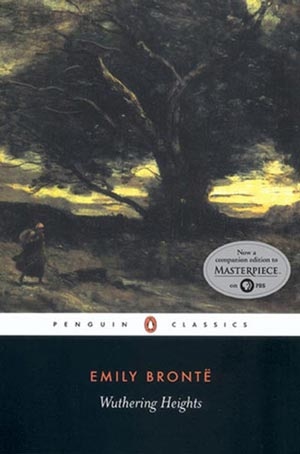
My favourite classic novel is undoubtedly Wuthering Heights by Emily Brontë. Published in 1847, this book is considered a masterpiece of English literature. It is famous for its doomed love between Catherine Earnshaw and Heathcliff, which is indeed the most passionate and fascinating love story I have ever read.

But what I find incredibly inspiring in this novel is how DARING it is. Not only does the novel have a complex narrative structure (hello multiple narrators and mise en abyme) and it depicts an amazing setting, but it also includes incredibly violent scenes, bold topics and dialogues in Yorshire dialect.

Wuthering Heights’ writing is actually so bold and original that it has often been suggested that Emily Brontë, a shy clergyman’s daughter who lived in the middle of nowhere, couldn’t possibly have written such a book. Yet she did. It’s called the power of imagination.

And I wish my books were half as daring as Wuthering Heights.

“If all else perished, and he remained, I should still continue to be; and if all else remained, and he were annihilated, the universe would turn to a mighty stranger.”

For everything there is to know about Wuthering Heights, visit: http://www.wuthering-heights.co.uk/index.htm

What about you? What is your favorite classic novel? Join the fun here and happy writing!