My Week In Review – ROW80 Check-In 4

Hello gentle reader,

So I’m trying something new today. Instead of my usual ROW80 Check-In + Inspiring Writer’s Story, I’m starting a new series of posts. I hope you enjoy it. Let me know in the comment section!

Quote of the Week

“Watch your step. Keep your wits about you; you will need them.” The Crimson Petal & the White by Michel Faber

Especially if you’re attempting to write a YA Historical Fantasy set in Victorian London, like me.

Book of the Week

cover_ruby_in_the_smoke

The Ruby In The Smoke by Philip Pullman (YA Historical Fantasy set in Victorian London)

Read in your genre, they say…

Picture of the Week

M.LIN St Paul's Cathedral

St Paul’s Cathedral – London (by my friend M.LIN)

My WIP’s opening is set in St Paul’s Churchyard…

Word Count of the Week

As of yesterday, my WIP is at  6000 words. Also it has a secret title and my MC has a name. It’s taking shape! I’m hoping to add more words today.

TV Show of the Week

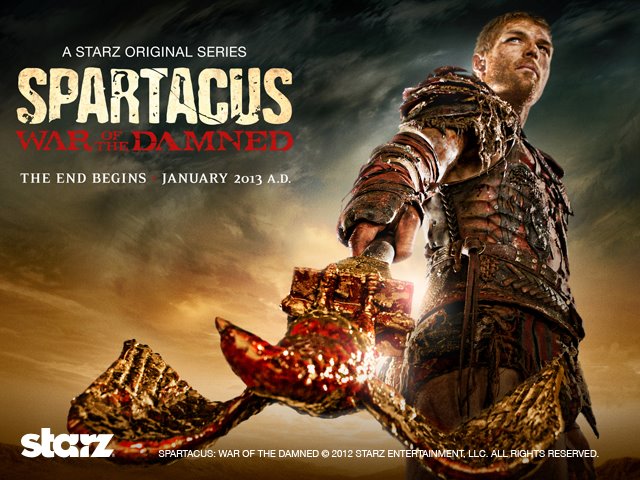
Spartacus-War of the Damned

Spartacus – War of the Damned (Starz)

This show has its flaws, but I’m addicted. And this is the last season…

Good News of the Week

The ever-awesome Amanda Foody got an agent and celebrated with a hilarious post. Go and congratulate her!

ROW80 Check-In

ROW80 Logo

My goal for this round is to write every day. This week I managed to write 4 days out of 7.

Music of the Week

Les Miserables Musical 1985

I’ve been listening to this on repeat. If you’ve read this post, you know why.

Links of the Week

On my blog I discussed how to write unforgettable secondary characters.

Over on There And Draft Again Raewyn talked about Magical Creatures in Fantasy and Rachel gave some advice on writing fantasy without clichés.

On the Writer Diaries Blog, Vicky Leigh posted a great post about the querying process – with Gifs

Dahlia Adler did the same, but without Gifs

Next week

My blog is so close to 300 followers I have decided to thank you by giving away a book! Stay tuned 🙂

What did you do this week? Make sure to share your writing progress and what inspired you this week in the comment section below!

ROW80 Check-In 3: On the importance of being a good beta-reader or critique partner

ROW80 Logo

Hello gentle reader,

It’s Sunday, and it’s time for my third ROW80 Check-In of this round. My goal this round is to write every day and this week I managed 5/7 days. I’m getting more organized as weeks go by and I’ve almost settled into a routine, which means I’m hoping for a 7/7 next week.

The reason I didn’t hit my 7 writing days this week is that I had to give priority to my critique partners in their hour of need…

Back in July 2012 I wrote a blog post about The Importance of Feedback and Beta Readers. I explained why it is essential for writers to have their work read and critiqued before they send it to an agent or a publisher. But there’s another side to this process: the part where you, the writer, give feedback on someone else’s Work In Progress.

As it happens this week, I spent a good amount of time thinking about how and why we should thrive to give helpful feedback to other writers. First I beta-read the full manuscript of the very talented Rachel. Later in the week I helped out the ever-awesome Jessica revise her first chapter then deal with negative feedback from another writer on her first pages. I also read this Conversation between Critique Partners on the Publishing Crawl blog and this blog post about How To Break Up With Your CP by Kat Ellis.

And I shall try to summarise the outcome of my little brainstorm below:

  1. Nothing and no one forces you to beta-read or critique other writer’s WIP if you don’t want to. Although it’s customary to swap WIPs, there’s no rule saying you should always reciprocate the favour. The way I see it, it’s more of a “pay-it-forward” process. I read Rachel’s novel but didn’t ask her to read anything for me. However I asked Juliana to read a short story for me and I have never beta-read any of her work.
  2. If you accept to beta-read or critique someone’s work, make sure you have the time and right frame of mind to do it. Comments should be honest but presented with a positive spin. The last thing you want to do is discourage the writer, even if her WIP needs tons of work. When commenting, you should always follow the THINK rule: is your comment True, Helpful, Inspiring, Necessary and Kind?
  3. Make sure you’re clear on what the other writer wants from you. Prior to reading the WIP, agree on a timeframe, and on the type of feedback you’ll give (line-editing, overall feelings, etc.). An experienced writer and a newbie will be likely to have very different needs, be sure to understand what they are.
  4. Don’t try to make the story your own. Don’t try to change the writer’s voice or to tell her how her characters and her plot should be. She wrote the story, it’s hers. You’re just here to help her make it stellar, not turn it into your work.
  5. Keep the conversation going. When beta-reading or critiquing for someone, communication is key. And if it takes 5 emails or a 1-hour phone call to make sure the writer understands what you mean, it’s worth taking the time to avoid confusion.
  6. Last but not least, use the time you spend reading other people’s work to ponder on your own writing. See what works, see what doesn’t, marvel at other writers’ talent. Learn from them, from their mistakes but also from their achievements.

What is being a good Critique Partner to you? How did you build a productive relatonship with other writers? I’d love to hear your thoughts below!

And don’t forget this is a blog hop! Here is the Linky for the other check-in posts. How are you other ROW80 writers doing?

M.LIN snow

Snowy UK this week, by my friend M.LIN

ROW80 Check-In 2 – Starting a Novel from Scratch by Toni Kerr

Hello gentle reader,

if you’re here to enter my Dreaming of Books Giveaway, click on the image below:

dreaming hop

And if you’re here for my ROW80 Check-In, keep reading!

ROW80 Logo

So my goal for this round is simply to Write or edit every day.

I have to admit, I was a bit all over the place, this week. Here in southern England we have had a lot of snow, which means this has affected my personal and professional life (cancelled trips & the like). In terms of writing-related activities, I sent out a new batch of queries, beta-read a friend’s manuscript, started working on a new Secret WIP, read one book and handled an inbox full of old emails. So, that was my week.

Now let’s move on to an inspiring story to keep us motivated for the week to come. This week I’m sharing YA author Toni Kerr’s advice on starting a novel from scratch. I read this post on the Operation Awesome blog and I strongly suggest you check this blog out if you haven’t already.

Toni Kerr

“A blank slate can be just as overwhelming as a landscape of laundry and clutter on every surface. But instead of shielding my eyes and pretending it’s not there, I’ll explore the empty space with baby steps!
 
Why am I suddenly faced with a blank slate? Because I’ve invested 100% into one series—one set of characters with a fascinating set of circumstances that I absolutely love. I can’t stand walking away from that, but right now, while I wait for the editor’s letter, I have nothing to edit, nothing to revise, and nothing waiting in a file somewhere.  
 
I’ve accepted the fact (to some degree anyway) that I need to start something new, even if what I write never sees the light of day. I need to because I’ll go insane if I don’t (and certain writing friends would smack me upside the head).
 
But planning a novel from nothing is a new concept for me. My first novel ran without boundaries or guidelines. Not that I’m complaining about that, but I’m sure some pre-planning will save me countless hours and many many rounds of editing.  
 
And so, as with anything that seems overly daunting, I’ve broken my task into itsy-bitsy baby steps to help me get started. I haven’t written that first line yet, but now I know my genre. I have five strong characters and know exactly what makes them tick, how they relate with each other, and I know where they need to start and finish emotionally. I sort of know my theme, but I’m leaving wiggle room for change  as the story reveals itself.   
 
I’m sure there are as many ways to start a novel as there are writers, but from what I know now, that I didn’t know then… here’s what I’ve done to break it down.
 
Baby Step #1
Research Genres—to refresh your memory on definitions and basic word count expectations. It’ll save you from having a novel that doesn’t fit in a defined category, and from having to cut 40k because it’s way beyond a healthy range.
 
Baby Step #2
Theme—this might come later, but think about it now. There are many blogs and writing sites listing popular themes—some fit certain genres better than others, and they do spark a few ideas. Having a theme will keep the story on track.
 
Baby Step #3
Basic Plot—Sadly, most novels can be boiled down to these: overcoming the monster (be it society, some sort of evil, or another person); rags to riches; the quest; voyage and return; comedy; tragedy; rebirth. Even romance falls into these topics…
Baby Step #4
Brainstorm for Ideas! I didn’t love Nathan Bransford’s query formula when I was trying to write my query, but I was amazed by how simple the plot should be (according to his formula). I swore that for my next novel, I’d write the query blurb first, just to keep my plot THAT simple (I’ll of course let it grow from there). So here’s his formula:
 
[protagonist name] is a [description of protagonist] living in [setting]. But when [complicating incident], [protagonist name] must [protagonist’s quest] and [verb] [villain] in order to [protagonist’s goal].
 
Keep playing until one or two actually sound workable. Next, we need characters for whatever the great idea is.
Baby Step #5
Character’s Photo ID – I love sifting through Google images for characters. If I know the sex and age of my character, I usually start by searching hairstyles. For example: teen girl hairstyles. A search like this generates nice headshots, which I find most useful when I don’t know exactly what I’m looking for—a spark in the eye, maybe some attitude. I save images for every character as I find them, even though I might find something better later. If nothing jumps, I’ll alter the search. Such as ‘Emo girl hairstyles’, or, if I have more information, such as wanting red hair, I might try ‘Irish girl’.  
 
Baby Step #6
Give the characters a life – Start a new .doc for all your characters. I like to keep them all in ONE document, separated by section breaks. That way, when you need a very specific detail that you swear you wrote somewhere, you won’t have to search through multiple files to find it. (Been there!) Insert each character’s image and fill in the personals. Age.. goals.. interests… biggest regret.. and what’s keeping from reaching their biggest goal? The information will depend on the genre/age of the character. There are character sheets and interview forms available all over the place (gotta love Google!). I usually combine what works for me. I also like to add a few paragraphs about how each character relates to all the other (main) characters. Interesting facts come out of these relationships, whether they are used in the story or not. For example, if character #1 and #3 were a hot item long before #1 and #2 start dating, it might explain why there is such a bitter tension between them. What if they belong together? I’ll bet that would make an interesting thread…    
 
Speaking of threads….
 
Baby Step #7
Outline! My first novel was not outlined. I had no idea where the characters were taking me, but I went along like a good little typist and didn’t get in the way. Maybe that’s why it took me so long to get it streamlined? This time, I’m trying Martha Alderson’s plotting system, and so far, I think it’ll work great. My scenes are not fully formed yet, but I know where I want to start, the point of no return (end of the beginning), and the final climax. I’ll let the characters work out the rest. The good news is, I should be able to keep them heading in the right direction.”
How do you go about starting a brand new manuscript? I’d love to read your tip sin the comments below!
And don’t forget this is a blog hop: visit the other ROWers here.

ROW80 Check-In 1- Writing a first novel by Marie Lu

ROW80 Logo

Hello gentle reader,

It is time for my first ROW80 check-in of this round. As a reminder, my goal for this round is simply to Write or edit every day.

I don’t know about you, but this week went by really quickly to me. I started my new position at my day job and it was quite time-consuming. In my spare time I wrote a couple of blog posts, went to see Les Miserables at the theatre and rewrote my query letter. But I didn’t find the time to work on my novels, which I intend to do this week. Finally my blog received the Lovely Blog Award and you can read all about it here.

Now if you’re new to this blog, know that each Sunday, I share an inspiring story with you to keep us motivated for the week to come. This week I’m sharing YA author Marie Lu‘s tale of her Very First Novel. She published this post on Publishing Crawl in November 2012 and I thought you might find it interesting… Enjoy!

Marie Lu-Legend

“I’m talking about my very, very, very first novel. You only have one first novel–not your first published novel, but the first one that you are able to write “The End” on. I know that for the most part (unless you are Stephenie Meyer!), first novels don’t end up going anywhere except for the back of your closet or the Archives folder on some old hard drive. And for the most part, this is a good thing. But I’ve always felt a certain rosy fondness for first novels–not just for my own, but for others’. It’s usually that first novel, however bad (or good), that teaches us that we want to become writers. It’s the one that makes us realize that we can do it. The dream is possible, at least according to our word count.

 Here’s the story behind my first. […]

That first novel was a high fantasy titled The Wings of Heaven. I’m still not sure why I called it that, since it had nothing to do with the story. It was about a young, orphaned (of course) knight’s apprentice named Pher (pronounced “Fair”) Artemsrough who aspired to become a knight and who loved the kingdom’s red-haired princess. One day, a beautiful woman came to the kingdom and told him that he was the Chosen One, and that she was on a quest to bring him to the far reaches of the world so that they could find a shiny ancient object that would tell her what his role in a prophecy was. I can’t even remember who the bad guys were in this story, but there were definitely some bad guys. I think. Along the way, the beautiful woman and Pher picked up a ragtag team of elves, thieves, and assassins that all happily joined them on this quest. There were also some children that could breathe fire, some powerful sorceresses, and a snowy cave called The Dark of Night.

It was 160,000 words. Yeah, I know.

Of course, fifteen year old Marie was completely oblivious to all of this thing’s flaws. I worked on it obsessively. Every night, I’d set my alarm clock for 2 AM, wake up, stuff a bathrobe under my door so that my parents wouldn’t see lamplight leaking from the bottom of the door, and then write quietly until the hour right before dawn. I wrote notes in my schoolwork and drew pictures of my characters on the margins of my homework. I posted chapters of it onto a personal site that I shared with my closest childhood friend. I spent a great deal of time lost in the whimsical haze of First Book Euphoria. I promised myself that I would finish it. I will never forget typing “The End” on that manuscript–I leaned back in my bedroom chair at 3:30 AM, stretched my arms up high, and smiled so hard that I thought I might break.

It was a terribly written story. I loved it with all my heart. I learned from The Wings of Heaven that I could finish a novel-length book, that I could carry characters from point A to point B (however badly), and that I could keep a promise to myself. I learned that if I wanted something badly enough, I would find the time to work on it–even if it was in the middle of the night.

Of course I went on to submit it to over a hundred literary agents, and of course they all soundly rejected it. I don’t think I even had a single request for sample chapters–that should tell you something about my query-writing skills. I remember crying over some of those rejections, laughing over others, stuffing them all in a big manila envelope (which I still have), and then pushing stubbornly onward. The thing is, looking back, my naivety was probably my greatest advantage. Had I actually known how difficult it would be to get published, I might never have finished that manuscript. I never might have been able to face getting rejected. And writing another manuscript. And getting rejected. And writing another. And getting rejected. And another. And another. If I hadn’t been so naive, I might have stopped right there. But I was so young, arrogant, optimistic, ignorant, and hopeful, and because of that, I was able to convince myself to write “just one more.” Most importantly, I was able to figure out over time that I wanted to write stories regardless of publication, that I loved it and that it was a permanent part of me.

This is why I love first novels, in all their imperfection and wonder.”

What was your very first novel like? Did you try and get it published? And how are you other ROWers doing after this first week? Feel free to leave me a comment below!

Here is the Linky to cheer the other ROWers on if you wish to do so.

ROW80: Final Check-In

ROW80 Logo

Hello gentle reader,

And we’ve come to the end of this 4th round of A Round Of Words in 80 Days (aka ROW80). My goal for this round was to write or edit every day and I’m pleased to say this has been my most productive round so far (this was my third participation). For at least 6 weeks I had a 100% sucess rate and even in the last few weeks, when work really got crazy and I couldn’t find the time to write every day, I did get a lot done.

So this round, I have:

– edited my WIP The Last Queen (thanks to a few awesome CPs and beta readers) and started querying it.

– added a few chapters to my two other WIPs.

– took part in the launch of a new blog along some writerly friends. The blog is called There And Draft Again and you can check it out here.

Here I’d like to thank Juliana Haygert and Lauren Garafalo for cheering me along during the Twitter sprints. You ladies are awesome!

See you all next round!

In the meantime, keep writing…

ROW80 Check-In 10: Garth Nix on Parting Company with Your Book

ROW80 Logo

Hello gentle reader,

And… it’s time for another ROW80 check-in! My goals for this fourth round are as follows: Write or edit every day.

So this week was again quite stressful at work and I didn’t manage to write every day. However, I did write. I wrote 5115 words in 3 days! Yes, that’s a big number for me. *Cue happy dance* I also added a post on my blog about Originality and Writing a book that doesn’t already exist. Feel free to join the conversation here.

Now, here is an inspiring story to keep us going this coming week. Today I’m sharing Garth Nix’s Nine Stages of a Novel. In this post published on his website, the Australian author explains the creative lifecycle of his books. For those of you who don’t know him, Garth Nix is a Young Adult Fantasy writer, author of the Old Kingdom series, The Seventh Tower series, and The Keys to the Kingdom series.

Nix--Garth

Here I’m only sharing Stage Nine: Parting Company with Your Book, because this is where I am now with my novel The Last Queen, which I am currently querying.

“Stage Nine: Parting Company

Responding to the structural edit and then later checking the copy-edit (which is where the prose is smoothed and minor inconsistencies are corrected) always feels like a strange afterthought to me. Emotionally I have already moved on to the next book, and the editing is purely a craft process, done with the head not the heart.

I think you need to let a book go when all the work is done, and it’s important to move on. In my years in publishing I often met authors whose whole self was entirely bound up in a single book, usually their first. Their lives would rise or fall depending solely on that book’s fate, and in this business, that’s an incredibly foolhardy and dangerous gamble to make.

I’m all for investing all your passion and self into the writing of a book, indeed, you need to put a lot of your soul into the story. But when the writing and editing is all done, I think you need to withdraw somewhat. It’s likely there will be many months before the book hits the shelves. It may even be a year away, and thinking about it and wondering how it will do and obsessing over it for that entire time is not healthy.

You need to say ‘goodbye and good luck, my friend’ and start on the next book. (…)

I’m always really pleased to see one of my finished books. I get a great feeling of accomplishment when I hold that first copy in my hand, a feeling that is undiminished from the very first time, way back in 1990.

But I also feel detached, and I think that is a good thing. I probably already have a new book partly written, or at least the outline is there and the prologue. I look at this finished book and I flick through the pages, and even though I can remember every part of writing it, sometimes I read a bit and I feel like I’m reading someone else’s story. A real book, not one of my own. I like that feeling, because it means I’ve succeeded in my ultimate ambition: writing the sort of book that I like to read.”

How are you other ROWers doing? Here is the Linky to support each other!

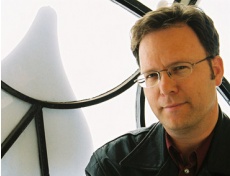
Garth Nix

ROW80 Check-In 9: Marie Lu on dealing with Writer’s Insecurities

ROW80 Logo

Hello gentle reader,

I can’t believe it’s already time for another ROW80 check-in! My goals for this fourth round are as follows: Write or edit every day.

So this week was crazy. I think I wrote every day but I have been doing so many different things I can’t be sure. What I did do was launch a blog alongside some lovely ladies (Raewyn Hewitt, Jessica Montgomery, Mara Valderran, K.L. Schwengel and Rachel Horwitz). Our blog is called There And Draft Again: A Fellowship of Fantasy Writers and I hope you’ll be willing to hop over there and support us. There’s a giveaway for our first blog followers. Alternatively, you can follow us on Twitter.

Now, on to an inspiring story to keep us going this coming week. Today I’m sharing Marie Lu’s take on Insecurities. She published the following post on her blog in February 2011, back when her best-selling dystopian novel Legend was still unpublished. I found this post especially fitting this week because I’m querying The Last Queen and I’m not feeling very confident about my writing at this time…

 Marie Lu-Legend

“Artists and writers tend to be fragile creatures by nature. Our work is a piece of our passion cut out and put on public display for the world to see, and we wait with our hearts in our throats as others analyze that work. Sometimes we achieve the ultimate goal: entertaining our public by making them react in an emotional way (joy, sadness, anger, enlightenment, even disgust–depending on what we’re aiming for). More times than not, we’re greeted with our greatest fear: the public’s disappointment, the public’s accusations that our work is a ripoff of something else, or the worst of them all…..the public’s silence.

I have to admit: I’ve never been a very secure person. I wish I could say that I’m confident in the quality of what I do, that I don’t care what others think as long as I’m happy with what I’ve created. But I can’t. I care very much what others think of both my artwork and my writing, and when I’ve disappointed viewers and/or readers, I feel ashamed that I let them down. And as the clock ticks gradually down to Legend’s November launch, I’ve learned something else: a book deal does not cure insecurity. In some ways, it makes it worse. Am I capable of pulling off three consecutive books all featuring the same characters and the same world? Am I smart enough to create prodigiously intelligent characters? Will I be able to make my readers fall in love with my hero and heroine? Some days I can answer these questions with an upbeat “yes, like Obama, I can!”. Other days, I will re-read my words-in-progress and think, “This is trash. This is drivel. Reviewers are going to eat me alive when this comes out.”

In the end, all I can do is put everything into my writing/art and hope that what comes out is something that the public will like. I do know one thing: Legend is the best story I’ve ever written. Which is nerve-wracking. I remember telling myself as it first went out on submission that if Legend couldn’t make it, then there was a good chance that nothing I write would ever make it. It’s my best effort (up until this point, at least). Whether or not that effort is good enough will remain to be seen.”

How are other ROWers doing? Here is the Linky to support each other!

ROW80 Check-In 7: Tamora Pierce on finding ideas & dealing with writer’s block


Hello gentle reader,

It is already time for another ROW80 check-in! My goals for this fourth round are as follows: Write or edit every day 4/7

This week I finished my current round of editing for The Last Queen. Unfortunately I didn’t do this every day but I did get a lot more done than last week. I’m hoping to get back to writing every day next week. Also this week my blog reached 200 followers and I have a giveaway to celebrate. Feel free to enter to win YA books!

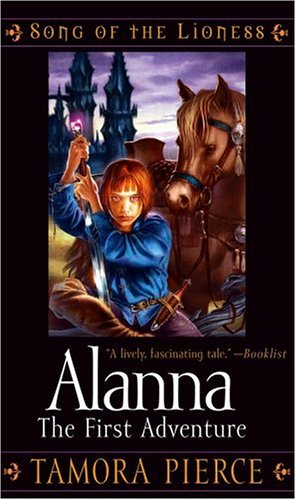
Now, on to an inspiring story to keep us going this coming week. Today I’m sharing Tamora Pierce’s tips to find ideas and fight writer’s block. When it comes to YA fantasy, one doesn’t really get more successful than Tamora Pierce. She has been writing since the 1980s and she is most famous for her Song of the Lioness quartet.

“Where do you get your ideas?

Some I stumble across: watching his nature programs, I decided British naturalist Sir David Attenborough would make a cool bio-mage. Watching my mother and sister produce blankets from balls of yarn and crochet hooks, I thought of it as a kind of magic, and wondered what all could be done with thread magic. Wrestling with my best friend’s dove gave me the ideas for Kel’s relationship with the baby griffin in SQUIRE. Pictures in magazines also give me ideas, as do stories in the news.

Other ideas come from my past obsessions. From the time I was six or seven until I was ten, I read anything and everything I could find about knights, the Crusades, and the Middle Ages. My next area of interest in knighthood was in the fantasy novels and Arthurian legends I read in middle school.

Another way I get ideas is from people: my Random House editor, Mallory Loehr, my agent Craig Tenney, my husband Tim, my friend Raquel…

Current events and history are also fertile ground for ideas. Keep a file of events and figures that interest you; it might prove useful one day.

The best way to prepare to have ideas when you need them is to listen to and encourage your obsessions. Watch and re-watch all the TV programs and movies you have a need to; read and re-read all the books, magazines and comic books; visit all the museums, zoos, galleries, concerts and wilderness areas; and listen to all the kinds of music that interest you. If you get a sudden passion for anything and everything to do with, say, gang warfare, starling behavior, painting frescoes, or jousting, go with the urge. Find out all you can. Even if you can’t use it right away, it’ll go into some holding zone deep in your brain, and surface when you need it. All creative people–not just writers!–expose themselves to as much information, in as many forms, as possible, in the hopes that it will be useful down the road, or even right now. You never know what will spark something new!


How do you deal with writer’s block? Here are some fixes I use when I get stuck:

  • Introduce a new character, a strong one with an individual style in speech, dress and behavior–one who will cause the other characters to review their own actions and motives to decide where they stand with regard to the new character.
  • Have something dramatic happen. As Raymond Chandler put it, “Have someone come through the door with a gun in his hand.” (My husband translates this as “Have a troll come through the door with a spear in his hand.”) Machinery or vehicles (cars, wagons, horses, camels) can break down; your characters can be attacked by robbers or pirates; a flood or tornado sweeps through. Stage a war or an elopement or a financial crash. New, hard circumstances force characters to sink or swim, and the way you show how they do either will move things along.
  • Change the point of view from which you tell the story. If you’re doing it from inside one character’s head, try switching to another character’s point of view. If you’re telling the story from an all-seeing, third person (“he/she thought”) point of view, try narrowing your focus down to one character telling the story in first person. If down the road in the world you’ve created someone has written a book or encyclopedia about these events, insert a nonfiction-like segment (that doesn’t give the important stuff away) as a change of pace. Try telling it as a poem, or a play (you can convert it to story form later).
  • Put this story aside, and start something else: letters, an article, a poem, a play, an art project. Look at the story in a day, or a week, or a couple of months. It may be fresh for you then; it may spark new ideas.
  • If you have an intelligent friend who’s into the things you’re writing about, talk it out with him/her. My husband often supplies wonderful new ideas so I can get past whatever hangs me up, and my family and friends are used to mysterious phone calls asking about things seemingly out of the blue, like what gems would you wear with a scarlet gown, or how tall are pole beans in late June?
  • Most important of all, know when it’s time to quit. Sometimes you take an idea as far as it will go, then run out of steam. This is completely normal. When I began to write, I must have started 25 things for each one I completed. Whether you finish something or not, you’ll still have learned as you wrote. The things you learn and ideas you developed, even in a project you don’t finish, can be brought to your next project, and the next, and the next. Sooner or later you’ll have a story which you can carry to a finish.”

How are other ROWers doing? Here is the Linky to support each other!

ROW80 Check-In 6 & Sunshine Award

Hello gentle reader,

So I had a crazy week, and for the first time since the beginning of this round, I didn’t meet my ROW80 goal, which is to: Write or edit every day. You also won’t find an inspiring story along with this post, simply because I didn’t have the time to find one.

Here is my week in numbers:

Number of hours spent editing/writing this week: 4

Number of hours spent at my day job: 54

Number of work-related dinner parties I attended: 2

Number of pest control interventions because of a wasp invasion in my kitchen: 1

Number of YA authors interviewed on my blog: 1 (you can read the interview here)

Number of writing contests I entered: 1

Number of awards my blog received: 1

Rhiann Wynn-Nolet was kind enough to pass on to me the Sunshine Award. This award is for “bloggers who positively and creatively inspire others in the blogosphere”. Although I am very flattered to receive this award, I am not going to answer the questions that go with it simply because they are all about my favourite food, my favourite colour and my favourite flower, and I don’t see how this can be interesting for you, gentle reader. I am also supposed to nominate 10 bloggers for this award, so I’ll just say: if you’re reading this and you’re doing ROW80, consider yourself (and your blog) nominated.

Hope you all have a great week! Here is the Linky to support each other.

ROW80 Check-In 5 : Claire Legrand on How To Come To Terms With Your Writing

Hello gentle reader,

And it is time for another ROW80 check-in! My goals for this fourth round are as follows:

Write or edit every day DONE

Editing – Finish my current round of editing for The Last Queen, get my manuscript critiqued and beat-read, then edit some more.

DONE: This week again I have been editing every day.

Writing – Write a short story, and continue writing the first draft of The Cursed King

I didn’t do any writing this week since I was focused on editing The Last Queen.

So this was another good writing week for me and I’m still happy with my goals. This week I also posted on my blog two posts you might enjoy: my Halloween reads recommendations and a discussion on the popularity of YA High Fantasy novels.

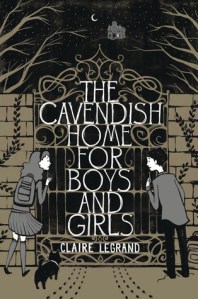
Now, on to an inspiring story to keep us going this coming week. Today I’m sharing YA author Claire Legrand’s tips for writers. Claire’s debut novel THE CAVENDISH HOME FOR BOYS AND GIRLS came out in August 2012.

“When I first started writing, I spent a lot of time online researching what writers should and should not do. There are many rules floating around out there dictating what supposedly makes for a good writing process and a bad writing process, a good writer and a bad writer, a book that will sell and a book that won’t.

Some I have encountered are:

  • You must write every day.
  • You should NOT write every day.
  • You should write [insert number of choice] words per day.
  • You should make a writing schedule and stick to it, absolutely no excuses.
  • You should be writing [insert number of choice] books per year if you ever hope to make a living in this business.
  • You must write at this pace.
  • No, this pace.
  • No way, THIS pace. Slackers.
  • You should write at least one million words before even thinking of querying an agent with a manuscript; before then, you’re not ready.
  • You should create an account for THIS social media service, and THIS one, and THIS one too, and post THIS many times a week.
  • You should blog regularly, on a set schedule, and stick to it. If you blog irregularly, you’re a bad blogger/writer/human being.
  • You should use Scrivener.
  • No, you shouldn’t.
  • You MUST outline, in detail.
  • You MUST outline, but only the main plot points.
  • Eh, you don’t need to outline.
  • You should plan your book around this method of story structure.
  • No, this one.
  • No, those suck, THIS one.
  • You should query one agent at a time.
  • You should query five agents at a time.
  • You should query ten agents at a time.
  • Your book should be between [number] and [number] words long, and anything else won’t fly.
  • You must use critique partners.
  • Your first drafts should look like this.
  • You should only have to do [insert number] rounds of revisions; anything more, and something’s wrong with you/your book/your soul.

Frankly, these shoulds and shouldn’ts start contradicting each other pretty quickly, and it can make a fledgling writer feel pretty lost. Heck, I’m all fancy and published now (and I say that tongue-in-cheek because there’s not much that’s fancy about it, and also, I still don’t feel like I know what I’m doing), and reading these kinds of statements STILL makes me feel pretty lost. They also, if I focus too hard on them, make me feel like I’m doing everything wrong when I can look at what I’m producing and rationally know that I’m not.

Rules can be a good thing. As Victoria Wright might say, rules help the world run just so.

But writing is not always a quantifiable activity. Much of it is instinct, luck, and plain old dogged persistence, whether that’s rigidly scheduled in a spreadsheet or just crammed into whatever spare thirty minutes you can find as your day allows it. And much of what works and what doesn’t for one person’s writing doesn’t translate to the next person. Therefore, I would say that many of the so-called universal writing rules we might see in blog posts, online articles, and tweets are really just what the author has found to work for herself, or for her friends, or for the majority of people within her peer group.

But that doesn’t mean it has to–or will–work for you (or for your book).

Such a statement seems elementary enough (everyone’s different! we’re all unique snowflakes!), but I still have a hard time accepting it. I’m a person very influenced by others, for good or for ill. This means some of my most productive writing days are when I’m “sprinting” online in the company of friends; this also means that other’s successes, failures, methods, and “musts” all have a way of affecting me deeply. I start to think I’m not doing enough or that I’m not doing it right, and then I lose confidence, and then I sit there staring at a blank Word document while scarfing down a box of Cheezits.
The thing is, I don’t do half the things on that list up there above.

I don’t use Scrivener; I have a notebook in which I scribble random thoughts. The rest is done in plain old Microsoft Word, with a lot of world-building and character notes jotted down in Notepad.

I don’t use critique partners. There is one good writer friend whom I trust to look at my unpolished work, but beyond that, no one looks at my books before my editor except for me and my agent.

I outline in detail, but I don’t have a set writing schedule every day, nor do I log my word counts or have micro-goals of any kind. I tried doing that, but it didn’t work for me because if I didn’t meet a goal for the day (or the week) I felt like a failure, and my work suffered for it. Instead, I shoot for big goals (finishing the book by this date) and as long as I meet that big goal, what happens until then doesn’t matter.

I write long what I call “zero drafts” (that is, the first ever draft of the book, before I make preliminary cuts, before I send to abovementioned good writer friend, before I send to agent). And when I say long, I mean long. And even beyond that, once a book has gone through revisions, it’s still on the longer side. I’m just plain wordy (as you can tell by reading this post and really my blog in general). (…)

What does this say about me and my writing?

Absolutely nothing. Except that I write long and then cut back during revisions. It does not reflect on the quality of my writing, the effectiveness of my methods, or how I measure up against the writing and methods of others.

Likewise, my method of outlining, my writing schedules, the fact that I only have one beta reader, etc. etc., means nothing except that this system is what works for me and my books. End of story.

You hear that, brain??

So I’m going to tell you this, in hopes that myself, through writing it, will soak in the reminder (and because I know there are others out there who, like me, doubt and compare and wonder if they’re nuts or stupid or somehow wrong for writing like they do):

The way you write is not necessarily how others write.

Your books are not going to be as [insert adjective of choice] as others’ are.

Your writing will be just that: how you write.

Your books will be just that: your books (and no one else’s.)

Know this, accept this. The sooner you do, the sooner you will come to terms with your writing. And the sooner you do that, the sooner you can get to writing that next book (and the next one, and the next . . . ), no matter how long/short/bracketed/messy/outlined/pantsed/critiqued/Scrivenered/Worded/slowly written/quickly written/ it ends up being.”

How are you other ROWers doing? Here is the Linky to support each other!