Writing Pet Peeves

Hello gentle reader,

Sometimes in my readings I come across writing devices that make me roll my eyes and shake my head. I guess we all have them: pet peeves. I’ve recently come to realize that mine are mostly plot-related. I’ve listed them below, and I’m curious to find out if you share my opinion on them…

Pet Peeve #1: The Resurrection

Gossip-Girl-Chuck-Bart

This plot device consists in resurrecting a character that was presumed dead for a good part of the story in order to resolve a plot line. The Resurrection was used twice in Gossip Girl, for both Chuck’s father and mother. I’ll admit, I hate this plot device with a passion, because it’s usually synonymous with plot inconsistencies in particular and lazy writing in general.

Pet Peeve #2: Everybody lies

The pretender

This is when the main character, and the reader alongside her, can’t trust anything the characters say. Please note I’m not talking about the unreliable narrator here. I’m talking about the writing device that tells you something then denies it ten pages later, keeping you from speculating and therefore from really enjoying the book. Remember The Pretender? Teenage Me loved this show. To be honest, Present Me still loves it. But let’s face it, this show had serious plot issues, one of them being that everyone kept contradicting themselves from one episode to the other and saying they’d lied. That’s not good writing according to me.

Pet Peeve #3: The Keeper of Secrets

Witchblade Kenneth Irons

This is when the plot could be resolved in a second if one character just revealed everything he knows to the main character. But he doesn’t because of reasons. And the plot drags on forever. This writing device was used ad nauseam in Witchblade (both the comic book and the TV series): the main villain Kenneth Irons knew everything about the main character’s past and destiny, but he didn’t tell her anything because… he was villainous that way.

Pet Peeve #4: The ellipsis

This is when main events happen off screen and are retold/summarized later. Instead of having the satisfaction of seeing the events unfold in front of her, the reader has to make do with a main character losing consciousness, or a random chapter dealing with a subplot or a simple leap in time. Talk about disappointing.

What about you? Do you have writing pet peeves? Plot devices that make you roll your eyes? Most importantly, did you ever watch The Pretender? Make sure to leave me a comment below!

Writing and How To Create A Vivid Setting

Hello gentle reader,

I haven’t been writing or blogging a lot lately, but I have been reading. And I’ve been disappointed by a couple of books, because of their setting. Or lack thereof.

If you’re a writer trying to get published, you may have received rejections that stated your world building needed work, or your setting wasn’t vivid enough.

Today I’m giving a few pointers to create a well-realised setting, one that will draw your readers in and bring the places you describe to life.

Step 1: Identify your setting’s weaknesses

–          Your book suffers from the “We could be anywhere” syndrome

I read this book that was set in Chicago. Halfway through it, I had to go back to the beginning, because I couldn’t remember if it took place in Chicago or New York City. That’s how vague the setting was. In your own manuscript, ask yourself if your story could take place anywhere else. If the answer is yes, it means that your plot and your story aren’t interwoven enough: there needs to be a reason why this story happens in this specific place (whether it is a small town in rural America or London).

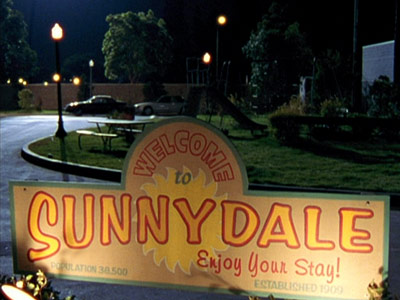
 Welcome_to_Sunnydale_(Buffy_screenshot)

–          Your descriptions are clichéd

I recently read another book, which was set in Paris. To my dismay, the author seemed to think that mentioning the Eiffel Tower here and having a character talk about Montmartre there was enough to set the scene. With your story, ask yourself if you’ve researched your setting enough to avoid describing what everyone already knows about that place.

 Gossip Girl Paris

–          Your descriptions are boring

I read another book, which was set in a US high school. This is a tricky setting, because, well, we’ve all been to school and watched countless films/TV shows about teenagers at school. What you want to avoid here is a bland description: classrooms, bleachers, bathroom… If your story takes place in a very familiar place, ask yourself if you’ve described what makes it special in the eyes of your characters (whether good or bad). Ask yourself if your setting has personality.

Teen_Wolf_Meeting_at_school

Step 2: Create a great setting

–          Avoid setting each scene in “anonymous” places such as hotel rooms, random streets, nameless restaurants, etc. This is especially important if you’ve chosen to set your story in an exciting big city. As a reader, there’s nothing more frustrating than being sold a book “set in Tokyo” and have the characters spend all their time in a non-descript apartment, for example.

–          Do your research. Do A LOT of research. Your book will have two types of readers: the ones who have been to the place you describe, and therefore expect an accurate description, and the ones who haven’t been there, who deserve a description that will give them the chance to explore a place where they might never go. If you’re choosing to set your story in a well-know place, I tend to think that you should visit it yourself, to avoid clichés and to give your descriptions your own flavour. When it’s not possible, read widely about your setting, and make sure you write about what makes it unique and what makes it come alive.

–          Make your setting come alive by using all the senses: help you reader experience the whole of your setting. Help him see it, but also smell it, hear it, touch it and even taste it.

–          Avoid long descriptions: better focus on a few specific and striking details than write a boring one-page paragraph. Give the places’ names, and point out what makes them unforgettable.

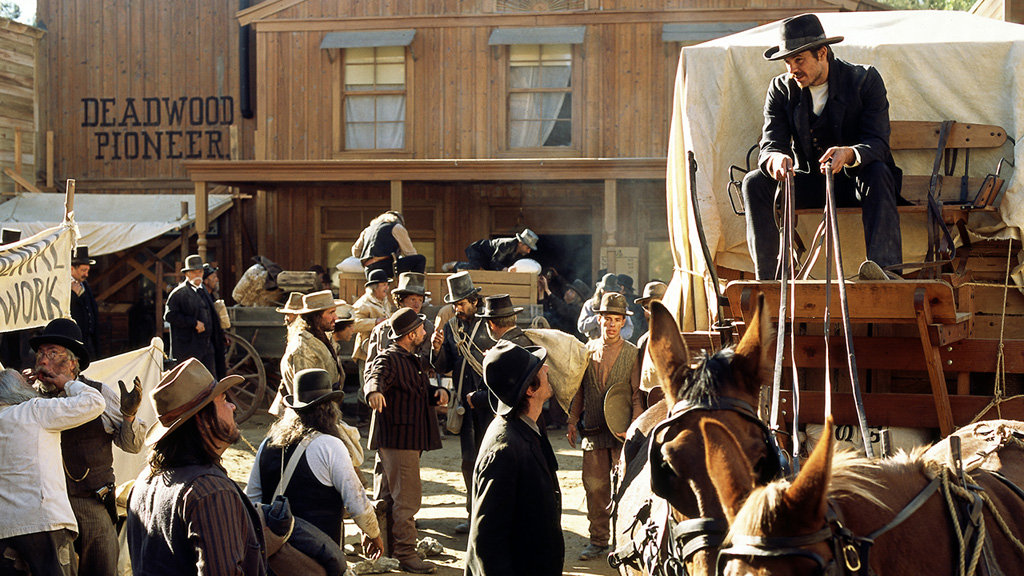
deadwood

Reading recommendations:

–          For a great example of a setting and a plot that blend together: THE DIVINERS by Libba Bray

–          For a great example of a book set in Paris that avoids all the clichés: DIE FOR ME by Amy Plum

What about you? Do you have trouble writing vivid settings? Do you have examples of setting done well in literature? Make sure to share your thoughts below!

2013: My Writing Year In Retrospect

Hello gentle reader,

This is the last day of the year and time for a look back at 2013…

What I read:

I read 28 novels this year. You can find out which ones were my favourite here.

What I wrote:

I wrote a 70,000 word Historical Fantasy novel this year. It’s called LILY IN THE SHADOWS and you can read about it here. Hopefully one day soon you’ll be able to read the actual book too 😉

Where I went:

I attended two writers’ conferences this year:

SCBWI Europolitan Conference (Paris, France, March 2013) where I learnt so much and got such useful feedback on Lily.

Midwest Writer Workshop (Muncie, Indiana, USA, July 2013) where I went with my wonderful Critique Partner Jessica Rubinkowski and where lots of fun was had.

What happened on this blog:

According to WordPress.com, this blog was viewed about 24,000 times in 2013. My most popular post remains (just like in 2012) “Word count : is your Fantasy novel too long ?

What I watched:

I watched 32 new releases in 2013. It’s very hard to choose my favourite film of the year, but I’ll recommend Les Misérables, The Great Gatsby, Much Ado About Nothing, Saving Mr. Banks and The Hobbit: Desolation of Smaug.

What I’m thankful for:

You, gentle readers who keep reading my posts, entering my giveaways, leaving nice comments and sharing my words.

The writing community, so supportive and enthusiastic, always.

What’s next?

2013 was a great writing year for me, so I hope for more of the same in 2014: more books, more conferences, more writerly friendships, more inspiration and more blogging!

How was your year? Did you achieve your writerly goals? Make sure to share your thoughts below!

Happy New Year and see you in 2014!


Victorian England… on TV!

Hello gentle reader,

By now you must know how much I love all things Victorian and I’m delighted to report that this autumn’s TV schedule allows me to indulge in my passion for this topic. There are currently three shows that take place in late 19th Century England. Each one shows a different aspect of this era. Have you watched them?

Dracula_NBC

Dracula – Historical Fantasy

Season 1 began on 25th October in the US and 31st October in the UK

This is a retelling of Bram Stoker’s Dracula. Set in 1890s London, it introduces Alexander Grayson (Dracula), a vampire posing as an American entrepreneur set on revenge against the Order who has killed his wife and turned him into a creature of the night. He is helped in his plans by Abraham Van Helsing. But he also meets Mina Murray, engaged to journalist Jonathan Harker, and falls in love with her.

Dracula - Season 1

Why I’m watching it: Vampires in Victorian London! Two of my favourite things put together! I’m also really enjoying the beautiful sets, gorgeous dresses and amazing cinematography.

Dracula set

Dracula set 2

***

Ripper Street

Ripper Street – Historical Mystery Drama

Now in its second season, this show was first broadcasted in the UK in December 2012 and in the US in January 2013

Set in 1889 Whitechapel (London East End) after the Jack the Ripper murdering spree, this show follows the paths of three policemen investigating the everyday crimes occuring in their impoverished district. Their investigations take them to slums, pubs, factories and brothels where they encounter all sorts of characters and situations.

ripper_street

Why I’m watching it: because it’s realistic and gripping. No glamourous dresses or high society plots here: poverty and crime are everywhere, yet each character fights to make their life and their district better.

Ripper Street 2

Ripper Street 3

Ripper Street 4

***

the paradise bbc

The Paradise – Historical drama

Now in its second season, this show was first broadcasted in the UK in September 2012 and in the US in October 2013.

Based on Emile Zola’s Au Bonheur Des Dames (“The Ladies’ Paradise”), this show is set in 1875 North East England. It portrays lives of the people who work or shop in the first department store, “The Paradise”. The main character, Denise Lovett, comes from a small town to work as a shopgirl in ladies wear at the store, where she falls in love with the shop’s owner. But her ambitions are seen as a threat by many…

The Paradise BBC set

Why I’m watching it: because it’s light and fun and highly enjoyable. The dresses are beautiful, the heroine lovely, the villains villainous, and all always ends well. The upmarket department store, entirely recreated at Lambton Castle, is a wonderful setting.

The Paradise

The Paradise BBC Denise

So tell me, are you watching these Victorian shows? What do you think of them? Make sure to leave me a comment below!

A Writer in the Spotlight – Aimee L. Salter

A Writer In The Spotlight Logo

This week again I was lucky enough to have a YA author give me an exclusive interview! You may remember I interviewed the wonderful Aimee L. Salter back in November 2012. At the time, she was an agented writer with a book on submission and I asked her questions about her writing process. Since then, Aimee has chosen to self-publish her amazing debut, BREAKABLE, which came out on Monday 4th November 2013. This time, I’m interviewing her about her self-publishing adventure…

Aimee L. Salter2

Author : Aimee L. Salter

Genre : Young Adult, Magical Realism

Location: Oregon, USA

Contact: Blog, Twitter, Facebook

Bio: Aimee L. Salter is a Pacific North-Westerner who spent much of her young (and not-so-young) life in New Zealand. After picking up a Kiwi husband and son, she’s recently returned to Oregon. She writes novels for teens and the occasional adult who, like herself, are still in touch with their inner-high schooler. Aimee is the author behind Seeking the Write Life, a popular blog for writers.

My interview (22d October 2013)

Where did you get the inspiration for your book?

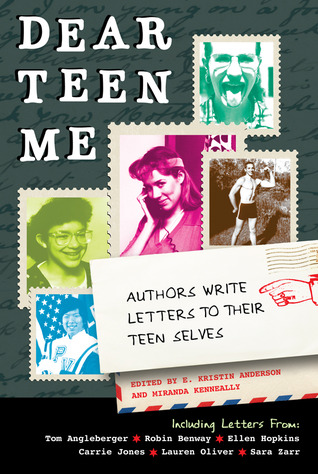
In early 2011 I was reading the website www.dearteenme.com, in which published authors write letters to their teen selves. As I kept reading and reading (you know, one of those days when you should be doing something else, but a website catches your attention and you just keep reading “one more post”?) one sentiment was a recurring theme in the letters. Many of them, very early in the piece, said something along the lines of “I know you won’t listen to me when I tell you this, but…”

That got me thinking – what if I could actually talk to my sixteen year old self. That line would be paramount in my letter because I know if we could sit down, she’d nod and smile, maybe even think I was right, but go ahead and do whatever she wanted anyway.

As I chewed that over – what I’d say to try and make her listen; what approaches I might take that might actually get through to her; it just kind of came to me. I could see these two versions of this one person, both with feelings and thoughts based on their point in life. Both with the same hurts and wounds – but different perspectives on them…

Anyway, I started writing that afternoon, more for my own interest than anything else. It was a hard book to write. But I’m glad I stuck with it!

DTMfinalcoverwithbleeds2

Your book has just come out. Can you tell us about your (complicated!) path to publication?

Gosh, complicated is right! Well, when I wrote Breakable (then called Listen to Me), I was trying to get another book, an urban fantasy, published traditionally. Unfortunately, I’d “broken up” with my agent the year before, and I was having trouble finding a new agent for it. It took another year to refine Breakable and get an agent for it.

Brittany Howard (AKA: NYT, USA Today, International and everything else Bestselling author, Cora Carmack) picked my book up in August 2012. By November of that year her own author career took a massive leap. We were still working, revising, and submitting to editors when in June of this year she admitted she just didn’t have the time to agent anymore.

But she still believed in my book and wanted to help it find a home, however I chose to do that. So, after a couple weeks of discussing, chewing, praying, and, yes, freaking out, I decided to go ahead and self-publish Breakable rather than look for another agent (there were all kinds of legal rigmaroles I’d have had to jump through, not to mention that with the editors we’d already seen, some agents would be concerned their “pot” had shrunk).

So… here we are! “Cora Carmack” blurbed my book and is busily promoting it to her entire network (can’t TELL you how grateful I am for that!) and Brittany also has a useful network of bloggers and reviewers who’ve jumped on board to help too.

All in all, there’s no guarantees for any kind of self-publishing venture. I know that better than anyone. But I also know my book couldn’t get a better chance than this. So if it doesn’t “make it”, then it wasn’t ever going to anyway!

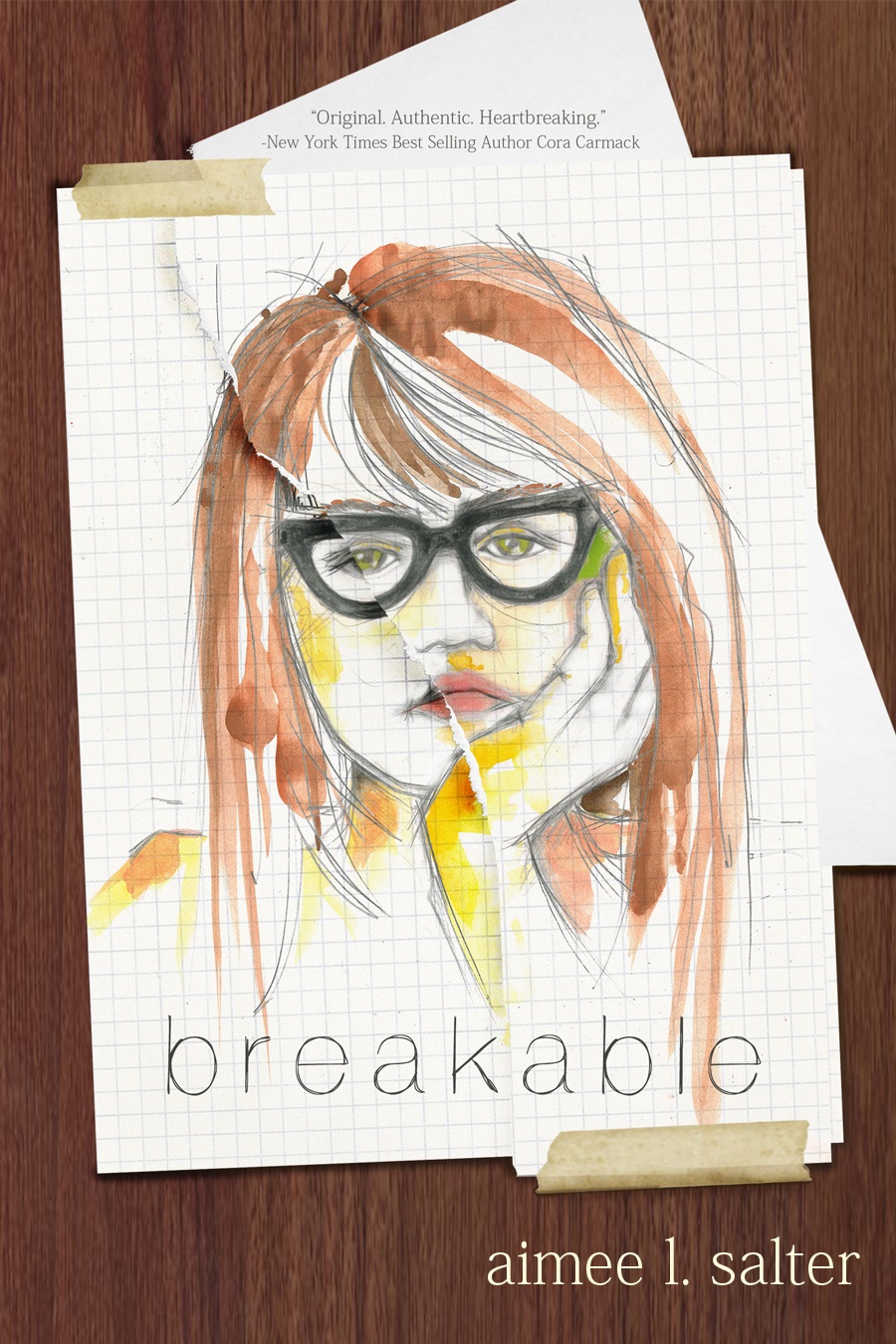
BREAKABLE

Getting your book out there was quite a bumpy ride, did you have moments when you thought of giving up? (If yes, what made you carry on?)

Yes. And yes. And yes. And YES. (Did I mention, &#$% YES?)

I think every writer goes through those moments (or weeks, or months – even years) where they believe it’s pointless. Or just too hard. I certainly have (and do!) but there were two reasons I never actually let go:

  1. I think this is what I was meant to do. I think God wants me to do it. I know I want to do it. And frankly, even if I never tried to publish another word, I’d keep writing – so why not try if I’m going to be carving these worlds out of nothing anyway?
  2. Every time I’d start to feel like giving up, something would happen to encourage me. I’d feel like I just couldn’t get the story to do what I wanted – then someone would read it and rave. I’d feel like my writing was poor, then I’d send the manuscript in for a critique clinic and (besides all the useful criticism) I’d get unsolicited praise for my writing. When I was (nervously) looking for an agent I got a really good response to the query. When I kept getting rejections or R & R’s I wasn’t comfortable with, I attended WriteOnCon and got several new, unsolicited requests. Then when nothing came of that and I was discouraged, I got an offer from a small, independent press. Then Brittany offered to represent me – and she turned out to be PERFECT for me. On and on and on… the number of times I’d start thinking “I can’t do this anymore”, then something good would happen…well, it just picked me up. I had to keep going. Those little stories continue to this day!

What were the challenges of self-publishing your book you didn’t expect?

Hmmm… how much time do you have? I mean, don’t get me wrong, there’s been some pleasant surprises in the self-publishing process. So it hasn’t been all bad. But I’d been researching self-publishing for two years. And I had the advice and foresight of a very successful self-published author. I felt like I was going into it prepared. But there’s some things you just can’t understand until you get into them.

Like, the fact that so many reviewers and bloggers just flatly refuse to look at self-published books. I actually knew this, but I hadn’t anticipated how widespread it was. I even understood why people did it (I have turned down more self-published author review copies than I care to count for my blog, and I don’t run a “big” blog). But being on this side of the coin… it actually made me angry. “What, so just because I have “self published” next to my name, you won’t even look?

I also “knew” that the formatting process was complicated. But when you’re working through it – even with the good advice that I’ve been given ahead of time, and the fact that I’m a genuine, advanced user of the Microsoft suite, I am surprised on a daily basis at how one, tiny little slip or miss can make such a big difference to the appearance or professionalism of my book. It’s frightening actually.

But I’d say the biggest thing, and something I didn’t anticipate at all, is the fear of and sense that I’m “going it alone”. I mean, I went into this with a lot of support. My husband is behind me 100%. I have a bestselling author promoting me and blurbing my book. I have an awesome community of writers and bloggers (like you, Eve!) who are encouraging me and supporting me.

I didn’t anticipate that, when push came to shove, I’d feel so isolated by this process. The success or failure of this book is squarely on my shoulders, because I’ve done all the work. Sure, I’ve had editorial critique, and designers involved. But all the decisions are mine. The final buck stops with me on everything.

One the one hand, there’s something very freeing about that. I can do exactly what I want to do and I don’t have to answer to anyone else about it.

But on the other…no matter what the product, there’s no one actually behind it except me. If there is criticism, I can’t say “well, such-and-such made me do that”, and if there’s failure I can’t say “well, the press should have do thus-and-so.” It’s just me.

Of course, if there’s success, I get the kudos too. But let’s be honest, failure is a MUCH more likely scenario in this game. I’ve had to power through that on a mental and emotional level and prepare myself for it. I do feel prepared now. But I definitely wasn’t a couple months back. It’s an interesting ride!

Thanks, Aimee!

Thanks for having me, Eve.

Add BREAKABLE on Goodreads.

Enter a contest to win BREAKABLE here.

Buy BREAKABLE for Kindle, Nook and in paperback.

Writers and Publishing Trends

Hello gentle reader,

On 27th September 2013, Publishers Weekly published an article about new trends in YA. Such articles appear every so often, informing us of what’s “in” and what’s “out” and attempting to predict YA readers’ future tastes.

Right now, Paranormal, Dystopian, Greek mythology, Sci-Fi, mermaids, vampires, werewolves and trilogies are not what editors are looking for. They are more interested in realistic contemporary fiction, thrillers, fantasy, mysteries and stand-alones.

As for what will be popular in a year, no one has a clue.

So what are we, writers, to do with such information?

Should we care about trends?

Writers wishing to get traditionally published should be aware of trends. Querying a paranormal manuscript with vampires and Greek gods in 2013 will only bring on rejections and disappointment. This is why writers are encouraged to read widely in their genre, and to stay informed of what’s happening in the publishing world (book fairs and specialised websites are a great way to find such information).

Should trends affect our writing?

Let’s be clear. I strongly believe you should write whatever you want, regardless of trends. Write that vampire book if it makes you happy: you will be honing your writing skills if anything else. Trends only come into play when you want to publish said book.

On the other hand, don’t try to write according to trends: your book will be out in 18 months at the earliest. By that time trends will have changed 3 times.

So what are we to do?

Write a book as original as possible within its genre, with an interesting plot, a great voice, unique characters and beautiful writing. Think about what makes it stand out from other books on the market.

This is what agents and publishers are looking for. This is the next trend.

Querying, dream agents and the right agent for you

Hello gentle reader,

This post was inspired by some FizzyWisdom I read yesterday, aka a blog post by the amazing Summer Heacock about what you should and shouldn’t share on social media while you’re querying your manuscript. In her post, Summer explains how oversharing online can hinder your chances of finding an agent. She also mentions the term “Dream Agent”, which is the topic I want to discuss today.

What is a “Dream Agent”?

If you’re a querying writer, a Dream Agent is the agent you really, really want to sign with. This agent is whoever you think will be the perfect match for you and your writing.

Does everyone have a Dream Agent?

Sometimes, it sounds like everyone is talking about their Dream Agent, or asking who your Dream Agent is. I’m going to be very honest here and say I don’t have a Dream Agent. I have maybe 12 Dream Agents. Why? Because I want to keep my options open. Because a Dream Agent, an agent you *think* will be a perfect match, isn’t necessarily the Right Agent for you, that is, an agent who *will be* your perfect match.

How do I go about finding the Right Agent for me, then?

Do your research and find out:

  • if the agent represents your genre and is in contact with publishers interested in your genre.
  • what’s the agent’s style: editorial or non-editorial? Happy to communicate with you often or preferring to get in touch only when necessary? This info is usually available on the agent’s website or blog.
  • the agent’s sales record (how many books they sold, to whom and when): this info is available on Publishers Marketplace.
  • if the agent is an AAR (Association of Author Representatives) member. Sometimes new agents aren’t AAR members but they should work for an agency with AAR members (aka an established agency with a sales record). You can find this info on Query Tracker.
  • where the agent lives:  with Internet, whether the agent lives in London, New York or Los Angeles shouldn’t be an issue for your book to sell. However do check where the agent lives to consider if her/his location will have an impact on your relationship (time difference anyone?)
  • what’s the agent’s personality: this is where things get a bit subjective, but checking an agent’s online presence can help you determine whether she/he is the right agent for you. Twitter is a good resource for this, or agents’ blogs and Tumblr.

But the final decision about whether an agent is right for you or not will be during The Call: when an agent makes an offer of representation. This is when you will be able to judge if the agent’s vision of your book and your career matches your dream. Then hopefully, you’ll decide this agent is the Right one, aka your Dream Agent.

What about you? Do you have a Dream Agent? How do you go about finding out if an agent is the right one for you? Make sure to leave me your comments and questions below!

Getting published: finding your own path and going at your own pace

Hello gentle reader,

In 2010, I wrote a Sci-Fi novel and I sent it to my former English teacher with a question: “Is this good enough to be published?” Incredibly – given the poor quality of my Masterpiece – she didn’t say “NO WAY”. Instead she told me: “If you work hard and you really want this, I don’t see why not.”

So I embarked on my very own publishing journey, full of hopes and dreams. I chose the traditional route, because it was what felt like the best way for me and my stories. It still feels that way, actually.


Soon enough, I found other writers on the same path: people writing a manuscript, or people with a manuscript looking for an agent. I read their blog, followed them on Twitter, made a lot of writerly friends with whom I could share the aforementioned hopes and dreams.

I wrote another novel (a YA High Fantasy), found beta readers and Critique Partners, and after a year I queried it.

It turned out finding an agent who loved my manuscript was even harder than predicted.

At the end of 2012, I made the decision to shelve my YA High Fantasy and to start working on another story.

I began writing a YA Victorian Fantasy.

In the meantime, I started noticing the writing community around me had changed.

Some simply quit and disappeared, sometimes with one last blog post explaining their decision, sometimes without a whisper.

Some got an agent and later on a publishing deal, leaving the shore of unpublished writers for the land of authors.

Others got a publishing deal with a small press or an independent publisher, and saw their book come out within 9 months or a year.

And a staggering, STAGGERING number decided to self-publish.

Now, I’m not criticising the last two publishing paths in the slightest. I just know one thing: those publishing options aren’t for me. Self-publishing is way more work than I can handle, and dealing with a publisher (whatever its size) means I need an agent to tell me what (not) to do.

Three years on, and I now find myself rather lonely on my publishing road.

Out of all the writers I met online or in person in the past 3 years, many, many of them now have a book out or a soon-to-be-published book.

And I’m still walking on the path, with my manuscript in hand and my hopes and dreams with me, forever convinced I will find the right agent and traditional publisher in the end.

And it struck me the other day that maybe I’m not as alone as I think in this situation.

When you spend a lot of time around the writing community, it sometimes feels like EVERYONE you know now has an agent and/or a book out.

But it’s not true. We just hear more about those who have exciting news than about those who are STILL looking for an agent after three years.

So if you’re one of those lonely writers without news for the world, remember this:

–          Going at your own pace is fine. What matters is getting where you want.

–          Don’t give up on your traditional publishing dream because it’s slow to come true.

–          Don’t give up, period.

–          Write the best book you can, and do your best, always. Someone will notice in the end.

–          Enjoy the journey without worrying about what others accomplish. One day, you will accomplish those things too.

And never stop writing.

Writing Contests Round-Up (Autumn Edition)

Hello gentle reader,

The lovely Natasha M. Heck asked me if I could write a post about writing contests for querying writers. There are many coming up, which I have listed below. Hoping this helps!

NB: The contests I mention here are for unagented writers with a finished/polished manuscript. Their goal is to offer you the chance to get your writing on an agent’s desk.

So without further ado, all your autumn writing contests… in one place!

Contest: Trick or Treat with Agents 2013

Date(s): Submissions on Tuesday 22d October

Organised by: Kimberly P. Chase, Brenda Drake and Dannie Morin

Open to: MG,YA, NA, and Adult. (No Erotica or Memoirs)

How to enter: 3-sentence pitch + first 250 words + answer 2 questions

Cost: Free

More info: http://kimberlypchase.blogspot.co.uk/2013/09/trick-or-treat-with-agents-2013.html

Contest: 2013 Baker’s Dozen

Date(s): 29th to 31st October for Adult submissions, 5th to 7th November for YA and MG fiction

Organised by: Miss Snark’s First Victim (aka Authoress)

Open to: MG and YA (all genres) – Adult (all genres except erotica and erotic romance)

How to enter: a logline (= a 1 to 2-sentence pitch that encapsulates your story & makes us want to read it) + first 250 words

Cost: $10 entry fee

More info: http://misssnarksfirstvictim.blogspot.co.uk/2013/09/the-fourth-annual-bakers-dozen-facts.html

Contest: Mystery Agent

Date(s): 1st of each month

Organised by: Operation Awesome

Open to: Depends on the judging agent

How to enter: one-line pitch or 250 first words

Cost: Free

More info: http://operationawesome6.blogspot.fr/

Contest: Secret Agent contest

Date(s): November (date TBA)

Organised by: Miss Snark’s First Victim (aka Authoress)

Open to: Depends on the judging agent

How to enter: first 250 words

Cost: Free

More info: http://misssnarksfirstvictim.blogspot.co.uk/p/secret-agent.html

Contest: Pitch Wars

Date(s): December (date TBA)

Organised by: Brenda Drake

How to enter: TBA

Cost: TBA

More info: http://brenleedrake.blogspot.co.uk/

So tell me: are you going to enter those contests? Are there any other contests this autumn I haven’t heard about? Feel free to leave me a comment below!

Querying and dealing with an R&R (Revise and Resubmit)

Hello gentle reader,

In previous posts, I have explained how to maximize your chances of success during the querying process, how to make sense of rejections and when to make the decision to shelve your manuscript.

From those posts, you might have assumed there are only two endings to the querying process: rejection (“NO”) or offer of representation (“YES”).  But there is a third option, which I shall address here: the “Revise and Resubmit” option, aka “R&R”, aka “MAYBE-NOT-YET”.

What is an R&R?

It’s a letter (these days, it’s usually an email) from an agent who has read your full manuscript. This agent sees enough potential in your story to write you a letter, but she’s not ready to offer you representation just yet. Instead, she asks you to revise (according to her helpful suggestions) and resubmit your manuscript at a later time.

Is this good news?

It might not look like it at first glance, but it IS great news. Agents are busy people. Yet one of them saw enough potential in your story to write you pages of suggestions to improve it. Not only did this agent read your whole manuscript, but she thought about it during her daily commute and then sat down at her desk to write you a 3-page email.

What do I do now?

It’s entirely up to you. You may decide to go ahead with the revisions or you may decide to ignore them and carry on querying. Here are the questions you can yourself in order to make that decision:

–          Do you agree with the agent’s suggestions?

–          Do you feel capable of doing the required revisions?

If your answer is yes to both questions, then go ahead and revise. If you’re unsure, discuss it with your Critique Partners. Take your time and think about it: you need to be fully committed to these revisions; otherwise you’re just wasting your time.

Is this a test?

In a way, yes, it is.

The agent sees a spark in your manuscript, and she’s testing you in order to see if you are able to revise it according to her comments. You’re a potential client.

And for you, this is the opportunity to find out if you like the agent’s style and editorial approach. For a few months, she’s your potential agent.

How long do I have to complete those revisions?

That’s the tricky part. You’ve got AS LONG AS YOU WANT. An R&R is a great opportunity to show yourself and your story in the best light possible. There’s no need to rush. At the same time, most agents say that taking forever doesn’t send the best message, because they start doubting you can handle revisions in a timely manner. So between 1 month and 6 months is acceptable.

What happens when I resubmit?

Hopefully this time, the agent’s reply will be an offer of representation. BUT IT DOESN’T HAVE TO BE. The agent can ask for another R&R. The agent might send you a rejection after all. But in the meantime, you’ve made your manuscript stronger, and it might just be what will help you find an(other) agent after all.

So tell me: have you had an R&R before? How did you deal with it? Do you have any questions? Feel free to leave me a comment below!