A Writer in the Spotlight – Rebecca Maizel

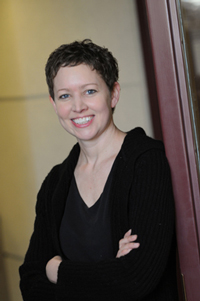
This week again I was lucky enough to have a YA author give me an exclusive interview! The idea behind the “Writer in the Spotlight” feature is that published (and bestselling) authors are the best source of advice for us, would-be-published writers. Today’s interview is with the wonderful Rebecca Maizel, one of my favorite YA authors.
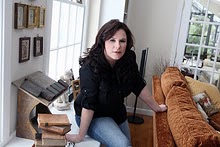
Author : Rebecca Maizel

Genre : Young Adult, Science Fiction & Fantasy

Location:  Rhode Island, USA

Website : http://rebeccamaizel.com/

Blog: http://rebeccamaizel.blogspot.co.uk/

Twitter: http://twitter.com/rebeccajoym and http://twitter.com/VampQueenNovels

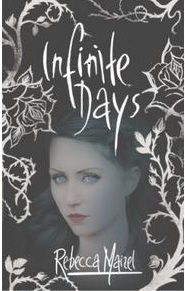
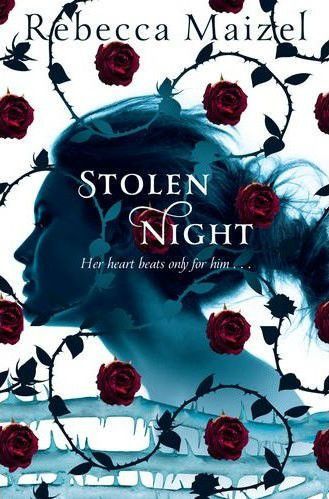
Books : The Vampire Queen series: Infinite Days (2010) and Stolen Nights (released July 2012)

Bio: Rebecca Maizel graduated from Boston University and the Rhode Island College master’s program. She teaches community college in Rhode Island and is studying to receive her MFA from Vermont College.

My interview (29/04/2012):
On Writing:

Did you always know you wanted to be a writer?

I’ve been writing since I was a little girl. When I was a kid most people were playing with Barbies, I was using my sister’s video camera to make movies starring my Barbies. I guess I was thinking in a narrative format even when I was really little! Also, I loved dance. I was in recitals and danced competitively until I was an older teenager. There was a connection for me between a choreographed dance and a choreographed scene. I haven’t gotten to the bottom of this yet  – but I will!

When and where do you write?

It really depends on the day. I write in my office at home, mostly. But these days if I’ve seen too much of my office, I’ll work at a coffee shop. In Rhode Island, I love a place called Java Madness which is fun because it’s right on top of the water. Mornings are best for me creatively but revisions I can do at night.

Do you ever experience writer’s block?

I try to listen to music, which is similar in tone to what I am writing. I go for long walks, I put the project down for a few days. Sometimes what helps is writing a letter from one character to another character within the story, writing from their point of view. For instance, in Infinite Days, I might write a letter to Lenah from Justin or vice versa. I usually do this with a character or situation I am having trouble pushing through.

What do you say to people who want to be writers? How difficult is it to get published?

You have to love the craft. Don’t write just to be published. Write because your characters deserve your time and effort. Write because this story is coming to you from the depths of your gut. Publishing will come in its due time. Hone your craft, perfect your sentences. Make it sing.

Is it better to outline and plot your novel or “go with the flow”?

Well, I think it really depends on your story. I always find it best to outline. There’s that dreaded ACT II of your book that somehow always needs the most work. I find it helpful to outline as best as I can. I usually veer off from it but if the major act points are there, I know the direction of my scenes. You can still “go with the flow” even if you have a direction.

Do you set goals for yourself as you write?

Outside of my editors’ deadlines? No. I write as scenes come to me. I get my best work done when I’m driving listening to music. Then I rush home, and get them down on paper. Sometimes this takes hours and I have a rush of scenes. I make sure that I write a 4-5 hours every day and make some progress. Sometimes progress means reading because I need inspiration.
On “The Vampire Queen” novels:

To write this specific series, where did you get your inspiration from? Were you aware of the coming vampire trend in YA literature when you wrote it?

I started to free write one day. I literally sat down, started writing and Lenah’s voice came through, I let her tell the story and 8 months later, I had a draft of Infinite Days. I wish this story were more exciting. I should say something like, I fell down, cracked my head and when I was in the hospital, I had A VISION! A near death experience! But no, I was in a dark library free writing.

After I had written the novel, I started to read everything in the genre so I could see what else was being published. Someone recommended the Twilight series to me and I thought (after reading it) “wow, this is huge. I wonder if there is room in this genre for me?”

Lenah Beaudonte: How did you come up with this (awesome) character?

I connected to her voice. It was so strong; and sinister and tragic. I wanted to tap into that sorrow and darkness. I wanted to bring this person, whoever she was back out to light. It turned out that she was a vampire and thematically, it worked. Every person out there has done something they aren’t proud of. And whatever that thing is, they have to live with it – forever. That’s Lenah but times about a million! I just started writing one day and there she was with a motive, a purpose, and some really scary enemies.

What type of music do you listen to when you write this series?

I listen to music when I write but it has to be music without lyrics. Most of the time its operatic or choral music like a soundtrack from a movie or ambient. I know a lot of writers use music to illuminate the mood or atmosphere of a scene, I know I do. Listening to music as I write helps me imagine a scene more clearly in my head. It’s strange to think of fiction in “scenes,” like you would a movie but I think it’s easier that way.

Some tracks:

1. None Can Die – Tristan and Isolde Soundtrack

2. Little Women Soundtrack

3. Tall Ships – Bill Leslie

What are you working on now? Is it a “Vampire Queen” novel?

I have started Book 3. I am working on other books as well but they are very top secret.

When is “Stolen Night” finally coming out?

July 5th in the UK! Soon thereafter in the US.

Reading advice:

Which authors inspire you now?

AM Jenkins, Franny Billingsley, Coe Booth, An Na, and many many others. I’m inspired by beautiful language and hot fictional boyfriends. 🙂

Which YA books would recommend?

Last great books I read:
Gina Damico – Croak
AM Jenkins – Beating Heart
Laini Taylor – Daughter of Smoke and Bone
Coe Booth – Bronxwood

Liked this interview? Check out my interview with Rachel Caine (author of the Morganville Vampires series) here and my interview with Beth Fantaskey (author of Jessica’s Guide to Dating on the Dark Side) here.
A Round of Words in 80 Days – Check-in #3

This week was an incredibly busy one for me and I’m afraid I didn’t complete all my goals for this challenge. But this is what happens when you spend one day of the week in Paris, and one in London, when you launch a Twitter account (you can now follow me here), when your day job takes over your life, when you exchange emails with publishers and when you interview writers for your blog. Don’t get me wrong, I had a great week, I just didn’t write as much as I wanted to (my need to sleep is ruining my schedule).

So let’s have a look at my goals:

1-    Write the first draft of my new dystopian novel with at least 750 words per day: not completed. I did write a few lines here and there but nothing close to 750 words a day. I might need to update this goal if my day job keeps me insanely busy as it did this week.

2-    Self-edit/revise The Last Queen so that I finally have a final draft for it: completed to a certain extent (the first part of the novel is edited). This is the only writing task I did this week, and it’s coming along well.

Here is the Linky for the other check-in posts.

This week on my blog you can find:

–       an exclusive interview with YA writer Beth Fantaskey on her books and the craft of writing.

–       a post on the definition of YA fiction.

–       my book of the week.

–       my pick for the Waiting On Wednesday meme.

How are you other ROW80 writers doing?


A Writer in the Spotlight – Beth Fantaskey

This week again I was lucky enough to have a YA author give me an exclusive interview! The idea behind the “Writer in the Spotlight” feature is that published (and bestselling) authors are the best source of advice for us, would-be-published writers. Today’s interview is with the amazingly nice Beth Fantaskey.

Author : Beth Fantaskey

Genre : Young Adult, Paranormal Fiction

Location: Pennsylvania, USA

Website : http://bethfantaskey.com/

Books :

Jessica’s Guide to Dating on the Dark Side (2009)

Jekel Loves Hyde (2010)

Jessica Rules the Dark Side (2012)

My interview (19/04/2012)

On writing

Did you always know you wanted to be a writer?

No, while I was growing up, I had no idea that I wanted to write, and I actually became a writer out of necessity.  When I graduated from college, I had no job prospects, so when a friend mentioned that a public relations office was hiring writers, I applied.  When I turned in my writing sample, the man who would become my boss said, “You know you’re a writer, right?”  I got hired on the spot, and that’s what I’ve done ever since – thank goodness!

When and where do you write?

I write in my home office, which is a messy space that fortunately has a nice view of my neighbor’s gorgeous garden.  I write while my three children are at school.  As soon as they are out of the house, I sit down to work. 

Do you ever experience writer’s block?

That’s an interesting question, because I think people experience that in a lot of different ways.  I do have days where the words don’t seem to flow naturally, or I really have to struggle for ideas.  I suppose that’s my form of the disease!

What do you say to people who want to be writers? How difficult is it to get published?

I always give people the same boring but sincere advice, which is to treat writing like anything else you want to be good at – meaning practice every day.  I get the sense that some people think writing is a “gift” that you either have or don’t have.  But in my opinion, it’s also a talent that you can develop with hard work and practice.  So I always encourage aspiring writers to sit down and work, just like you’d practice piano if you wanted to be a concert pianist, or do soccer drills if you wanted to be a soccer star.

I worked as a professional writer for nearly twenty years before I tried a novel, and I learned something every day on the job.

Is it better to outline and plot your novel or “go with the flow”?

I can’t speak for everyone, but I tend to go with the flow.  I like to know where a  story will start and end – especially in terms of how the main characters will develop – but beyond that, I just let the rest come out naturally.  I honestly don’t think I could stick to a plot, because it seems like new possibilities always open up as I write.  For example, I’ll leave a cliffhanger at the end of a chapter, and suddenly I see new directions to take.  I envy people who can create detailed plots, though.  I think that’s probably a more sane way to work! 

Do you set goals for yourself as you write?

I generally strive to finish one chapter each day, but hopefully achieve more than that.  One chapter (mine are usually short) seems like an achievable goal – and not overly intimidating – so I think about that as I sit down at my computer.  However, in the back of my mind, I’m also expecting to go past that mark.  I guess that’s my way of breaking down the big job of writing a complete novel by looking at it as a series of small steps.

On “Jessica’s Guide to Dating on the Dark Side”

To write this book, where did you get your inspiration from? Were you aware of the coming vampire trend in YA literature when you wrote it?

Honestly, if I’d been aware of the trend, I probably wouldn’t have written the book.  I had no idea that the market was already getting saturated, because I didn’t read YA lit before I started writing for YA readers. 

The inspiration actually came from my family.  My children are adopted, and sometimes we wonder what their birth parents are or were like.  Maybe doctors?  Farmers?  Teachers?  Who knows?  That gave me the idea to write the story of a grounded, logical girl who discovers that her birth parents were different from anything she could have imagined – and how that rocks her world.  I took that to the extreme by making Jessica’s birth parents vampires, because they are very close to “human” in terms of appearance and habits, and therefore almost within the realm of believability, but “monsters,” too.  That’s how I ended up writing about vampires.

Jessica and Lucius: How did you come up with those characters? Are they based on real people?

None of my characters are based on real people.  I swear, they just sort of spring to life, fully formed, as I write about them.  Vampire prince Lucius, in particular, was a vivid presence from the minute I started writing his first letter home to his uncle.  It was as if he walked into my office and began dictating to me – which seems like something he’d do.  Within the first few seconds, I felt like I knew everything about him. 

What type of music did you listen to when you wrote those books?

I live close to a small university with a radio station, and that’s what I usually listen to while I work.  It’s mainly alternative rock.  I definitely have to work to music, which seems to be true of most writers, don’t you think?  I guess it’s such a solitary job that you need some company. 

What are you working on now? Is it another “Jessica’s” book?

I am actually working full time on my doctoral dissertation.  I took a break from school to write my three novels, but if I don’t finish this year, seven years of education are down the drain.  I really want to finish my degree, so I’m hustling. 

Reading advice

Which authors inspire you now?

I’m still inspired by the classic English-literature canon, which is reflected in my books.  For example, my character Lucius Vladescu loves literature, and in the first book does a rather dramatic classroom report on Wuthering Heights.  And, of course, my second novel, Jekel Loves Hyde, is a modern interpretation of The Strange Case of Dr. Jekyll and Mr. Hyde.  I guess I’m a traditionalist.

Which YA books would recommend?

You know, as I mentioned before, I didn’t really read YA lit before writing a YA novel – and I still don’t read it.  Before, I just didn’t know much about the genre, but now I deliberately avoid that whole section of the bookstore because I don’t want to be influenced by what other YA writers are doing.  I just want to make sure that I’m always writing in my voice and style, and never subconsciously being swayed by other authors’ works.  I know there’s a whole incredible world of YA books waiting out there, the minute I’m done writing for young adults, though!

You can follow Beth Fantaskey on Twitter and learn more about her books on Goodreads.


What is Young Adult Fiction?

I was at the London Book Fair last Monday and I had the chance to attend a few thought-provoking seminars and to meet a few interesting publishers/writers there. What was obvious to me from what I heard during those meetings/discussion groups is that nobody agrees on what YA literature is/should be.

The American Library Association describes YA fiction as anything someone between the ages of 12-18 chooses to read. It can include different genres: contemporary, historical, paranormal, fantasy, science-fiction, mystery, etc…

However, this definition cannot be definite, for two reasons:

–          people well over 18 read YA books every day

–          you don’t read the same books when you’re 12 and when you’re 18

I remember going to a seminar on YA literature three years ago and the writers invited there all agreed on the fact that you cannot include violence, sex and swearing in a YA book. However the writers who were at the London Book Fair this Monday disagreed with that point of view, stating that older teenagers deserve to have a literature that deals with those more difficult themes.

To my mind, one cannot give a definite characterization of YA literature. But we can attempt to say what YA books always include and what they don’t have to include to be YA books.

What YA fiction NEEDS to include:

–          The journey of a young person who is becoming an adult. Along the way, this character needs to find the answer to the most important question in life: “Who am I and who do I want to become?” In Twilight by Stephenie Meyer, the whole point of the series is to explore what kind of adult Bella will become, regardless of external factors.

–           Choices and their consequences. Growing up is all about finding out things for yourselves and to understand that the choices you make have consequences in the future and for others. The main protagonist in a YA book needs to be faced with interesting choices that will offer the reader an opportunity to reflect on those decisions. Which is why YA books can include violence/sex/difficult themes, as long as the consequences of such behaviors are explained and explored. For example, you can include children turned into killers (The Hunger Games by Suzanne Collins), forced marriage (Wither by Lauren DeStefano), graphic violence (This Is Not Forgiveness by Celia Rees) and so on.

–          Themes that are relevant to teenagers: friendship, first love, independence, school, religion, racism, parents’ divorce, bullying, teen sex, teen pregnancy, ecology, politics… But YA books can also tackle issues that are not directly based on the lives of teenagers that read them but are nonetheless important because they open their eyes to problems dealt by others in other times (see YA historical and dystopian novels on slavery, witch-hunts, bleak future, etc…) or in other places (see YA contemporary novels on child labor, child soldiers, child trafficking, etc…)

What YA fiction DOESN’T NEED to include:

–          A first-person narrative. Writers! Third-person narrative is fine! The Morganville Vampires series by Rachel Caine is not a first-person narration and it still is a NY Times best-seller.

–          Parents that are dead/gone/out of the picture/bad at parenting in general. The Line by Teri Hall includes a main protagonist with a loving mother, yet she still manages to learn to make her own choices and to become independent.

–          A teenage girl as the main character. Hey, boys are cool too.

–      A school. A boarding school. Details on the main character’s school life. Usually, writers get them wrong, so unless it’s incredibly relevant to the story, don’t bother recreating in details a biology lesson that will sound nothing like an actual biology lesson.

–          A love triangle/An impossible love. A regular love story between just two people can be complicated enough, you know.

–         Vampires and/or werewolves. Characters with superpowers/magic powers in general. Gods. Sirens. Witches. Contemporary novels with regular people sell well too.

–         A bad boy with stalking habits whose heart melts for the main female protagonist. Seriously. Fictional characters deserve more than to be stereotypes.

So what do you think? What is YA fiction according to you? I’d love to hear your thoughts!

This post was inspired by two excellent blog posts that I suggest you check out:

Defining YA literature http://bookalicious.org/2012/04/ya-101-defining-ya-lit/

The YA Drinking Game http://www.ricklipman.com/drinking-game/

You might also want to read : Campbell’s Scoop: Reflections on Young Adult Literature by Patty Campbell (Scarecrow Press, 2010)

A writer in the spotlight – Teri Hall

This week again I was lucky enough to have a YA author give me an exclusive interview! The idea behind the “Writer in the Spotlight” feature is that published (and bestselling) authors are the best source of advice for us, would-be-published writers. Today’s interview is with Dystopian writer Teri Hall.

Author : Teri Hall

Genre : Dystopian, young adult literature

Location:  Washington State, USA

Website : http://www.terihall.com/

Books : The Line Trilogy – The Line (2010), Away (2011), The Island (no release date yet)

My interview (12/04/2012)

On “The Line” trilogy:

Why did you decide to write a YA Dystopian novel?

I think dystopias offer a unique opportunity to explore big questions.  Are the values our society holds the ones we should be reinforcing?  What is important?  What is true bravery?  What choices would you make if you were put in a situation where every one of them was crucial?

Is Rachel, her mother and Ms Moore based on real people?

Nope.

The Unified States are a very interesting (and frightening!) place to live in. How did you come up with the Unified States?

I really just took what’s happening now (border tension, nationalistic fervor, loss of personal freedom in hopes that it will somehow “protect” us from harm, humanity’s innate fear of the “other”) and extrapolated in order to try to envision what things could look like in the near future.  The scariest part of that process was that it was so easy to see how we could get to a place like the Unified States within a very short time.

The relationship between Vivian and Rachel is very well described, as well as the contradictory feelings that teenagers can experience toward their parents. How did you go about writing about those? 

I remember being a teenager, and I know plenty of teenagers and mothers, so that special sort of love/resentment thing was pretty easy to write about.  The way you think your Mom might be the stupidest person on earth sometimes, and then as time passes you realize what she’s been dealing with, and how you had no idea that her actions might have had a whole set of adult concerns attached to them that you had no idea about.

What type of music did you listen to when you were writing this book?

I don’t like to listen to music while I write.  I generally like only silence or bird sounds from my open window.

What are you working on now?

Book three of the trilogy.  It’s called The Island, and I am having a lot of fun writing it.

On writing:

Did you always know you wanted to be a writer?

Nope. Nobody ever mentioned that as a possibility.

When and where do you write? 

I write in a tiny home office, whenever I can find time.

Do you ever experience writer’s block?

Hmm.  I do experience difficulty writing sometimes, but I think it’s less of a block than it is just being too tired, or too distracted, or too . . . something.

What do you say to people who want to be writers? How difficult is it to get published?

I try to say very little except “good luck” and “keep trying” to people who express to me that they want to be writers.  I think all writers’ paths are unique, and that advice about some general way of doing things is not very useful.  In terms of how difficult it is to be published, I don’t have a good answer.  I’ve watched some great writers get passed by or published only after exhaustive attempts, and I’ve see the opposite happen, too.

Away is already available in hardcover in the UK. It will come out in paperback in September 2012.

A Round of Words in 80 Days – Check-in #2

So I’ve just finished my first week of ROW80 challenge (I joined in a few days late) and so far it’s going well (although I’ve been told this is often the case for the first week).

For the record, my goals are:

1-      I shall write the first draft of my new dystopian novel with at least 750 words per day.

2-      I shall also self-edit/revise The Last Queen so that I finally have a final draft for it.

And this is what happened this week:

1-      I did write 750 words per day of my new dystopian novel.

2-      I didn’t revise The Last Queen per say but I’ve been reading a book on self-editing (Self-editing for fiction writers by Browne and King) so I still think I’ve worked toward this goal.

As a result: yeah! This challenge is doing me some good.

Here is the Linky for the other check-in posts.

Also, please have a look at my post for today: an exclusive interview with YA Dystopian author Teri Hall on her books and the craft of writing.

How are you other ROW80 writers doing?

A Round of Words in 80 Days – Check-in #1


On Friday I posted an interview with best-selling YA author Cinda Williams Chima and one of her comment sounded very true to me:

“The most important thing to do if you want to have a career in writing is to write. Sounds obvious, but it’s amazing how many would-be writers do everything but write. Don’t be building that online platform or looking for that agent or learning to write a query letter until you get yourself some skills.”

Just like many would-be-published writers, I am often guilty of that: I’ll come home from my day job, update my blog, look up some agents on the Internet, read a book, watch a movie, eat, make telephone calls, vacuum my living-room and… you get the idea. And then I go to bed without having written a single line of that novel I’m currently trying to finish.

But to every problem there is a solution.

Thus I have decided to join an awesome challenge called A Round of Words in 80 Days (aka ROW80). Created by Kait Nolan, it is “the writing challenge that knows you have a life”, or “the challenge that champions the marriage of writing and real life.” Unlike NaNoWriMo which runs for only a month, each ROW80 round runs for 80 days and the participating writers have to set themselves writing goals for that time. Each Wednesday and Sunday, we check in and let the others know how we are doing. The idea is to form writing habits that writers will hopefully continue once the challenge is over.

So here are my goals:

1-    I shall try to write the first draft of my new dystopian novel with at least 750 words per day.

2-    I shall also attempt to self-edit/revise The Last Queen so that I finally have a final draft for it.

We’ll see how that goes…!

Round Two started on Monday, April 2nd (so I jump in a little late) and will end on Thursday, June 21st.

If you would like to join in this writing challenge and become a part of the ROW80 community, here are the rules:

  1. Post a goals post in which you lay out your goals for this round.
  2. Post a check-in post every Wednesday and Sunday, in which you share your progress with the other ROW80 participants.
  3. Comment on other participants’ check-in posts.

Here is the Linky for the other check-in posts. How are you other ROW80 writers doing?

11/04/2012 Post Edit: so I’ve slightly changed the wording of my goals as a few people mentioned that I shouldn’t be using the words “try” and “attempt”. So far I’m doing well with those goals. More update on Sunday!

A writer in the spotlight: Rachel Caine

Today I’m starting a new blog topic: writers’ interviews. I figured published (and bestselling) authors were the best source of advice for us, would-be-published writers. And the wonderful Rachel Caine has agreed to be the first author to be interviewed!

Author : Rachel Caine
Genre : Urban fantasy, paranormal, young adult literature, short fiction
Location:  Texas, USA
Website : www.rachelcaine.com

Books :
The Weather Warden series (9 books, 2003-2010)
The Red Letter Days series (2 books, 2005-2006)
The Morganville Vampires series (15 books, 2006-2013)
The Athena Force series (1 book, 2007)
The Outcast Season series (4 books, 2009-2012)
The Revivalist series (1 book, 2011)

Bio:

Rachel Caine is a New York Times, USA Today and internationally bestselling author of more than 30 novels. She had received numerous literary awards and attended over a hundred conventions and conferences in the past twenty years. She has a bachelor’s degree in business administration from Texas Tech University and she has worked in many jobs, before becoming a full time writer in 2010.

My interview with Rachel (24/03/2012)

On writing:
1.    Did you always know you wanted to be a writer?
Oh NO! I was going to be (in order) an astrobiologist (age 9), a detective (age 12), and a professional musician (ages 14-30). I was a *hobby* writer. But I wrote consistently from age 14 onward.
2.    When and where do you write?
I do my best work in the mornings, the earlier the better, so I try hard to get up at 5 am or so, and work about 8 hours, then knock off for lunch. I usually run errands in the afternoons and work on business items at night.
3.    Do you ever experience writer’s block?
Sure, I think everyone does — but it’s really more of a “day off.” It’s easy to let that day off turn into two, then a week, then a month, and that’s when you’re in trouble. So I never let myself take more than one day off, unless I’m sick. If I get stuck on a story, I try reading it from the beginning, which often does the trick, or if it doesn’t, I jump forward to the next thing I want to write in the timeline.
4.    What do you say to people who want to be writers? How difficult is it to get published?
That’s a complicated question now — much more so than when I started. The easy answer is “not difficult at all” because things like Kindle Direct make it possible to write something and put it out for sale digitally immediately. The HARD part of that is that when you do that, you’re likely doing it way too soon. Becoming a writer is a craft and a skill … something you acquire slowly over time, usually. Your first efforts probably won’t be that great (mine certainly weren’t). In fact, your 10th effort may not be great, either. People grow at different rates in their craft — and the way you find out you’re not ready, in traditional publishing, is that you compete with others for the limited opportunities available. The better you get, the more chance you have to grab that chance. It’s a process that creates not *more* writers, but *better* writers, which is why I still like it.
But more than likely, things will change even more over the next few years … so the answer is: yes, it’s probably pretty easy now. But easy isn’t always a good thing. And it’s still hard to get in with the big professional publishers, and always will be.
5.    Is it better to outline and plot your novel or “go with the flow”?
That depends. Some people work better to go “seat of the pants” … and some won’t start a road trip without a map. I’m a bit of both … I like a road map, but I’m not averse to taking interesting side roads too. I usually have a loose outline.
6.    Do you set goals for yourself as you write?
The deadlines really set them for me — I have a book due every three months, at 100,000 words, so that means I have to write a thousand words a day. The more days off I take, the higher that number gets!

On “The Morganville Vampires” series:
7.    To write this specific series, where did you get your inspiration from?
In the beginning, it was the idea of the town itself … all the layers of secrets (Vampires! Sick vampires! Sick vampires who are the last of their kind! With a secret enemy! … and on and on.) That really excited me.
8.    How did you come up with those characters? Are they based on real people?
I don’t base my characters on real people as a rule, but some of the vampires are historical people. I started with Claire and figured out what she was like, and then filled in characters around her. (And continue to do that!)
9.    What type of music do you listen to when you write this series?
I listen to many different kinds of music, and I find I need NEW music every book … so the first thing I do when I start is pick a few songs to start out with, and look for more music as I go. I tend to like alternative music, with a good sprinkling of pop, rock, some classics, even soundtrack music.
10. What are you working on now? Is it a Morganville Vampires book?
It is! I’m working on Book 13, BITTER BLOOD. And it’s due next week!

Reading advice:
11. Which authors inspire you now?
Every author I read inspires me in some way. We’ve all got strengths and weaknesses as writers … I look for what the other writer does especially well, because it’s usually something I *don’t* do as well. Most of the writers I’ve met are inspiring people as well … beautiful and gracious people!

Oh, okay, if you want me to be *specific,* … Charlaine Harris. Richelle Mead. Melissa Marr. Kelley Armstrong. Jim Butcher. George R.R. Martin.

12. Which YA books would recommend?
There are SO many good ones! I will always recommend Jackie Kessler’s Four Horsemen series … it’s brilliant. Tough and uncompromising, but brilliant. Heather Brewer’s books. Suzanne Collins. Beth Revis. The fabulous Cassandra Claire. Ann Aguirre. And ALWAYS Holly Black. But that only scratches the surface … there are so many amazing writers in YA, and more coming daily — just dig in! It’s a literary feast!

Rachel Caine will be in England from May 4th to May 24th 2012. Check her website for more details.

Music for Writing

I cannot write without music on. Some people need a quiet environment to write, I, however, need music to focus and be “inspired”. Sometimes, if I’m being lazy, I just turn the TV on to a music channel. But most of the time, I listen to music I love and know will help me to write.

Here is my writing soundtrack:

Within Temptation (1996-present)

Genre: Symphonic/Gothic Metal

Favorite song: Fire and Ice

Apocalyptica (1993-present)

Genre: Neo-classical Metal

Favorite song: I don’t care

Nightwish 51996-present)

Genre: Symphonic Metal

Favorite song: Eva

Delain (2002-present)

Genre: Symphonic Metal

Favorite song: See me in shadow

Thirty Seconds To Mars (2002-present)

Genre: Progressive Metal

Favorite song: Hurricane

Sucker Punch – Movie Soundtrack (2011)

Genre: Movie Soundtrack

Favorite song : “Sweet Dreams (Are Made Of This)” – Emily Browning

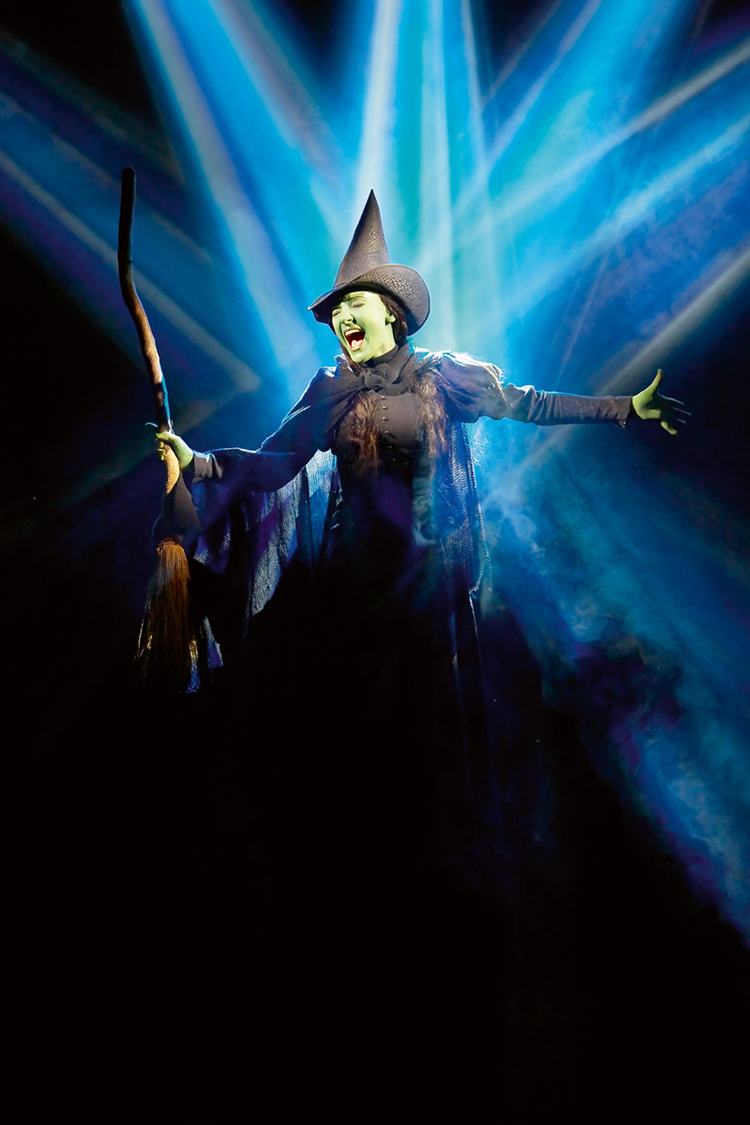
Wicked The Musical (2003)

Genre: Musical

Favorite song: Defying Gravity

What about you, do you have a soundtrack for writing?

Writing is all about reading

In the never-ending process of writing a publishable novel, the would-be-published writer spends a lot of time… reading. Why? Because one cannot go without the other.

First, the would-be-published writer has to read already-published books belonging to the genre that he/she is writing in. For example, I read a lot of Young Adult novels, as well as Fantasy/Dystopian novels. It is the only way to know what is already out there (you wouldn’t want to write an entire novel, only to find out that someone else has already written – and published- it). It is also the only way to find out if what you are writing compares (even remotely) with published novels (you wouldn’t want to start writing down your ideas without having a clue about what a GOOD novel is).

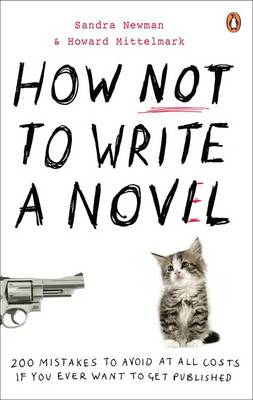
Secondly, the would-be-published writer has to read books on writing. The best one I have come across is entitled How Not To Write A Novel by Sandra Newman and Howard Mittelmark. It is a hilarious book that is also an invaluable source of information about what NOT to do when you are trying to write a publishable novel.

Furthermore, in this era of digital technology, the would-be-published writer has to go online and see what others have to say about writing. And once again, I have found some websites that have been incredibly enlightening about the whole writing process:

http://absolutewrite.com/ (the forum is especially good)

http://warriorwriters.wordpress.com/ (Kristen Lamb’s blog)

http://writerunboxed.com/

There are also numerous authors/agents/editors’ websites or blogs worthy of your time, which will be mentioned in another post.

In the meantime, keep reading!