New Project Reveal – Part 1: The Setting

Hello gentle reader,

today I’m taking part in the Tursday’s Children meme hosted by Rhiann Wynn-Nolet and Kristina Perez. It is “a weekly blog hop where writers come together to talk about whatever inspires them.”

thurschilbadgejpg

I have decided to join this meme to share a little bit more about what I’ve been working on, a YA Historical Fantasy I have teasingly nicknamed Secret WIP. I have been getting a lot of questions about it, especially on Twitter, so I have come up with the idea of a “Project Reveal” in 4 parts, that will give you a taste of what Secret WIP is all about over the next few weeks.

Today’s theme is : SETTING.

My novel takes place in London, during the Victorian era. I am lucky enough to live near London, which means whenever I need to research a location, I can hop on a train, go to London and take pictures. All the pictures below are therefore mine…

EM Castellan - Whitechapel

Whitechapel, London

My main character moves about London a lot, and she can be found in the morning in East London, at noon at Covent Garden and in the evening at St James’s. Above and below are pictures of the Whitechapel district, made famous by Jack The Ripper at the end of the 19th Century.

EM Castellan - Spiltafields Market

Spitalfields Market

EM Castellan - Fournier St

Fournier Street (with the Ten Bells Pub and Christ Church)

Then if we travel west we arrive at St Paul’s Cathedral…

EM Castellan - St Paul's Cathedral

St Paul’s Cathedral

Then we reach West London, wealthier and more grand…

EM Castellan - St James's Square

St James’s Square

EM Castellan- Russell Hotel

Russell Square

So this is where my new project takes place! I hope this gives you a taste of what’s to come in my Secret WIP…

What is the setting of your Work In Progress? Do you find inspiration in the places you visit or where you live? Feel free to leave me a comment below, and to visit the other Thursday’s Children posts here.

My Week In Review – ROW80 Check-In 6

Hello gentle reader,

It is time for another weekly check-in! I hope you had a great and productive week. Mine was… crazy.

Quote of the Week

“I think I’ll try defying gravity.”

Wicked, The Musical by Stephen Schwartz and Winnie Holzman

Trying to get traditionally published sometimes feels like trying to defy gravity. This week I received one too many rejections and was tempted to throw my flying broom in the fire. But then I didn’t, partly thanks to the support of Jessica Montgomery, Rhiann Wynn-Nolet, Kate Michael, Rachel O’Laughlin, Juliana Haygert and Rachel Horwitz. These ladies are awesome and I’m so grateful I have them…

Picture of the Week

EM Castellan- Russell Hotel

Hotel Russell, Russell Square, London

I went to London this week, and I stayed at a beautiful Victorian hotel. That was quite fitting, since I’m working on a novel set in Victorian London…

Word Count of the Week

This week I had some time off work and I added 9000 words to my Work In Progress, which means it is now at 18,000 words. I’m very pleased with that.

TV Show of the Week

DowntonAbbey

Downton Abbey (ITV)

Slowly but surely, I am catching up on the latest seasons of this awesome show…

Film of the Week

Warm Bodies

Warm Bodies

I went to see it last Friday and I loved it! Such a fun, adorable and thought-provoking movie.

Good News of the Week

This week, Rachel O’Laughlin decided to self-publish her Epic Fantasy and wrote an excellent post about it.

ROW80 Check-In

ROW80 Logo

My goal for this round is to write every day. This week again I managed to write

4 days out of 7.

Links of the Week

On my blog I posted about movies that taught me something about writing, and I added pictures of handsome actors. It was Valentine’s Day after all this week.

On There And Draft Again this week, Mara shared some World Building Resources and I gave advice on how to write a 200-word pitch for a Fantasy novel.

On her blog, Emily Wenstrom interviewed the awesome YA writer Aimee L. Salter about her creative process. Worth a read!

Literary agent Carly Watters posted about When to revise your manuscript and when to keep submitting It was exactly the post I needed to read this week.

And YA author Maggie Stiefvater revealed the cover of the sequel to The Raven Boys here.

Next week

Next week on my blog I shall take part in the Thursday Children meme for the first time. It’s “a weekly blog hop where writers come together to talk about whatever inspires them.” I’m very excited about it…

How was your week? Make sure to share your writing progress and what inspired you this week in the comment section below!

Learning to Write With Movies

Hello gentle reader,

As promised today I am mixing work and pleasure, in the sense that I’m going to talk about writing and handsome actors. See, I am a huge movie fan and I often go and see movies for the actor I happen to fancy. Sometimes the movie is great. Sometimes it is terrible and all I can do is stare at the awesomeness that is the main actor and forget about the movie itself. Whatever the case, I always learn something about writing. Thus let me share below a few nuggets of wisdom learned from various movies (in chronological order)… or you can just scroll down and stare at the pretty pictures.

Gladiator

Movie: Gladiator (2000)

Actor: Russell Crowe

What I learned about writing: Never underestimate the narrative power of the good old “Hero’s Journey”. If you put a new spin on it, there’s no reason why your hero shouldn’t get a call, meet a mentor, go through some trials, defeat the bad guy and finish his journey transformed.

Alexander

Movie: Alexander (2004)

Actor: Jared Leto

What I learned about writing: Don’t be afraid to be a bit ambitious and to go for epicness. Some stories need it.

Tristan & Isolde

Movie: Tristan and Isolde (2006)

Actor: Henry Cavill

What I learned about writing: Do not make your villain/secondary character more interesting, more handsome, more complex than your hero. Because then, your reader will fancy him more than the hero. And that can be a problem.

Mr Brooks

Movie: Mr Brooks (2007)

Actor: Kevin Costner

What I learned about writing: it is perfectly acceptable to have a villain as your main character, as long as you show him in all his complexity.

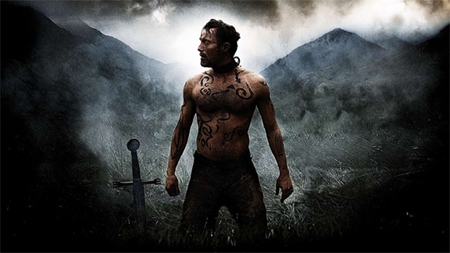
valhalla-rising

Movie: Valhalla Rising (2009)

Actor: Mads Mikkelsen

What I learned about writing: having a disabled main character can make your story intriguing and more original. In this example, the hero is one-eyed and mute. Yet he is fascinating.

Centurion

Movie: Centurion (2010)

Actor: Michael Fassbender

What I learned about writing: Michael Fassbender is awesome. Wait, that’s not a writing lesson. Here is the lesson: even if you have a large cast, make sure all the characters have their own “arc” and storyline. The more the reader feels he knows them, the more he is likely to care.

Anonymous

Movie: Anonymous (2011)

Actor: Jamie Campbell Bower

What I learned about writing: Done artfully, it can be very moving and narratively powerful to portray a character from his youth to his death and to span 80 years of history.

The Eagle

Movie: The Eagle (2011)

Actor: Channing Tatum and Jamie Bell

What I learned about writing: Nothing will make your reader care more about your main character than showing him with a best friend.

Have you learned any writing lessons from watching movies? If, yes, which ones? Feel free to leave me a comment below!

My Week In Review – ROW80 Check-In 5

Hello gentle reader,

It is already time for a weekly check-in. I hope you had a great week (despite the snowstorm for those of you who are on the US East coast!). Mine was busy and productive…

Quote of the Week

“Despite herself Winnie was looking at life as if for her book. She was double-living through a day with genuine concerns because the needs of her fictions were as strong as those of her life, or stronger.”

Lost by Gregory Maguire.

That pretty much sounds like me at work this week…

Picture of the Week

M.LIN London 1849

London – A Clock (by my friend M.LIN)

I’m still working on my YA Historical Fantasy, which means I’m still obsessed with Victorian London…

Word Count of the Week

This week I added 5000 words to my Work In Progress, which means it should now be at 11,000 words. However since I deleted 2000 words (I realised one character could be taken out of the story without harming the plotline) it is now at 9000 words.

TV Show of the Week

Ripper Street

Ripper Street (BBC)

This mini-series is set in Whitechapel (London’s East End) in 1889, six months after the Jack the Ripper murders. I find it highly enjoyable, and I can pretend it’s research… 🙂

Good News of the Week

This week, both Brianna Shrum and Emmie Mears got an agent!

Reading their post recounting “how they did it” is quite inspirational, I recommend it.

ROW80 Check-In

ROW80 Logo

My goal for this round is to write every day. This week again I managed to write

4 days out of 7.

Music of the Week

snow-white-and-the-huntsman

Finding a relevant music to my Secret WIP has proven hard.

This week I have listened to the soundtrack of Snow White and the Huntsman (by James Newton Howard) quite a lot, and I like it.

Links of the Week

On my blog I made a list of 5 books I think should be movies. Stop by and let me know which book you’d like to see turned into a movie.

On There And Draft Again this week, Jessy tackled The Creation of a New World: Believability and Raewyn discussed The Role of the Epic Fantasy in a Byte-Sized Future.

On her blog, Authoress Anon wrote a beautiful post about writing the story you want: The Story Inside You. Read it.

If you need motivation to write every day, Twitter sprints are a good way to get writing along other writers. I especially like Lauren Garafalo’s #ROW80 sprints (twice a day) and Susan Dennard’s  #BAMFWordBattle (all day long when she is on a deadline!)

And finally, because your week wouldn’t be complete without this picture:

Wedding dress and bouquet made entirely from the pages of The Princess Bride

Next week

Next week on my blog I shall be discussing how having a crush on an actor can make your book better. The post will thus include pictures of handome actors. Hey, it’s Valentine’s Day on Tursday after all…

How was your week? Make sure to share your writing progress and what inspired you this week in the comment section below!

My Week In Review – ROW80 Check-In 4

Hello gentle reader,

So I’m trying something new today. Instead of my usual ROW80 Check-In + Inspiring Writer’s Story, I’m starting a new series of posts. I hope you enjoy it. Let me know in the comment section!

Quote of the Week

“Watch your step. Keep your wits about you; you will need them.” The Crimson Petal & the White by Michel Faber

Especially if you’re attempting to write a YA Historical Fantasy set in Victorian London, like me.

Book of the Week

cover_ruby_in_the_smoke

The Ruby In The Smoke by Philip Pullman (YA Historical Fantasy set in Victorian London)

Read in your genre, they say…

Picture of the Week

M.LIN St Paul's Cathedral

St Paul’s Cathedral – London (by my friend M.LIN)

My WIP’s opening is set in St Paul’s Churchyard…

Word Count of the Week

As of yesterday, my WIP is at  6000 words. Also it has a secret title and my MC has a name. It’s taking shape! I’m hoping to add more words today.

TV Show of the Week

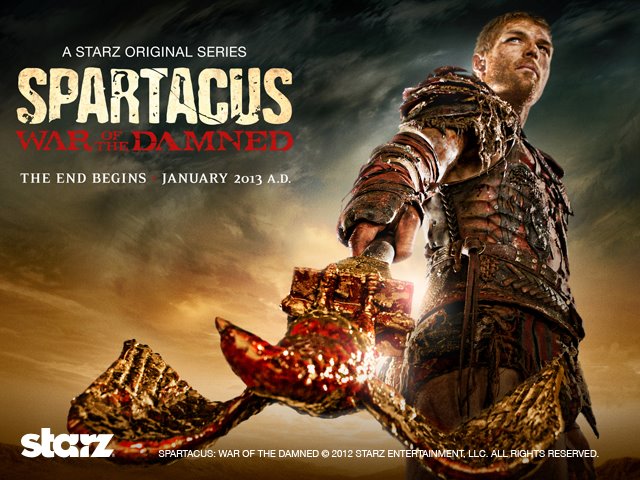
Spartacus-War of the Damned

Spartacus – War of the Damned (Starz)

This show has its flaws, but I’m addicted. And this is the last season…

Good News of the Week

The ever-awesome Amanda Foody got an agent and celebrated with a hilarious post. Go and congratulate her!

ROW80 Check-In

ROW80 Logo

My goal for this round is to write every day. This week I managed to write 4 days out of 7.

Music of the Week

Les Miserables Musical 1985

I’ve been listening to this on repeat. If you’ve read this post, you know why.

Links of the Week

On my blog I discussed how to write unforgettable secondary characters.

Over on There And Draft Again Raewyn talked about Magical Creatures in Fantasy and Rachel gave some advice on writing fantasy without clichés.

On the Writer Diaries Blog, Vicky Leigh posted a great post about the querying process – with Gifs

Dahlia Adler did the same, but without Gifs

Next week

My blog is so close to 300 followers I have decided to thank you by giving away a book! Stay tuned 🙂

What did you do this week? Make sure to share your writing progress and what inspired you this week in the comment section below!

On Writing Unforgettable Secondary Characters – With Ianto Jones

Hello gentle reader,

Today I’d like to talk about how to write unforgettable secondary characters. To do so I will use the example of Ianto Jones, a supporting character in the British Science-Fiction Drama Torchwood (played by Gareth David-Lloyd). Fair warning: here there’ll be spoilers, so stop reading now if you haven’t watched this great show which ended in 2010.

Ianto Jones Portrait

Why Ianto Jones, you ask? Because when Ianto died in the fourth episode of the series’ third season in July 2009, fans were so overwhelmed with shock and grief they created a shrine for him in Cardiff. Yes, a shrine.

Ianto's Shrine - Cardiff

Photo by crimson_bride from Save Ianto.Com

So how did the writers of the show made us care for Ianto so much that his fictional death broke our hearts, and what can we learn from this for our own writing?

1-      The audience can relate to him

The Torchwood Institute is a small team of alien-hunters in Cardiff, Wales. All the main characters are clever and charismatic heroes who are excellent at saving the world and the day. And then you have Ianto.

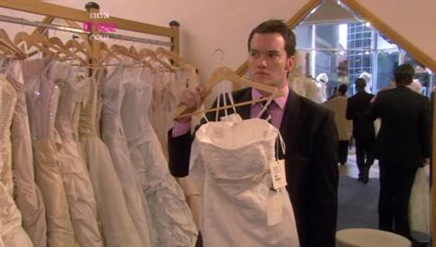
Ianto Jones - Gwen's wedding dress

“And this is Ianto Jones. Ianto cleans up after us and gets us everywhere on time.”

Ianto is not a hero. He makes coffee, sweeps the floor, drives the car, gets takeout food and occasionally helps the heroine buy her wedding dress. He is stuck in a dead-end job and feels inadequate. And yet, in this part-of-the-background kind of way, the audience gets used to him. And starts to wonder why he’s here…

2-       He has a personality

From the start of the series, Ianto has defining characteristics that make him real and present in the audience’s subconscious. These are details, but they help flesh him out: his clothes (a three-piece suit, his earpiece), the stiffness in his posture, his dry sense of humor… Ianto is a 3D character.

Ianto Jones Official Promo

3-      Somebody loves him

The best way to make the reader/audience care about a character is to show him loved by another beloved character. In this case, it becomes clear in the 2d season of the show that the hero Jack is falling for Ianto. And the fact that Ianto means something to the other protagonists makes it easier for the audience to love him too.

Ianto Jones - Jack Harkness

4-      His actions are motivated (even if it’s not clear at first)

Ianto’s presence in the Torchwood’s team is not accidental. The audience doesn’t know it at first, and finds out about it as the series progresses. And looking back, you’re able to understand why Ianto accepted this dead-end job, why he acted the way he did in each episode, and why his death is simply a tragedy.

5-      He is flawed

Ianto Jones is not a hero. He is a normal bloke who makes bad decisions, can be a coward in the face of danger and has dubious judgment. He has layers. And you can only love him for it.

So next time you’re creating a secondary character, ask you yourself how you can make him so real, so mutli-layered and so easy to identify with your readers will build him a shrine when you kill him off.

How do you make secondary characters unforgettable? Share your tips in the comment section below!

And here are a few links you may find useful:

On Writing Memorable (Minor) Characters
Creating Memorable Secondary Characters
10 Secrets to Creating Unforgettable Supporting Characters

ROW80 Check-In 3: On the importance of being a good beta-reader or critique partner

ROW80 Logo

Hello gentle reader,

It’s Sunday, and it’s time for my third ROW80 Check-In of this round. My goal this round is to write every day and this week I managed 5/7 days. I’m getting more organized as weeks go by and I’ve almost settled into a routine, which means I’m hoping for a 7/7 next week.

The reason I didn’t hit my 7 writing days this week is that I had to give priority to my critique partners in their hour of need…

Back in July 2012 I wrote a blog post about The Importance of Feedback and Beta Readers. I explained why it is essential for writers to have their work read and critiqued before they send it to an agent or a publisher. But there’s another side to this process: the part where you, the writer, give feedback on someone else’s Work In Progress.

As it happens this week, I spent a good amount of time thinking about how and why we should thrive to give helpful feedback to other writers. First I beta-read the full manuscript of the very talented Rachel. Later in the week I helped out the ever-awesome Jessica revise her first chapter then deal with negative feedback from another writer on her first pages. I also read this Conversation between Critique Partners on the Publishing Crawl blog and this blog post about How To Break Up With Your CP by Kat Ellis.

And I shall try to summarise the outcome of my little brainstorm below:

  1. Nothing and no one forces you to beta-read or critique other writer’s WIP if you don’t want to. Although it’s customary to swap WIPs, there’s no rule saying you should always reciprocate the favour. The way I see it, it’s more of a “pay-it-forward” process. I read Rachel’s novel but didn’t ask her to read anything for me. However I asked Juliana to read a short story for me and I have never beta-read any of her work.
  2. If you accept to beta-read or critique someone’s work, make sure you have the time and right frame of mind to do it. Comments should be honest but presented with a positive spin. The last thing you want to do is discourage the writer, even if her WIP needs tons of work. When commenting, you should always follow the THINK rule: is your comment True, Helpful, Inspiring, Necessary and Kind?
  3. Make sure you’re clear on what the other writer wants from you. Prior to reading the WIP, agree on a timeframe, and on the type of feedback you’ll give (line-editing, overall feelings, etc.). An experienced writer and a newbie will be likely to have very different needs, be sure to understand what they are.
  4. Don’t try to make the story your own. Don’t try to change the writer’s voice or to tell her how her characters and her plot should be. She wrote the story, it’s hers. You’re just here to help her make it stellar, not turn it into your work.
  5. Keep the conversation going. When beta-reading or critiquing for someone, communication is key. And if it takes 5 emails or a 1-hour phone call to make sure the writer understands what you mean, it’s worth taking the time to avoid confusion.
  6. Last but not least, use the time you spend reading other people’s work to ponder on your own writing. See what works, see what doesn’t, marvel at other writers’ talent. Learn from them, from their mistakes but also from their achievements.

What is being a good Critique Partner to you? How did you build a productive relatonship with other writers? I’d love to hear your thoughts below!

And don’t forget this is a blog hop! Here is the Linky for the other check-in posts. How are you other ROW80 writers doing?

M.LIN snow

Snowy UK this week, by my friend M.LIN

ROW80 Check-In 2 – Starting a Novel from Scratch by Toni Kerr

Hello gentle reader,

if you’re here to enter my Dreaming of Books Giveaway, click on the image below:

dreaming hop

And if you’re here for my ROW80 Check-In, keep reading!

ROW80 Logo

So my goal for this round is simply to Write or edit every day.

I have to admit, I was a bit all over the place, this week. Here in southern England we have had a lot of snow, which means this has affected my personal and professional life (cancelled trips & the like). In terms of writing-related activities, I sent out a new batch of queries, beta-read a friend’s manuscript, started working on a new Secret WIP, read one book and handled an inbox full of old emails. So, that was my week.

Now let’s move on to an inspiring story to keep us motivated for the week to come. This week I’m sharing YA author Toni Kerr’s advice on starting a novel from scratch. I read this post on the Operation Awesome blog and I strongly suggest you check this blog out if you haven’t already.

Toni Kerr

“A blank slate can be just as overwhelming as a landscape of laundry and clutter on every surface. But instead of shielding my eyes and pretending it’s not there, I’ll explore the empty space with baby steps!
 
Why am I suddenly faced with a blank slate? Because I’ve invested 100% into one series—one set of characters with a fascinating set of circumstances that I absolutely love. I can’t stand walking away from that, but right now, while I wait for the editor’s letter, I have nothing to edit, nothing to revise, and nothing waiting in a file somewhere.  
 
I’ve accepted the fact (to some degree anyway) that I need to start something new, even if what I write never sees the light of day. I need to because I’ll go insane if I don’t (and certain writing friends would smack me upside the head).
 
But planning a novel from nothing is a new concept for me. My first novel ran without boundaries or guidelines. Not that I’m complaining about that, but I’m sure some pre-planning will save me countless hours and many many rounds of editing.  
 
And so, as with anything that seems overly daunting, I’ve broken my task into itsy-bitsy baby steps to help me get started. I haven’t written that first line yet, but now I know my genre. I have five strong characters and know exactly what makes them tick, how they relate with each other, and I know where they need to start and finish emotionally. I sort of know my theme, but I’m leaving wiggle room for change  as the story reveals itself.   
 
I’m sure there are as many ways to start a novel as there are writers, but from what I know now, that I didn’t know then… here’s what I’ve done to break it down.
 
Baby Step #1
Research Genres—to refresh your memory on definitions and basic word count expectations. It’ll save you from having a novel that doesn’t fit in a defined category, and from having to cut 40k because it’s way beyond a healthy range.
 
Baby Step #2
Theme—this might come later, but think about it now. There are many blogs and writing sites listing popular themes—some fit certain genres better than others, and they do spark a few ideas. Having a theme will keep the story on track.
 
Baby Step #3
Basic Plot—Sadly, most novels can be boiled down to these: overcoming the monster (be it society, some sort of evil, or another person); rags to riches; the quest; voyage and return; comedy; tragedy; rebirth. Even romance falls into these topics…
Baby Step #4
Brainstorm for Ideas! I didn’t love Nathan Bransford’s query formula when I was trying to write my query, but I was amazed by how simple the plot should be (according to his formula). I swore that for my next novel, I’d write the query blurb first, just to keep my plot THAT simple (I’ll of course let it grow from there). So here’s his formula:
 
[protagonist name] is a [description of protagonist] living in [setting]. But when [complicating incident], [protagonist name] must [protagonist’s quest] and [verb] [villain] in order to [protagonist’s goal].
 
Keep playing until one or two actually sound workable. Next, we need characters for whatever the great idea is.
Baby Step #5
Character’s Photo ID – I love sifting through Google images for characters. If I know the sex and age of my character, I usually start by searching hairstyles. For example: teen girl hairstyles. A search like this generates nice headshots, which I find most useful when I don’t know exactly what I’m looking for—a spark in the eye, maybe some attitude. I save images for every character as I find them, even though I might find something better later. If nothing jumps, I’ll alter the search. Such as ‘Emo girl hairstyles’, or, if I have more information, such as wanting red hair, I might try ‘Irish girl’.  
 
Baby Step #6
Give the characters a life – Start a new .doc for all your characters. I like to keep them all in ONE document, separated by section breaks. That way, when you need a very specific detail that you swear you wrote somewhere, you won’t have to search through multiple files to find it. (Been there!) Insert each character’s image and fill in the personals. Age.. goals.. interests… biggest regret.. and what’s keeping from reaching their biggest goal? The information will depend on the genre/age of the character. There are character sheets and interview forms available all over the place (gotta love Google!). I usually combine what works for me. I also like to add a few paragraphs about how each character relates to all the other (main) characters. Interesting facts come out of these relationships, whether they are used in the story or not. For example, if character #1 and #3 were a hot item long before #1 and #2 start dating, it might explain why there is such a bitter tension between them. What if they belong together? I’ll bet that would make an interesting thread…    
 
Speaking of threads….
 
Baby Step #7
Outline! My first novel was not outlined. I had no idea where the characters were taking me, but I went along like a good little typist and didn’t get in the way. Maybe that’s why it took me so long to get it streamlined? This time, I’m trying Martha Alderson’s plotting system, and so far, I think it’ll work great. My scenes are not fully formed yet, but I know where I want to start, the point of no return (end of the beginning), and the final climax. I’ll let the characters work out the rest. The good news is, I should be able to keep them heading in the right direction.”
How do you go about starting a brand new manuscript? I’d love to read your tip sin the comments below!
And don’t forget this is a blog hop: visit the other ROWers here.

ROW80 Check-In 1- Writing a first novel by Marie Lu

ROW80 Logo

Hello gentle reader,

It is time for my first ROW80 check-in of this round. As a reminder, my goal for this round is simply to Write or edit every day.

I don’t know about you, but this week went by really quickly to me. I started my new position at my day job and it was quite time-consuming. In my spare time I wrote a couple of blog posts, went to see Les Miserables at the theatre and rewrote my query letter. But I didn’t find the time to work on my novels, which I intend to do this week. Finally my blog received the Lovely Blog Award and you can read all about it here.

Now if you’re new to this blog, know that each Sunday, I share an inspiring story with you to keep us motivated for the week to come. This week I’m sharing YA author Marie Lu‘s tale of her Very First Novel. She published this post on Publishing Crawl in November 2012 and I thought you might find it interesting… Enjoy!
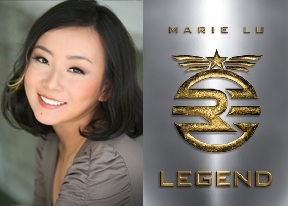
Marie Lu-Legend

“I’m talking about my very, very, very first novel. You only have one first novel–not your first published novel, but the first one that you are able to write “The End” on. I know that for the most part (unless you are Stephenie Meyer!), first novels don’t end up going anywhere except for the back of your closet or the Archives folder on some old hard drive. And for the most part, this is a good thing. But I’ve always felt a certain rosy fondness for first novels–not just for my own, but for others’. It’s usually that first novel, however bad (or good), that teaches us that we want to become writers. It’s the one that makes us realize that we can do it. The dream is possible, at least according to our word count.

 Here’s the story behind my first. […]

That first novel was a high fantasy titled The Wings of Heaven. I’m still not sure why I called it that, since it had nothing to do with the story. It was about a young, orphaned (of course) knight’s apprentice named Pher (pronounced “Fair”) Artemsrough who aspired to become a knight and who loved the kingdom’s red-haired princess. One day, a beautiful woman came to the kingdom and told him that he was the Chosen One, and that she was on a quest to bring him to the far reaches of the world so that they could find a shiny ancient object that would tell her what his role in a prophecy was. I can’t even remember who the bad guys were in this story, but there were definitely some bad guys. I think. Along the way, the beautiful woman and Pher picked up a ragtag team of elves, thieves, and assassins that all happily joined them on this quest. There were also some children that could breathe fire, some powerful sorceresses, and a snowy cave called The Dark of Night.

It was 160,000 words. Yeah, I know.

Of course, fifteen year old Marie was completely oblivious to all of this thing’s flaws. I worked on it obsessively. Every night, I’d set my alarm clock for 2 AM, wake up, stuff a bathrobe under my door so that my parents wouldn’t see lamplight leaking from the bottom of the door, and then write quietly until the hour right before dawn. I wrote notes in my schoolwork and drew pictures of my characters on the margins of my homework. I posted chapters of it onto a personal site that I shared with my closest childhood friend. I spent a great deal of time lost in the whimsical haze of First Book Euphoria. I promised myself that I would finish it. I will never forget typing “The End” on that manuscript–I leaned back in my bedroom chair at 3:30 AM, stretched my arms up high, and smiled so hard that I thought I might break.

It was a terribly written story. I loved it with all my heart. I learned from The Wings of Heaven that I could finish a novel-length book, that I could carry characters from point A to point B (however badly), and that I could keep a promise to myself. I learned that if I wanted something badly enough, I would find the time to work on it–even if it was in the middle of the night.

Of course I went on to submit it to over a hundred literary agents, and of course they all soundly rejected it. I don’t think I even had a single request for sample chapters–that should tell you something about my query-writing skills. I remember crying over some of those rejections, laughing over others, stuffing them all in a big manila envelope (which I still have), and then pushing stubbornly onward. The thing is, looking back, my naivety was probably my greatest advantage. Had I actually known how difficult it would be to get published, I might never have finished that manuscript. I never might have been able to face getting rejected. And writing another manuscript. And getting rejected. And writing another. And getting rejected. And another. And another. If I hadn’t been so naive, I might have stopped right there. But I was so young, arrogant, optimistic, ignorant, and hopeful, and because of that, I was able to convince myself to write “just one more.” Most importantly, I was able to figure out over time that I wanted to write stories regardless of publication, that I loved it and that it was a permanent part of me.

This is why I love first novels, in all their imperfection and wonder.”

What was your very first novel like? Did you try and get it published? And how are you other ROWers doing after this first week? Feel free to leave me a comment below!

Here is the Linky to cheer the other ROWers on if you wish to do so.

ROW80 Round 1 – Goals!

ROW80 Logo

Hello gentle reader,

January 7th, 2013 (that’s today!) is the official start date for Round 1 of A Round of Words in 80 Days (aka ROW80). I have decided to join this writing challenge for the fourth time. Created by Kait Nolan, ROW80 is “the writing challenge that knows you have a life”, or “the challenge that champions the marriage of writing and real life.” Unlike NaNoWriMo which runs for only a month, each ROW80 round runs for 80 days and the participating writers have to set themselves writing goals for that time. Each Wednesday and Sunday, we check in and let the others know how we are doing. The idea is to form writing habits that writers will hopefully continue once the challenge is over.

As you may know if you follow this blog, my daily life is pretty crazy. I have a day job that keeps me extremely busy, I travel a lot and I read tons of books. Fitting some writing time in my schedule is a challenge, but I’m still very intent on getting published one day.

So here are my goals for this round (and yes, I know they are the same as the last round’s, but if at first you don’t succeed…) :

Write or edit every day

Writing – Write a short story, and continue writing the first draft of The Cursed King

Editing – I’m currently querying The Last Queen, and I keep this goal in case someone (!) asks for a revision…

This First Round starts today and will end on Thursday, March 28th. Every Sunday I post about an author’s successful journey into publishing. Make sure to stop by if you need motivation to keep writing!

If you would like to join in this writing challenge and become a part of the ROW80 community, here are the rules:

  1. Post a goals post in which you lay out your goals for this round.
  2. Post a check-in post every Wednesday and/or Sunday, in which you share your progress with the other ROW80 participants.
  3. Comment on other participants’ check-in posts.

Here is the Linky for the other participants’ posts. What are your ROW80 goals for this round?