A Writer in the Spotlight – Aimee L. Salter

This week again I was lucky enough to have a YA author give me an exclusive interview! The idea behind the “Writer in the Spotlight” feature is that authors are the best source of advice for us, would-be-published writers. So today’s interview is a bit different because Aimee L. Salter is not published yet. However she has an agent and she is awesome, so I couldn’t resist interviewing her any longer!

Author : Aimee L. Salter

Genre : Young Adult, Magical Realism

Location: New Zealand

Contact: Blog, Twitter

Bio: Hailing from the Pacific Northwest, but recently sighted in New Zealand, Aimee is a self-proclaimed coffee aficionado.  She channels the caffeine buzz to wrangle her young son and write books she hopes his high school girlfriend will read. She is represented byBrittany Howard of Corvisiero Literary. While waiting to see what the future holds, she is still writing, studying the craft, and learning more about the rapidly changing industry every day. Her (great) blog Seeking the Write Life shares the things she learned along the way.

My interview (13/11/2012)

On critiquing other writers’ manuscripts (Aimee is an awesome CP!):

Do you think it’s important for writers to have their work critiqued thoroughly and can you explain why?

Quite honestly, I think it’s the most important part of the writing process. Whether your critiques are “professional” (for a fee), or just feedback from experienced writers, what you’re gaining is a skilled reader’s point of view. You’re getting a heads up about where your manuscript is flawed before paying readers take a look. It isn’t fun, but it is very rewarding when you fix those problems and know your book is better for it.

See, whether you get a publishing contract, or self-publish, the end-point is a reader who doesn’t know you from Jack. They haven’t sat down and listened to you talk about your world. They haven’t had coffee with you while you ground your teeth over a tricky scene. They don’t love you and care about your personal success. They’re just looking for a good read. And if your book doesn’t provide that, they’ll move on.

The best kind of critique comes from a writer who has some technical skill, but is also an avid reader. They can assess your book from a reader’s point of view – but offer advice as a writer. They’ll highlight areas of your plot, characterisation or pacing that a reader may find distracting, implausible, or just plain boring.

If you can’t handle the idea of someone telling you your book isn’t perfect, then you want to think really carefully about whether or not you’re cut out for publishing. Regardless of how you publish, you’ll get feedback from readers. Personally, I feel being critiqued in the safety of the hands of another writer who’s helping me make my book better is a much better option than putting my book out there and having readers tell me they don’t like it.

Did you learn anything from critiquing other writers’ WIP?

I learn tons. And I really mean that. The other side of the critiquing coin is that because we’re all too close to our own books (and we know too much about the world and character thoughts / feelings / backstory) we can’t accurately gauge whether our writing is communicating the story we want to tell.

But when we’re reading other writer’s material, we don’t have that backstory to draw on. We don’t know all the little bits and pieces about the world that never make it into the book. We have to take it at its face value. And in that, we can see flaws.

When I’m critiquing I’m often in a position to identify a problem in the manuscript – be it a technical writing issue, an implausible plot, or an unlikeable character. Because I’m analyzing the text, I get to see not just what is wrong, but how the writer delivered that problem.

I can then look through my own writing for that kind of word choice, or plot development, or narration device. Because I’ve seen it in someone else’s work, it becomes easier to identify in my own.

What mistakes do you most often see in the MS you critique?

There are a lot of common themes in the flaws of unpublished manuscripts. I’ve covered some of them in this post. But lately the thing I’ve seen most often is a tendency to over-explain in the narration, or over-state.

Over-explaining is a result of a talented writer (who knows how to “show”), not trusting the reader to understand what they meant. So they quite rightly give all the right cues (body language, dialogue, etc).  But then they round off every paragraph (or sometimes every other sentence!) with a summary of what it all means.

When a writer is over-explaining you’ll get a lot of statements like “I realized he was angry.” Or “If such-and-such was true, then that meant I needed to do this-and-that.”

The solution is to look for any statements that are explaining the progress of the plot or characters and delete them. Just let the character see, hear, smell and (most importantly) react. Your goal is to depict real life. The explaining that’s required in narration is the focal character’s emotions and motivations – not their reaction to the events around them. Those should be shown as a matter of course.

The other common flaw, over-statement, is a result of a writer wanting the reader to understand the impact of something, but not being sure their depiction gets it across. I see it all the time when a heroine meets the hero and insta-love ensues. Suddenly an otherwise succinct manuscript is rife with purple prose describing how gorgeous the guy is, how stunned the heroine is, and how her entire body is consumed with desire / attraction / fear, etc.

My best advice to anyone who thinks they might be falling into that is to pick up a few traditionally published books in their genre and analyze what kind of descriptions are used when the hero / heroine meet (or whatever other gargantuan event occurs). Note that the author rarely (or barely) describes the narrator’s feelings. They focus instead on the stimulus. Be it the strong slant of his shoulders, or the quirk of his eyebrow, the page time is given to the things that create the feelings, not the feelings themselves.

 What are your pet peeves as a critical reader?

How much time do you have? Ha! Lately the thing that’s been bothering me is the “causing” sentence structure. You know the one: “He threw an arm out, causing me to stumble back against the wall.” or “The ripple of his muscles caused my heart to stutter.” While these kinds of statements might be true, they lack real finesse. I far, far prefer a solid stimulus structure: “He threw an arm out. I stumbled backwards, coming up hard against the wall.” or “I couldn’t take my eyes off the ripple of his muscles. My heart hammered against my ribs.”

On getting an agent:

Can you tell us “how you got your agent”?

If you want to go right back to 2009 when I first started trying to get published, I’ve been through well over 100 rejections, an agent who was great but didn’t work out, another thirty or so rejections, then wrote a new (different) book.

I revised my new book a dozen times (including getting eight or nine critiques to help guide my rewrites), wrote a query letter, queried about forty or fifty agents, attended an online writer’s conference, had just over a 30% hit rate on my queries for manuscript submissions. In the end I got offered an independent contract (from a digital-only, royalty paying publisher) and an offer of representation from Brittany Howard (my agent). When Brittany offered there were other agents looking at my full manuscript, but after talking to Brittany I knew we’d be a good fit and I withdrew the manuscript from the remaining agents.

Where are you now in your publishing journey?

Right now I’ve been through one, low-level round of edits for Brittany and am just waiting for her next, more detailed round of edits. Once I’ve completed those (and if I do a bang-up job), Brittany will start submitting my manuscript to editors.

As far as the editing process goes, the thing I like about editing with an agent is I’m confident about the changes. When someone critiques me, or if I were to pay an editor, I’d still be the one in control, so to speak.

When my agent asks for changes I know it’s because she believes those changes will make my book more commercially or technically sound. I’m confident about following her advice, and don’t need to second-guess whether or not I’m going to accidentally shoot myself in the foot.

I’m sure at some point in the future there will be moments when I’ll question advice from Brittany or an editor. But so far, I haven’t hit that. To me, it’s a relief to have someone else guiding the process. Someone with some knowledge of what editors want (Brittany has also worked as an Editor for an independent publisher), who can help me understand why changes are important, and where to focus my energy.

On your book:

What is the genre of your book and what is it about?

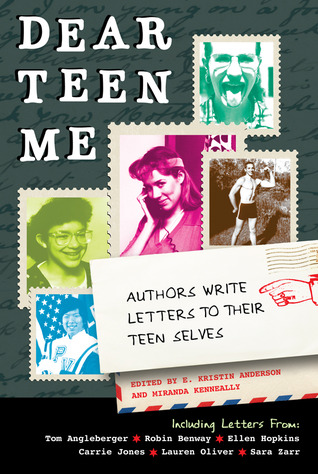
My book is currently titled LISTEN TO ME. It’s a YA magical realism (or a YA contemporary with a time-twist, depending on which day you ask). It’s about Stacy, an unpopular, bullied seventeen-year-old who can talk to her future, adult self when she looks in a mirror. Stacy’s dealing with unrequited love, bullying, and a mother who just wants her to be “normal”. The problem is, Stacy has learned that her future self has been lying. A lot. She has to figure out if she can trust her future self’s advice when it appears her future self has been steering her away from all the things she wants (specifically, a relationship with her popular best friend Mark, and popularity / acceptance from her peers). It was inspired by the www.dearteenme.com website, wherein authors write letters to their teenage selves. I love those letters!

When I read some early last year I got to wondering how my teenage self would feel about advice I would give her now if I could. What would happen if we sat down and talked? Would she listen to me? Or would she think I was boring? Would she look at me and think she didn’t want to be like me? Or would she trust my judgment? Needless to say I was inspired and started writing almost immediately. Stacy is a character very, very close to my heart.
Why did you choose to write for Young Adult readers?

I would say I didn’t really choose YA, it chose me. My entire life I’ve always been riveted by high school stories. I guess you could say I never grew out of them. I think it’s because high school was a very negative experience for me. I think I kept wanting to go back and do it differently – or imagine it differently, at least.

My books reflect a desire to rewrite history, to a certain degree. They aren’t “my” stories, but they definitely draw on the feelings, experiences and conflicts I encountered at that time in my life.

What do you think it was THE book that got you an agent? (=what made it special?)

I think LISTEN TO ME has two things going for it. It’s “high concept” (easy to explain in a sentence or two) and there isn’t anything else like it out there right now. It isn’t derivative of something that’s already popular. I know Brittany connected with the story on an emotional level, and that’s what I wanted from an agent. She and I feel the story deeply for different reasons, but she “gets it” like I do. I had several agents who rejected it, but also noted that they’d been moved emotionally by the character and the story. So… I guess it makes people feel. That was always my goal, so I’m excited to see if we can find an editor who feels the same.

On your blog:

You’ve got a successful author platform, what is your advice for writers who are just beginning to blog/tweet/etc ?

Successful blogging takes time, commitment and perseverance. If you don’t have a passion for it, don’t do it. If you do have a passion for it, get focused.My advice is twofold: Focus on what you have to offer other people (not just your own story, but something others can use to benefit themselves) and don’t give up if it doesn’t happen quickly.

On a practical level, use platforms like Twitter and Facebook to connect with people. They aren’t just signposts for your blogposts or your books. They are places to get to know people and let them get to know you. The more time you spend just communicating with people, the more loyal your following will be. And when they’re loyal, they’ll do your promotion for you so you don’t have to.

It took me two years to gain over 500 followers (I’m now just cresting 3000 genuine followers on Twitter, too).  I don’t think my numbers are anything “special”, but they’re solid enough now to create a sense of community. In order to do that I’ve committed time almost every day for two years to talk with people on twitter, comment on blogs, follow blogs / twitter, offer useful information on my blog, and answer emails, etc that people send to me.

It’s a lot of work. But it’s rewarding when you start getting some traction. So, just keep going!

Thanks Aimee!

Thanks for having me, Eve!

ROW80 Check-In 6 & Sunshine Award

Hello gentle reader,

So I had a crazy week, and for the first time since the beginning of this round, I didn’t meet my ROW80 goal, which is to: Write or edit every day. You also won’t find an inspiring story along with this post, simply because I didn’t have the time to find one.

Here is my week in numbers:

Number of hours spent editing/writing this week: 4

Number of hours spent at my day job: 54

Number of work-related dinner parties I attended: 2

Number of pest control interventions because of a wasp invasion in my kitchen: 1

Number of YA authors interviewed on my blog: 1 (you can read the interview here)

Number of writing contests I entered: 1

Number of awards my blog received: 1

Rhiann Wynn-Nolet was kind enough to pass on to me the Sunshine Award. This award is for “bloggers who positively and creatively inspire others in the blogosphere”. Although I am very flattered to receive this award, I am not going to answer the questions that go with it simply because they are all about my favourite food, my favourite colour and my favourite flower, and I don’t see how this can be interesting for you, gentle reader. I am also supposed to nominate 10 bloggers for this award, so I’ll just say: if you’re reading this and you’re doing ROW80, consider yourself (and your blog) nominated.

Hope you all have a great week! Here is the Linky to support each other.

A Writer in the Spotlight – Anna Carey

This week again I was lucky enough to have a YA author give me an exclusive interview! The idea behind the “Writer in the Spotlight” feature is that published (and bestselling) authors are the best source of advice for us, would-be-published writers. Today’s interview is with the amazing Anna Carey. Between her busy schedule and emails lost in spam folders, there were times when I thought I would never get this interview, but Anna was SUPER kind and I’m very happy that you can read her answers to my questions today!

Author : Anna Carey

Genre : Young Adult, Dystopian, Contemporary

Location: Los Angeles, USA

Contact: Website, Goodreads, Twitter

Books : The Sloan Sisters series (2009), the Eve trilogy: Eve (2011), Once (2012), Rise (2013)

Bio: Anna Carey has been a gift wrapper, face painter, nanny, horrific cocktail waitress, sofa saleswoman and children’s book editor. She graduated from New York University and has an MFA in fiction from Brooklyn College. She currently lives in Los Angeles, where she can be found writing, reading, and doodling on the giant chalkboard in her kitchen.

My interview (08/11/2012)

On writing:

Did you always know you wanted to be a writer?

I always knew I wanted to be a writer, though it took me nearly a decade to say those words out loud. Growing up I didn’t know any authors, had never been to a book talk or had a writer visit my school. That life seemed like an impossible dream.

When and where do you write?

As much as I try to keep a set schedule, this changes from book to book. My preference is to write at home, on my couch, in yoga pants. It usually takes me eight hours to get five solid hours of work done. I’ve gone through periods where things are different, where I work predominantly in coffee shops or only at night, but the eight hour rule has always proved true.

What do you say to people who want to be writers?

First off, read as much as you can. You learn so much about characters, story, and plot just from reading well crafted books. We’re lucky that there are so many books on writing out there (On Writing by Stephen King, The Faith of a Writer by Joyce Carol Oates, Burning Down the House by Charles Baxter). Add these to your reading list.

Secondly, write as much as you can and finish whatever you start. Strangely, this is the hardest part. Try not to get discouraged by unwieldy first drafts. Try not to judge. Once you finish there will be time to cut, add, rewrite and perfect. Until then…it’s impossible to revise a blank page.

Lastly: Find a few readers you trust. Share your work and learn how to listen to criticism. A useful comment feels like an arrow hitting it’s mark.

On the “Eve” trilogy:

To write these books, where did you get your inspiration from? Were you aware of the coming dystopian trend in YA literature when you wrote “Eve”?

Eve started with a question: What happens when you discover everything you learned is a lie? Would you have the courage to relearn your life?

Publishing is a slow industry. It can take over a year (sometimes two) for a book to go from finished manuscript to published work. That said, once you’re aware of a trend it’s generally too late to write with it. I’m like most of the authors who are writing dystopian now. When I started Eve dystopian wasn’t a huge trend. The first book of The Hunger Games was out, but it wasn’t what it is now. I wrote the story I was interested in, and fortunately the timing was right.

On reading:

Which authors inspire you now?

I just read The Marbury Lens by Andrew Smith, which is creepy and magnificent. If I Stay by Gayle Forman is one of my favorite YA reads, my go-to “if you haven’t read this READ THIS”. Right now I’m on a bit of a Gillian Flynn kick. I finished Gone Girl and am now reading Sharp Objects, one of her earlier books.

Thanks, Anna, for an awesome interview!

Anna’s books are available from Amazon here.

Book of the Week – 14

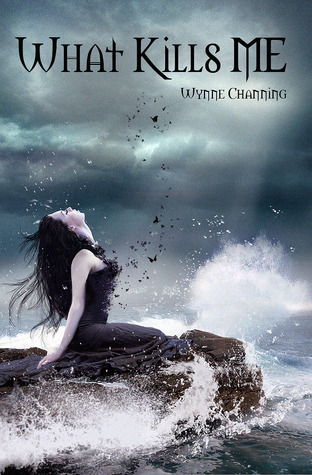
This week I am reading What Kills Me by Wynne Channing (published June 2012 by Jet & Jack Press). It is a YA Paranormal romance. I don’t usually read that kind of books, but I won a copy on Kayla Curry’s blog during her Trick Or Tweet Giveaway. And it’s a story about vampires, so I really couldn’t say no to reading that book!

From Goodreads:

An ancient prophecy warns of a girl destined to cause the extinction of the vampire race.

So when 17-year-old Axelia falls into a sacred well filled with blood and emerges a vampire, the immortal empire believes she is this legendary destroyer. Hunted by soldiers and mercenaries, Axelia and her reluctant ally, the vampire bladesmith Lucas, must battle to survive.

How will she convince the empire that she is just an innocent teenager-turned bloodsucker and not a creature of destruction? And if she cannot, can a vampire who is afraid of bugs summon the courage to fight a nation of immortals?

What are you reading this week?

ROW80 Check-In 5 : Claire Legrand on How To Come To Terms With Your Writing

Hello gentle reader,

And it is time for another ROW80 check-in! My goals for this fourth round are as follows:

Write or edit every day DONE

Editing – Finish my current round of editing for The Last Queen, get my manuscript critiqued and beat-read, then edit some more.

DONE: This week again I have been editing every day.

Writing – Write a short story, and continue writing the first draft of The Cursed King

I didn’t do any writing this week since I was focused on editing The Last Queen.

So this was another good writing week for me and I’m still happy with my goals. This week I also posted on my blog two posts you might enjoy: my Halloween reads recommendations and a discussion on the popularity of YA High Fantasy novels.

Now, on to an inspiring story to keep us going this coming week. Today I’m sharing YA author Claire Legrand’s tips for writers. Claire’s debut novel THE CAVENDISH HOME FOR BOYS AND GIRLS came out in August 2012.

“When I first started writing, I spent a lot of time online researching what writers should and should not do. There are many rules floating around out there dictating what supposedly makes for a good writing process and a bad writing process, a good writer and a bad writer, a book that will sell and a book that won’t.

Some I have encountered are:

  • You must write every day.
  • You should NOT write every day.
  • You should write [insert number of choice] words per day.
  • You should make a writing schedule and stick to it, absolutely no excuses.
  • You should be writing [insert number of choice] books per year if you ever hope to make a living in this business.
  • You must write at this pace.
  • No, this pace.
  • No way, THIS pace. Slackers.
  • You should write at least one million words before even thinking of querying an agent with a manuscript; before then, you’re not ready.
  • You should create an account for THIS social media service, and THIS one, and THIS one too, and post THIS many times a week.
  • You should blog regularly, on a set schedule, and stick to it. If you blog irregularly, you’re a bad blogger/writer/human being.
  • You should use Scrivener.
  • No, you shouldn’t.
  • You MUST outline, in detail.
  • You MUST outline, but only the main plot points.
  • Eh, you don’t need to outline.
  • You should plan your book around this method of story structure.
  • No, this one.
  • No, those suck, THIS one.
  • You should query one agent at a time.
  • You should query five agents at a time.
  • You should query ten agents at a time.
  • Your book should be between [number] and [number] words long, and anything else won’t fly.
  • You must use critique partners.
  • Your first drafts should look like this.
  • You should only have to do [insert number] rounds of revisions; anything more, and something’s wrong with you/your book/your soul.

Frankly, these shoulds and shouldn’ts start contradicting each other pretty quickly, and it can make a fledgling writer feel pretty lost. Heck, I’m all fancy and published now (and I say that tongue-in-cheek because there’s not much that’s fancy about it, and also, I still don’t feel like I know what I’m doing), and reading these kinds of statements STILL makes me feel pretty lost. They also, if I focus too hard on them, make me feel like I’m doing everything wrong when I can look at what I’m producing and rationally know that I’m not.

Rules can be a good thing. As Victoria Wright might say, rules help the world run just so.

But writing is not always a quantifiable activity. Much of it is instinct, luck, and plain old dogged persistence, whether that’s rigidly scheduled in a spreadsheet or just crammed into whatever spare thirty minutes you can find as your day allows it. And much of what works and what doesn’t for one person’s writing doesn’t translate to the next person. Therefore, I would say that many of the so-called universal writing rules we might see in blog posts, online articles, and tweets are really just what the author has found to work for herself, or for her friends, or for the majority of people within her peer group.

But that doesn’t mean it has to–or will–work for you (or for your book).

Such a statement seems elementary enough (everyone’s different! we’re all unique snowflakes!), but I still have a hard time accepting it. I’m a person very influenced by others, for good or for ill. This means some of my most productive writing days are when I’m “sprinting” online in the company of friends; this also means that other’s successes, failures, methods, and “musts” all have a way of affecting me deeply. I start to think I’m not doing enough or that I’m not doing it right, and then I lose confidence, and then I sit there staring at a blank Word document while scarfing down a box of Cheezits.

The thing is, I don’t do half the things on that list up there above.

I don’t use Scrivener; I have a notebook in which I scribble random thoughts. The rest is done in plain old Microsoft Word, with a lot of world-building and character notes jotted down in Notepad.

I don’t use critique partners. There is one good writer friend whom I trust to look at my unpolished work, but beyond that, no one looks at my books before my editor except for me and my agent.

I outline in detail, but I don’t have a set writing schedule every day, nor do I log my word counts or have micro-goals of any kind. I tried doing that, but it didn’t work for me because if I didn’t meet a goal for the day (or the week) I felt like a failure, and my work suffered for it. Instead, I shoot for big goals (finishing the book by this date) and as long as I meet that big goal, what happens until then doesn’t matter.

I write long what I call “zero drafts” (that is, the first ever draft of the book, before I make preliminary cuts, before I send to abovementioned good writer friend, before I send to agent). And when I say long, I mean long. And even beyond that, once a book has gone through revisions, it’s still on the longer side. I’m just plain wordy (as you can tell by reading this post and really my blog in general). (…)

What does this say about me and my writing?

Absolutely nothing. Except that I write long and then cut back during revisions. It does not reflect on the quality of my writing, the effectiveness of my methods, or how I measure up against the writing and methods of others.

Likewise, my method of outlining, my writing schedules, the fact that I only have one beta reader, etc. etc., means nothing except that this system is what works for me and my books. End of story.

You hear that, brain??

So I’m going to tell you this, in hopes that myself, through writing it, will soak in the reminder (and because I know there are others out there who, like me, doubt and compare and wonder if they’re nuts or stupid or somehow wrong for writing like they do):

The way you write is not necessarily how others write.

Your books are not going to be as [insert adjective of choice] as others’ are.

Your writing will be just that: how you write.

Your books will be just that: your books (and no one else’s.)

Know this, accept this. The sooner you do, the sooner you will come to terms with your writing. And the sooner you do that, the sooner you can get to writing that next book (and the next one, and the next . . . ), no matter how long/short/bracketed/messy/outlined/pantsed/critiqued/Scrivenered/Worded/slowly written/quickly written/ it ends up being.”

How are you other ROWers doing? Here is the Linky to support each other!

Should you really be writing that YA High Fantasy novel?

Hello gentle reader,

Recently I have been researching agents as I am getting ready to query my YA High Fantasy novel The Last Queen. And when I check out literary agents’ websites to find out what genre they represent, I often find a note along those lines: “represents YA Fantasy, all subgenres, but no high fantasy please”. And I want to bang my head on my keyboard.

When asked why they don’t represent YA High Fantasy, literary agents will often give you one of these two answers:

–          The market for YA High Fantasy is very narrow: only a handful of readers buy those books.

–          The agent herself doesn’t read this genre.

The second answer is fair enough, and I wouldn’t want to be represented by an agent who doesn’t “get” my book anyway. But the first one? I beg to differ.

I went to check the Amazon’s Best-Seller List this morning. Not 6 months ago. THIS MORNING. And in the Top 100 Books for Teens, you find authors like: J.R.R. Tolkien, Orson Scott Card, Cinda Williams Chima, Rick Riordan, Christopher Paolini and Laini Taylor. Most of them appear twice in the list. All of them but one appear among the first 40 best-selling books.

Then I checked the new releases to see how the YA High fantasy books released in 2012 are ranked by Amazon (according to their sales). Here is what I found:

The Crimson Crown by Cinda Williams Chima (released October 2012): #318 in Books

The Crown of Embers by Rae Carson (released September 2012): #4,778 in Books

Throne of Glass by Sarah J. Maas (released August 2012): #6,184 in Books

Seraphina by Rachel Hartman (released July 2012): #1,592 in Books

Shadow and Bone by Leigh Bardugo (released June 2012): #4,436 in Books

Bitterblue by Kristin Cashore (released May 2012): #3,505 in Books

The False Prince by Jennifer A. Nielsen (released April 2012): #10,834 in Books

NB: The books in bold are debut novels. All rankings are in Books (E-books sales are not taken into account).

You’ll notice that when the release date is further away, sales start to decrease. But even if we take this into consideration, I’d say these sales figures are quite impressive for a subgenre that’s supposedly dying. I’m especially interested in the ranking of debut novels such as Seraphina and Throne of Glass: these books sell really well considering their authors are unknown.

So is YA High Fantasy a subgenre that only a handful of readers buy? I don’t think so. Is shopping around a YA High Fantasy debut novel crazy? A little bit. But not crazier than shopping around a “regular” YA fantasy novel.

What do you think? Have you written a High Fantasy novel for Young Adults? Have you encountered agents who tell you you’ll never sell your book? Is YA High Fantasy dying, or is it the next big thing?

Feel free to leave me a comment, I’d love to hear what you have to say!

YA Halloween reads

What’s on my bookshlef ? 7

Are you looking for scary books that are suitable for Young Adult readers? On my bookshelf, you can find books with…

Zombies: Something Strange & Deadly by Susan Dennard

1876: the Dead are rising in Philadelphia and only a teenage girl in petticoats can stop them…

Ghosts: Uncle Montague’s Tales of Terror by Chris Priestley

Edward visits his Uncle Montague, who tells him some of the most frightening stories he knows. But the house around them is creepy and Uncle Montague’s tales sound more and more real as time goes by…

Vampires: Department 19 by Will Hill

Department 19 is a secret organization that deals with all things supernatural. With the help of its strange members, a teenager must save his mother from a powerful vampire.

Witches: The Raven Boys by Maggie Stiefvater

Blue comes from a family of witches, but she has no power of her own. The only thing she knows for sure is that she will cause her true love to die. Which wasn’t a problem until she met the Raven Boys…

Death: Abandon by Meg Cabot

A teenage girl escapes more the Realm of the Dead (the Underworld), only to find herself in a lot of supernatural trouble. With more romance than scary moments, this book will suit readers who enjoy YA Paranormal reads.

Any other books you’d recommend? Feel free to comment! And don’t forget you can still win The Graveyard Book by Neil Gaiman here.

ROW80 Check-In 4 : Jay Kristoff’s Query tips

Hello gentle reader,

And it is time for another ROW80 check-in! My goals for this fourth round are as follows:

Write or edit every day DONE!

Editing – Finish my current round of editing for The Last Queen, get my manuscript critiqued and beat-read, then edit some more.

DONE: I heard back from my CPs and beta readers at the beginning of the week and I have been editing all week.

Writing – Write a short story, and continue writing the first draft of The Cursed King

I didn’t do any writing per se this week since I was focused on editing The Last Queen.

So this was again a good writing week for me and I’m still happy with my goals. However I was so focused on my editing that I neglected my inbox and blog comments. I apologise if you’re waiting to hear back from me, I’ll get to this today. I didn’t have the time for any reading either. The only thing I did manage to do this week beside editing was keeping my blog alive with a Halloween book giveaway (you can enter here to win THE GRAVEYARD BOOK by Neil Gaiman if you wish). Also my blog received the Liebster Award!

Now, on to an inspiring story to keep us going this coming week. Today I’m sharing SF/F author Jay Kristoff’s 13 Steps to Getting an Agent. Jay’s first trilogy, THE LOTUS WAR, was purchased in a three-way auction by US publishing houses in 2011. The first installment, STORMDANCER, is out now. It is “a dystopian Japanese-inspired Steampunk Fantasy”. I have found the following tips on the Adventures in YA & Children’s Publishing blog.

“The agent search. You pick up your manuscript, nurtured from a tiny seed, and send it out into the world. It’s perfect. You love it. Surely, everyone else will too.

And then you watch agents curbstomp it, or worse, ignore it, months on end, until you look at this thing you once loved and question whether it has any redeeming features at all.

That pretty much sums up what it was like for me. Brief periods of giddy excitement. Disappointment. Intense self-doubt. Feigned apathy. Resentment. Months on end. Long is the way, and hard, that out of hell leads up to representation. And nothing anybody says makes it easier. You can have your betas say your MS is the next Harry Potter, you can repeat the absolute, perfect truth “It only takes one yes” until your voice fails, but ultimately, you’re still getting rejected. And rejection is a fun as funerals.

The thing that made it easier for me was mechanizing the process. Routine and ritual. I don’t claim to be any kind of expert. But I share my thirteen steps here, in the hope it might help somebody else out on that long hard road.

Step 1 – Write a book. Make it the best you can possibly make it. This is kinda the easy part, and I’m not kidding when I say that. By no means is it easy. But it’s easier than what comes after.

Step 2 – Finish the book. Really finish it. Don’t just finish your third edit and say “done!”. Scour the pages until they bleed. No truer words were ever spoken to me than this – “Your first chapter better be stonkingly awesome. Because that’s all most agents are ever gonna read.”

Step 3 – Stop finishing the book. You’re just ruining it now. There comes a time when you need to say “Enough, this thing is ready to go out”. Some people spend years polishing, and never get around to actually querying. That’s fear. Fear is the mindkiller. Say it with me and Muad’dib and send that puppy out to slaughter.

Step 4 – Do your homework – Go to Querytracker. Go to Agentquery. Subscribe to Publisher’s Marketplace. Visit agent websites, read interviews. Learn everything you can about them. Check outPreditors and Editors. Pay no money to an agent upfront, EVER. Do not let your desire to get published blind you to the realities. Do not let your hard work go to waste at the hands of a hustler. Do not be a sucker.

Do. Your. Homework.

Note – there’s a fine line between research and stalking. If you find yourself rifling through an agent’s trash or standing outside their apartment in the rain, you’re doing it wrong.

Step 5 – Prioritize your list. Who’s your dream agent? Do you put them top of list or midlist? Do you acknowledge your query is going to suck at first (because it will), or do you think it’s as awesome as it’s ever going to be (it isn’t) and blow your shots at your dream agents by using them as guinea pigs?

Step 6 – Forge a prescription for some quality painkillers, then write your query letter. There are entire websites devoted to this (writing the query, not forging a prescription). I won’t elaborate on it, but there are faaaaaaaabulous resources online, darling, and you should take advantage.

You can find my query on my blog if you’re interested. The version you’ll be reading was my third iteration. The first one blew more goat than wow I don’t even want to finish that thought…

Step 7 – Read the submission guidelines. This can’t be stressed enough. The brownie points I’m racking up by mentioning this fact will be enough to get me repped in my next seventeen lives.

Every agent is different. Some like you to send your query solo (which is why your letter needs to sing like Amanda Palmer). Some like a synopsis. Some like a sample. Some like watching episodes of House wearing only an old “Spice Girls” T-shirt and bunny slippers, but you don’t know that because you’re not standing outside her apartment in the rain, are you?

Are you?

Step 8 – Send it. Cross your fingers. Pray to whatever flavor of Flying Spaghetti Monster you prefer. Sacrifice a cat to the blood god. Seriously, cats are vermin, the less we have of them, the better.

I had around 15 queries in the air at any given moment. As soon as a rejection came in, I’d send out another. Some folks will tell you this is too many queries to run at the one time. Some will say it’s not enough. There are no absolutes here. You are stepping beyond the rim.

Step 9 – Wait.

Then wait some more.

You can choose to spend your waiting time however you wish. Writing your next book is a good way to go. Whatever you do, it had best be something you enjoy, because you’re going to doing a lot of it.

STORMDANCER is a rulebreaker –it really only took three months for me to land an agent on it, which is nothing. To put it in perspective, I waited three months for replies on some queries for my first ms. I spent five months waiting to hear back on a full (which incidentally, was a rejection).

So writing your next book while you wait? Probably a good idea.

Step 10 – Wait.

I realize I said this already, but it’s worth mentioning twice.

Step 11 – Learn from your rejections. My wife used to say to me “Stephanie Meyer got rejected nine times before Twilight got bought. J.K Rowling got canned a dozen times too”. I will say this now – those ladies had it easy. I took twenty two kicks to the baby maker on STORMDANCER. I took seventy on my previous MS. I had it easy. I know writers who got rejected over three hundred times before they got repped. Three. Hundred.

Most of your rejections will be forms. An automated, boiler-plate “thanks but no thanks”. If you’re lucky enough to receive feedback from an agent with your rejection, treat this like a nugget of gold. It’s a true rarity, and that agent is taking time out of an unimaginably busy schedule to offer it. Say “thank you” and be on your way.

When you get rejected, don’t ask why. You’ll be sorely tempted to. But sadly, it’s not the agent’s job to tell you what’s wrong with your ms. It’s your job to be telepathic. Yay!

Step 12 – Revise.

My query letter got better as I went along (hence you should consider the order in which you query your “dream picks” very seriously). If you’re getting lots of rejections, something is wrong. Of course, trying to fix it when you’re getting nothing but boiler-plate is difficult unless you have mutant powers. It’s maddening, but this is the status-quo.

Step 13 – Believe

I’ll depart from my wise-cracking, tall dark and scary routine long enough to give a little group hug now. Everyone needs a hug once in a while, especially querying writers. Here it is:

The only belief that matters in this equation is your own. It’s nice to have the support of betas or trusted friends, but it’s not necessary (the only person who had any idea that I was writing a book until I got repped was my wife). The only person who needs to believe you can do this is you. Everything else is window dressing. If you’re meant to be doing this, you can, and you will.

Believe in yourself. Keep the faith. At the end of the day, it’s all any of us have.”

How are you other ROWers doing? Here is the Linky to support each other!

All Hallow’s Read Giveaway (closed)

Hello gentle reader,

Halloween is one week away and I have decided to take part in an awesome initiative called All Hallow’s Read. The idea? Give someone a scary book for Halloween.

Fantasy author Neil Gaiman made a lovely (!) video to explain this Halloween tradition:

So I’ve chosen to join this initiative by giving away a copy of The Graveyard Book by Neil Gaiman himself (YA Fantasy, UK paperback).

From Goodreads:

After the grisly murder of his entire family, a toddler wanders into a graveyard where the ghosts and other supernatural residents agree to raise him as one of their own.

Nobody Owens, known to his friends as Bod, is a normal boy. He would be completely normal if he didn’t live in a sprawling graveyard, being raised and educated by ghosts, with a solitary guardian who belongs to neither the world of the living nor of the dead. There are dangers and adventures in the graveyard for a boy. But if Bod leaves the graveyard, then he will come under attack from the man Jack—who has already killed Bod’s family . . .

Beloved master storyteller Neil Gaiman returns with a luminous new novel for the audience that embraced his New York Times bestselling modern classic Coraline. Magical, terrifying, and filled with breathtaking adventures, The Graveyard Book is sure to enthrall readers of all ages.

GIVEAWAY IS NOW CLOSED -Thanks to all you entered!

The winner will be contacted by email

Giveaway information:

The giveaway is open until Wednesday, October 31st 2012 at midnight (BST time)

To enter please fill in the contact form below with your name and email.

If you follow my blog by email, WordPress or RSS feed, if you are a Twitter follower , if you like my page on Facebook or if you tweet about the giveaway, this will grant you an extra entry. Mention it below.

Entrants must be at least 13 years of age.

This giveaway is open Internationally.

The winner will be chosen randomly, notified by email and will have 72 hours to reply or a new winner will be chosen.

I am not responsible for items lost in the mail.

I hold the right to end the giveaway before its original deadline without any prior notice.

I hold the right to disqualify any entry as I see fit.

Privacy information: no information given for this giveaway will be used for other purpose than this giveaway. All information provided (names, emails and mail addresses) will be deleted after the giveaway.

Good luck and feel free to leave me a comment below…

Liebster Blog Award!

Hello gentle reader,

Last week my blog was nominated twice (!) for the Liebster Award! Thanks to Craig Schmidt & Mara Valderran for passing the award on to me. This award is about spotlighting new blogs (with fewer than 200 followers) and answering 11 questions. Since I was nominated twice, I had to choose from a set of 22 questions.

So this award arrived just on time since my blog has almost reached 200 followers (more on this coming soon!). Here are the questions I have decided to answer:

What is your motto?

Don’t give up your dream.

Tell us three things about a favourite character you’ve created.

In my WIP The Last Queen, the main character Elian is shy, dutiful and self-conscious. Yet, somehow, he becomes a hero. Don’t ask him how, he wouldn’t know.

Which author influences you most as a writer, and in what way?

Neil Gaiman is one of my favourite authors, because he tells fantasy stories that are accessible to any reader, at almost any age.

When you get writer’s block, doing this helps.

When I get the feeling that what I’m writing doesn’t work, I stop writing and I read instead. Sometimes it takes just one book, sometimes it takes six, but eventually it makes me want to write again.

What is something you regret?

I have been writing for 15 years, and it took me a very long time to listen to people who told me “why don’t you try to get published?” I wish I had listened to them earlier.

What was the first thing you remember writing?

The first novel I wrote AND finished was a story called The Chronicles of a Girl on a Swing in Paris. Well, the title pretty much says it all 😉

What goal are you most focused on right now?

Finishing edits to The Last Queen and querying it.

Who was your favourite actor or actress when you were growing up?

Kevin Costner. I still really like him. If one of his movies comes on TV, I’ll always each it.

What is your favourite television show that was cancelled before its time/too soon?

I’m assuming everyone already said Firefly… So I’ll say Blood Ties (2007): vampires and an awesome heroine. No idea why it got cancelled, it was excellent. I also was a bit disappointed that The Gates (2010) didn’t really get a chance to find its audience.

What is on your bucket list (things you want to do before you die)?

Read ALL THE BOOKS (almost). Visit the US West Coast, New Zealand, Italy and Greece.

If you were to write a “Thank you” note to someone you’ve never actually met, who would that be and why?

I would write it to Fantasy author Gregory Maguire (The Wicked Years series). His books were a huge inspiration because they were like nothing I had read before and it showed me that I could write weird stories too, as long as they were good.

Now I have to tag other new bloggers so they’ll answer those witty questions…  Here is my list:

Yesenia Vargas

Em Loves to read, Wants to write

Lauren Garafalo

SJ Maylee