The Very Inspiring Blog Award

Hello gentle reader,

my blog was nominated for the Very Inspiring Blog Award by the lovely Ayesha Schroeder ! Thank you Ayesha for thinking of me, I really appreciate it.

Accepting this award means I have to share with you 7 things about myself. So here goes:

1 – I started this blog back in March 2012 because I had read that a would-be-published writer like me should have a presence online. Then I discovered that I love blogging! 9 months later, this little blog has more than 250 followers and it has had more than 12,000 page views. Thank YOU for that.

2 – Fantasy is my favourite genre as a reader and a writer. I love a book that makes me forget where and who I am, and takes me to imaginary lands.

3 – I live in England, in the countryside south of London. I have a day job that keeps me very busy, but it won’t keep me from writing. Ever.

4 – After talking about it for months, I have finally started querying my YA High Fantasy novel The Last Queen at the beginning of November. The process is a bit scary, but I do want to try and see if I can get published the traditional way…

5 – I have met a few authors during the last couple of years, and all of them gave me incredible insight into the writing and publishing process. Among them were Philip Pullman, Rachel Caine, and Celia Rees.

6 – I’m in love with Jared Leto. There, I’ve bared my soul to you.

7 – This Saturday, be ready for the official launch of a new blog called There And Draft Again. Alongside 5 writerly friends, I will blog about Fantasy and giving away Fantasy books. If you want, you can already follow the blog here.

Now I have to nominate the blogs who deserve this award:

Raewyn Hewitt writes about fantasy and lives in New Zealand. She is AWESOME and you should all be following her.

Jessica Montgomery and Aimee L. Salter have helped me SO MUCH with The Last Queen, I will owe them for life if this novel ever gets published. You should check out their blogs full of advice for writers.

Yesenia Vargas, Juliana Haygert, Sydney Aaliyah, Amanda Fanger, Rachel Horwitz, KL Schwengel, Mara Valderran, Craig Schmidt, Karen Rought all have great writerly blogs and they have been incredibly supportive of my writing endeavours these past few months. Pay them a visit!

Finally Summer Heacock has a writerly blog that is highly inspiring and hilarious, so I needed to mention her here as well.

That’s it for my Very Inspiring Blog Award, thanks for reading and see you this weekend!

Book of the Week – 15

Hello gentle reader,

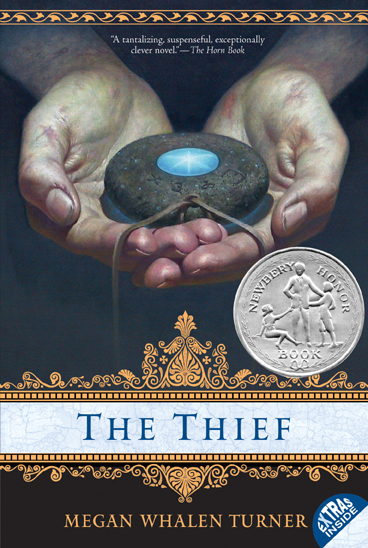
I realise I haven’t done a “Book of the Week” post in a while, but this is because I have been reading a series of books by YA Fantasy author Megan Whalen Turner and I wanted to finish it before I shared it with you.

Nicknamed The Queen’s Thief by its readers (MWT has no name for it herself), the series has four books so far, with 2 more announced. The first book in the series, The Thief, was published in 1996 and it won the Newbery Medal in 1997.The following books are The Queen of Attolia (2000), The King of Attolia (2006), and A Conspiracy of Kings (2010).

This YA High Fantasy series is not well known, and I came across it because Sarah J. Maas (author of 2012 debut Throne of Glass) recommended it.

And I’m so glad I went ahead and read it. Not only is this series so well written it makes me want to weep, it is also a very clever, audacious and captivating example of great High Fantasy for young adult readers. Each book plays with points of view, has a smart twist at the end and explores themes such as religion, politics and personal choices. The main character, Gen, is nothing like you’ve read before, I promise. And if you haven’t read this series yet, I suggest you get it sooner rather than later, because you’re missing out.

From Goodreads:

The king’s scholar, the magus, believes he knows the site of an ancient treasure. To attain it for his king, he needs a skillful thief, and he selects Gen from the king’s prison. The magus is interested only in the thief’s abilities.

What Gen is interested in is anyone’s guess. Their journey toward the treasure is both dangerous and difficult, lightened only imperceptibly by the tales they tell of the old gods and goddesses.

What are you reading this week?

ROW80 Check-In 8: 5 Writing Tips from Laini Taylor

Hello gentle reader,

It is already time for another ROW80 check-in! My goals for this fourth round are as follows: Write or edit every day

This week I was waiting to hear from my beta readers on The Last Queen after my latest round of edits, so in the meantime I did something which has nothing to do with my Darklands trilogy. I dug up an unfinished first draft and added some 5000 words to it, and it was a lot of fun. I also worked on my query and researched agents. Finally I worked on a Super Secret and Super Exciting Project (code name TADA): you’ll find out all about it on 1st December!

Now, on to an inspiring story to keep us going this coming week. Today I’m sharing Laini Taylor’s writing tips. The following article was published on the Publishers Weekly website on 16 November 2012. In case you’ve missed it, here it is:

Laini Taylor‘s Days of Blood & Starlight (the follow-up to Daughter of Smoke & Bone) is filled with dazzling writing, not to mention fantasy, suspense, and a page-turning story. Take notes, because Taylor’s sharing her 5 writing tips.

I’ve wanted to be a writer since I was a small child, but I was thirty-five before I finished my first novel, because I have issues with perfectionism. It took me a long time to learn to finish what I start, and I’ve developed a lot of tools and tricks for keeping myself moving forward through a story when a big slice of my brain wants nothing so much as to stop and rewrite everything I’ve already written. It can be exhausting, but the upside is that I love to revise. The main thing I’ve learned is that we all have to learn to work with—and appreciate—the brain we’ve been given, and not waste time wishing things were easier.

1. Know what you love. Try imagining the book that would light your heart and mind on fire if you came across it in a bookstore—the one that would quicken your pulse and keep you up all night reading. What would it be? Details, details: when, where, what, who? Think it up, imagine it fully, then bring it forth. That’s the book you should be writing.

2. Never sit staring at a blank page or screen. If you find yourself stuck, write. Write about the scene you’re trying to write. Writing about is easier than writing, and chances are, it will give you your way in. You could try listing ten things that might happen next, or do a timed freewrite—fast, non-precious forward momentum; you don’t even have to read it afterward, but it might give you ideas. Try anything and everything. Never fall still, and don’t be lazy.

3. Eliminate distractions. Eliminate Internet access. Find/create a place and time where you won’t be bothered. Noise-canceling headphones are great. Hotel-writing-sprees are even better if you can make that happen every once and a while: total dedicated writing time. During my second draft pass on my last book I made 20,000 words happen in a week, which is practically supernatural for me, and it would never have been possible without three nights in a hotel in my own city. It’s an incredible splurge, and a huge liberation, and you might just deserve it!

4. Get your characters talking. Dialogue is the place that books are most alive and forge the most direct connection with readers. It is also where we as writers discover our characters and allow them to become real. Get them talking. Don’t be precious. Write dialogues. Cultivate the attitude that every word you write need not end up in the book. Some things are just exercises, part of the process of discovery. Be willing to do more work than will show. The end result is all that matters. Be huge and generous and fearless.

5. Be an unstoppable force. Write with an imaginary machete strapped to your thigh. This is not wishy-washy, polite, drinking-tea-with-your-pinkie-sticking-out stuff. It’s who you want to be, your most powerful self. Write your books. Finish them, then make them better. Find the way. No one will make this dream come true for you but you.”

How are other ROWers doing? Here is the Linky to support each other!

Waiting On Wednesday – 20


“Waiting On Wednesday” is a weekly event, hosted by book blogger Breaking The Spine, that spotlights upcoming releases that we’re eagerly anticipating.

This week I’m waiting on A Darkness Strange and Lovely by Susan Dennard (expected publication: July 23rd 2013 by HarperTeen). It will be Book 2 in the Something Strange and Deadly series.

Something Strange and Deadly is one of my favourite books of 2012 and I’m really looking forward to reading what happens next to Eleanor and the Spirit Hunters. This sequel will take place in Paris, which sounds awesome. Also, look at this gorgeous cover!

From Goodreads:

Following an all-out battle with the walking Dead, the Spirit Hunters have fled Philadelphia, leaving Eleanor alone to cope with the devastating aftermath. But there’s more trouble ahead—the evil necromancer Marcus has returned, and his diabolical advances have Eleanor escaping to Paris to seek the help of Joseph, Jie, and the infuriatingly handsome Daniel once again. When she arrives, however, she finds a whole new darkness lurking in this City of Light. As harrowing events unfold, Eleanor is forced to make a deadly decision that will mean life or death for everyone.

What do you think? Have you read Something Strange and Deadly? Is Book 2 on your TBR list?

And what are you waiting on this week?

ROW80 Check-In 7: Tamora Pierce on finding ideas & dealing with writer’s block


Hello gentle reader,

It is already time for another ROW80 check-in! My goals for this fourth round are as follows: Write or edit every day 4/7

This week I finished my current round of editing for The Last Queen. Unfortunately I didn’t do this every day but I did get a lot more done than last week. I’m hoping to get back to writing every day next week. Also this week my blog reached 200 followers and I have a giveaway to celebrate. Feel free to enter to win YA books!

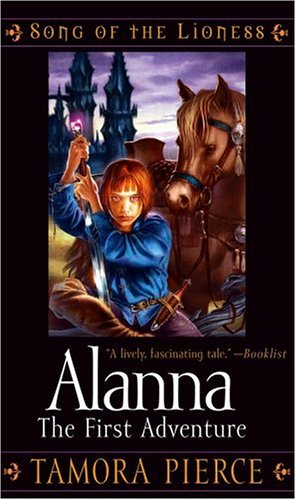
Now, on to an inspiring story to keep us going this coming week. Today I’m sharing Tamora Pierce’s tips to find ideas and fight writer’s block. When it comes to YA fantasy, one doesn’t really get more successful than Tamora Pierce. She has been writing since the 1980s and she is most famous for her Song of the Lioness quartet.

“Where do you get your ideas?

Some I stumble across: watching his nature programs, I decided British naturalist Sir David Attenborough would make a cool bio-mage. Watching my mother and sister produce blankets from balls of yarn and crochet hooks, I thought of it as a kind of magic, and wondered what all could be done with thread magic. Wrestling with my best friend’s dove gave me the ideas for Kel’s relationship with the baby griffin in SQUIRE. Pictures in magazines also give me ideas, as do stories in the news.

Other ideas come from my past obsessions. From the time I was six or seven until I was ten, I read anything and everything I could find about knights, the Crusades, and the Middle Ages. My next area of interest in knighthood was in the fantasy novels and Arthurian legends I read in middle school.

Another way I get ideas is from people: my Random House editor, Mallory Loehr, my agent Craig Tenney, my husband Tim, my friend Raquel…

Current events and history are also fertile ground for ideas. Keep a file of events and figures that interest you; it might prove useful one day.

The best way to prepare to have ideas when you need them is to listen to and encourage your obsessions. Watch and re-watch all the TV programs and movies you have a need to; read and re-read all the books, magazines and comic books; visit all the museums, zoos, galleries, concerts and wilderness areas; and listen to all the kinds of music that interest you. If you get a sudden passion for anything and everything to do with, say, gang warfare, starling behavior, painting frescoes, or jousting, go with the urge. Find out all you can. Even if you can’t use it right away, it’ll go into some holding zone deep in your brain, and surface when you need it. All creative people–not just writers!–expose themselves to as much information, in as many forms, as possible, in the hopes that it will be useful down the road, or even right now. You never know what will spark something new!


How do you deal with writer’s block? Here are some fixes I use when I get stuck:

  • Introduce a new character, a strong one with an individual style in speech, dress and behavior–one who will cause the other characters to review their own actions and motives to decide where they stand with regard to the new character.
  • Have something dramatic happen. As Raymond Chandler put it, “Have someone come through the door with a gun in his hand.” (My husband translates this as “Have a troll come through the door with a spear in his hand.”) Machinery or vehicles (cars, wagons, horses, camels) can break down; your characters can be attacked by robbers or pirates; a flood or tornado sweeps through. Stage a war or an elopement or a financial crash. New, hard circumstances force characters to sink or swim, and the way you show how they do either will move things along.
  • Change the point of view from which you tell the story. If you’re doing it from inside one character’s head, try switching to another character’s point of view. If you’re telling the story from an all-seeing, third person (“he/she thought”) point of view, try narrowing your focus down to one character telling the story in first person. If down the road in the world you’ve created someone has written a book or encyclopedia about these events, insert a nonfiction-like segment (that doesn’t give the important stuff away) as a change of pace. Try telling it as a poem, or a play (you can convert it to story form later).
  • Put this story aside, and start something else: letters, an article, a poem, a play, an art project. Look at the story in a day, or a week, or a couple of months. It may be fresh for you then; it may spark new ideas.
  • If you have an intelligent friend who’s into the things you’re writing about, talk it out with him/her. My husband often supplies wonderful new ideas so I can get past whatever hangs me up, and my family and friends are used to mysterious phone calls asking about things seemingly out of the blue, like what gems would you wear with a scarlet gown, or how tall are pole beans in late June?
  • Most important of all, know when it’s time to quit. Sometimes you take an idea as far as it will go, then run out of steam. This is completely normal. When I began to write, I must have started 25 things for each one I completed. Whether you finish something or not, you’ll still have learned as you wrote. The things you learn and ideas you developed, even in a project you don’t finish, can be brought to your next project, and the next, and the next. Sooner or later you’ll have a story which you can carry to a finish.”

How are other ROWers doing? Here is the Linky to support each other!

Gratitude Giveaway (aka 200 followers giveaway) (closed)

GIVEAWAY IS NOW CLOSED – THANKS TO ALL WHO ENTERED!

The winner will be contacted by email

Hello gentle reader,

so my blog has almost reached 200 followers and I have decided to take part in to the 3rd Annual Gratitude Giveaways Blog Hop hosted by I Am A Reader, Not A Writer to thank all of you for  you support during the past few months.

The giveaway runs from today until Sunday 25th November, 2012. The giveaway is open Internationally. Since this giveaway is to thank my followers, you have to follow my blog via email or WordPress to enter.

I am giving away two books to one winner:

– a copy of Throne of Glass by Sarah J. Maas (YA High Fantasy, UK paperback)

– a signed (!) copy of Wilde’s Army (Darkness Falls: Book 2) by Krystal Wade (YA Paranormal romance, US paperback)

Giveaway information:

The giveaway is open until Sunday 25th November, 2012 at midnight (BST time).

To enter please fill in the contact form below with your name and email, and let me know if you follow via email or WordPress.

You HAVE TO follow my blog by email or WordPress to enter.

Entrants must be at least 13 years of age.

This giveaway is open Internationally.

The winner will be chosen randomly, notified by email and will have 72 hours to reply or a new winner will be chosen.

I am not responsible for items lost in the mail.

I hold the right to end the giveaway before its original deadline without any prior notice.

I hold the right to disqualify any entry as I see fit.

Privacy information: no information given for this giveaway will be used for other purpose than this giveaway. All information provided (names, emails and mail addresses) will be deleted after the giveaway.

Good luck and feel free to leave me a comment below…

A Writer in the Spotlight – Aimee L. Salter

This week again I was lucky enough to have a YA author give me an exclusive interview! The idea behind the “Writer in the Spotlight” feature is that authors are the best source of advice for us, would-be-published writers. So today’s interview is a bit different because Aimee L. Salter is not published yet. However she has an agent and she is awesome, so I couldn’t resist interviewing her any longer!

Author : Aimee L. Salter

Genre : Young Adult, Magical Realism

Location: New Zealand

Contact: Blog, Twitter

Bio: Hailing from the Pacific Northwest, but recently sighted in New Zealand, Aimee is a self-proclaimed coffee aficionado.  She channels the caffeine buzz to wrangle her young son and write books she hopes his high school girlfriend will read. She is represented byBrittany Howard of Corvisiero Literary. While waiting to see what the future holds, she is still writing, studying the craft, and learning more about the rapidly changing industry every day. Her (great) blog Seeking the Write Life shares the things she learned along the way.

My interview (13/11/2012)

On critiquing other writers’ manuscripts (Aimee is an awesome CP!):

Do you think it’s important for writers to have their work critiqued thoroughly and can you explain why?

Quite honestly, I think it’s the most important part of the writing process. Whether your critiques are “professional” (for a fee), or just feedback from experienced writers, what you’re gaining is a skilled reader’s point of view. You’re getting a heads up about where your manuscript is flawed before paying readers take a look. It isn’t fun, but it is very rewarding when you fix those problems and know your book is better for it.

See, whether you get a publishing contract, or self-publish, the end-point is a reader who doesn’t know you from Jack. They haven’t sat down and listened to you talk about your world. They haven’t had coffee with you while you ground your teeth over a tricky scene. They don’t love you and care about your personal success. They’re just looking for a good read. And if your book doesn’t provide that, they’ll move on.

The best kind of critique comes from a writer who has some technical skill, but is also an avid reader. They can assess your book from a reader’s point of view – but offer advice as a writer. They’ll highlight areas of your plot, characterisation or pacing that a reader may find distracting, implausible, or just plain boring.

If you can’t handle the idea of someone telling you your book isn’t perfect, then you want to think really carefully about whether or not you’re cut out for publishing. Regardless of how you publish, you’ll get feedback from readers. Personally, I feel being critiqued in the safety of the hands of another writer who’s helping me make my book better is a much better option than putting my book out there and having readers tell me they don’t like it.

Did you learn anything from critiquing other writers’ WIP?

I learn tons. And I really mean that. The other side of the critiquing coin is that because we’re all too close to our own books (and we know too much about the world and character thoughts / feelings / backstory) we can’t accurately gauge whether our writing is communicating the story we want to tell.

But when we’re reading other writer’s material, we don’t have that backstory to draw on. We don’t know all the little bits and pieces about the world that never make it into the book. We have to take it at its face value. And in that, we can see flaws.

When I’m critiquing I’m often in a position to identify a problem in the manuscript – be it a technical writing issue, an implausible plot, or an unlikeable character. Because I’m analyzing the text, I get to see not just what is wrong, but how the writer delivered that problem.

I can then look through my own writing for that kind of word choice, or plot development, or narration device. Because I’ve seen it in someone else’s work, it becomes easier to identify in my own.

What mistakes do you most often see in the MS you critique?

There are a lot of common themes in the flaws of unpublished manuscripts. I’ve covered some of them in this post. But lately the thing I’ve seen most often is a tendency to over-explain in the narration, or over-state.

Over-explaining is a result of a talented writer (who knows how to “show”), not trusting the reader to understand what they meant. So they quite rightly give all the right cues (body language, dialogue, etc).  But then they round off every paragraph (or sometimes every other sentence!) with a summary of what it all means.

When a writer is over-explaining you’ll get a lot of statements like “I realized he was angry.” Or “If such-and-such was true, then that meant I needed to do this-and-that.”

The solution is to look for any statements that are explaining the progress of the plot or characters and delete them. Just let the character see, hear, smell and (most importantly) react. Your goal is to depict real life. The explaining that’s required in narration is the focal character’s emotions and motivations – not their reaction to the events around them. Those should be shown as a matter of course.

The other common flaw, over-statement, is a result of a writer wanting the reader to understand the impact of something, but not being sure their depiction gets it across. I see it all the time when a heroine meets the hero and insta-love ensues. Suddenly an otherwise succinct manuscript is rife with purple prose describing how gorgeous the guy is, how stunned the heroine is, and how her entire body is consumed with desire / attraction / fear, etc.

My best advice to anyone who thinks they might be falling into that is to pick up a few traditionally published books in their genre and analyze what kind of descriptions are used when the hero / heroine meet (or whatever other gargantuan event occurs). Note that the author rarely (or barely) describes the narrator’s feelings. They focus instead on the stimulus. Be it the strong slant of his shoulders, or the quirk of his eyebrow, the page time is given to the things that create the feelings, not the feelings themselves.

 What are your pet peeves as a critical reader?

How much time do you have? Ha! Lately the thing that’s been bothering me is the “causing” sentence structure. You know the one: “He threw an arm out, causing me to stumble back against the wall.” or “The ripple of his muscles caused my heart to stutter.” While these kinds of statements might be true, they lack real finesse. I far, far prefer a solid stimulus structure: “He threw an arm out. I stumbled backwards, coming up hard against the wall.” or “I couldn’t take my eyes off the ripple of his muscles. My heart hammered against my ribs.”

On getting an agent:

Can you tell us “how you got your agent”?

If you want to go right back to 2009 when I first started trying to get published, I’ve been through well over 100 rejections, an agent who was great but didn’t work out, another thirty or so rejections, then wrote a new (different) book.

I revised my new book a dozen times (including getting eight or nine critiques to help guide my rewrites), wrote a query letter, queried about forty or fifty agents, attended an online writer’s conference, had just over a 30% hit rate on my queries for manuscript submissions. In the end I got offered an independent contract (from a digital-only, royalty paying publisher) and an offer of representation from Brittany Howard (my agent). When Brittany offered there were other agents looking at my full manuscript, but after talking to Brittany I knew we’d be a good fit and I withdrew the manuscript from the remaining agents.

Where are you now in your publishing journey?

Right now I’ve been through one, low-level round of edits for Brittany and am just waiting for her next, more detailed round of edits. Once I’ve completed those (and if I do a bang-up job), Brittany will start submitting my manuscript to editors.

As far as the editing process goes, the thing I like about editing with an agent is I’m confident about the changes. When someone critiques me, or if I were to pay an editor, I’d still be the one in control, so to speak.

When my agent asks for changes I know it’s because she believes those changes will make my book more commercially or technically sound. I’m confident about following her advice, and don’t need to second-guess whether or not I’m going to accidentally shoot myself in the foot.

I’m sure at some point in the future there will be moments when I’ll question advice from Brittany or an editor. But so far, I haven’t hit that. To me, it’s a relief to have someone else guiding the process. Someone with some knowledge of what editors want (Brittany has also worked as an Editor for an independent publisher), who can help me understand why changes are important, and where to focus my energy.

On your book:

What is the genre of your book and what is it about?

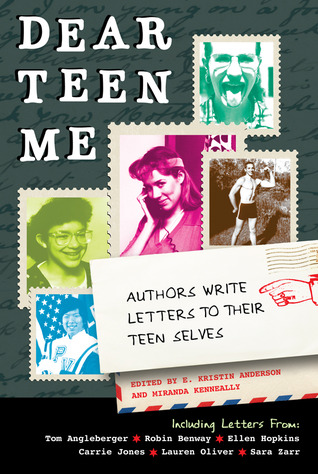
My book is currently titled LISTEN TO ME. It’s a YA magical realism (or a YA contemporary with a time-twist, depending on which day you ask). It’s about Stacy, an unpopular, bullied seventeen-year-old who can talk to her future, adult self when she looks in a mirror. Stacy’s dealing with unrequited love, bullying, and a mother who just wants her to be “normal”. The problem is, Stacy has learned that her future self has been lying. A lot. She has to figure out if she can trust her future self’s advice when it appears her future self has been steering her away from all the things she wants (specifically, a relationship with her popular best friend Mark, and popularity / acceptance from her peers). It was inspired by the www.dearteenme.com website, wherein authors write letters to their teenage selves. I love those letters!

When I read some early last year I got to wondering how my teenage self would feel about advice I would give her now if I could. What would happen if we sat down and talked? Would she listen to me? Or would she think I was boring? Would she look at me and think she didn’t want to be like me? Or would she trust my judgment? Needless to say I was inspired and started writing almost immediately. Stacy is a character very, very close to my heart.

Why did you choose to write for Young Adult readers?

I would say I didn’t really choose YA, it chose me. My entire life I’ve always been riveted by high school stories. I guess you could say I never grew out of them. I think it’s because high school was a very negative experience for me. I think I kept wanting to go back and do it differently – or imagine it differently, at least.

My books reflect a desire to rewrite history, to a certain degree. They aren’t “my” stories, but they definitely draw on the feelings, experiences and conflicts I encountered at that time in my life.

What do you think it was THE book that got you an agent? (=what made it special?)

I think LISTEN TO ME has two things going for it. It’s “high concept” (easy to explain in a sentence or two) and there isn’t anything else like it out there right now. It isn’t derivative of something that’s already popular. I know Brittany connected with the story on an emotional level, and that’s what I wanted from an agent. She and I feel the story deeply for different reasons, but she “gets it” like I do. I had several agents who rejected it, but also noted that they’d been moved emotionally by the character and the story. So… I guess it makes people feel. That was always my goal, so I’m excited to see if we can find an editor who feels the same.

On your blog:

You’ve got a successful author platform, what is your advice for writers who are just beginning to blog/tweet/etc ?

Successful blogging takes time, commitment and perseverance. If you don’t have a passion for it, don’t do it. If you do have a passion for it, get focused.My advice is twofold: Focus on what you have to offer other people (not just your own story, but something others can use to benefit themselves) and don’t give up if it doesn’t happen quickly.

On a practical level, use platforms like Twitter and Facebook to connect with people. They aren’t just signposts for your blogposts or your books. They are places to get to know people and let them get to know you. The more time you spend just communicating with people, the more loyal your following will be. And when they’re loyal, they’ll do your promotion for you so you don’t have to.

It took me two years to gain over 500 followers (I’m now just cresting 3000 genuine followers on Twitter, too).  I don’t think my numbers are anything “special”, but they’re solid enough now to create a sense of community. In order to do that I’ve committed time almost every day for two years to talk with people on twitter, comment on blogs, follow blogs / twitter, offer useful information on my blog, and answer emails, etc that people send to me.

It’s a lot of work. But it’s rewarding when you start getting some traction. So, just keep going!

Thanks Aimee!

Thanks for having me, Eve!

ROW80 Check-In 6 & Sunshine Award

Hello gentle reader,

So I had a crazy week, and for the first time since the beginning of this round, I didn’t meet my ROW80 goal, which is to: Write or edit every day. You also won’t find an inspiring story along with this post, simply because I didn’t have the time to find one.

Here is my week in numbers:

Number of hours spent editing/writing this week: 4

Number of hours spent at my day job: 54

Number of work-related dinner parties I attended: 2

Number of pest control interventions because of a wasp invasion in my kitchen: 1

Number of YA authors interviewed on my blog: 1 (you can read the interview here)

Number of writing contests I entered: 1

Number of awards my blog received: 1

Rhiann Wynn-Nolet was kind enough to pass on to me the Sunshine Award. This award is for “bloggers who positively and creatively inspire others in the blogosphere”. Although I am very flattered to receive this award, I am not going to answer the questions that go with it simply because they are all about my favourite food, my favourite colour and my favourite flower, and I don’t see how this can be interesting for you, gentle reader. I am also supposed to nominate 10 bloggers for this award, so I’ll just say: if you’re reading this and you’re doing ROW80, consider yourself (and your blog) nominated.

Hope you all have a great week! Here is the Linky to support each other.

A Writer in the Spotlight – Anna Carey

This week again I was lucky enough to have a YA author give me an exclusive interview! The idea behind the “Writer in the Spotlight” feature is that published (and bestselling) authors are the best source of advice for us, would-be-published writers. Today’s interview is with the amazing Anna Carey. Between her busy schedule and emails lost in spam folders, there were times when I thought I would never get this interview, but Anna was SUPER kind and I’m very happy that you can read her answers to my questions today!

Author : Anna Carey

Genre : Young Adult, Dystopian, Contemporary

Location: Los Angeles, USA

Contact: Website, Goodreads, Twitter

Books : The Sloan Sisters series (2009), the Eve trilogy: Eve (2011), Once (2012), Rise (2013)

Bio: Anna Carey has been a gift wrapper, face painter, nanny, horrific cocktail waitress, sofa saleswoman and children’s book editor. She graduated from New York University and has an MFA in fiction from Brooklyn College. She currently lives in Los Angeles, where she can be found writing, reading, and doodling on the giant chalkboard in her kitchen.

My interview (08/11/2012)

On writing:

Did you always know you wanted to be a writer?

I always knew I wanted to be a writer, though it took me nearly a decade to say those words out loud. Growing up I didn’t know any authors, had never been to a book talk or had a writer visit my school. That life seemed like an impossible dream.

When and where do you write?

As much as I try to keep a set schedule, this changes from book to book. My preference is to write at home, on my couch, in yoga pants. It usually takes me eight hours to get five solid hours of work done. I’ve gone through periods where things are different, where I work predominantly in coffee shops or only at night, but the eight hour rule has always proved true.

What do you say to people who want to be writers?

First off, read as much as you can. You learn so much about characters, story, and plot just from reading well crafted books. We’re lucky that there are so many books on writing out there (On Writing by Stephen King, The Faith of a Writer by Joyce Carol Oates, Burning Down the House by Charles Baxter). Add these to your reading list.

Secondly, write as much as you can and finish whatever you start. Strangely, this is the hardest part. Try not to get discouraged by unwieldy first drafts. Try not to judge. Once you finish there will be time to cut, add, rewrite and perfect. Until then…it’s impossible to revise a blank page.

Lastly: Find a few readers you trust. Share your work and learn how to listen to criticism. A useful comment feels like an arrow hitting it’s mark.

On the “Eve” trilogy:

To write these books, where did you get your inspiration from? Were you aware of the coming dystopian trend in YA literature when you wrote “Eve”?

Eve started with a question: What happens when you discover everything you learned is a lie? Would you have the courage to relearn your life?

Publishing is a slow industry. It can take over a year (sometimes two) for a book to go from finished manuscript to published work. That said, once you’re aware of a trend it’s generally too late to write with it. I’m like most of the authors who are writing dystopian now. When I started Eve dystopian wasn’t a huge trend. The first book of The Hunger Games was out, but it wasn’t what it is now. I wrote the story I was interested in, and fortunately the timing was right.

On reading:

Which authors inspire you now?

I just read The Marbury Lens by Andrew Smith, which is creepy and magnificent. If I Stay by Gayle Forman is one of my favorite YA reads, my go-to “if you haven’t read this READ THIS”. Right now I’m on a bit of a Gillian Flynn kick. I finished Gone Girl and am now reading Sharp Objects, one of her earlier books.

Thanks, Anna, for an awesome interview!

Anna’s books are available from Amazon here.

Book of the Week – 14

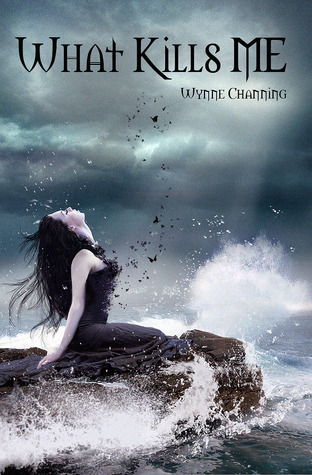
This week I am reading What Kills Me by Wynne Channing (published June 2012 by Jet & Jack Press). It is a YA Paranormal romance. I don’t usually read that kind of books, but I won a copy on Kayla Curry’s blog during her Trick Or Tweet Giveaway. And it’s a story about vampires, so I really couldn’t say no to reading that book!

From Goodreads:

An ancient prophecy warns of a girl destined to cause the extinction of the vampire race.

So when 17-year-old Axelia falls into a sacred well filled with blood and emerges a vampire, the immortal empire believes she is this legendary destroyer. Hunted by soldiers and mercenaries, Axelia and her reluctant ally, the vampire bladesmith Lucas, must battle to survive.

How will she convince the empire that she is just an innocent teenager-turned bloodsucker and not a creature of destruction? And if she cannot, can a vampire who is afraid of bugs summon the courage to fight a nation of immortals?

What are you reading this week?